APR Vs. APY: Key Differences And How To Compare Accounts
Understand APR vs. APY: Borrowers want low APR, savers seek high APY. Master these rates for smarter financial decisions.
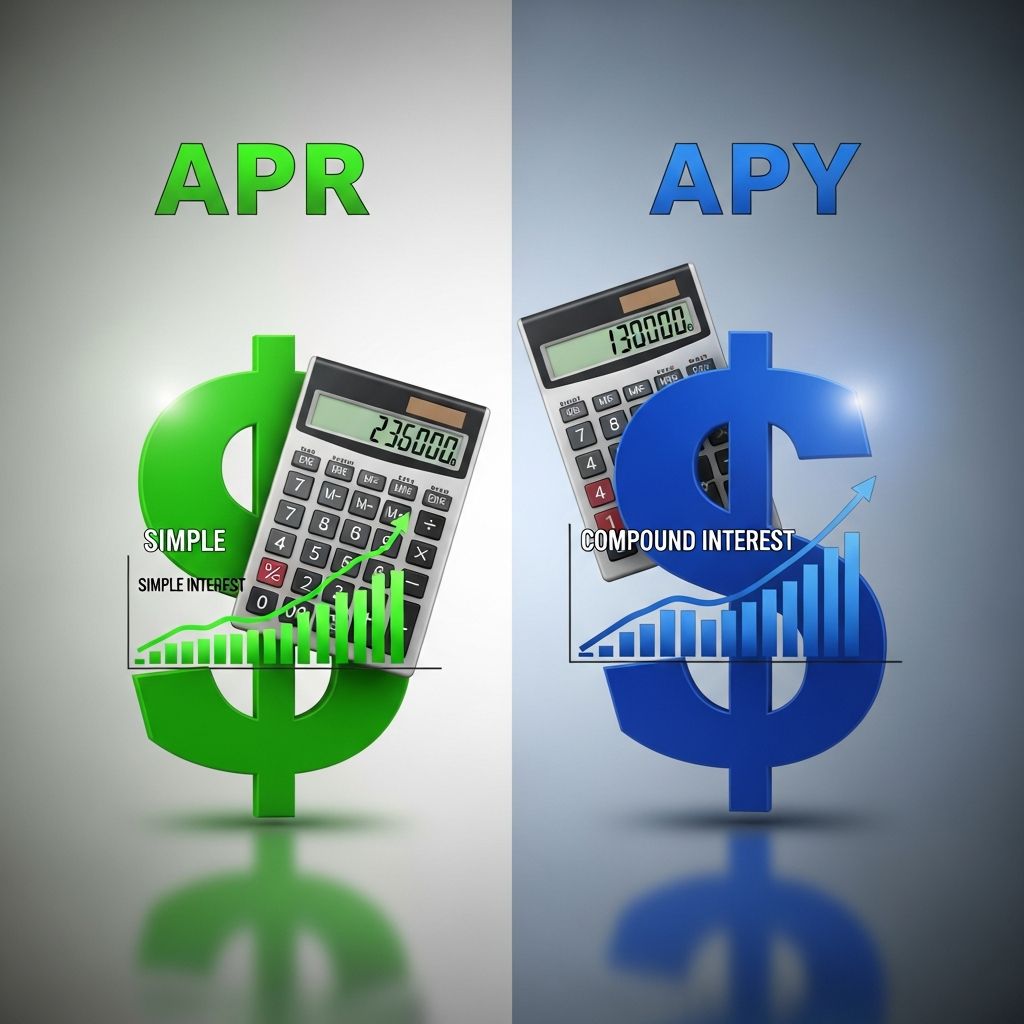
APR (Annual Percentage Rate) and APY (Annual Percentage Yield) are essential financial terms that help consumers understand the true cost of borrowing and the real return on savings. While they sound similar, APR applies to loans and credit where you pay interest plus fees, whereas APY applies to deposit accounts where you earn compounded interest. Grasping these distinctions empowers better decisions on everything from credit cards to high-yield savings accounts.
What is APR?
**Annual Percentage Rate (APR)** represents the total yearly cost of borrowing money, encompassing not just the interest rate but also fees like origination charges, closing costs, or annual fees. It standardizes loan comparisons by expressing costs as a single percentage.
For borrowers, a lower APR means less overall expense. For instance, on a credit card or mortgage, APR reveals what you’ll pay beyond the base interest rate. Unlike simple interest, APR assumes the rate is fixed over a year but does not factor in compounding on the borrower side—it’s more about upfront and periodic costs.
- Credit cards: APR determines interest on unpaid balances, often variable based on prime rate plus margin.
- Mortgages/Personal loans: Includes points, broker fees, and insurance in the calculation.
- Auto loans: Factors in dealer fees and taxes.
Regulated by the Truth in Lending Act (TILA), lenders must disclose APR prominently to prevent misleading advertising with low ‘teaser’ rates.
What is APY?
**Annual Percentage Yield (APY)** measures the effective annual return on savings or investments, accounting for compounding interest—the process where interest earns interest over multiple periods.
APY is crucial for deposit products like savings accounts, CDs, and money market accounts. A higher APY signals better growth potential. For example, compounding daily yields more than annually at the same nominal rate.
- Savings accounts: Variable APY tied to federal funds rate.
- CDs: Fixed APY for term length, penalty for early withdrawal.
- Money market accounts: Often higher APY with check-writing perks.
APY assumes funds remain deposited for a full year with no withdrawals, providing a realistic earnings projection.
APR vs. APY: Core Differences
APR and APY serve opposite purposes: APR quantifies borrowing costs (what you pay), while APY quantifies earning potential (what you gain). Here’s a breakdown:
| Aspect | APR | APY |
|---|---|---|
| Applies to | Loans, credit cards, mortgages | Savings, CDs, checking (interest-bearing) |
| Measures | Cost of borrowing (pay) | Return on deposit (earn) |
| Compounding | No (simple rate + fees) | Yes (daily/monthly/etc.) |
| Goal | Lower is better | Higher is better |
| Fees Included | Yes (origination, etc.) | No |
Variable rates can change both: APR with market indexes, APY with Fed adjustments. Introductory APRs end, spiking costs—always check post-promo rates.
Interest Rate vs. APR vs. APY
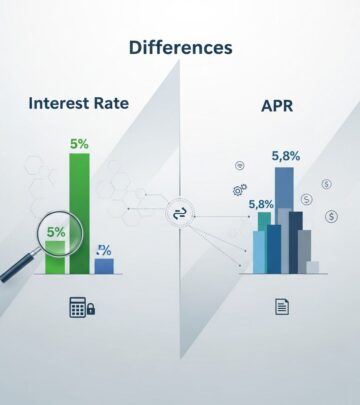
The nominal interest rate is the base percentage without fees or compounding. APR builds on this by adding fees for borrowers. APY enhances it with compounding frequency for savers.
Example: A 5% interest rate loan with $100 fees on $10,000 over 1 year has higher APR (~5. something%). A 5% savings rate compounded monthly has APY >5%.
- Interest rate: Raw percentage (e.g., 5%).
- APR: Interest + fees annualized.
- APY: Interest with compounding effect.
Compounding: Why It Matters for APY
Compounding supercharges growth: Interest on principal plus prior interest. Frequency (daily best, annual worst) amplifies APY.
Formula: APY = (1 + r/n)n – 1, where r = nominal rate, n = compounds per year.
| Compounding | 5% Nominal Rate APY |
|---|---|
| Annual | 5.00% |
| Monthly | 5.12% |
| Daily | 5.13% |
Over time, this gap widens—prioritize frequent compounding for savings.
How to Calculate APR and APY
APR Calculation
APR = [{(Fees + Expenses) / Principal} / Loan Days] × 365 × 100. Tools like calculators simplify this.
Example: $10,000 loan, 10% rate monthly compound, 5% fee over 3 years → APR ~13.56%.
APY Calculation
APY = (1 + r/n)n – 1. For 5% daily: (1 + 0.05/365)365 – 1 ≈ 5.13%.
Use bank-provided figures for accuracy; compare apples-to-apples.
Real-World Examples: APR and APY in Action
Borrowing: $20,000 auto loan at 6% interest + 2% fees → APR 8%. Monthly payments higher due to fees.
Saving: $10,000 at 4% compounded monthly → APY 4.07%, earning ~$407 year 1 vs. $400 simple.
CD ladder: Split funds across maturities for liquidity + high APY.
When Shopping for Loans or Savings
- Loans: Seek lowest APR; read fine print on fees/variable terms.
- Savings: Hunt highest APY; check minimums, withdrawal limits.
- Online banks often beat bricks-and-mortar rates.
Current high-rate environment (post-2022 Fed hikes) favors savers—lock CDs now.
Frequently Asked Questions (FAQs)
Q: Is a higher APY always better?
A: Yes, for savings, as it reflects true earnings power with compounding. Confirm no hidden fees erode gains.
Q: Does APR include compounding?
A: No, APR is simple annualized cost + fees; compounding affects total interest paid separately.
Q: Can APR be lower than interest rate?
A: No, fees make APR higher or equal. Zero-fee loans have APR = interest rate.
Q: Are APY and APR fixed?
A: Can be variable; check disclosures. Promotional APRs expire.
Q: Where to find best rates?
A: Compare FDIC-insured banks online; tools like Bankrate aggregate APYs/APRs.
Conclusion
Mastering APR vs. APY demystifies finance: Minimize APR on debt, maximize APY on savings. Always compare standardized rates, understand compounding, and align products with goals for optimal wealth building.
References
- APR vs. APY: What’s the Difference? — Capital One. 2024-03-21. https://www.capitalone.com/learn-grow/money-management/apr-vs-apy/
- Interest Rates vs. APR vs. APY: What’s the Difference? — Armed Forces Bank. 2024. https://www.afbank.com/article/interest-rates-vs-apr-vs-apy-whats-the-difference
- APY vs. APR: What’s the Difference? — PNC Insights. 2024. https://www.pnc.com/insights/personal-finance/save/apy-vs-apr.html
- What is the difference between APR and APY? — Discover. 2024. https://www.discover.com/online-banking/banking-topics/apy-vs-apr/
- APR vs APY: Understanding the Key Differences — Ally. 2024. https://www.ally.com/stories/save/apy-vs-apr-what-is-apr-what-is-apy/
- What’s the difference between APR and APY? — YouTube (Consumer Financial Protection Bureau). 2024. https://www.youtube.com/watch?v=ZJJe51Bdzus
Similar Articles








Read full bio of medha deb