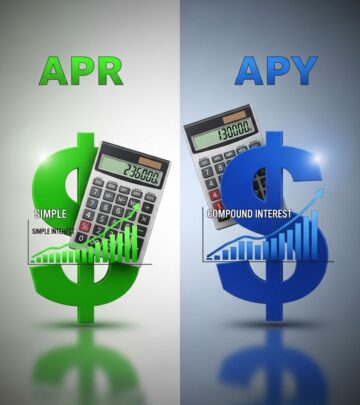
APR vs APY Explained
Master the difference between APR and APY to optimize borrowing costs and savings returns effectively.
Understanding the distinction between
APR
(Annual Percentage Rate) andAPY
(Annual Percentage Yield) is essential for anyone managing loans, credit cards, or savings accounts. APR represents the cost of borrowing money, including interest and fees, while APY measures the effective return on savings or investments, accounting for compounding. These metrics help consumers compare financial products accurately.Defining APR: The True Cost of Borrowing
The
Annual Percentage Rate (APR)
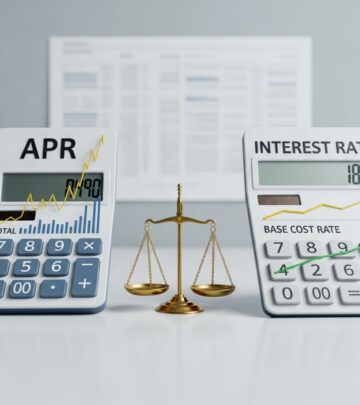
is a standardized metric that reveals the yearly cost of a loan or credit product. It encompasses not just the interest charged on the borrowed principal but also additional fees such as origination fees, closing costs, and other charges associated with the loan. Lenders are required by federal regulations to disclose APR, making it a reliable tool for comparing borrowing options across institutions.For instance, a credit card might advertise a 15% interest rate, but if it includes an annual fee, the APR could be higher, say 17%, providing a fuller picture of the expense. APR does not factor in compounding frequency for the borrower; it’s primarily a simple annual rate adjusted for fees.
Defining APY: Maximizing Savings Growth
In contrast,
Annual Percentage Yield (APY)
quantifies the real earnings from deposit accounts like savings, CDs, or money market funds over one year. APY incorporates the effect of compound interest, where interest is earned on both the initial deposit and the accumulated interest from prior periods. This makes APY higher than the nominal interest rate, especially with frequent compounding.Banks and credit unions use APY to advertise competitive returns, allowing savers to see the true growth potential. For example, a 5% interest rate compounded daily yields a higher APY than the same rate compounded annually.
Core Differences Between APR and APY
While both are annual percentages related to interest, their applications and calculations diverge significantly:
- Purpose: APR applies to borrowing (loans, credit cards), showing costs paid; APY applies to saving/investing, showing earnings received.
- Compounding: APR typically ignores compounding for borrowers; APY always includes it for depositors.
- Fees: APR includes fees; APY does not.
- Goal: Seek low APR for debt, high APY for savings.
| Aspect | APR | APY |
|---|---|---|
| Used For | Borrowing (loans, cards) | Saving (accounts, CDs) |
| Includes Fees? | Yes | No |
| Compounding | No (simple rate) | Yes |
| Desirable Value | Lower is better | Higher is better |
Interest Rate vs APY: Compounding Matters
Many confuse the base
interest rate
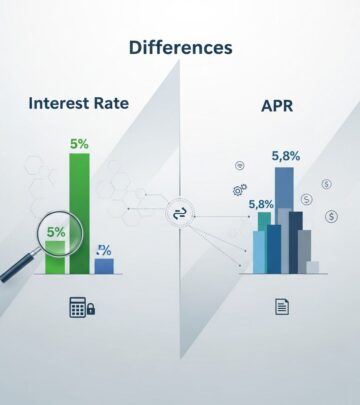
with APY. The interest rate is the raw percentage applied to the principal without compounding. APY builds on this by adding interest earned on interest, amplifying returns over time.Consider two accounts with a 5% interest rate: one compounds annually (APY ≈ 5%), the other daily (APY ≈ 5.12%). The daily compounding edges out more growth. The APY formula is: APY = (1 + r/n)^n – 1, where r is the interest rate (decimal) and n is compounding periods per year.
How to Compute APR for Loans
Calculating APR involves the periodic rate: [(fees + expenses) / principal] / loan term days, then APR = (periodic rate × 365) × 100. This method standardizes costs for comparison.
Example: A $10,000 loan with $500 fees over 365 days. Periodic rate = ($500 / $10,000) / 365 ≈ 0.000137. APR = (0.000137 × 365) × 100 ≈ 5% plus base interest.
Real-World Examples: APR and APY in Action
Suppose you deposit $1,000 in a savings account at 5% APY compounded annually. After year 1: $1,050. With monthly compounding, it grows to about $1,051.16, illustrating compounding’s power.
For borrowing: A $5,000 personal loan at 10% interest with $200 fees has an APR of ~12.4%, higher than the base rate, revealing hidden costs.
| Years | Annual Compounding ($1,000 @ 5% APY) |
|---|---|
| 1 | $1,050 |
| 5 | $1,276.29 |
| 10 | $1,628.91 |
Practical Strategies for Using APR and APY
Optimizing Savings
Shop for high-APY accounts, especially online banks offering 4-5%+ as of recent data. Verify compounding frequency and watch for variable rates.
Minimizing Borrowing Costs
Compare APRs across lenders, not just interest rates. Avoid high-fee products where APR balloons. Refinance high-APR debt to lower-rate options.
Balancing Debt and Savings
Pay off high-APR debt before aggressive saving, as borrowing costs often exceed savings yields.
Frequently Asked Questions (FAQs)
What is the main difference between APR and APY?
APR is the cost of borrowing including fees; APY is earnings from savings with compounding.
Is a higher APY always better?
Yes, for savings, but confirm terms like minimum balance and withdrawal limits.
Does APR include compounding?
No, APR is a simple annualized rate with fees; compounding affects effective borrower cost separately.
How does compounding frequency impact APY?
More frequent compounding (daily > monthly > annual) increases APY for the same rate.
Can APY change over time?
Yes, variable-rate accounts adjust APY with market conditions.
Common Pitfalls and How to Avoid Them
- Ignoring Fees: Always check APR for loans, not just advertised rates.
- Overlooking Compounding: Use APY, not interest rate, for savings comparisons.
- Variable Rates: Understand if APY/APR can fluctuate.
- Short-Term Focus: APY assumes one year; adjust for your horizon.
By mastering APR and APY, individuals can make informed decisions that enhance wealth building and reduce expenses. Regularly review account terms and market rates to stay ahead.
References
- What is APY and how is it calculated? — Fidelity Investments. 2024. https://www.fidelity.com/learning-center/smart-money/what-is-apy
- APY vs Interest Rate: What’s the Difference? — NerdWallet. 2024. https://www.nerdwallet.com/banking/learn/apy-vs-interest-rate
- APR vs APY: Understanding the Key Differences — Ally Bank. 2024. https://www.ally.com/stories/save/apy-vs-apr-what-is-apr-what-is-apy/
- APR vs APY – What’s the Difference? — Signal Financial FCU. 2025-01-01. https://www.signalfinancialfcu.org/2025/apr-vs-apy-whats-the-difference
- APR vs. APY: What’s the Difference? — Capital One. 2024. https://www.capitalone.com/learn-grow/money-management/apr-vs-apy/
- APY vs. Interest Rate: Learn the Difference Here — Citizens Bank. 2024. https://www.citizensbank.com/learning/apy-vs-interest-rate.aspx
Similar Articles








Read full bio of medha deb