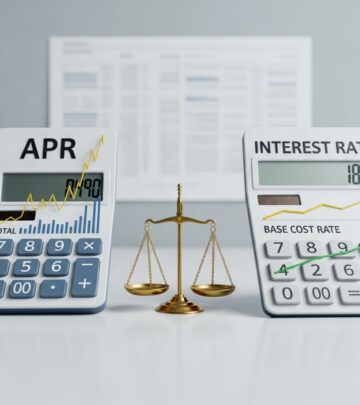
APR vs. APY: Understanding the Key Differences
Master the difference between APR and APY to make smarter financial decisions.

APR vs. APY: Understanding What Banks Hope You Don’t Know
When you’re shopping for financial products, whether it’s a credit card, mortgage, savings account, or certificate of deposit, you’ll inevitably encounter two terms that sound remarkably similar: APR and APY. Banks and financial institutions often hope consumers won’t fully grasp the distinction between these rates, as understanding the difference could significantly impact your financial decisions. Both annual percentage rate (APR) and annual percentage yield (APY) involve percentages and interest, yet they measure fundamentally different concepts that can cost or earn you thousands of dollars over time.
The confusion between APR and APY is intentional to some degree. Financial institutions benefit when consumers make decisions based on surface-level understanding rather than deep comprehension of how these rates actually work. However, armed with knowledge about what each rate represents and how they’re calculated, you can navigate the financial landscape with confidence and make decisions that genuinely serve your best interests.
What Is APR?
Annual percentage rate (APR) represents the yearly cost of borrowing money, expressed as a percentage. When you take out a loan, use a credit card, or secure a mortgage, the APR tells you how much you’ll pay annually in interest charges and fees associated with that debt.
APR is composed of two main elements: the interest rate itself and additional fees or charges associated with borrowing. This includes origination fees, closing costs, broker fees, points, and other expenses lenders may charge. By incorporating these fees into a single percentage, APR provides a more complete picture of the true cost of borrowing compared to the interest rate alone.
Key Characteristics of APR
Several important features distinguish APR from other interest rate measures:
– Includes fees and charges: Unlike a simple interest rate, APR encompasses all the costs associated with borrowing, giving you the full financial picture.- Fixed or variable: An APR can be fixed, meaning it remains the same for the life of the loan, or variable, meaning it can change based on market conditions or your creditworthiness.- Standardized comparison tool: Because APR includes all costs, it’s easier to compare different loan products from different lenders on an equal basis.- Lower is better: When borrowing money, a lower APR means you’ll pay less in total costs, making it one of the most important factors to consider when comparing loans.
What Is APY?
Annual percentage yield (APY) represents the total amount of interest you can earn on your deposits over one year, taking compound interest into account. When you place money in a savings account, money market account, certificate of deposit (CD), or other deposit account, the APY tells you the real return you can expect, factoring in how often the bank compounds your interest.
APY is more comprehensive than the simple interest rate because it accounts for the compounding effect. Compounding means you earn interest not just on your original deposit but also on the interest that has already accumulated, allowing your money to grow exponentially over time.
Understanding Compound Interest in APY
The power of APY lies in its inclusion of compound interest. Compound interest is calculated on both your principal (initial deposit) and the accumulated interest from previous periods. The more frequently a bank compounds your interest—whether daily, monthly, quarterly, or annually—the more interest you ultimately earn.
Consider a practical example: two savings accounts offer the same interest rate of 5%. Account A compounds interest annually, while Account B compounds daily. While the stated interest rate is identical, Account B will actually generate more earnings for you because daily compounding allows your interest to earn interest more frequently throughout the year. This is exactly why APY provides a more accurate comparison tool than simple interest rates alone.
Types of Accounts Using APY
APY is typically used for deposit accounts, including:
– Savings accounts- Money market accounts- Certificates of deposit (CDs)- Interest-bearing checking accounts- Some investment accounts
APR vs. APY: A Direct Comparison
| Feature | APR | APY |
|---|---|---|
| Purpose | Measures cost of borrowing | Measures earnings from saving/investing |
| Used For | Credit cards, loans, mortgages | Savings accounts, CDs, money market accounts |
| Includes Fees | Yes, includes all borrowing costs | No, represents only interest earned |
| Compound Interest | Does not factor in compounding | Accounts for compounding frequency |
| Direction | Money flows to the lender | Money flows to the account holder |
| Better When | Lower is better (costs less) | Higher is better (earns more) |
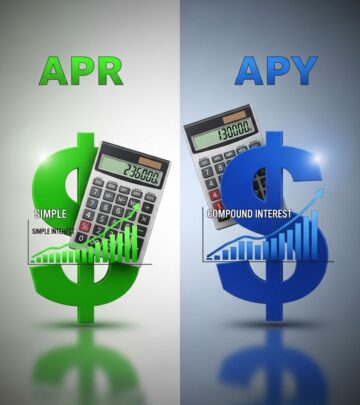
The fundamental difference is straightforward: APR measures what you pay when you borrow, while APY measures what you earn when you save or invest. APR is associated with debt products, while APY is associated with deposit and investment products.
Why Banks Hope You Won’t Notice the Difference
Financial institutions benefit significantly when consumers conflate these two terms or fail to understand their implications. When you don’t fully comprehend APR, you might overlook the true cost of borrowing, potentially choosing a loan based on a lower advertised interest rate while ignoring significant fees embedded in the APR. Similarly, confusion about APY might lead you to choose a savings account with a slightly higher stated interest rate without considering the compounding frequency, ultimately earning less than you could with an alternative account.
Banks capitalize on this confusion through marketing tactics that emphasize one rate while downplaying another. A credit card company might advertise a “low” interest rate while burying the APR details in fine print. Similarly, savings accounts might highlight a base interest rate while the actual APY—which accounts for compounding frequency—tells the real story of how much you’ll earn.
How APR Is Calculated
Understanding how to calculate APR helps you verify lender calculations and make informed comparisons. The APR calculation process involves several steps:
Step 1: Calculate the periodic interest rate
The formula is: [(loan fees + additional expenses) / loan principal] / number of days in your loan term
Step 2: Apply the APR formula
APR = (Periodic interest rate × 365) × 100
This standardized calculation method ensures consistency across different lenders and loan products, making it easier for you to compare actual costs rather than just interest rates.
How APY Is Calculated
APY calculation requires knowing your interest rate and how frequently the bank compounds your interest. The formula is:
APY = (1 + R/N)^N – 1
Where R represents the interest rate and N represents the number of compounding periods per year. Using this formula, you can see exactly how compounding frequency impacts your earnings. More frequent compounding periods result in higher APY, even when the base interest rate remains constant.
Fixed vs. Variable Rates
Both APR and APY can be either fixed or variable, and this distinction significantly impacts your planning:
Fixed Rates: A fixed APR or APY typically won’t change during the loan or account term, providing predictability and stability. This is advantageous when interest rates are rising, as you lock in today’s rate.
Variable Rates: Variable rates can fluctuate based on market conditions, the prime rate, or your credit score changes. If you have an introductory APR, understand exactly when it expires and how much your rate may increase afterward. Variable APY on deposit accounts might fluctuate with market performance, affecting your earnings potential.
Practical Impact: Real-World Examples
Borrowing Example: You’re comparing two credit cards. Card A advertises 18% interest, Card B advertises 18.5% APR. Card B actually costs more overall because its APR includes annual fees, while Card A’s stated rate doesn’t reflect all costs. When you calculate Card A’s APR including its $95 annual fee, it actually totals 19.2%, making it more expensive than Card B despite the lower advertised rate.
Savings Example: You’re comparing savings accounts offering 5% interest. Account A compounds annually; Account B compounds daily. After one year, Account B will have earned approximately 5.12% APY while Account A earned 5% APY. On a $10,000 deposit, this $12 difference might seem small, but over multiple years and larger deposits, the compounding effect becomes substantial.
How to Use APR and APY When Making Financial Decisions
When comparing borrowing products, always focus on APR rather than the advertised interest rate. The APR reflects the true annual cost of borrowing, including all fees and charges. This single number allows you to compare loans from different lenders on an apples-to-apples basis.
When comparing savings and investment products, prioritize APY over the stated interest rate. The APY reflects how much you’ll actually earn when accounting for compounding frequency. Two accounts might advertise the same interest rate, but different compounding schedules mean different earnings.
Always ask lenders and financial institutions to provide both the interest rate and the APR or APY. This ensures you’re making decisions based on complete information. Don’t accept “that’s the rate” as an answer—understand what fees are included and what compounding frequency applies.
Frequently Asked Questions
Q: Is APR or APY better?
A: Neither is inherently better; they measure different things. APR is better for evaluating borrowing costs—lower is preferable. APY is better for evaluating savings returns—higher is preferable.
Q: Can APR and APY rates change?
A: Yes, if the rates are variable. Fixed rates typically remain unchanged for the loan or account term. Variable rates can fluctuate based on market conditions and other factors.
Q: How often should I compare APR and APY?
A: Compare APR and APY whenever you’re considering a new financial product. Market rates change frequently, and better options may become available than your current accounts or loans.
Q: Why is compounding so important for APY?
A: Compounding allows you to earn interest on your interest, creating exponential growth. More frequent compounding means more interest is calculated and added to your account, increasing your total earnings.
Q: Should I pay attention to APR on every loan?
A: Absolutely. APR directly impacts how much you’ll pay over the life of the loan. Even small differences in APR can mean significant differences in total interest paid on large loans like mortgages.
Taking Action: Empowering Your Financial Future
Understanding the difference between APR and APY transforms you from a passive consumer into an informed decision-maker. No longer will you fall for marketing tactics that obscure the true costs of borrowing or the real returns from saving. By focusing on APR when borrowing and APY when saving, you’ll make choices that genuinely serve your financial interests.
The next time you encounter these terms, remember: APR is what you pay, APY is what you earn. Banks hope this distinction remains unclear, but now you have the knowledge to see through the confusion. Use this understanding to negotiate better rates, choose better accounts, and build a stronger financial future.
References
- APR vs. APY: What’s the Difference? — Capital One. March 21, 2024. https://www.capitalone.com/learn-grow/money-management/apr-vs-apy/
- APY vs. APR: What’s the Difference? — PNC Insights. https://www.pnc.com/insights/personal-finance/save/apy-vs-apr.html
- APR vs APY: Understanding the Key Differences — Ally. https://www.ally.com/stories/save/apy-vs-apr-what-is-apr-what-is-apy/
- What Is an Annual Percentage Rate (APR)? — Equifax. https://www.equifax.com/personal/education/credit-cards/articles/-/learn/what-is-apr/
Similar Articles








Read full bio of Sneha Tete