Apple Trillion: History’s Biggest Companies
Apple reaches $3 trillion valuation, joining the world's most valuable companies.
Apple Reaches Historic $3 Trillion Valuation: A Look at the World’s Biggest Companies
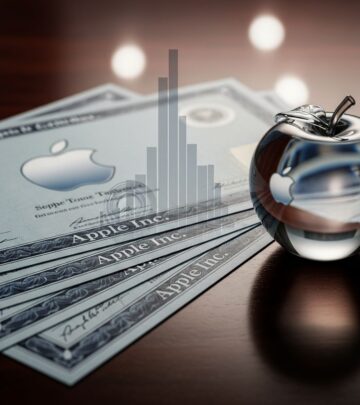
Apple has made extraordinary history by becoming the first publicly traded company to achieve a market capitalization of $3 trillion, marking a significant milestone in corporate achievement and reflecting the unprecedented dominance of technology companies in modern equity markets. This achievement underscores not only Apple’s exceptional business performance but also the broader shift in economic power toward the technology sector.
The iPhone maker’s ascent to this unprecedented valuation represents decades of strategic innovation, product development, and consistent execution that have cemented its position as one of the most valuable companies in human history. With a market value exceeding $3 trillion, Apple stands roughly half a trillion dollars above the next-largest company, demonstrating the scale of its dominance in global financial markets.
The Trillion-Dollar Club: An Elite Group
Companies reaching trillion-dollar valuations represent an exceedingly rare achievement in business history. In the United States, only a select group of megacap technology and internet stocks have crossed this extraordinary threshold.
The membership of the trillion-dollar club includes:
– Apple Inc. (first to reach $3 trillion)- Microsoft Corporation (over $2 trillion valuation)- Alphabet Inc. (Google’s parent company)- Amazon.com Inc.- Nvidia Corporation (first trillion-dollar chipmaker)
These companies represent the pinnacle of corporate success and market leadership. Apple’s distinction as the first $3 trillion company reflects not only its scale but also investor confidence in its long-term growth prospects and business model resilience.
Apple’s Journey to $3 Trillion
The $1 Trillion Milestone (2018)
Apple first achieved the remarkable milestone of $1 trillion in market capitalization in August 2018, becoming the first publicly traded U.S. company to reach this valuation. This historic moment represented the culmination of decades of innovation beginning with the introduction of the iPhone in 2007, which fundamentally transformed the company’s business model and revenue streams.
At the time of reaching $1 trillion, Apple’s stock price had increased approximately 1,100 percent since the first iPhone launched in 2007, when the company’s total market value was approximately $106 billion. This explosive growth reflected the revolutionary impact of mobile technology on consumer behavior and business economics.
The $2 Trillion Achievement (2020)
Apple doubled its valuation to $2 trillion by August 2020, making it the first U.S. company to surpass this level, though Saudi Aramco had previously become the first $2 trillion company globally. This rapid expansion demonstrated accelerated investor enthusiasm for the company’s services revenue, installed base growth, and ecosystem lock-in effects.
The $3 Trillion Breakthrough (2023)
The company briefly rose above the $3 trillion level in early 2022 but failed to close above it sustainably. However, following a rally that added more than $983 billion to Apple’s market value throughout the year, the company achieved lasting $3 trillion status. This achievement was driven by investor excitement about artificial intelligence applications, the company’s exceptional balance sheet, and durable competitive advantages.
What Drives Apple’s Exceptional Valuation?
Business Model Excellence
Apple’s valuation reflects multiple competitive advantages that have proven durable over more than a decade. The company maintains a consumer staples-esque platform business model characterized by exceptional margins and recurring revenue streams. With approximately 2 billion active devices worldwide, Apple has created one of the strongest network effects in technology.
The ecosystem strategy represents a critical advantage—customers become increasingly invested in Apple’s platforms through content purchases, app subscriptions, and device interconnectivity. This creates sticky customer relationships and high switching costs that support premium pricing power.
Financial Strength
Apple’s balance sheet remains phenomenal by any standard, providing strategic flexibility and investor confidence. The company maintains:
– Substantial cash reserves enabling strategic acquisitions and investments- A robust dividend payment program that continues to grow- An active share repurchase program that returns capital to shareholders- Strong free cash flow generation funding all capital allocation priorities
These financial characteristics distinguish Apple from most competitors and provide a safety margin during economic uncertainties.
Competitive Positioning
Apple’s lock on the consumer market continues to strengthen through continuous product innovation and ecosystem integration. The company’s position as the largest vendor of mobile phones, largest vendor of tablet computers, and largest manufacturer by revenue reflects its comprehensive market dominance across multiple product categories.
Market Performance and Investor Sentiment
Stock Performance
Apple became the world’s most valuable stock in 2011, when its market capitalization was under $340 billion and it comprised approximately 3.3 percent of the S&P 500. Since then, Apple has rarely relinquished that title, demonstrating consistent outperformance over more than a decade.
The stock’s strong performance reflects execution on a business strategy that works, with earnings plans delivering consistent growth and consumer loyalty remaining strong. Notably, Apple’s ascent to $3 trillion helped drive the Nasdaq 100 Index to its best-ever first-half performance, underscoring the stock’s influence on broader market movements.
Market Influence
Apple’s size translates to massive influence over equity markets. The company accounts for approximately 7.7 percent of the weight of the S&P 500 Index, making it the dominant single influence on index performance. This concentration reflects both investor enthusiasm for the company and the relative dominance of mega-cap technology stocks in modern portfolios.
The Technology Sector Dominance
Apple’s rise to $3 trillion reflects broader market trends showing the overwhelming dominance of technology companies in modern equity markets. The concentration of market value in mega-cap tech stocks has raised questions among some strategists about valuation sustainability and portfolio diversification.
However, investors remain excited about artificial intelligence growth potential and continue to gravitate toward quality factors that technology leaders embody—strong balance sheets, durable revenue streams, and robust competitive positions. Apple exemplifies these characteristics to an exceptional degree, justifying its premium valuation multiples relative to historical averages.
Valuation Multiples and Future Outlook
Apple currently trades at approximately 30 times forward earnings, representing a significant premium to its 10-year historical average of 17.9 times. While this multiple has declined from the 2020 peak above 35 times earnings, it remains elevated relative to long-term norms, suggesting the market is pricing in meaningful future growth.
Analysts covering Apple have demonstrated ongoing optimism about the stock, with recent coverage initiations featuring buy ratings and upside targets. Research from Citi suggests Apple’s ability to continue expanding margins remains underappreciated by the market, with targets suggesting potential upside of approximately 30 percent, which would approach $4 trillion in valuation.
However, the stock trades above average analyst price targets, suggesting limited consensus expectations for substantial gains from current levels. This pricing already reflects substantial bull case assumptions about future growth and margin expansion.
Historical Context: The Biggest Companies
Market Capitalization Evolution
Reaching $3 trillion places Apple among the most valuable companies in human business history when adjusted for the era in which valuations occurred. In nominal terms, Apple’s $3 trillion valuation exceeds the annual gross domestic product of most countries, highlighting the extraordinary scale modern technology companies have achieved.
The speed at which Apple reached successive trillion-dollar milestones reflects accelerating valuations in technology-driven economies. The company reached $1 trillion over more than a decade, $2 trillion within two years, and $3 trillion within an additional three years, demonstrating exponential value creation.
Comparison to Other Megacaps
While Nvidia, Meta Platforms, and Tesla have delivered higher percentage gains during recent periods, Apple’s absolute size provides greater influence over market movements. The distinction between percentage returns and absolute market impact shapes different investment implications for various portfolio strategies.
Among U.S. stocks, only Microsoft matches Apple’s scale with valuations exceeding $2 trillion. This concentration of market value in two companies—alongside Google, Amazon, and Nvidia—reflects technology sector dominance in modern capitalism.
Strategic Initiatives Supporting Valuation
Product Innovation
Apple’s continued investment in new product categories and technological advancement supports its premium valuation. The company maintains active development pipelines in emerging technologies including artificial intelligence integration, augmented reality, and advanced semiconductors through its custom chip development programs.
Services Revenue Growth
Services revenue represents an increasingly important component of Apple’s business model, offering higher margins and recurring revenue characteristics that justify premium valuation multiples. The expansion of services revenue—including Apple Music, iCloud, App Store revenue sharing, and Apple TV+—has diversified revenue streams beyond hardware sales.
Capital Allocation
Apple’s consistent return of capital through dividends and share repurchases supports stock price appreciation while maintaining financial flexibility. The company’s ability to simultaneously invest in innovation, return capital to shareholders, and strengthen the balance sheet demonstrates exceptional capital allocation discipline.
Challenges and Considerations
Despite its remarkable achievements, Apple faces ongoing challenges including antitrust investigations by regulatory agencies, competitive pressures in smartphone markets, and cyclical consumer spending patterns. Additionally, the company’s valuation multiples already reflect substantial bull case assumptions about future growth, potentially limiting upside surprises.
The concentration of technology stocks in major indices creates systemic risk for diversified portfolios, raising questions about valuation sustainability if interest rates rise or economic growth disappoints.
Frequently Asked Questions (FAQs)
Q: When did Apple first reach $1 trillion in market value?
A: Apple first achieved $1 trillion in market capitalization in August 2018, becoming the first publicly traded U.S. company to reach this milestone.
Q: What is Apple’s current market valuation?
A: As of October 2025, Apple is valued at just over $4 trillion, continuing its position as one of the world’s most valuable companies.
Q: What percentage of the S&P 500 does Apple represent?
A: Apple accounts for approximately 7.7 percent of the S&P 500 Index, making it the single largest influence on index performance.
Q: What are the main drivers of Apple’s valuation?
A: Apple’s valuation reflects exceptional business execution, a strong balance sheet, durable competitive advantages, ecosystem lock-in effects, and investor enthusiasm about artificial intelligence integration opportunities.
Q: Which other companies have reached trillion-dollar valuations?
A: Microsoft, Alphabet (Google), Amazon, and Nvidia have all achieved trillion-dollar valuations, with Microsoft and Apple being the only U.S. stocks valued above $2 trillion.
References
- Apple becomes first $3 trillion market value company — Fortune. 2023-06-30. https://fortune.com/2023/06/30/apple-history-3-trillion-market-value/
- Apple Inc. — Wikipedia. 2025. https://en.wikipedia.org/wiki/Apple_Inc.
- Apple becomes first $1 trillion dollar company — IAB UK. 2018. https://www.iabuk.com/news-article/apple-becomes-first-1-trillion-dollar-company
- The Founding of Apple Computer, Inc. – This Month in Business History — Library of Congress. 2024. https://guides.loc.gov/this-month-in-business-history/april/apple-computer-founded
- How Apple Became A Trillion Dollar Company — HackerNoon. 2021. https://hackernoon.com/how-apple-became-a-trillion-dollar-company
Similar Articles








Read full bio of medha deb