Annuity Essentials: Key Types Explained
Discover the core annuity varieties to secure your retirement with reliable income strategies tailored to risk levels.

Annuities serve as vital tools for retirement planning, offering structured ways to convert savings into steady income streams. These insurance products come in various forms, each balancing safety, growth potential, and payout timing differently to match diverse financial needs.
Understanding Annuities in Retirement Strategy
Annuities provide a mechanism to manage longevity risk—the chance of outliving one’s savings—while potentially shielding against market volatility. Issued by insurance companies, they typically involve an upfront premium in exchange for future payments. Key distinctions arise from how returns are calculated, when payments begin, and the level of investment risk involved.
Investors often select annuities based on age, risk tolerance, and income objectives. Conservative individuals prioritize principal protection, while others seek higher returns despite volatility. Regulatory oversight from bodies like state insurance departments and the SEC ensures consumer safeguards, particularly for securities-linked products.
Fixed Annuities: The Foundation of Stability
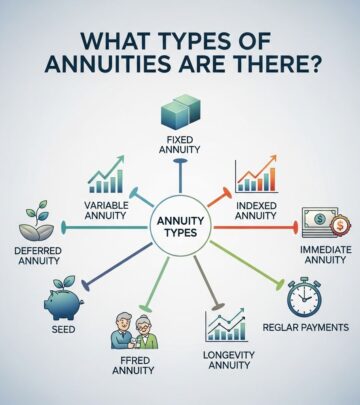
Fixed annuities deliver guaranteed returns at a predetermined interest rate set by the insurer, unaffected by economic fluctuations. This predictability appeals to those nearing retirement who value consistency over speculation.
Principal and interest accumulate tax-deferred until withdrawal, enhancing compounding. Common variants include multi-year guaranteed annuities (MYGAs), which lock rates for periods like 3-10 years, often outperforming bank CDs in yield. Another is the single premium immediate annuity (SPIA), transforming a lump sum into instant periodic payouts.
- Pros: Zero market risk, reliable income, simplicity.
- Cons: Lower growth potential, inflation erosion risk, surrender charges for early access.
For example, a $100,000 premium at 4% fixed rate over 10 years could yield steady payments post-term, ideal for supplementing Social Security.
Fixed Index Annuities: Balancing Safety and Upside
Fixed index annuities (FIAs), also known as equity-indexed, link growth to a market benchmark like the S&P 500 without direct stock exposure. They feature floors (minimum 0% return) protecting principal from downturns and caps or participation rates limiting maximum gains.
This hybrid appeals to moderate-risk profiles seeking stock market participation with downside buffers. Earnings credit annually based on index performance, credited conservatively to maintain guarantees. Optional riders may add income guarantees or death benefits for extra fees.
| Feature | Description |
|---|---|
| Floor | Protects against losses (e.g., 0% minimum). |
| Cap | Limits upside (e.g., 8% max annual gain). |
| Participation Rate | Percentage of index gain credited (e.g., 80%). |
FIAs shine in bull markets with tempered gains and bull out losses in bears, fostering steady accumulation.
Variable Annuities: Growth Through Market Exposure
Variable annuities invest premiums into subaccounts mirroring mutual funds in stocks, bonds, or other assets. Returns fluctuate with markets, offering high growth potential but no principal guarantees.
Suitable for younger, risk-tolerant savers, they provide tax-deferred growth and optional riders like guaranteed minimum withdrawal benefits (GMWBs) mitigating sequence-of-returns risk. However, fees—including mortality, expense, and investment charges—can erode returns.
- Best for: Long horizons, high income needs, diversification.
- Risks: Market losses, high costs (1-3% annually).
Performance ties directly to chosen allocations; aggressive portfolios may double value over decades, but crashes could halve it.
Immediate vs. Deferred: Timing Your Income
Annuities classify by payout start: immediate begin within a year of purchase, often via lump sum, providing instant income for retirees. Deferred versions accumulate value first, annuitizing later for larger future payments.
Immediate annuities offer lifetime or period-certain options, hedging longevity. Deferred allow flexibility, growing via fixed rates, indices, or variables before conversion.
| Type | Payout Timing | Ideal User |
|---|---|---|
| Immediate | Now (e.g., SPIA) | New retirees needing cash flow. |
| Deferred | Future (5-30 years) | Pre-retirees building nest eggs. |
Joint-and-survivor variants extend to spouses, crucial for couples.
Comparing Annuity Options Side-by-Side
Selecting the right annuity hinges on priorities. Fixed suit safety-first strategies; variables fuel aggressive growth; indexed bridge the gap.
| Annuity Type | Risk | Growth | Protection | Best Fit |
|---|---|---|---|---|
| Fixed | Low | Steady | Full | Conservatives |
| Fixed Index | Medium | Moderate | Principal | Balanced |
| Variable | High | High | Limited | Aggressives |
| Immediate | Varies | N/A | Guaranteed income | Instant needs |
This matrix highlights trade-offs; consult advisors for personalization.
Tax Implications and Funding Sources
Annuities offer tax-deferred growth on earnings, taxed as ordinary income upon withdrawal. Qualified annuities (IRA/401(k) funded) are fully taxable; non-qualified (after-tax) return principal tax-free first.
10% IRS early withdrawal penalty applies pre-59½. Lump-sum rollovers or systematic withdrawals optimize taxes. Roth conversions may apply for qualified types.
Pros, Cons, and Strategic Fit
Overall Benefits: Lifetime income, tax advantages, customization via riders.
Drawbacks: Illiquidity (surrender periods 5-10 years), fees, complexity, opportunity costs vs. diversified portfolios.
Allocate 10-30% of retirement assets to annuities for income floor, blending with stocks/bonds.
Factors Influencing Annuity Performance
Interest rates, insurer financial strength (check A.M. Best ratings), rider costs, and economic cycles impact outcomes. Shop multiple quotes; understand crediting methods.
In low-rate eras, indexed/variable gain appeal; high rates favor fixed.
FAQs: Common Annuity Questions
Q: Are annuities FDIC-insured?
A: No, backed by insurer claims-paying ability; state guaranty associations offer limited protection up to $250,000.
Q: Can I lose money in a fixed annuity?
A: No, principal and credited interest are guaranteed if held to term.
Q: What’s the difference between FIA and RILA?
A: RILAs (buffer annuities) allow some losses for higher upside potential, regulated as securities.
Q: How to annuitize?
A: Convert accumulation value to lifetime payments, irreversible for stability.
Q: Are annuities reversible?
A: Generally no post-annuitization; free-look periods (10-30 days) allow early cancellation.
Steps to Choose and Purchase an Annuity
- Assess goals, risk tolerance, timeline.
- Research insurers’ ratings.
- Compare quotes from independent agents.
- Review contract disclosures.
- Consult fiduciary advisor.
Avoid high-commission products; prioritize needs[10].
References
- Types of Annuities Made Easy — Annuity.org. 2023. https://www.annuity.org/annuities/types/
- What are the Different Types of Annuities? — Equifax. 2024-01-15. https://www.equifax.com/personal/education/personal-finance/articles/-/learn/what-types-of-annuities-are-there/
- Annuities Explained: Types, Benefits, & How They Work — Guardian Life. 2025. https://www.guardianlife.com/annuities
- Annuities – A brief description — Internal Revenue Service (.gov). 2024-03-10. https://www.irs.gov/retirement-plans/annuities-a-brief-description
- Annuities — FINRA.org. 2025-02-20. https://www.finra.org/investors/investing/investment-products/annuities
- Types of Annuities — NC DOI (.gov). 2024. https://www.ncdoi.gov/consumers/annuities/types-annuities
Similar Articles








Read full bio of medha deb