Annuity: Definition, Types, and Investment Benefits
Understanding annuities: A comprehensive guide to guaranteed income streams and retirement planning.

What Is an Annuity?
An annuity is a financial product offered by insurance companies that provides a guaranteed stream of income, either immediately or at a future date. Individuals who purchase annuities enter into a contract with the insurance company, agreeing to make payments (either as a lump sum or in installments) in exchange for regular payments that typically last for a specified period or for the remainder of their lives. Annuities are often used as retirement income vehicles, allowing individuals to convert a portion of their savings into predictable, steady income that cannot be outlived.
The primary appeal of annuities lies in their ability to provide security and predictability. Unlike other investment vehicles that fluctuate with market conditions, annuities often offer guaranteed returns, making them particularly attractive to retirees and risk-averse investors who prioritize income stability over growth potential. The insurance company assumes the investment risk and longevity risk, ensuring that the annuitant receives payments regardless of market performance or how long they live.
How Annuities Work
The annuity process involves several key stages: the accumulation phase, the payout phase, and considerations about the beneficiary. During the accumulation phase, the annuitant makes payments to the insurance company, which invests those funds. The value of the annuity grows during this period, either through guaranteed returns or market-based returns, depending on the annuity type.
Once the predetermined date arrives or the annuitant reaches a certain age, the contract enters the payout phase, also known as the annuitization phase. During this period, the insurance company begins distributing regular payments to the annuitant. These payments can be structured in various ways, including monthly, quarterly, annual, or in a lump sum, and can continue for a fixed period or for the annuitant’s entire lifetime.
The payment structure can also include survivor benefits, ensuring that a designated beneficiary receives remaining funds or continues receiving payments after the annuitant’s death. This flexibility allows individuals to customize their annuity to suit their specific financial needs and family situations.
Types of Annuities
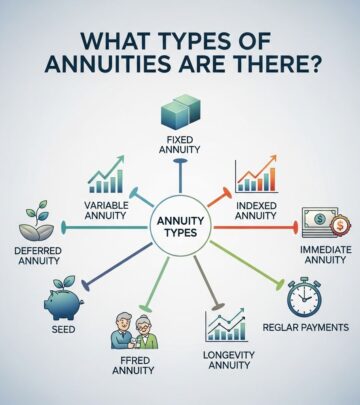
Annuities come in several distinct varieties, each offering different features and risk profiles:
Fixed Annuities
Fixed annuities provide a guaranteed rate of return set by the insurance company at the time of purchase. The insurance company assumes all investment risk, and the annuitant receives predetermined payments regardless of market conditions. This makes fixed annuities an excellent choice for conservative investors seeking predictability and security. The interest rate is typically set for a specific period, such as three to ten years, after which it may be adjusted.
Key benefits of fixed annuities include:
- Guaranteed minimum rate of return
- Predictable income stream
- Protection from market volatility
- Minimal fees compared to variable annuities
- Insurance company credit risk backing
Variable Annuities
Variable annuities allow the annuitant to invest in a selection of investment portfolios, typically mutual funds. The returns fluctuate based on the performance of the underlying investments, meaning payments can vary significantly. Variable annuities offer growth potential but carry greater risk, as poor market performance can reduce the value of payments and the contract’s overall value.
Variable annuities often include additional features such as:
- Investment choices aligned with risk tolerance
- Potential for higher returns during strong market periods
- Riders and guarantees for added protection
- Flexibility to adjust investment allocations
Indexed Annuities
Indexed annuities, also called equity-indexed annuities, offer a middle ground between fixed and variable annuities. Returns are tied to a stock market index, such as the S&P 500, but with a guaranteed minimum return regardless of market performance. This structure provides some growth potential while limiting downside risk, making them attractive to moderate investors.
Immediate Annuities
An immediate annuity begins making payments to the annuitant shortly after the contract is purchased, typically within a year. This type of annuity is often purchased with a large lump sum, such as an inheritance or retirement account distribution, and is ideal for individuals who need income right away.
Deferred Annuities
Deferred annuities have a delayed payout period, allowing the investment to grow during the accumulation phase before payments begin at a later date. This type is beneficial for younger investors planning for retirement or those who want to accumulate wealth over time before beginning to receive distributions.
Advantages of Annuities
Annuities offer several compelling benefits for retirement planning and income security:
- Guaranteed Income: Fixed and indexed annuities provide a reliable, predictable income stream that cannot be outlived, offering peace of mind during retirement.
- Longevity Protection: Annuities protect against the risk of outliving savings, as payments continue for life if structured accordingly.
- Tax-Deferred Growth: Earnings within an annuity accumulate on a tax-deferred basis during the accumulation phase, allowing investments to grow more efficiently.
- Flexibility: Annuities can be customized with various riders and payment options to align with individual financial goals and circumstances.
- Asset Protection: Annuities may provide creditor protection in some jurisdictions, safeguarding assets during legal disputes.
- Spousal Continuity: Many annuities include survivor benefits, ensuring beneficiaries continue receiving income or inherit remaining funds.
- No Contribution Limits: Unlike retirement accounts such as IRAs or 401(k)s, annuities have no annual contribution limits.
Disadvantages of Annuities
While annuities offer significant benefits, they also come with notable drawbacks:
- High Fees and Commissions: Annuities, particularly variable annuities, often carry substantial fees, including management fees, mortality and expense charges, and surrender charges.
- Liquidity Constraints: Money invested in annuities is often locked in for extended periods, with significant penalties for early withdrawal or surrender.
- Complexity: Annuity contracts can be extraordinarily complex, making them difficult for average investors to fully understand.
- Inflation Risk: Fixed annuities provide static payments that may lose purchasing power over time due to inflation.
- Limited Upside Potential: Fixed annuities may not keep pace with investment returns available through other vehicles during bull markets.
- Market Risk (Variable Annuities): Variable annuities expose investors to market fluctuations, potentially reducing retirement income.
- Irreversibility: Once annuitized, the decision is permanent, limiting flexibility if circumstances change.
Annuity Payout Options
When it comes time to receive payments, annuity holders can choose from several distribution structures:
| Payout Option | Description | Best For |
|---|---|---|
| Life Only | Payments continue for the annuitant’s lifetime, with no survivor benefits | Individuals without dependents seeking maximum monthly income |
| Life with Period Certain | Payments continue for life, with a guaranteed minimum period (e.g., 10 years); beneficiaries receive remaining payments if the annuitant dies within that period | Those wanting lifetime income plus beneficiary protection |
| Joint and Survivor | Payments continue until both the annuitant and spouse pass away, with the surviving spouse receiving ongoing benefits | Married couples seeking long-term security for both partners |
| Lump Sum | The entire contract value is distributed as a single payment | Individuals preferring direct control over investment decisions |
| Fixed Period | Payments are made for a specific duration (e.g., 15 years) regardless of whether the annuitant is living | Those wanting income over a defined timeframe with flexibility |
Who Should Consider Annuities?
Annuities are most suitable for specific investor profiles:
- Retirees seeking income security: Those wanting guaranteed, predictable income during retirement.
- Risk-averse investors: Individuals uncomfortable with market volatility and preferring stable returns.
- Those with longevity concerns: People who expect a long lifespan and wish to ensure they won’t outlive their savings.
- High earners with excess savings: Individuals who have maxed out retirement account contributions and seek additional tax-deferred growth.
- Beneficiaries receiving lump sums: People inheriting or receiving large sums who want structured income.
- Late-career workers: Employees nearing retirement who want to quickly build an income foundation.
Frequently Asked Questions
Q: What is the difference between an annuity and life insurance?
A: Life insurance provides a death benefit to beneficiaries, while an annuity provides income to the living annuitant. However, some products combine both features. Insurance protects against dying too young; annuities protect against living too long.
Q: Can I withdraw money from an annuity before the payout phase begins?
A: Yes, but most annuities impose surrender charges for early withdrawal, typically 5-10% of the withdrawal amount or more, depending on the contract terms. Some annuities allow penalty-free withdrawals after a specific period or under certain circumstances.
Q: Are annuity payments taxable?
A: Yes. A portion of each payment represents a return of principal (tax-free) and a portion represents earnings (taxable as ordinary income). If the annuity is held within a qualified retirement account like an IRA, all payments are typically taxed as ordinary income.
Q: What happens to my annuity if the insurance company fails?
A: Most states have insurance guarantee associations that protect annuity holders up to a certain amount (typically $100,000-$500,000) if an insurer becomes insolvent. Coverage varies by state, so it’s wise to verify your state’s protections.
Q: Can I change my annuity investment allocation in a variable annuity?
A: Yes, variable annuity holders can typically adjust their investment mix among available options without tax penalties. However, some transfers may carry restrictions or occur only during open enrollment periods.
Q: What is a 1035 exchange?
A: A 1035 exchange allows you to swap one annuity for another without immediate tax consequences. This can be useful if you want to switch to a different annuity with better features or lower fees, though surrender charges from the original annuity may still apply.
Q: Are annuities appropriate for young investors?
A: Typically, young investors benefit more from growth-oriented investments than annuities. However, variable annuities with long time horizons may be suitable for those seeking tax-deferred growth potential combined with downside protection through riders.
Q: What is an annuity rider?
A: An annuity rider is an optional add-on to a standard annuity contract that provides additional benefits, such as guaranteed minimum income, enhanced death benefits, or long-term care coverage. Riders increase costs but offer extra protection and flexibility.
Conclusion
Annuities are powerful financial instruments designed to provide security, predictability, and income longevity during retirement. Whether through fixed annuities offering guaranteed returns, variable annuities providing growth potential, or indexed annuities striking a middle ground, annuities serve diverse financial objectives. However, their complexity, fees, and limitations require careful consideration. Before purchasing an annuity, individuals should thoroughly understand their specific needs, compare contract terms, and consult with qualified financial advisors to ensure the product aligns with their broader financial strategy and retirement goals.
References
- Annuity Products and Safeguards — U.S. Securities and Exchange Commission (SEC). 2024. https://www.sec.gov/
- Understanding Annuities: Types, Benefits, and Risks — Financial Industry Regulatory Authority (FINRA). 2024. https://www.finra.org/investors/learn-to-invest/types-investments/annuities
- State Insurance Guarantee Associations — National Organization of Life & Health Insurance Guaranty Associations (NOLHGA). 2024. https://www.nolhga.com/
- Retirement Planning and Annuities — U.S. Department of Labor Employee Benefits Security Administration. 2024. https://www.dol.gov/agencies/ebsa
- Tax Treatment of Annuity Distributions — Internal Revenue Service (IRS). 2024. https://www.irs.gov/retirement-plans
Similar Articles








Read full bio of medha deb