Annual Percentage Rate (APR): 5 Types And How To Compare
Understand how APR works and impacts your loans, credit cards, and mortgages.
What Is an Annual Percentage Rate (APR)?
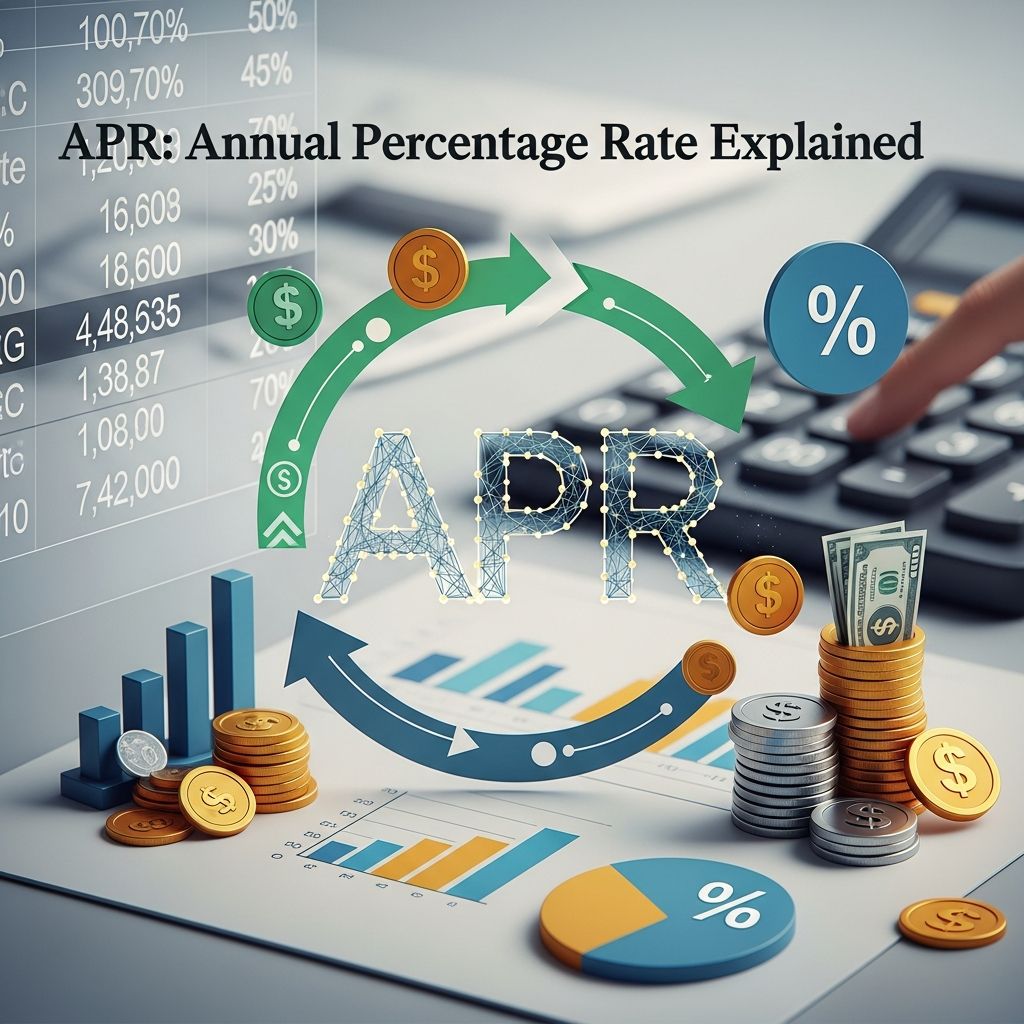
An Annual Percentage Rate, commonly abbreviated as APR, is the yearly cost of a loan or credit product expressed as a percentage. This rate encompasses not only the interest charged on borrowed money but also includes fees, closing costs, and other charges associated with the loan. The APR provides borrowers with a more comprehensive view of the true cost of borrowing compared to the interest rate alone, making it an essential metric for comparing different loan offers and credit products.
When you borrow money from a lender, whether for a mortgage, auto loan, or credit card, the APR represents the total annual expense you’ll incur. This includes the base interest rate plus any additional costs, expressed as a single percentage figure. Understanding APR is crucial for making informed financial decisions and comparing competing offers from different lenders.
Understanding the Difference Between APR and Interest Rate
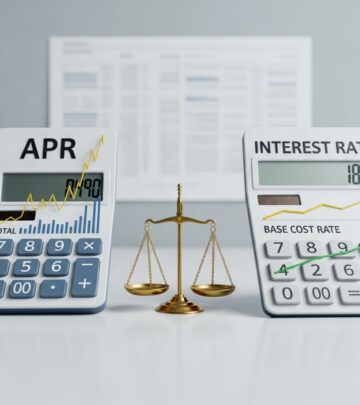
Many borrowers often confuse APR with the interest rate, but these two terms represent different concepts. The interest rate is simply the percentage of the principal amount that a lender charges per year. It does not include any additional fees or costs associated with the loan.
APR, on the other hand, is more comprehensive. It includes the interest rate plus all other charges and fees required to obtain the loan. These may include origination fees, application fees, underwriting fees, prepayment penalties, and closing costs. By incorporating these additional costs, the APR gives borrowers a more accurate picture of what they will actually pay for borrowed funds.
Key Differences:
- Interest Rate: Only the cost of borrowing the principal amount
- APR: Interest rate plus all fees and additional costs
- Transparency: APR is designed to provide better transparency and facilitate easier comparison between lenders
- Legal Requirement: Lenders are required by law to disclose the APR to borrowers
How APR Is Calculated
The calculation of APR involves several steps and takes into account the periodic interest rate, the number of payment periods, and any fees associated with the loan. The Truth in Lending Act (TILA) established standardized methods for calculating and disclosing APR to ensure consistency across the lending industry.
The basic formula for calculating APR is:
APR = [(Fees + Interest) / Principal] / Number of Days in Loan Term × 365
For simple loans, this calculation is straightforward. However, for more complex loan structures with varying payment schedules, the calculation becomes more involved. Lenders use sophisticated financial formulas and often rely on specialized software to compute the exact APR, as it must account for the timing of payments and the compounding of interest.
The Federal Reserve and the Consumer Financial Protection Bureau (CFPB) have established guidelines that lenders must follow when calculating APR to ensure transparency and consistency in disclosure practices.
Types of APR
Different types of APR exist depending on the nature of the credit product and how interest accrues:
Purchase APR
This is the interest rate applied to regular purchases made with a credit card. It is the cost of carrying a balance on your credit card from month to month when you don’t pay your bill in full.
Cash Advance APR
When you withdraw cash using your credit card, this typically higher APR applies. Cash advance APR is usually significantly higher than purchase APR and begins accruing interest immediately, with no grace period.
Balance Transfer APR
This is the rate charged when you transfer a balance from one credit card to another. Some credit card companies offer promotional balance transfer APR rates that are low or even zero percent for a limited introductory period.
Penalty APR
If you violate the terms of your credit card agreement, such as missing a payment, the credit card issuer may impose a penalty APR. This higher rate is applied to your outstanding balance and is the most expensive type of APR.
Fixed vs. Variable APR
Fixed APR: Remains constant throughout the life of the loan or credit agreement, providing predictable monthly payments.
Variable APR: Can change periodically based on market conditions or changes to a benchmark interest rate. Variable APR typically starts lower than fixed APR but carries more risk as payments may increase over time.
APR in Different Credit Products
Credit Cards
Credit card companies must disclose the APR for all interest-bearing balances. The APR on credit cards is typically higher than rates on secured loans like mortgages or auto loans, reflecting the unsecured nature of credit card debt and the higher risk to lenders. Many credit cards offer introductory APR rates that are reduced or zero percent for new cardholders during an initial period.
Mortgages
For mortgage loans, the APR includes the interest rate, origination fees, discount points, and other closing costs. The mortgage APR is typically slightly higher than the mortgage interest rate advertised. When comparing mortgage offers, examining the APR alongside the interest rate is crucial for understanding the true cost of borrowing.
Auto Loans
Auto loan APR encompasses the interest rate, application fees, documentation fees, and any other charges associated with the loan. Your credit score, loan term, and down payment amount all influence the APR you receive from an auto lender.
Personal Loans
Personal loan APR varies widely depending on your creditworthiness, income, and the lender’s policies. These unsecured loans typically carry higher APR than secured loans like mortgages or auto loans.
Why APR Matters for Borrowers
Understanding and comparing APR across different lenders is vital for several reasons:
- True Cost Comparison: APR allows you to compare the actual cost of borrowing across different lenders and loan products on an apples-to-apples basis
- Informed Decision-Making: Knowing the APR helps you understand the total amount you’ll pay over the life of the loan
- Budget Planning: APR disclosure helps you plan your budget and determine whether a loan is affordable
- Legal Requirement: Lenders are legally required to disclose APR, protecting consumers from predatory lending practices
- Long-Term Savings: Choosing a lower APR can result in significant savings over the life of a loan
How to Compare APR Across Lenders
When shopping for loans or credit products, following these steps can help you identify the best deal:
- Request APR quotes: Ask multiple lenders for their APR on the specific loan product you’re interested in
- Compare identical terms: Ensure you’re comparing loans with the same term length, principal amount, and loan type
- Review all fees: Make sure all fees are included in the APR calculation provided by each lender
- Check both fixed and variable: Compare fixed APR options with variable APR options to understand your risk tolerance
- Consider the annual cost: Calculate the total amount you’ll pay over the life of the loan at different APR rates
- Look for promotional rates: Check if lenders offer any temporary reduced APR rates for qualified borrowers
APR Limitations and Considerations
While APR is a valuable tool for comparing loans, it has certain limitations that borrowers should be aware of:
- Doesn’t account for payment frequency: APR assumes annual interest calculations and may not perfectly reflect actual costs for loans with different payment schedules
- Variable rate changes: For variable APR products, the advertised rate may change after the promotional period ends
- Excludes some costs: APR may not include all potential costs associated with borrowing, such as late payment fees or prepayment penalties
- Assumes on-time payments: APR calculations assume you’ll make all payments on time; missed payments can result in penalty APR
- Different calculation methods: Some financial institutions may calculate APR differently for certain products like credit cards
Frequently Asked Questions
Q: Is APR the same as the interest rate?
A: No. The interest rate is only the cost of borrowing the principal, while APR includes the interest rate plus all other fees and charges associated with the loan. APR provides a more complete picture of the true cost of borrowing.
Q: Can APR change during the loan term?
A: With fixed APR loans, the rate remains constant throughout the loan term. However, variable APR can change based on market conditions or changes to the benchmark rate the APR is tied to. Always check your loan agreement to understand whether your APR is fixed or variable.
Q: How can I lower my APR?
A: You can lower your APR by improving your credit score, making a larger down payment, choosing a shorter loan term, shopping around with multiple lenders, or requesting a rate reduction from your current lender if your financial situation has improved.
Q: What is a good APR?
A: What constitutes a good APR depends on the type of loan and current market conditions. Generally, lower APR is better, but rates vary significantly by credit product. Your personal credit score and market conditions will determine whether you qualify for a competitive APR.
Q: How is APR different for credit cards?
A: Credit card APR is typically higher than rates on secured loans and may vary depending on the type of transaction (purchase, cash advance, or balance transfer). Credit cards also commonly offer introductory APR periods with reduced or zero percent rates.
Q: Is it better to focus on APR or interest rate when shopping for loans?
A: Focus on APR as it represents the true cost of borrowing. While the interest rate is important, APR provides a more accurate comparison tool by including all associated fees and costs, making it easier to compare different lenders’ offers.
References
- Truth in Lending Act (TILA) and Regulation Z — Board of Governors of the Federal Reserve System. Updated 2024. https://www.federalreserve.gov/supervisionreg/regz.htm
- Annual Percentage Rate (APR) Regulations and Compliance — Consumer Financial Protection Bureau (CFPB). 2024. https://www.consumerfinance.gov/about-us/newsroom/cfpb-reports-credit-card-apr-increases/
- How to Calculate Annual Percentage Rate (APR) — U.S. Department of the Treasury. 2024. https://www.treasury.gov/
- Credit Card Interest Rates and APR Disclosure Requirements — Federal Trade Commission (FTC). 2024. https://consumer.ftc.gov/articles/0219-understanding-credit-card-apr
- Mortgage APR vs. Interest Rate: What Borrowers Need to Know — National Association of Realtors. 2024. https://www.nar.realtor/
Similar Articles








Read full bio of Sneha Tete