Amortization vs. Depreciation: Key Differences Explained
Understand the critical differences between amortization and depreciation for accurate financial reporting.
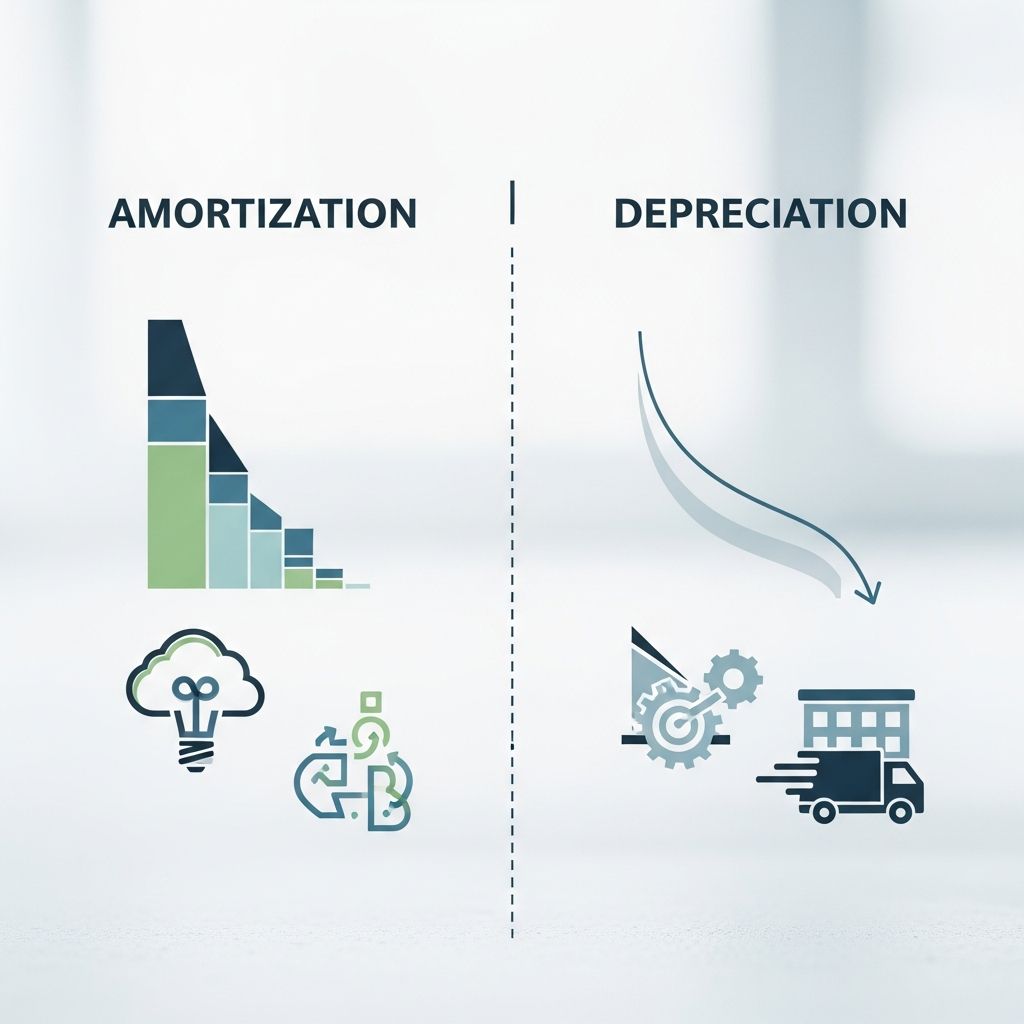
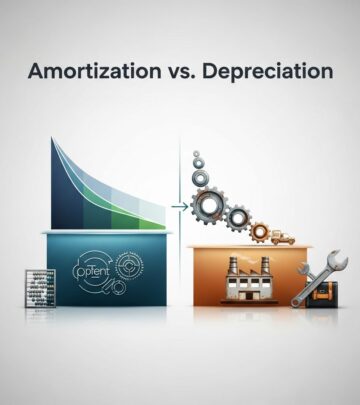
Amortization vs. Depreciation: Understanding the Key Differences
Both amortization and depreciation are accounting methods used to allocate the cost of assets over time, yet they serve different purposes and apply to different categories of assets. While these terms are sometimes used interchangeably by those unfamiliar with accounting practices, understanding their distinct applications is essential for accurate financial reporting, tax planning, and strategic business decision-making. Whether you’re a small business owner, investor, or finance professional, grasping the nuances between these two concepts will help you maintain accurate financial statements and optimize your tax position.
What is Depreciation?
Depreciation is an accounting method used to allocate the cost of tangible assets over their useful life. Tangible assets are physical items that you can touch and see—things like machinery, vehicles, office furniture, computers, and buildings. These assets gradually lose value over time due to wear and tear, obsolescence, or regular use.
The fundamental principle behind depreciation is that as these physical assets are used to generate revenue for your business, their cost should be matched against that revenue. Rather than expensing the entire cost of an asset in the year it’s purchased, depreciation allows you to spread that cost across multiple years, reflecting the asset’s decreasing value and utility.
For example, if your company purchases a delivery truck for $50,000, you wouldn’t record the entire $50,000 as an expense in year one. Instead, you would depreciate the truck over its useful life—perhaps 5 to 7 years—recording a portion of that cost as an expense each year. This approach provides a more accurate picture of your company’s profitability in any given period.
What is Amortization?
Amortization is an accounting method used to allocate the cost of intangible assets over their useful life. Unlike tangible assets, intangible assets lack physical substance but still have value to your business. Common examples of intangible assets include patents, trademarks, copyrights, franchise agreements, goodwill, software licenses, and brand names.
Amortization serves a similar purpose to depreciation—it matches the cost of an asset to the revenue it generates over time. However, because intangible assets don’t deteriorate from use in the same way physical assets do, amortization is typically calculated using a straight-line method, where the same amount is expensed each period throughout the asset’s useful life.
For instance, if your company purchases a patent for $100,000 with a useful life of 10 years, you would record $10,000 in amortization expense each year for 10 years, rather than recording the entire $100,000 as an immediate expense.
Key Differences Between Amortization and Depreciation
While amortization and depreciation share similar objectives, several fundamental differences distinguish them:
1. Type of Asset
Depreciation applies to tangible assets—physical property with material substance that can be seen and touched. Amortization applies to intangible assets—non-physical assets that represent rights, competitive advantages, or intellectual property.
2. Calculation Method
While both can use various depreciation methods, depreciation often employs multiple approaches including straight-line, declining balance, or units of production methods. Amortization typically uses the straight-line method exclusively, dividing the asset’s cost equally across each period of its useful life using the formula:
(Asset Cost – Residual Value) ÷ Useful Life = Annual Amortization Expense
3. Accounting Treatment
The accounting treatment differs between the two methods. When recording amortization, you directly reduce the intangible asset account. However, when recording depreciation, you credit a separate account called accumulated depreciation, which is a contra-asset account. This means the original cost of the fixed asset remains on your balance sheet, but you also report the accumulated depreciation separately, showing the net book value.
4. Asset Value Decline
Tangible assets like vehicles and machinery lose value through physical deterioration and use. A vehicle depreciates as its mileage increases and parts wear out. Intangible assets like patents don’t “wear out” in the traditional sense but have legal or contractual time limits. A design patent, for example, has a 14-year lifespan from the date it was granted, after which its legal protection expires.
Depreciation Methods and Examples
Several depreciation methods exist, each appropriate for different types of assets and business circumstances:
Straight-Line Depreciation
This is the most common method, where an equal amount is depreciated each year. The formula is:
(Asset Cost – Residual Value) ÷ Useful Life = Annual Depreciation Expense
If you purchase equipment for $100,000 with a residual value of $10,000 and a 10-year useful life, you would depreciate $9,000 per year.
Declining Balance Method
This method applies a fixed depreciation rate to the declining book value of the asset each year, resulting in higher depreciation expenses in earlier years. It’s often used for assets that lose value more rapidly initially.
Units of Production Method
This approach ties depreciation to actual usage rather than time. For example, machinery might be depreciated based on the number of units it produces, making this ideal for manufacturing equipment.
Why Amortization Matters for Your Business
Understanding and properly accounting for amortization is crucial for several reasons:
Tax Deductions
The Internal Revenue Service (IRS) permits businesses to deduct amortized costs over an asset’s useful life, which reduces your taxable income. Failing to properly account for amortization means you could be paying more in taxes than necessary. This is one of the most immediate and tangible benefits of proper amortization accounting.
Accurate Financial Reporting
Proper amortization ensures your financial statements accurately reflect your company’s profitability. When you fail to account for amortization, you risk overvaluing your company by implying value that isn’t really there. This false company valuation can adversely affect your financial statements and damage your credibility with potential investors or lenders.
Fundraising and Financing
When seeking financing or investment, lenders and investors scrutinize your financial statements closely. If your statements don’t properly account for amortization, it can drive away potential investors or financiers who recognize the accounting deficiency. Accurate amortization accounting demonstrates financial sophistication and transparency.
Cash Flow Management
Asset amortization helps alleviate cash flow challenges that many businesses face. By spreading large costs over time, amortization avoids sudden strain on your cash flow, lowers interest expenses, and improves key debt ratios that lenders consider when evaluating your creditworthiness. This allows you to better predict the costs that will impact your profit margin.
Comparison Table: Amortization vs. Depreciation
| Aspect | Amortization | Depreciation |
|---|---|---|
| Asset Type | Intangible assets (patents, trademarks, goodwill, copyrights) | Tangible assets (equipment, vehicles, buildings, furniture) |
| Primary Method | Straight-line method | Multiple methods (straight-line, declining balance, units of production) |
| Reason for Value Loss | Legal/contractual expiration or obsolescence | Physical wear, tear, and usage |
| Accounting Recording | Direct reduction of asset account | Credit to accumulated depreciation contra-asset account |
| Balance Sheet Presentation | Asset reduced directly | Original asset cost shown with accumulated depreciation deducted |
| Tax Implications | IRS allows deductions for amortized costs | IRS allows depreciation deductions within specific guidelines |
Common Intangible Assets Subject to Amortization
Various types of intangible assets require amortization accounting:
Intellectual Property
Patents, trademarks, and copyrights represent significant investments and have defined useful lives based on legal protection periods. A copyright, for instance, may last for the author’s life plus 70 years, while a patent typically protects an invention for 20 years from the application date.
Franchise Agreements
When you purchase the right to operate a franchise, that agreement has a specific term. The cost is amortized over the length of the franchise agreement.
Goodwill
When you acquire another business, the purchase price often exceeds the fair market value of its tangible assets. This excess is recorded as goodwill and amortized over time, though it must be tested for impairment annually.
Software Licenses
Purchased software licenses represent intangible rights to use specific software and are amortized over their useful lives.
Customer Lists and Relationships
In certain acquisitions, the value of an existing customer base or established relationships is recognized as an intangible asset and amortized over time.
Practical Examples in Business
Manufacturing Company
A manufacturing company purchases machinery for $200,000 with a 10-year useful life and no residual value. Using straight-line depreciation, the company records $20,000 in depreciation expense each year. This matches the machinery’s declining utility as it’s used in production.
Technology Startup
A tech startup acquires a competitor for $5 million, with $3 million attributed to goodwill. Using straight-line amortization over 10 years, the company records $300,000 in amortization expense annually, reflecting the gradual realization of the acquired company’s value.
Professional Services Firm
A consulting firm purchases a trademark and brand for $100,000 with an estimated useful life of 20 years. The firm records $5,000 in annual amortization expense, systematically allocating the brand’s cost against the revenue it generates.
How to Calculate Amortization
The basic amortization formula is straightforward:
(Asset Cost – Residual Value) ÷ Useful Life = Annual Amortization Expense
If the intangible asset has no residual value (which is typical), simply divide the initial cost by the useful life in years.
Example: A company purchases a patent for $500,000 with a 20-year useful life and no residual value. Annual amortization = $500,000 ÷ 20 = $25,000 per year.
Frequently Asked Questions
Q: Can tangible assets be amortized?
A: No, tangible assets are depreciated, not amortized. Amortization specifically applies to intangible assets like patents, trademarks, and goodwill.
Q: Why do intangible assets need to be amortized?
A: Intangible assets need to be amortized to match their cost against the revenue they generate over time, providing an accurate picture of profitability and compliance with accounting standards and tax regulations.
Q: What is accumulated depreciation?
A: Accumulated depreciation is a contra-asset account that records the total depreciation expense taken on a tangible asset since its acquisition. It’s subtracted from the original asset cost to show the net book value on the balance sheet.
Q: How do I know the useful life of an intangible asset?
A: Useful life is typically determined by legal protections (for patents and copyrights), contractual terms (for franchise agreements), or management estimates based on how long the asset will generate benefits for the company.
Q: Are amortization and depreciation tax deductible?
A: Yes, both amortization and depreciation expenses can be deducted on your business tax return, reducing your taxable income. However, specific IRS rules apply regarding which assets qualify and over what period they can be deducted.
Q: What happens if I don’t record amortization?
A: Failing to record amortization results in overstated asset values on your balance sheet, overstated profits on your income statement, higher tax liability than necessary, and potential issues with investors or lenders who review your financial statements.
Key Takeaways
While amortization and depreciation serve similar accounting purposes, they are distinct methods applied to different asset categories. Depreciation allocates the cost of tangible physical assets over their useful lives, while amortization allocates the cost of intangible assets. Understanding these differences is fundamental for accurate financial reporting, proper tax planning, and sound business decision-making. Whether managing a small business, evaluating a company for investment, or working as a finance professional, mastering these concepts ensures you maintain precise financial statements and optimize your tax strategy for long-term success.
References
- Asset Amortization Defined — U.S. Chamber of Commerce. 2025. https://www.uschamber.com/co/run/finance/asset-amortization-defined
- Internal Revenue Service (IRS) Publication 946: How to Depreciate Property — U.S. Department of Treasury. https://www.irs.gov/publications/p946
- Financial Accounting Standards Board (FASB) – Accounting Standards Codification Topic 360: Property, Plant, and Equipment — FASB. https://www.fasb.org/
Similar Articles








Read full bio of medha deb