America Is Not Really a Free Market Economy
Exploring how government intervention shapes the U.S. economic system beyond pure market forces.
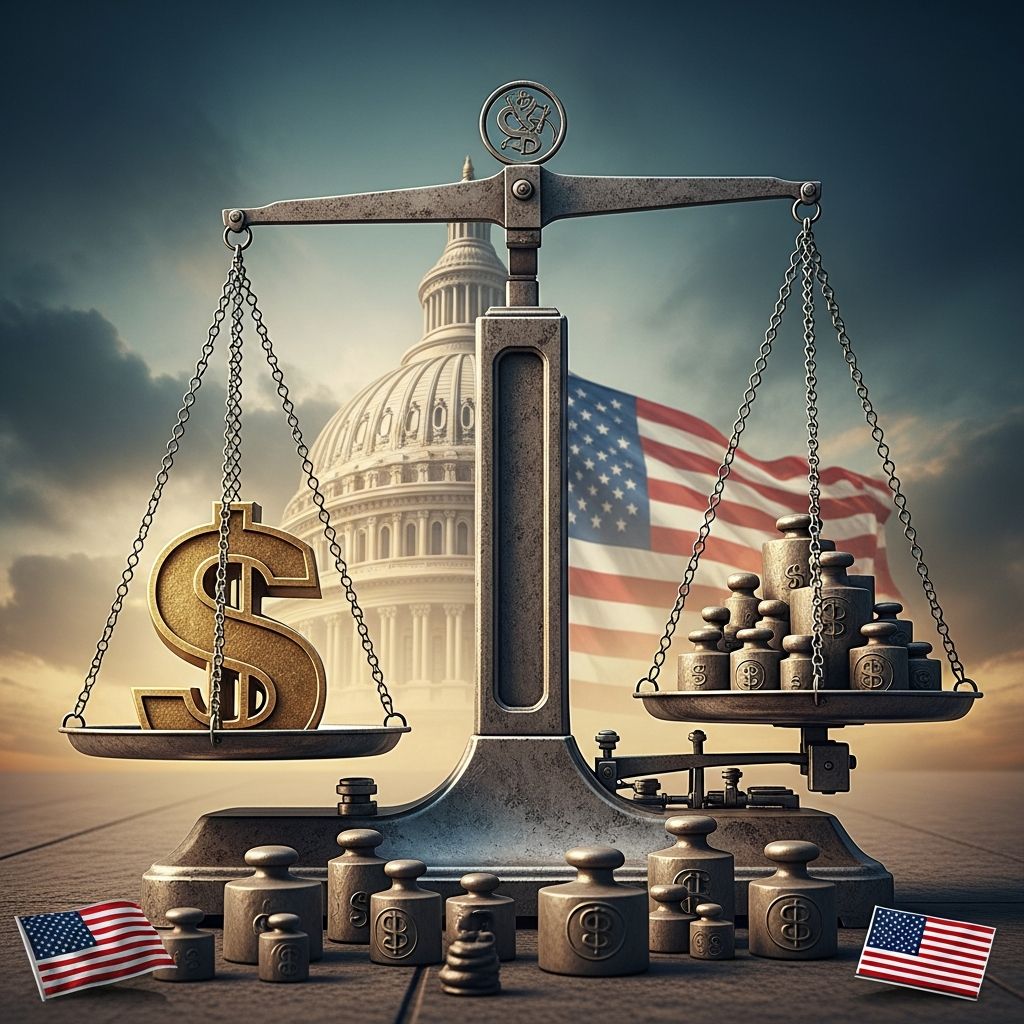
Understanding the American Economic System
The United States is often described as having a free market economy, where supply and demand dictate prices and businesses operate with minimal government interference. However, this characterization oversimplifies the reality of how the American economy actually functions. In truth, the United States operates a mixed economy that combines elements of free market capitalism with substantial government intervention and regulation. Understanding this distinction is crucial for comprehending modern economic policy, market dynamics, and the complex relationship between government and business in America.
A purely free market economy would exist in an environment where sellers face no barriers to entry, products are exchanged solely through willing buyer-seller interactions, and government intervention is minimal or nonexistent. However, this theoretical ideal rarely manifests in practice. The American economy, while maintaining market-based principles, incorporates numerous layers of government control, regulation, and intervention that fundamentally shape how businesses operate and how resources are allocated.
What Defines a True Free Market Economy
To understand why America is not truly a free market economy, we must first clarify what characteristics define a genuine free market system. According to economic theory, a free market economy exhibits several key features:
- Voluntary exchange: Products are exchanged between willing buyers and sellers without coercion
- No barriers to entry: Individuals can produce and sell any product at any price without legal restrictions
- Private ownership: Resources and means of production are controlled by individuals and private companies rather than central government
- Consumer sovereignty: Consumers determine which products succeed or fail through their purchasing decisions
- Competition-driven innovation: Businesses compete to improve products and services based on consumer demand
- Self-regulation through supply and demand: Market forces naturally regulate prices and production without government oversight
In theory, these characteristics create an efficient economic system where resources flow to their most productive uses. However, the American economy deviates significantly from this pure model in multiple important ways.
Government Regulation and Market Barriers
One of the most significant ways the American economy differs from a true free market is through extensive government regulation. While some level of regulation is necessary to ensure public safety, protect the environment, and maintain fair competition, the United States has developed a complex regulatory framework that substantially constrains market freedom.
These regulations create barriers to market entry and restrict the ability of businesses to operate freely. Examples include:
- Import and export tariffs that restrict international trade
- Age restrictions on certain products like alcoholic beverages
- Occupational licensing requirements that limit who can provide certain services
- Environmental regulations that mandate specific production practices
- Labor laws that regulate employment relationships and wages
- Financial regulations that control how banks and investment firms operate
The regulatory burden on the American economy is substantial. For instance, regulatory relief initiatives have historically aimed to reduce these constraints. During the Clinton administration, the National Partnership for Reinventing Government resulted in “$28 billion a year in reduced regulatory burdens” and the elimination of “16,000 pages of regulations.” More recently, regulatory reform has remained a policy priority, recognizing that excessive regulation can hinder economic growth and innovation.
Government Spending and Fiscal Intervention
Beyond regulation, the American government actively intervenes in the economy through fiscal policy, including spending, taxation, and redistribution of wealth. A true free market economy would involve minimal government spending and no wealth redistribution mechanisms. The U.S. government, however, funds extensive social programs, infrastructure projects, and public services through tax revenue and borrowing.
Government spending represents a significant portion of the American economy. The federal government budgets for defense, Social Security, Medicare, Medicaid, education, and numerous other programs that are funded through taxation. This represents substantial government control over resource allocation—a clear deviation from free market principles where individuals and markets alone determine how resources are distributed.
Additionally, the government uses deficit spending to stimulate the economy during recessions, a practice known as Keynesian economics. This macroeconomic intervention illustrates how government actively shapes economic outcomes rather than allowing pure market forces to operate. The ideal economy, as many economists recognize, is actually a mixed one that balances market mechanisms with government intervention.
Banking and Financial System Control
The American financial system, while based on private banking institutions, operates under significant government oversight and control. The Federal Reserve, a quasi-governmental institution, manages monetary policy, interest rates, and the money supply—core functions in a truly free market economy that would be determined by market forces alone.
Banks and financial institutions, while private enterprises, must comply with extensive regulations governing lending practices, reserve requirements, capital ratios, and consumer protections. The 2008 financial crisis led to even stricter regulations, including the Dodd-Frank Act, which increased government oversight of financial markets. These regulations represent government intervention that prevents pure market operation in the financial sector.
Furthermore, the government provides safety nets for the financial system, such as deposit insurance through the Federal Deposit Insurance Corporation (FDIC) and emergency lending facilities during crises. These interventions prevent true market discipline from operating, as failing institutions may be rescued by government action rather than allowed to fail naturally.
Subsidies and Special Interest Protection
The American government regularly provides subsidies to particular industries and sectors, fundamentally distorting free market competition. Agricultural subsidies, energy sector supports, and tax breaks for specific industries represent government intervention that picks winners and losers in the economy rather than allowing market forces to determine success.
These subsidies protect established industries from competition and create barriers to entry for new competitors. For instance, agricultural price supports prevent market prices from reflecting true supply and demand, artificially maintaining prices above what they would be in a free market. Similarly, tax incentives for renewable energy, fossil fuels, or specific manufacturing sectors represent government choices about which industries deserve support—a fundamentally anti-free-market practice.
Trade Policy and Tariffs
A truly free market economy would involve completely unrestricted international trade, allowing goods and services to flow across borders based entirely on comparative advantage and consumer preferences. However, the United States imposes tariffs on imported goods, which directly restricts free trade and creates market inefficiencies.
Tariffs raise prices for domestic consumers, protect inefficient domestic producers from competition, and reduce overall economic efficiency. The imposition of tariffs represents a deliberate government choice to intervene in markets and restrict the free exchange of goods. Recent years have seen increased protectionist policies, further demonstrating how government intervention shapes the American economy contrary to free market principles.
Monopoly and Antitrust Intervention
In a true free market, monopolies would be prevented through competition. However, the American economy has witnessed the rise of dominant firms in various sectors—technology, telecommunications, pharmaceuticals, and others. The government addresses this through antitrust enforcement, which represents intervention to correct market failures.
While antitrust enforcement serves an important purpose, it also illustrates how the free market has failed to prevent monopolistic behavior naturally. Government intervention through antitrust litigation and regulation becomes necessary to restore competitive conditions, demonstrating that pure market forces alone do not prevent anticompetitive outcomes.
Intellectual Property Protection
Patents, copyrights, and trademarks are government-enforced monopolies that restrict free market competition. While designed to incentivize innovation, these intellectual property protections prevent competitors from freely offering similar products or services. This represents fundamental government intervention in markets that contradicts free market principles.
In a truly free market, knowledge and ideas would flow freely without government restriction. Instead, the American government actively protects intellectual property through patents lasting decades and copyrights extending for the life of creators plus additional years. This government-enforced scarcity prevents market forces from operating freely in knowledge-based industries.
The Mixed Economy Model in Practice
The reality is that most successful modern economies, including the United States, operate as mixed systems that blend market mechanisms with government intervention. This hybrid approach attempts to capture the efficiency benefits of markets while addressing market failures and providing public goods that markets alone would not supply efficiently.
Mixed economies typically include:
- Private ownership of most productive resources and businesses
- Market-determined prices for most goods and services
- Government provision of public goods (infrastructure, education, national defense)
- Regulation to prevent market failures and protect consumers
- Progressive taxation and wealth redistribution programs
- Government spending to stabilize economic cycles
- Protection of intellectual property and property rights
The United States fits this mixed economy model, not a pure free market model. The optimal balance between market and government intervention depends on specific circumstances, stages of development, and political preferences. As these factors change, so too should the appropriate mix of market freedom and government intervention.
Comparing Market Economies
| Economic System | Private Ownership | Government Regulation | Redistribution Programs | Real-World Examples |
|---|---|---|---|---|
| Pure Free Market | Nearly Total | Minimal | None | Theoretical only |
| Mixed Economy | Mostly Private | Moderate | Significant | United States, Western Europe |
| Socialist Economy | Mostly Public | Extensive | Comprehensive | Venezuela, Cuba |
| Planned Economy | Mostly Public | Complete | Comprehensive | China (historically), Soviet Union |
The Price Effects of Market Intervention
Research examining the relationship between free market economies and price levels reveals important insights. Studies analyzing U.S. economic data from 1990 to 2020 found that the free market model has a positive effect on price increases, while the size of government in the economy affects pricing in complex ways. This suggests that completely unrestricted markets may not be optimal for controlling inflation, and government intervention plays a necessary role in price stability.
Why Pure Free Markets Don’t Exist
Several factors explain why truly free markets are theoretical constructs rather than practical realities:
- Information asymmetries: Buyers and sellers often lack equal information, preventing optimal market outcomes
- Externalities: Market transactions create costs or benefits not reflected in prices (pollution, congestion)
- Public goods: Some goods (national defense, lighthouses) are underprovided by markets
- Monopoly power: Natural monopolies and network effects create market concentration
- Behavioral factors: Consumers don’t always act rationally as economic theory assumes
- Systemic risk: Financial crises require government intervention to protect the broader economy
The Debate Over Government Intervention
The appropriate level of government intervention in the economy remains hotly contested. Critics of excessive regulation argue that government controls stifle innovation, increase costs, and reduce economic efficiency. Advocates for greater intervention contend that government plays a necessary role in addressing market failures, protecting vulnerable populations, and maintaining economic stability.
Recent economic debates have highlighted these tensions. Some economists argue that free-market policies, when properly implemented, can achieve strong results, citing examples like Argentina’s recent economic reforms under President Milei, which included deregulation, privatization, and anti-union measures. However, others caution that excessive deregulation can create new problems and that the optimal economy requires a balanced approach.
Frequently Asked Questions
Q: Is the United States truly a free market economy?
A: No. The U.S. operates as a mixed economy combining market mechanisms with substantial government regulation, spending, and intervention. While markets play a significant role, government controls, subsidies, tariffs, and regulatory frameworks shape economic outcomes substantially.
Q: What are the main forms of government intervention in the U.S. economy?
A: Key interventions include regulatory frameworks, taxation and spending, monetary policy through the Federal Reserve, subsidies to specific industries, tariffs on imports, antitrust enforcement, and intellectual property protections. These collectively prevent pure market operation.
Q: Why doesn’t the U.S. have a purely free market economy?
A: Pure free markets are theoretical constructs that don’t exist in practice due to market failures including information asymmetries, externalities, monopoly power, and systemic risks. Government intervention addresses these failures and provides public goods markets alone won’t supply.
Q: What is the ideal balance between government and markets?
A: The ideal economy is a mixed one with market foundations plus government redistribution, public goods provision, and industrial policy. The optimal balance depends on the country’s circumstances, development stage, technology, trading patterns, and political values.
Q: How do tariffs represent government intervention?
A: Tariffs are taxes on imports that restrict free trade and prevent prices from reflecting true supply and demand. They protect domestic producers from competition and increase costs for consumers, exemplifying government choices overriding pure market operation.
Q: Can market intervention control inflation?
A: Yes. Research indicates that government intervention affects price levels and inflation. Fiscal and monetary policy through government spending, taxation, and central bank actions can influence inflation rates and economic stability, making complete government absence impractical.
References
- Free market economy: Is the market or prices free? Theory and Application — Wiley Journal of American Economic Society. 2021. https://onlinelibrary.wiley.com/doi/abs/10.1111/ajes.12513
- Free-market economics is working surprisingly well — Noah Smith (Noahpinion). 2024. https://www.noahpinion.blog/p/free-market-economics-is-working
- Free Market – Overview, Characteristics, Benefits and Drawbacks — Corporate Finance Institute. 2024. https://corporatefinanceinstitute.com/resources/economics/free-market/
- How Excessive Regulation Hurts the Economy — U.S. Chamber of Commerce. 2024. https://www.uschamber.com/economy/how-excessive-regulation-hurts-the-economy
- US Tariffs: What’s the Impact? — J.P. Morgan Global Research. 2025. https://www.jpmorgan.com/insights/global-research/current-events/us-tariffs
Similar Articles








Read full bio of medha deb