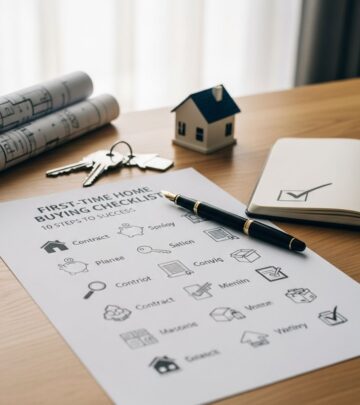
Am I Ready To Buy A House: Step-By-Step Checklist
Discover essential signs you're financially and emotionally prepared to purchase your first home and avoid common pitfalls.

Determining if you’re prepared to buy a house involves more than just wanting a place of your own. It requires a thorough evaluation of your finances, lifestyle, and market conditions to ensure this major decision leads to long-term stability rather than stress. This guide outlines critical factors to consider, helping you gauge your readiness step by step.
Evaluating Your Financial Foundation
Your financial health forms the bedrock of homeownership. Before diving into house hunting, scrutinize your income, debts, savings, and spending habits to confirm you can handle mortgage payments alongside other expenses.
- Stable Income Stream: Lenders favor consistent employment history, typically two years with the same employer. Self-employed individuals may need profit and loss statements to verify earnings.
- Debt-to-Income Ratio (DTI): Aim for a DTI below 43%, calculated as monthly debts divided by gross income. Lower ratios improve mortgage approval odds.
- Emergency Fund: Maintain 3-6 months of living expenses in savings, separate from your down payment, to cover unexpected costs like job loss or repairs.
Use online calculators to estimate affordability, factoring in property taxes, insurance, and maintenance, which can add 1-4% of the home’s value annually to your budget.
Building and Checking Your Credit Profile
A strong credit score unlocks better interest rates and loan terms. Scores above 740 often qualify for the lowest rates, potentially saving thousands over a loan’s life.
| Credit Score Range | Typical Mortgage Rate Impact | Action Steps |
|---|---|---|
| 760+ | Lowest available rates | Maintain status quo |
| 700-759 | Competitive rates | Monitor for improvements |
| 620-699 | Higher rates, limited options | Pay down debts, dispute errors |
| Below 620 | FHA loans possible, high rates | Work with credit counselor |
Review your credit report from AnnualCreditReport.com for inaccuracies. Pay bills on time, reduce credit card balances below 30% utilization, and avoid new debt applications during preparation.
Saving Strategically for Down Payment and Costs
Down payments typically range from 3-20%, with conventional loans favoring 20% to skip private mortgage insurance (PMI). Beyond the down payment, budget 2-5% of the purchase price for closing costs like appraisals, title fees, and origination charges.
- Gift Funds: Family contributions count toward down payments; provide donor documentation and gift letters.
- Low-Down-Payment Programs: FHA (3.5%), VA (0% for eligible veterans), or USDA loans assist qualified buyers.
- Savings Timeline: Automate transfers to high-yield accounts; cut non-essentials like dining out to accelerate growth.
First-time buyers saved an average of 10% down in recent years, per Federal Housing Finance Agency data, balancing affordability with equity buildup.
Securing Mortgage Pre-Approval
Pre-approval demonstrates seriousness to sellers and clarifies your budget. It involves submitting financial documents for a lender’s conditional commitment, valid 60-90 days.
Gather these essentials:
- Pay stubs (last 30 days)
- W-2s or tax returns (two years)
- Bank and investment statements (two months)
- ID, SSN, and employment verification
- Debt statements and rental history
Shop multiple lenders for the best rates; compare APRs, which include fees. Pre-approval strengthens offers in competitive markets.
Defining Your Ideal Home and Lifestyle Fit
Clarify must-haves versus nice-to-haves to focus searches efficiently. Consider future needs like family growth or remote work space.
- Location Priorities: Commute time, school quality, crime rates, and walkability.
- Property Features: Bedrooms/baths, square footage, yard size, garage.
- Style and Condition: New build versus fixer-upper; energy-efficient upgrades save on utilities.
Create a prioritized list: essentials (e.g., 3 bedrooms), desirables (e.g., fireplace), and walk-aways (e.g., poor roof).
Assembling Your Professional Team
A skilled team streamlines the process and protects your interests.
- Real Estate Agent: Experienced in your area, with strong negotiation skills and seller networks.
- Lender/Mortgage Broker: Offers multiple loan options and responsive service.
- Home Inspector: Licensed, with detailed reports on structural and system integrity.
- Title Company/Escrow Agent: Ensures clear property transfer.
Interview candidates via referrals and reviews; compatibility matters for a months-long partnership.
Navigating the House Hunting Phase
House hunting averages 4-6 months. Attend open houses, track viewings, and note pros/cons.
Inspection checklist highlights:
- Exterior: Roof age, foundation cracks, siding integrity.
- Interior: Flooring wear, wall cracks, closet space.
- Systems: HVAC age (replace over 15 years), plumbing leaks, electrical panel capacity.
- Bonus: Attic/basement moisture, window efficiency.
Document findings with photos; use them to negotiate repairs or price reductions.
Making a Competitive Offer
Craft offers with agent guidance, including price, contingencies (inspection, appraisal), and earnest money (1-3% deposit).
In hot markets, escalate clauses or waive minor contingencies, but protect against major risks. Sellers review net proceeds after commissions and fees.
Finalizing with Inspection, Appraisal, and Closing
Post-offer acceptance:
- Inspection (7-10 days): Uncovers issues; renegotiate if needed.
- Appraisal (lender-ordered): Confirms value; low appraisals may require renegotiation.
- Closing (30-60 days): Review loan docs, wire funds, sign papers.
Walk through the property pre-closing for changes.
Emotional and Lifestyle Readiness Factors
Beyond finances, assess commitment to homeownership responsibilities like maintenance and immobility during market downturns. Renting offers flexibility; owning builds equity but demands stability.
Frequently Asked Questions
What’s the minimum credit score for a mortgage?
Conventional loans prefer 620+; FHA allows 580+ with higher down payments.
How much should I save for closing costs?
Plan for 2-5% of the loan amount, varying by location and loan type.
Can I buy a house with student loans?
Yes, if your DTI remains under 43-50% including the mortgage.
Is now a good time to buy in 2026?
Monitor rates and inventory; pre-approval positions you for opportunities.
What if my appraisal comes in low?
Negotiate price drop, lender credits, or challenge with comps.
References
- Buying a Home — U.S. Department of Housing and Urban Development. 2025-01-15. http://www.hud.gov/helping-americans/buying-a-home
- Home Buying Checklist for First-Time Buyers: Your 2026 Guide — The Mortgage Reports. 2026-01-10. https://themortgagereports.com/26853/want-to-buy-a-house-checklist
- The Ultimate Home Buying Checklist In 15 Steps — Redfin. 2025-11-20. https://www.redfin.com/blog/checklist-for-buying-a-house/
- Checklist for buying your first house — Rocket Mortgage. 2025-12-05. https://www.rocketmortgage.com/learn/best-home-buying-checklist
- Ultimate Homebuying Checklist — Pennsylvania Association of Realtors. 2025-09-18. https://www.parealtors.org/ultimate-homebuying-checklist/
Similar Articles








Read full bio of medha deb