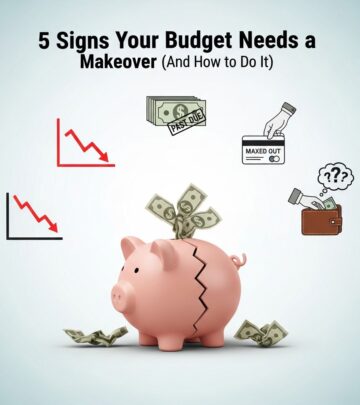
Always Running Out of Money? Here’s What to Do
Practical, step-by-step strategies to stop running out of money, build stability, and finally feel in control of your finances.

Feeling like your money disappears long before the month ends is stressful, discouraging, and exhausting. The good news is that you can change this. By understanding where your money is going and making a few intentional changes, you can stop constantly running out of money and start building stability instead.
This guide walks you through why this happens, what it really means for your financial health, and 5 key steps you can start using today to get control of your cash flow.
What it really means when you keep running out of money
Regularly running out of money is usually a sign of deeper financial issues rather than bad luck. In most cases, it points to a mismatch between income, spending, and planning.
Common underlying causes include:
- Not knowing exactly how much you spend each month
- Relying on guesswork instead of an intentional budget
- High fixed costs like housing, transportation, or debt payments
- Irregular income that makes timing and planning difficult
- Using credit cards or overdraft as a fallback instead of a plan
According to recent data from the Consumer Financial Protection Bureau (CFPB), many households struggle with cash-flow volatility where income and expenses do not align smoothly across the month, causing periods of shortfall even if annual income seems adequate. This means that even people who earn a reasonable income can still feel broke if their money isn’t being managed intentionally.
Why this is a serious red flag for your financial health
Running out of money from time to time during emergencies is one thing. Running out of money every month is a warning sign that your financial foundation is unstable.
If it continues, it can lead to:
- Growing debt: Using credit cards or loans to fill the gap can quickly snowball into high balances and interest charges. Research from the Federal Reserve shows that revolving credit (like credit cards) often grows when households face persistent cash-flow gaps.
- No savings: When every dollar is spent or used to catch up, there is nothing left to put away for emergencies or future goals.
- Money stress: Financial strain is linked to higher stress and can affect mental health, relationships, and work performance.
- Limited options: Without savings or breathing room, it becomes much harder to handle job loss, medical bills, or unexpected expenses.
The goal is not perfection. It is to move from constantly reacting (“How will I make it to next payday?”) to proactively planning (“Here’s how I’ll cover my needs and still save”).
How to stop running out of money: 5 key tips
The following five strategies mirror the core topics of the original Clever Girl Finance article and are designed to help you regain control step by step.
1. Look closely at your spending
You cannot fix what you cannot see. The first step to stop running out of money is to get brutally honest about where your money is going right now.
Do a quick spending audit:
- Gather your last 1–3 months of bank and credit card statements.
- List every transaction and group them into categories like housing, groceries, eating out, subscriptions, transportation, debt payments, and “everything else.”
- Total each category to see what you truly spend in an average month.
You might discover that certain spending categories are quietly draining your money. For many households, common problem areas include:
- Eating out and food delivery
- Subscriptions and memberships you no longer use
- Impulse purchases and small “treats” that add up
- Transportation costs, like rideshares or frequent driving
| Category | What to Look For | Potential Quick Wins |
|---|---|---|
| Food & Eating Out | Frequent takeout, delivery fees, coffee runs | Cook at home more, meal plan, bring snacks |
| Subscriptions | Streaming, apps, gym, software you rarely use | Cancel or pause unused subscriptions |
| Shopping | Impulse buys, duplicates, sales “just because” | Set a 24-hour rule before non-essential buys |
| Transportation | Multiple rideshares, high gas costs, parking fees | Combine trips, carpool, use public transit when possible |
Once you see the numbers, pick 1–3 categories where you can realistically cut back. Your goal is not to eliminate every joy, but to intentionally reduce the expenses that are not aligned with your priorities.
2. Try a budgeting method that actually works for you
Budgeting is not about restriction; it is about giving every dollar a job. A budget that fits your personality and lifestyle makes it much less likely that you will run out of money before payday.
There is no single “best” way to budget. The right method is the one that you will consistently use.
Popular budgeting methods to consider:
- Zero-based budget: Every dollar of income is assigned to a specific purpose (bills, savings, debt, fun) until there is zero left unallocated.
- 50/30/20 rule: Roughly 50% of income for needs, 30% for wants, and 20% for saving and debt repayment.
- Envelope or digital envelope system: You set limits for each category and use physical envelopes or app-based “envelopes” to track what is left.
Whichever method you choose, build your budget around your real numbers from your spending audit, not what you think you “should” spend. This helps you create a realistic plan instead of one you abandon after a week.
Key tips to make your budget work:
- Start with your income after taxes and any automatic deductions.
- List your essential bills first: housing, utilities, minimum debt payments, transportation, basic food.
- Then assign money to savings, additional debt payments, and non-essentials like dining out or entertainment.
- Review and adjust weekly; a budget is a living tool, not a one-time document.
3. Look for ways to save something – even if it’s small
If you often run out of money, the idea of saving may feel impossible. But saving even small amounts consistently can help break the “always broke” cycle. The point is to create a habit first, then increase the amount as your situation improves.
Start with a tiny emergency buffer:
- Choose a small, realistic first goal, such as $100 or $250.
- Open a separate savings account at your bank or credit union so the money is not mixed with your daily spending funds.
- Automate a transfer each payday, even if it’s $5–$20.
Research from the Consumer Federation of America and others has shown that having even a modest emergency cushion can significantly reduce the risk of severe financial hardship when faced with unexpected expenses.
Find painless ways to free up cash for savings:
- Cancel at least one unused subscription.
- Plan 1–2 no-spend days each week where you do not buy anything non-essential.
- Bring lunch or coffee from home a few days a week.
- Negotiate bills like phone, internet, or insurance where possible.
Every dollar you free up from cuts should be given a job: either reducing debt or building your savings buffer.
4. Explore ways to increase your income
There is a limit to how much you can cut from your budget, but there is more potential upside to increasing your income. For some people, running out of money is primarily a math problem: your basic expenses simply exceed your current income.
In those cases, income growth is essential. Research from the U.S. Financial Health Network and similar organizations shows that financial health improves significantly when households are able to increase reliable income and reduce volatility.
Consider these options to boost income:
- At your current job: Ask about overtime, additional shifts, or performance-based bonuses if available.
- Looking for a raise or promotion: Document your contributions, research market pay, and schedule a conversation with your manager.
- Side income: Freelancing, tutoring, gig work, or selling items you no longer need can provide temporary boosts while you stabilize.
- Upskilling: Explore low-cost or free training and education that can help you qualify for higher-paying roles over time. Many community colleges and workforce programs offer such options.
Keep in mind:
- Protect your health and energy; avoid overloading yourself to the point of burnout.
- Give extra income a purpose before it arrives: paying down specific debts, building your emergency fund, or catching up on essential bills.
5. Build a simple plan for your future money
Once you begin to slow the cycle of running out of money, it is important to think beyond just “making it to the end of the month.” A simple, forward-looking plan helps you maintain progress and avoid slipping back into old patterns.
Set short-term and medium-term goals:
- Short-term (0–12 months): build a starter emergency fund, get current on bills, pay down high-interest debt.
- Medium-term (1–5 years): larger emergency fund, saving for major expenses (moving, car repairs, education), and starting or increasing retirement contributions.
Put your plan on paper (or in a note app):
- Write down your income, your core bills, and your minimum payments.
- Decide how much you want to save toward your emergency fund each month.
- List your debts with interest rates and decide which to prioritize.
- Review this plan monthly and adjust as your situation changes.
Many people find that once they have a basic plan for where they want their money to go, everyday decisions get easier because they already know what they are working toward.
Practical example: Putting it all together
Here is how these five steps might look in real life:
- You review three months of bank statements and realize you spend $250 a month on takeout and $60 on subscriptions you barely use.
- You create a simple zero-based budget that reduces takeout to $80 a month and cancels two subscriptions, freeing up around $230.
- You decide that $100 will go into a starter emergency fund each month and $130 will go toward your smallest, highest-interest credit card.
- You ask about extra hours at work and pick up a small freelancing project that adds another $150 a month.
- You add that extra $150 toward your emergency savings until you reach a $500 buffer, then redirect some of it to long-term goals.
Within a few months, you have more breathing room, less reliance on credit, and a clearer sense of control over your money.
Mindset shifts that make this easier
Practical strategies are essential, but your mindset around money matters too. To successfully stop running out of money, consider adopting these beliefs:
- Clarity is power: Knowing your numbers is not a judgment; it is information that helps you make better decisions.
- Small steps count: You do not need to fix everything overnight. Consistent small actions create big changes over time.
- Setbacks are normal: An unexpected bill or a tough month does not mean you have failed. It is an opportunity to adjust your plan.
- You deserve stability: Wanting to feel safe, prepared, and less stressed about money is reasonable and achievable.
Frequently Asked Questions (FAQs)
Q: What should I do if I am already behind on bills and out of money?
Start by listing your bills and prioritizing essentials: housing, utilities, food, and transportation for work. Contact creditors and service providers to ask about hardship options, payment plans, or temporary relief. Then do a quick budget and spending audit to see where you can cut back immediately and look for short-term ways to increase income, such as extra shifts or selling unused items.
Q: How can I budget if my income is irregular?
Use your average income from the last 3–6 months as a baseline and build a “bare-bones” version of your budget around your lowest typical month. When you have a higher-income month, set aside part of the surplus in a separate account to cover leaner months. This creates a self-funded buffer that smooths out irregular income.
Q: Is it better to focus on paying off debt or building savings first?
If you frequently run out of money, it is usually helpful to build a small emergency cushion first (for example, $250–$500) so you are not forced to rely on credit for every unexpected expense. After that, focus more aggressively on paying down high-interest debt while still contributing something to savings each month.
Q: How long will it take before I stop feeling like I am always broke?
The timeline varies, but many people feel some relief within a few weeks of tracking spending and using a realistic budget. As you build even a small emergency fund and reduce your reliance on credit, the sense of constantly struggling usually begins to ease. The key is consistency: reviewing your plan regularly and making gradual improvements.
Q: Do I need expensive tools or apps to manage my money?
No. You can successfully manage your money using a notebook, a spreadsheet, or a basic notes app. The most important part is that you track income and expenses, review them regularly, and follow a plan. Digital budgeting tools can help, but they are optional.
References
- Making ends meet: Quarterly consumer survey on household financial health — Consumer Financial Protection Bureau. 2019-07-09. https://www.consumerfinance.gov/data-research/research-reports/making-ends-meet/
- Financial well-being in America — Consumer Financial Protection Bureau. 2017-09-26. https://www.consumerfinance.gov/data-research/research-reports/financial-well-being-america/
- Report on the Economic Well-Being of U.S. Households in 2023 — Board of Governors of the Federal Reserve System. 2024-05-21. https://www.federalreserve.gov/publications/2024-economic-well-being-of-us-households-in-2023-dealing-with-unexpected-expenses.htm
- Financial stress and its physical effects on individuals and communities — American Psychological Association. 2020-02-01. https://www.apa.org/news/press/releases/stress/2020/stress-in-america-financial-stress
- Workforce Innovation and Opportunity Act (WIOA) programs — U.S. Department of Labor. 2023-06-15. https://www.dol.gov/agencies/eta/wioa
Similar Articles








Read full bio of Sneha Tete