Alternative Investments Guide
Explore diverse alternative investments to diversify your portfolio beyond stocks and bonds for enhanced returns and risk management.

Alternative investments represent a broad spectrum of assets that extend beyond conventional stocks, bonds, and cash equivalents. These opportunities allow investors to tap into unique return streams, often with lower correlation to public markets, enhancing overall portfolio resilience.
Defining Alternative Investments
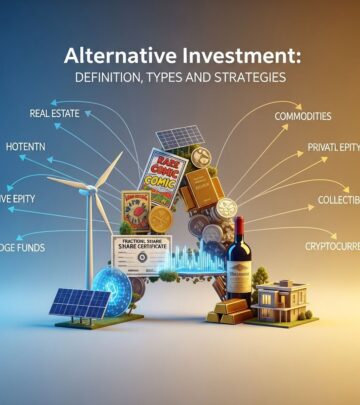
At their core, alternative investments encompass any financial assets outside the realm of traditional securities. They include private equity stakes, real property holdings, commodity contracts, and more exotic options like digital currencies or fine art. Unlike publicly traded instruments, these assets frequently exhibit illiquidity, meaning they cannot be sold quickly without potential price concessions. This characteristic demands a longer-term commitment but can reward patient investors with superior yields.
Investors turn to alternatives for diversification benefits. Traditional portfolios heavily reliant on equities and fixed income face synchronized risks during market downturns. Alternatives, by contrast, respond to distinct economic drivers, such as commodity supply chains or real estate rental demand, providing a buffer against volatility.
Core Categories of Alternative Investments
The landscape of alternatives is vast, but several prominent categories dominate modern portfolios. Each offers distinct risk-reward profiles suited to different investor tolerances.
Private Equity and Venture Capital
Private equity involves acquiring stakes in non-public companies, often with the aim of operational improvements and eventual profitable exits via sales or IPOs. Subsets include leveraged buyouts of mature firms and growth capital infusions for scaling businesses. Venture capital, a high-risk variant, targets nascent startups in sectors like technology and biotech, chasing exponential growth potential.
- Leveraged buyouts: Acquiring established companies using debt financing.
- Growth equity: Funding expansion for profitable private firms.
- Venture investments: Backing innovative early-stage ventures.
These investments typically lock capital for 7-10 years, with returns realized through multiple expansion or strategic sales.
Hedge Funds
Hedge funds employ sophisticated strategies to generate returns irrespective of market direction. Managers leverage derivatives, short positions, and arbitrage opportunities. Common approaches include long-short equity, where funds bet on overvalued and undervalued stocks simultaneously, or global macro plays tied to economic cycles.
Unlike mutual funds, hedge funds face fewer regulatory constraints, enabling aggressive tactics but also amplifying risks.
Real Estate and Infrastructure
Real estate remains a cornerstone alternative, offering rental income and property value growth. Investors can access residential complexes, commercial offices, or logistics warehouses. Infrastructure assets, such as toll roads, renewable energy facilities, and utilities, deliver stable cash flows backed by long-term contracts and public necessity.
| Asset Type | Key Benefits | Risks |
|---|---|---|
| Real Estate | Income generation, inflation hedge | Market cycles, maintenance costs |
| Infrastructure | Predictable yields, essential services | Regulatory changes, high upfront capital |
Commodities and Precious Metals
Commodities like oil, agricultural products, and metals serve as portfolio diversifiers. Gold and silver act as safe havens during uncertainty, while energy and grains respond to global supply dynamics. These assets hedge against inflation as prices rise with living costs.
Private Credit and Debt Instruments
Private credit fills gaps left by banks, providing loans to mid-market firms. Yields exceed public bonds due to illiquidity premiums and credit risk. Strategies include direct lending and distressed debt turnarounds.
Emerging Frontiers: Digital Assets and Collectibles
Digital assets, powered by blockchain, include cryptocurrencies like Bitcoin and tokenized real-world assets. High volatility defines this space, but institutional adoption grows. Collectibles—art, vintage cars, rare wines—appeal to connoisseurs, deriving value from scarcity and cultural trends.
Benefits of Incorporating Alternatives
Alternatives shine in diversification. Their low correlation to stocks and bonds smooths portfolio volatility. For instance, real assets like timberland perform well amid inflation, countering equity declines. Many generate income streams, from hedge fund distributions to real estate rents, bolstering total returns.
Institutional investors allocate 20-30% to alternatives for alpha generation—excess returns above benchmarks. Retail access expands via ETFs, interval funds, and platforms lowering entry barriers.
Risks and Challenges
Illiquidity poses the primary hurdle; capital may remain committed for years. Valuation opacity complicates pricing, relying on appraisals rather than market quotes. Fees run higher—2% management plus 20% performance—eroding net gains. Regulatory scrutiny and counterparty risks add layers of complexity.
- Illiquidity: Limited exit options during needs.
- Valuation uncertainty: Subjective appraisals inflate or deflate values.
- High minimums: Often $100K+ for direct access.
Strategies for Gaining Exposure
Investors classify alternatives by liquidity: liquid (publicly traded commodity ETFs), semi-liquid (hedge funds with quarterly redemptions), and illiquid (direct private equity). Beginners start with liquid vehicles like REITs for real estate or futures for commodities. Accredited investors pursue funds via platforms like FundCount.
Portfolio allocation depends on goals: conservative tilts favor infrastructure; aggressive ones embrace venture capital. Rebalancing annually maintains targets.
Trends Shaping 2026 and Beyond
Morgan Stanley highlights private credit growth amid bank retrenchment and infrastructure booms from energy transitions. Digital assets mature with regulatory clarity, while sustainable alternatives like green timberland gain traction. Fidelity notes rising retail interest in liquid alts for 401(k)s.
Who Should Consider Alternatives?
Suitable for high-net-worth individuals with 5-10+ year horizons and risk tolerance. Younger investors benefit from illiquidity premiums over time. Always consult advisors; alternatives suit satellites in core-satellite portfolios, comprising 10-20%.
FAQs
What are the most accessible alternative investments for beginners?
REITs, commodity ETFs, and Bitcoin ETFs provide liquid entry points without direct ownership complexities.
Do alternative investments outperform stocks long-term?
They complement rather than replace; historical data shows enhanced risk-adjusted returns in diversified mixes.
Are alternatives safe from market crashes?
No, but lower correlations mitigate impacts; e.g., gold rose during 2008.
How much should I allocate to alternatives?
5-15% for most, scaling with experience and liquidity needs.
Can retail investors access private equity?
Yes, via evergreen funds, crowdfunding, or interval funds lowering barriers.
Conclusion
Alternative investments offer compelling avenues for sophisticated portfolio construction. By understanding categories, benefits, and pitfalls, investors position themselves for resilient growth in uncertain markets.
References
- 10 Types of Alternative Investment in Modern Portfolios — Straits Financial. 2023. https://www.straitsfinancial.com/insights/types-of-alternative-investment
- Examples of Alternative Investments and How They Work — FundCount. 2024-01-15. https://fundcount.com/alternative-investment-examples/
- Alternative Investments | Asset Class Types + Examples — Wall Street Prep. 2025. https://www.wallstreetprep.com/knowledge/alternative-investments/
- Alternative Investments: Types, Benefits, Risks — NerdWallet. 2025-02-20. https://www.nerdwallet.com/investing/learn/alternative-investments
- 7 Types of Alternative Investments Everyone Should Know — Harvard Business School Online. 2024. https://online.hbs.edu/blog/post/types-of-alternative-investments
- Alternative Investing: 6 Key Themes Shaping 2026 — Morgan Stanley. 2025-12-01. https://www.morganstanley.com/articles/alternative-investments-key-themes
- Alternative Investments for Individual Investors — Fidelity Investments. 2025. https://www.fidelity.com/go/alternative-investments/overview
- Know your Alternatives — J.P. Morgan Asset Management. 2024-06-10. https://am.jpmorgan.com/content/dam/jpm-am-aem/americas/us/en/insights/portfolio-insights/know-your-alternatives.pdf
Similar Articles








Read full bio of Sneha Tete