Alternative Investments: 5 Key Types, Risks, And Uses
Discover the world of alternative investments beyond stocks and bonds for portfolio diversification and growth potential.

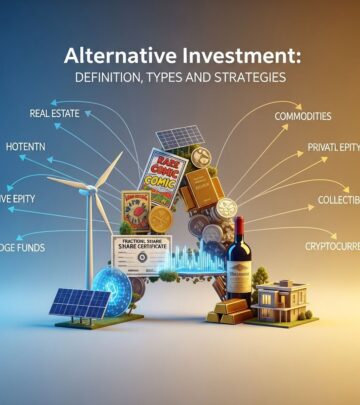
Alternative investments represent asset classes outside conventional stocks, bonds, and cash equivalents, offering unique opportunities for diversification and potentially superior returns. These assets, which include real estate, private equity, hedge funds, and emerging options like cryptocurrencies, often exhibit low correlation with traditional markets, making them valuable for risk management in portfolios.
Defining Alternative Investments
At their core, alternative investments diverge from mainstream securities by involving non-publicly traded assets or specialized strategies. They are typically less regulated by bodies like the U.S. Securities and Exchange Commission (SEC), leading to higher entry barriers such as minimum investment thresholds and accreditation requirements. Common traits include illiquidity—meaning assets cannot be quickly converted to cash—and the potential for outsized returns balanced against elevated risks.
Investors turn to alternatives to hedge against inflation, access private market growth, or employ advanced tactics like leverage and short-selling. For instance, infrastructure projects or commodities can provide steady income streams uncorrelated with equity volatility.
Key Categories of Alternative Investments
Alternative investments span a broad spectrum. Below is an overview of prominent types, each with distinct characteristics and appeal.
Real Estate and Tangible Assets
Real estate remains a cornerstone of alternatives due to its tangible nature and income-generating potential. Investors can pursue direct property ownership for rental yields or opt for Real Estate Investment Trusts (REITs), which pool funds to invest in commercial and residential holdings without requiring personal management.
Other tangible assets, such as precious metals like gold and silver, serve as inflation hedges. Commodities, including oil, agricultural products, and metals, offer exposure to global supply-demand dynamics.
Private Equity and Venture Capital
Private equity involves injecting capital into non-public companies to fuel growth, restructuring, or buyouts, aiming for profitable exits via sales or public offerings. Venture capital, a subset, targets startups with explosive growth prospects, though success rates are low.
These investments demand patience, often locking capital for 7-10 years, but can yield returns far exceeding public markets for successful ventures.
Hedge Funds and Managed Strategies
Hedge funds aggregate investor capital to deploy sophisticated tactics across assets like derivatives, currencies, and equities. Strategies range from long-short positions to market-neutral approaches, seeking absolute returns regardless of broader market direction.
Unlike mutual funds, hedge funds face lighter regulation, enabling flexibility but also higher fees and exclusivity for accredited investors.
Private Debt and Structured Products
Private debt provides loans to companies or projects outside public bond markets, offering higher yields than traditional fixed income. Structured products combine bonds with derivatives, such as credit default swaps, to tailor risk-return profiles.
Collectibles and Digital Assets
Collectibles like art, wine, and rare coins derive value from scarcity and cultural demand. Cryptocurrencies, powered by blockchain, introduce digital scarcity and decentralization, though extreme volatility defines this space.
Crowdfunding platforms further democratize access, allowing smaller investors to fund ventures collectively.
Advantages of Incorporating Alternatives
- Diversification: Low correlation with stocks and bonds smooths portfolio volatility.
- Return Potential: Private equity and venture capital have historically outperformed public equities over long horizons.
- Inflation Protection: Real assets like property and commodities retain purchasing power.
- Access to Innovation: Exposure to private markets and emerging tech unavailable in public forums.
Risks and Challenges
While promising, alternatives carry significant drawbacks. Illiquidity tops the list, with redemption windows potentially spanning years. Valuation opacity complicates pricing, especially for illiquid holdings.
High fees—often 2% management plus 20% performance—erode returns. Regulatory hurdles and complexity demand expertise, raising the risk of losses from poor due diligence.
| Investment Type | Liquidity | Risk Level | Typical Horizon | Min. Investment |
|---|---|---|---|---|
| Real Estate (Direct) | Low | Medium | 5-10 years | High |
| Private Equity | Very Low | High | 7-10 years | Very High |
| Hedge Funds | Medium | High | 1-5 years | High |
| Cryptocurrencies | High | Very High | Short-term | Low |
| Collectibles | Low | Medium-High | Variable | Medium |
This table summarizes comparative traits based on industry norms.
Who Should Consider Alternatives?
Suitable for high-net-worth individuals, institutions, or those with long-term horizons and risk tolerance. Accreditation often requires $1M+ net worth or $200K+ annual income. Emerging vehicles like interval funds and business development companies (BDCs) lower barriers, offering periodic liquidity.
Strategies for Portfolio Integration
Limit alternatives to 5-20% of assets, depending on risk profile. Start with liquid options like REITs or commodity ETFs before venturing into private markets. Conduct thorough due diligence, diversify across types, and align with financial goals.
Technology platforms streamline access, enabling advisors to vet opportunities efficiently.
Future Trends in Alternatives
Democratization via evergreen structures and digital platforms will broaden participation. Digital assets and sustainable infrastructure gain traction amid economic shifts.
Frequently Asked Questions
What is the most accessible alternative investment?
REITs and commodity ETFs provide entry without high minimums or illiquidity issues.
Are alternative investments suitable for beginners?
Generally no; they require experience due to complexity and risks. Consult professionals.
How do alternatives perform in downturns?
Many, like hedge funds and real estate, can outperform traditional assets via low correlation.
What fees should I expect?
Typically 1-2% management and 20% performance fees, higher than mutual funds.
Can retail investors participate?
Yes, increasingly through funds, ETFs, and crowdfunding, though limits apply.
References
- What Are Alternative Investments? Types, Pros & Cons — IMD. 2023. https://www.imd.org/blog/management/alternative-investments/
- 7 Types of Alternative Investments Everyone Should Know — Harvard Business School Online. 2023. https://online.hbs.edu/blog/post/types-of-alternative-investments
- Alternative Funds & Strategies — Russell Investments. 2024. https://russellinvestments.com/de/solutions/institutions/funds-and-strategies/alternative-investment-funds
- What Is an Alternative Investment? – CAIA Level I — CAIA Association. 2023. https://caia.org/sites/default/files/caia_level_i_4th_edition_chapter_1_new.pdf
- Alternative and Emerging Products — FINRA. 2025. https://www.finra.org/investors/investing/investment-products/alternative-and-emerging-products
Similar Articles








Read full bio of Sneha Tete