Alternative Housing: Cheap Places to Live
Discover affordable housing alternatives like tiny homes, RVs, and yurts that slash costs and offer flexible living in 2026.
In today’s skyrocketing housing market, traditional homes and apartments often come with prohibitive costs—average rents exceeding $1,800 monthly in many U.S. cities and median home prices hovering around $400,000. For those priced out, alternative housing provides viable paths to affordable, flexible living. These options, from mobile RVs to durable shipping container homes, can reduce upfront costs by tens of thousands and ongoing expenses like utilities and taxes by 50-70%. This guide covers proven alternatives, their costs, benefits, challenges, and key considerations like zoning laws.
Why Consider Alternative Housing?
With rent increases outpacing wages—up 30% since 2020 in some areas—many seek creative solutions. Alternative housing emphasizes minimalism, mobility, and self-sufficiency, appealing to remote workers, retirees, families, and adventurers. Benefits include lower mortgages or rent-free ownership, reduced utility bills (often under $100/month), minimal maintenance, and environmental sustainability. However, success requires research into local regulations, land access, and lifestyle fit.
1. Tiny Homes: Compact and Cost-Effective
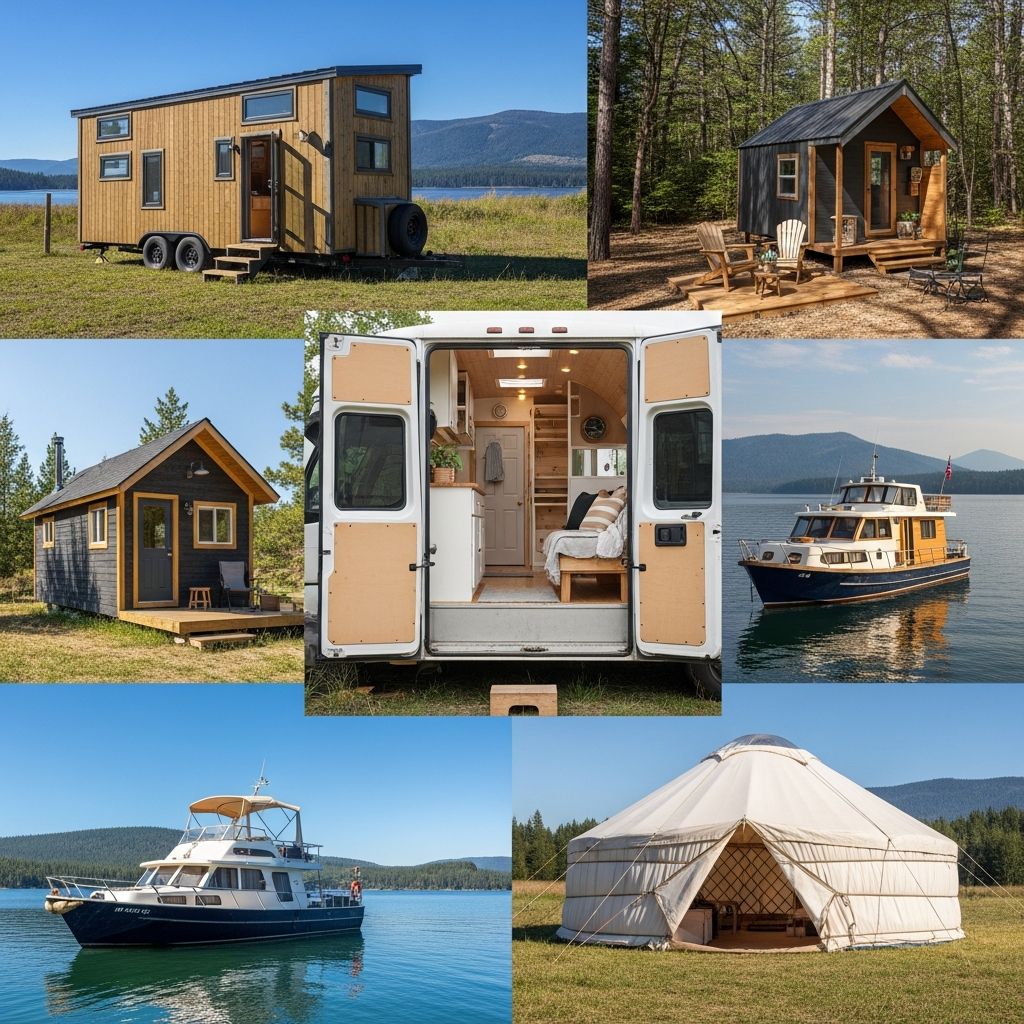
Tiny homes, typically 100-400 square feet, epitomize minimalist living. Built on wheels for mobility or foundations for permanence, they cost $20,000-$80,000, far below traditional homes. Ongoing savings stem from efficient insulation slashing energy use by 50% and tiny property taxes.
- Pros: Customizable designs, eco-friendly materials, easy to relocate.
- Cons: Limited space demands decluttering; zoning restrictions in urban areas.
- Cost Breakdown: Basic model: $25,000; High-end with solar: $60,000. Lot rent: $300-$800/month if not on owned land.
Ideal for singles or couples; many incorporate lofts, multi-use furniture, and off-grid features like composting toilets.
2. Houseboats: Waterfront Living on a Budget
Houseboats offer serene water-based living, moored at marinas or docks. Prices range $30,000-$150,000 for used vessels, with slip fees $400-$1,200 monthly. They provide unique freedom—move to new waters seasonally—while utilities like shared water/sewer keep costs low.
- Pros: Scenic views, community at marinas, potential for fishing/self-sufficiency.
- Cons: Maintenance for hull/engines, weather vulnerabilities, limited space.
Check marina regulations and insurance; popular in Florida, California.
3. RV Living: Mobility Meets Affordability
RVs enable a nomadic lifestyle with homes on wheels costing $20,000-$100,000+. Park at campgrounds ($500-$1,200/month) or boondock on public lands for free. No mortgage means chasing lower-cost areas, perfect for remote workers.
| RV Type | Cost Range | Space | Best For |
|---|---|---|---|
| Class A (Luxury) | $80k-$200k | 300-400 sq ft | Families |
| Class C | $50k-$100k | 200-300 sq ft | Couples |
| Van Conversion | $20k-$60k | 50-100 sq ft | Solo travelers |
Gas costs add up for frequent moves, but apps like Harvest Hosts offer free overnight stays.
4. Shipping Container Homes: Durable and Budget-Friendly
Repurposed steel containers ($20,000-$50,000 built) offer industrial chic and quick construction (weeks vs. months). Stackable for multi-level designs, they’re hurricane-resistant and off-grid ready with solar panels.
- Key Steps: Secure land, obtain permits, hire certified builders for insulation/HVAC.
- Pros: Low material costs, longevity (30+ years), customizable.
- Cons: Local bans common; rust prevention needed.
Verify zoning—many rural counties allow them.
5. Treehouses: Elevated Adventure Housing
Treehouses blend whimsy with seclusion, costing $30,000-$120,000. Elevated platforms suit wooded lots, providing natural insulation and views. Modern builds use steel frames for safety.
- Pros: Unique appeal, cooler summers, pest-resistant.
- Cons: Tree health maintenance, access challenges (stairs/ziplines), weather exposure.
Best for vacation homes or eco-retreats; engineering certification required.
6. Yurts: Minimalist Living With Low Overhead
Originating from Central Asian nomads, yurts are sturdy canvas/wood circles (200-700 sq ft) costing $10,000-$30,000. Quick assembly (days) and portable, they handle harsh weather with proper platforms.
- Pros: Low cost, aesthetic appeal, energy-efficient round design.
- Cons: Need solid foundation, condensation issues in humid areas.
Permits often classify as tents; ideal off-grid with wood stoves.
7. Barndominiums: A Rustic and Spacious Option
Barndominiums (‘barn’ + ‘condominium’) are metal-framed hybrids ($130,000-$320,000) with vast open plans, workshops, and lofts. Steel construction cuts build time 50%.
- Pros: Durable (fire/termite-proof), customizable shops/RVs garages.
- Cons: Higher upfront cost, aesthetic not for all.
FHA loans available; check snow/wind loads.
8. Coliving: Share the Costs, Share the Space
Coliving spaces house unrelated adults in shared homes with private bedrooms ($800-$2,000/month). Common areas foster community, slashing per-person costs vs. solo apartments.
- Pros: Amenities (pools, coworking), vetted roommates, urban locations.
- Cons: Less privacy, potential conflicts.
Platforms like Common or Ollie manage; great for young professionals.
Additional Tips for Success
Always research zoning via county offices—e.g., tiny homes banned in some suburbs but welcomed rurally. Budget for insurance ($500-$2,000/year), utilities, and transport. Off-grid setups save via solar ($10k install) and rainwater systems. Financing: Personal loans, RV loans, or owner-builder construction loans.
Frequently Asked Questions (FAQs)
What’s the most affordable alternative housing option?
Tiny homes and yurts often cost under $30,000 upfront, but factor in land and location for true value.
Can I finance alternative homes?
Barndominiums may qualify for FHA loans; others often need personal loans or cash.
Are these options legal everywhere?
No—zoning varies widely. Check local codes before building.
Is full-time RV living realistic?
Yes, with maintenance plans, mail services, and small-space comfort.
How much can I save?
Many cut costs 50-70% via lower bills, taxes, and no mortgage.
References
- Alternative Housing Options That Can Save You Money in 2025 — The Penny Hoarder. 2025. https://www.thepennyhoarder.com/save-money/alternative-housing/
- What to Do When You Can’t Find Affordable Housing — The Penny Hoarder. 2024. https://www.thepennyhoarder.com/save-money/find-affordable-housing/
- HUD-VASH Program Overview — U.S. Department of Housing and Urban Development. 2025-10-01. https://www.hud.gov/program_offices/housing/vash
- Zoning Laws for Tiny Homes — American Planning Association. 2024-06-15. https://www.planning.org/publications/report/1234567
- RV Industry Cost Data — RV Industry Association. 2025-01-01. https://www.rvia.org/news-insights/rv-cost-report-2025
Similar Articles








Read full bio of medha deb