Altcoins: Alternative Cryptocurrencies Beyond Bitcoin
Explore altcoins: innovative alternatives to Bitcoin with unique features and market opportunities.
What Are Altcoins?
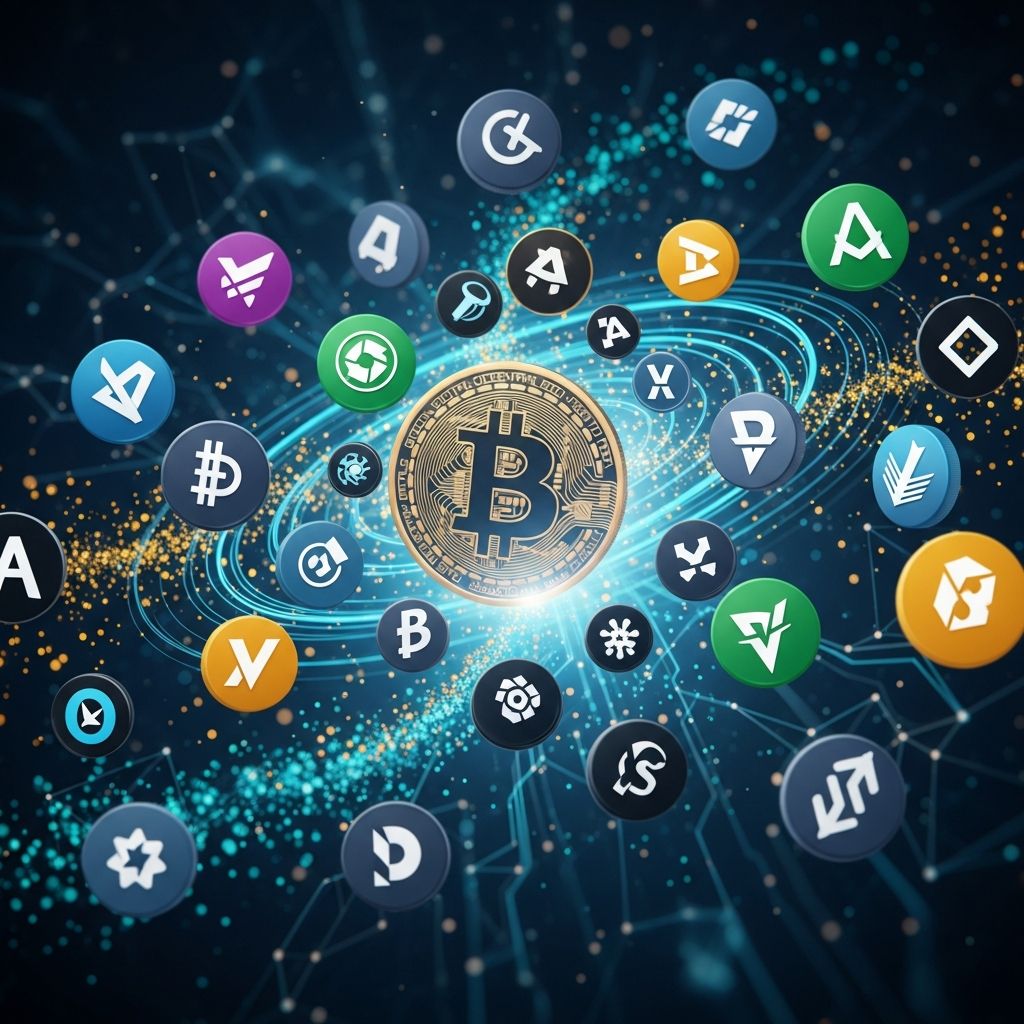
Altcoins are shorthand for “alternative coins” and represent any cryptocurrency or digital currency that exists outside of Bitcoin. Since Bitcoin’s introduction in 2009, thousands of alternative cryptocurrencies have emerged, each designed with different features, purposes, and technological innovations. As of early 2020, there were more than 5,000 cryptocurrencies in existence, with new projects launching regularly in response to market demands and technological advancements.
The term “altcoin” itself reflects Bitcoin’s pioneering role in the cryptocurrency space. Paul Vigna of The Wall Street Journal described altcoins in 2020 as “alternative versions of Bitcoin,” given Bitcoin’s position as the model protocol for cryptocurrency designers. However, a broader definition encompasses not only alternative versions of Bitcoin but every cryptocurrency other than Bitcoin itself, including entirely unique blockchain networks with distinct purposes and functionalities.
Understanding Cryptocurrency Fundamentals
Before exploring altcoins specifically, it’s essential to understand the underlying technology and principles that define all cryptocurrencies. Cryptocurrencies are digital currencies designed to work through a computer network that does not rely on any central authority, such as a government or bank, to uphold or maintain them. This decentralized nature represents a fundamental departure from traditional financial systems and provides users with greater control over their assets.
Blockchain Technology
The validity of each cryptocurrency’s coins is provided by a blockchain, which serves as the foundational technology enabling all cryptocurrencies. A blockchain is a continuously growing list of records called blocks, which are linked and secured using cryptography. Each block typically contains a hash pointer linking to a previous block, a timestamp, and transaction data. By design, blockchains are inherently resistant to modification of data.
A blockchain functions as “an open, distributed ledger that can record transactions between two parties efficiently and in a verifiable and permanent way.” For use as a distributed ledger, a blockchain is typically managed by a peer-to-peer network collectively adhering to a protocol for validating new blocks. Once recorded, data in any given block cannot be altered retroactively without altering all subsequent blocks, which requires collusion of the network majority. This immutability is one of blockchain’s most powerful security features.
Consensus Mechanisms
Individual coin ownership records are stored in a digital ledger or blockchain, which uses a consensus mechanism to secure transaction records, control the creation of additional coins, and verify the transfer of coin ownership. The two most common consensus mechanisms are proof of work and proof of stake. Proof of work requires computational effort to validate transactions, while proof of stake relies on validators who hold cryptocurrency to secure the network.
Network Nodes
A node is a computer that connects to a cryptocurrency network and supports the network through either relaying transactions, validating blocks, or hosting a copy of the blockchain. Each network computer has a copy of the blockchain of the cryptocurrency it supports. When a transaction occurs, the node creating the transaction broadcasts details using encryption to other nodes throughout the network, ensuring transparency and security across the entire system.
Key Differences Between Altcoins and Bitcoin
While altcoins share fundamental blockchain technology with Bitcoin, they often feature significant technical and functional differences. These distinctions define their unique value propositions and use cases within the broader cryptocurrency ecosystem.
Transaction Speed and Processing
One prominent difference is transaction speed. Litecoin, for example, aims to process a block every 2.5 minutes, rather than Bitcoin’s 10 minutes, which allows Litecoin to confirm transactions faster than Bitcoin. This faster transaction confirmation time makes Litecoin more suitable for everyday payments and commerce.
Smart Contracts and Decentralized Applications
Another example is Ethereum, which introduced smart contract functionality that allows decentralized applications to be run on its blockchain. Smart contracts are self-executing agreements with terms written into code, enabling complex operations beyond simple transactions. Ethereum was the most used blockchain in 2020, according to Bloomberg News, demonstrating the market demand for such functionality. In 2016, Ethereum had the largest “following” of any altcoin, according to the New York Times.
Comparison Table: Bitcoin vs. Major Altcoins
| Feature | Bitcoin | Litecoin | Ethereum |
|---|---|---|---|
| Block Time | ~10 minutes | ~2.5 minutes | ~12 seconds |
| Primary Purpose | Digital currency | Fast payments | Smart contracts & dApps |
| Supply Cap | 21 million | 84 million | Unlimited |
| Consensus | Proof of Work | Proof of Work | Proof of Stake |
Types of Altcoins
The altcoin ecosystem includes diverse categories of cryptocurrencies, each serving different purposes and addressing specific market needs.
Payment-Focused Altcoins
These altcoins prioritize transaction speed and efficiency for everyday payments. They typically feature faster block times and lower transaction fees than Bitcoin, making them more practical for commerce and retail transactions.
Platform Coins
Platform-based altcoins like Ethereum provide infrastructure for building decentralized applications and executing smart contracts. These platforms enable developers to create new applications on top of existing blockchains without building their own networks from scratch.
Utility Tokens
Utility tokens are created within altcoin ecosystems to provide specific functions within their respective networks. They may be used to access services, pay transaction fees, or participate in network governance.
Stablecoins
Stablecoins represent a category of cryptocurrency designed to maintain stable value by being pegged to external assets like fiat currency or commodities. While most cryptocurrencies experience significant price volatility, stablecoins aim to bridge the gap between traditional finance and the crypto market, though they may rely upon government action or legislation to uphold stable value.
Cryptocurrency Wallets and Storage
A cryptocurrency wallet is a means of storing the public and private “keys” (address) or seed, which can be used to receive or spend cryptocurrency. The private key enables the holder to write in the public ledger, effectively spending the associated cryptocurrency. The public key allows others to send currency to the wallet. Secure wallet management is essential for protecting cryptocurrency holdings from unauthorized access and theft.
Market Dynamics and “Altseason”
The altcoin market exhibits unique dynamics and patterns distinct from Bitcoin’s market behavior. Significant market price rallies across multiple altcoin markets are often referred to as an “altseason,” a period when alternative cryptocurrencies experience substantial price increases and heightened investor interest. These events typically occur when market sentiment shifts favorably toward altcoins and when capital flows from Bitcoin into alternative projects.
Initial Coin Offerings and Project Funding
Many altcoin projects launch through Initial Coin Offerings (ICOs), which represent a fundraising mechanism unique to the cryptocurrency space. In an ICO campaign, a percentage of the cryptocurrency (usually in the form of “tokens”) is sold to early backers of the project in exchange for legal tender or other cryptocurrencies, often Bitcoin or Ether. This approach allows projects to raise capital without traditional venture funding while giving early supporters potential upside if the project succeeds.
Regulatory Considerations
The regulatory landscape for altcoins continues to evolve globally. Cryptocurrencies are not considered currencies in the traditional sense, and varying legal treatments have been applied to them in various jurisdictions, including classification as commodities, securities, and currencies. Cryptocurrencies are generally viewed as a distinct asset class in practice.
European Union Regulations
The European Union defines crypto assets as “a digital representation of a value or of a right that is able to be transferred and stored electronically using distributed ledger technology or similar technology.” The EU regulation Markets in Crypto-Assets (MiCA) covering asset-referenced tokens (ARTs) and electronic money tokens (EMTs), also known as stablecoins, came into force on June 30, 2024. This comprehensive regulatory framework establishes standards for cryptocurrency projects operating within EU jurisdictions.
Investing in Altcoins
Altcoin investment presents both opportunities and risks distinct from Bitcoin investment. While altcoins may offer higher growth potential through innovation and market adoption, they also carry greater volatility and speculative risk. Investors should conduct thorough research into project fundamentals, development teams, technology, and market positioning before making investment decisions. Understanding an altcoin’s unique value proposition and competitive advantages within its category is essential for informed decision-making.
Frequently Asked Questions
Q: What is the difference between Bitcoin and altcoins?
A: Bitcoin is the first and largest cryptocurrency by market capitalization, designed primarily as a digital currency. Altcoins are all other cryptocurrencies and may serve different purposes, such as enabling smart contracts (Ethereum), providing faster payments (Litecoin), or maintaining price stability (stablecoins).
Q: How many altcoins exist?
A: As of early 2020, there were more than 5,000 cryptocurrencies in existence. The number continues to grow as new projects launch regularly, though many altcoins fail to gain significant adoption or market value.
Q: What is an altseason?
A: Altseason refers to periods of significant market price rallies across multiple altcoin markets. During altseason, alternative cryptocurrencies experience heightened investor interest and price appreciation, often accompanied by substantial capital inflows into the altcoin sector.
Q: Are altcoins regulated?
A: Regulatory treatment of altcoins varies by jurisdiction. They may be classified as commodities, securities, or currencies depending on local laws and their specific characteristics. The European Union implemented comprehensive cryptocurrency regulation through MiCA in June 2024.
Q: What is a smart contract?
A: A smart contract is self-executing code on a blockchain that automatically executes terms when predetermined conditions are met. Ethereum popularized smart contracts, enabling decentralized applications to run on its blockchain.
Q: How do I store altcoins securely?
A: Altcoins are stored in cryptocurrency wallets using public and private keys. Hardware wallets offer enhanced security for long-term storage, while software wallets provide convenience for regular transactions. Never share your private key with anyone.
References
- Cryptocurrency — Wikipedia. Accessed 2025. https://en.wikipedia.org/wiki/Cryptocurrency
- Markets in Crypto-Assets Regulation (MiCA) — European Commission. 2024-06-30. https://finance.ec.europa.eu/crypto/mica_en
- Blockchain Technology and Its Applications — ISO/TC 307 Blockchain and Distributed Ledger Technologies. https://www.iso.org/committee/6266604.html
- Smart Contracts: The Blockchain Technology Behind Ethereum — Ethereum Foundation. https://ethereum.org/en/smart-contracts/
- Cryptocurrency Market Overview — CoinGecko. 2025. https://www.coingecko.com/
Similar Articles








Read full bio of medha deb