5 Powerful Money Lessons an Allowance Can Teach Kids
Use a simple weekly allowance to teach kids real-world lessons about work, negotiation, spending, saving, and long-term goals.
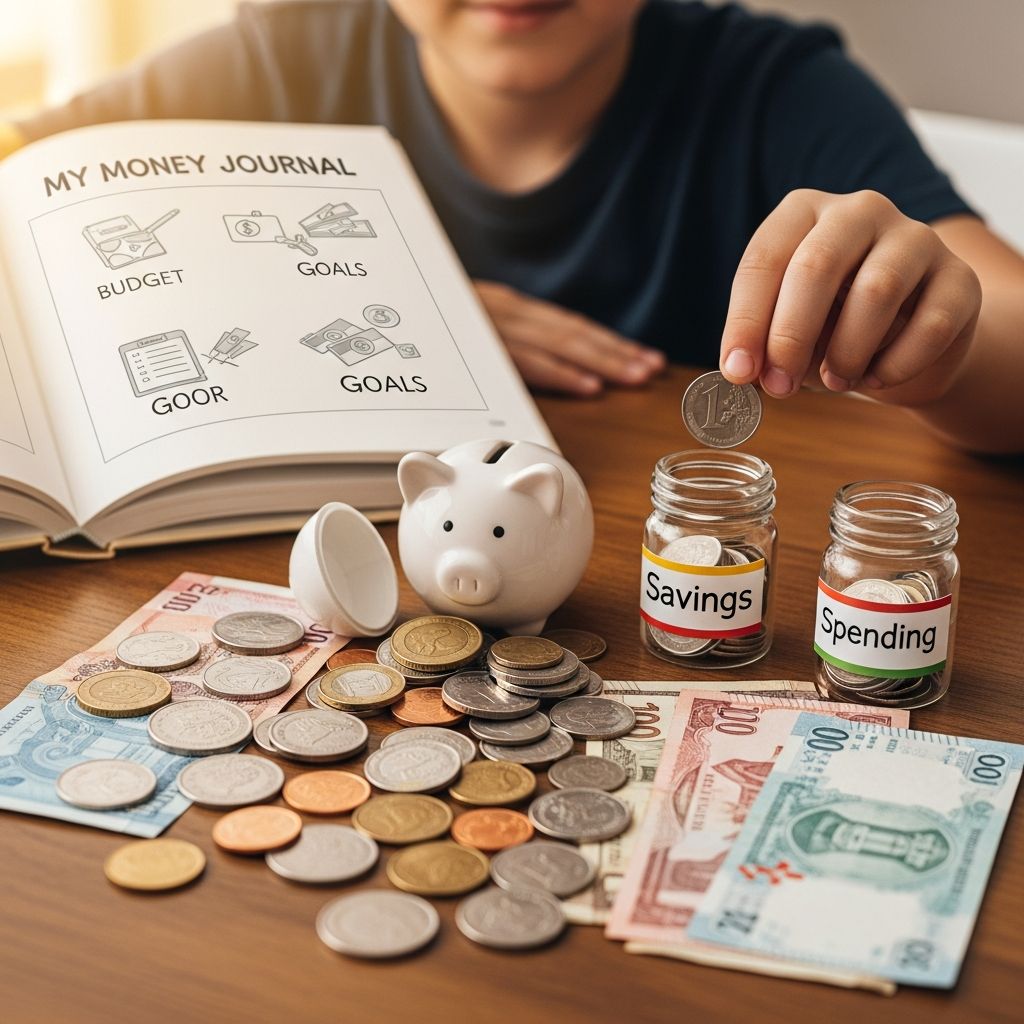
Deciding whether to give your child an allowance — and how to structure it — is a personal choice. But if you do choose to provide a regular allowance, you can turn it into a powerful, hands-on way to teach lifelong money skills rather than just handing over cash.
By being intentional about how your child earns, uses, and manages their allowance, you can help them build good habits around work, negotiation, spending, saving, and planning for the future.
This guide walks through five essential lessons an allowance can teach, plus practical tips, examples, and answers to common questions parents have.
Why Allowances Matter for Financial Education
Many experts emphasize that money habits start forming early in life, and that parents play a central role in children’s financial education. When kids manage a small, regular allowance, they can safely practice key skills such as budgeting, saving for goals, and making tradeoffs before facing higher-stakes decisions as adults.
Surveys suggest that a majority of parents use some form of allowance and often connect it to chores or responsibilities. Whether you tie allowance to work or not, the real value is in the conversations and lessons that surround it.
1. Teaching Kids the Value of Hard Work
One of the most common reasons parents give allowances is to help children connect money with effort. When kids see that income follows work, they are learning the foundation of a healthy work ethic.
Linking Allowance to Responsibilities
Many families choose to pay allowance when children complete agreed-upon tasks, such as household chores, school responsibilities, or behavior goals. The key is consistency and clarity about what must be done to earn the money.
- Household chores: vacuuming, washing dishes, taking out trash, feeding pets
- School-related tasks: finishing homework on time, reading for a set number of minutes, maintaining grades
- Personal responsibilities: keeping their room tidy, getting ready on time, helping younger siblings
Rather than viewing chores as optional in exchange for money, some parents use a hybrid approach: basic chores are expected as part of being in the family, while extra tasks can earn additional allowance.
Benefits of Connecting Work and Money
- Kids learn that money is earned, not guaranteed.
- They experience that effort has rewards, an idea that transfers to school and future jobs.
- They begin to understand time versus income tradeoffs — more work can mean more money.
| Approach | Pros | Potential Drawbacks |
|---|---|---|
| Fixed allowance (no chores) | Teaches budgeting with predictable income; easy to administer. | Might weaken the link between effort and money. |
| Earned allowance (tied to chores) | Builds work ethic; mirrors real-world pay-for-work dynamic. | Kids may resist unpaid basic responsibilities if everything is tied to money. |
| Hybrid allowance | Separates required family duties from optional paid tasks; balanced lessons. | Requires more communication and tracking from parents. |
2. Helping Kids Learn How to Negotiate
An allowance can also be a safe way for children to learn how to negotiate fairly — a skill they will use later when asking for raises, setting prices, or working in teams.
Using Allowance as a Negotiation Tool
Instead of unilaterally deciding the allowance amount, invite your child into a structured conversation about what they think is fair and why. This opens the door for them to practice advocating for themselves.
For example, you might ask:
- “How much do you think you should earn each week, and what would you be responsible for?”
- “If you want a raise, what additional chores or responsibilities are you willing to take on?”
- “How would you show that you are ready to handle more money?”
Negotiation requires children to think about their time, effort, and the value they bring — key concepts in labor and income that they will face as adults.
Guidelines for Fair, Educational Negotiations
- Set boundaries up front: share a realistic range for the allowance based on your budget.
- Encourage evidence: ask your child to explain why they deserve an increase (e.g., consistent chores, good grades).
- Connect raises to responsibility: more money is linked to new or higher expectations.
- Model respectful discussion: show how to disagree calmly and compromise.
By practicing negotiation at home, children can later approach job interviews and salary discussions with greater confidence and realism.
3. Teaching Kids to Make Smart Spending Decisions
Because parents usually pay for essential needs like housing, food, and healthcare, a child’s allowance is typically used for discretionary spending — wants rather than needs. This creates a perfect laboratory for learning how to evaluate purchases.
Letting Kids Experience Tradeoffs
When kids are responsible for paying for their own toys, games, or outings, they quickly learn that money is limited and choices matter. If they spend everything on a small impulse purchase, they may not have enough for a bigger item they want later.
Parents can guide this process by asking questions rather than giving orders:
- “If you buy this now, what will you have to give up later?”
- “Is this something you’ll still enjoy in a month?”
- “How many weeks of allowance does this cost?”
Practical Strategies to Teach Smart Spending
- Set categories for spending: agree on what the child is responsible for (e.g., small toys, in-game purchases, snacks with friends).
- Introduce simple budgets: have them decide how much of each allowance payment will go to spending versus saving.
- Use cash sometimes: physical money can help younger kids grasp value and counting.
- Review receipts together: occasionally go over what they bought that week and how they feel about those choices.
Mini Case Study: The Impulse Buy
Imagine your child gets $8 per week and wants a small toy for $10 and a larger building set that costs $30. If they spend immediately, they can get the $10 toy this week, but it will take four more weeks to save for the larger item. If they wait and save, they can get the $30 set in just under four weeks. This real-time tradeoff teaches delayed gratification and prioritization.
4. Showing the Importance of Saving
Allowance is one of the most effective ways to introduce the idea that you should pay yourself first — setting aside money for future goals before spending on today’s wants.
Creating a Simple Saving System
Many experts recommend automatically allocating a portion of each allowance payment to savings, even if the amount is small. For example, children might be asked to save 10–20% of their allowance every week.
- Saving jars or envelopes: one for spending, one for saving, and one for giving or donating.
- Dedicated savings account: once the saving jar reaches a certain amount, move it into a youth savings account.
- Visual progress charts: track how their savings balance grows over time.
Research shows that when children regularly save and talk about money at home, they are more likely to develop stronger financial literacy and positive financial behaviors later in life.
Helping Kids Open a Starter Savings Account
Many financial institutions offer savings accounts designed for children and teens, often with low minimum balances and no monthly fees. Opening such an account can make saving feel more “grown-up” and meaningful.
- Visit a local bank or credit union that offers youth accounts.
- Explain basic concepts like interest, deposits, and balances.
- Let your child help make deposits from their allowance.
Over time, watching their savings grow can reinforce patience, discipline, and the satisfaction of reaching longer-term financial goals.
5. Planning and Saving for the Future
Beyond short-term saving, allowance can help kids understand planning for bigger goals — such as a pricey toy, a bike, a school trip, or even early contributions to future education.
Setting Realistic Savings Goals
Goal-based saving helps children connect abstract numbers to concrete outcomes. Parents can walk through a simple plan whenever a child wants something that costs more than a week or two of allowance.
For example:
- Ask your child to choose a specific goal (e.g., a $60 game).
- Break down how many weeks of allowance it will take at their current saving rate.
- Discuss how saving a higher percentage of their allowance could shorten the timeline.
If a child receives $10 per week and saves $5, it will take 12 weeks to save $60. If they decide to save $7 per week, they can reach the goal in fewer than 9 weeks. Doing this simple math together makes planning tangible and empowering.
Introducing Longer-Term Thinking
Parents can also use allowance to introduce bigger-picture concepts, such as:
- Emergency savings: keeping a small buffer instead of spending everything.
- Future milestones: saving for teen goals like a first car, special trips, or education-related expenses.
- Opportunity cost: understanding that choosing one goal means postponing or forgoing another.
Over time, these experiences mirror the planning that adults do for retirement, education, and major purchases, helping kids build a mindset that looks beyond the next paycheck.
Practical Tips for Structuring an Effective Allowance
There is no single “right” way to set up an allowance, but some approaches tend to work well across many families.
Deciding How Much and How Often
- Start small and age-appropriate: younger children may get just a few dollars per week; amounts can increase with age and responsibility.
- Choose a predictable schedule: weekly for younger kids (easier to connect chores and pay), biweekly or monthly for older kids.
- Adjust as needs change: as children take on more of their own expenses, the allowance may need to adapt.
Setting Clear Rules and Expectations
- Write down what the allowance covers (for example, small toys, outings with friends, gifts for others).
- Clarify what must be completed to earn the full amount each period.
- Agree on how much must be saved versus how much can be freely spent.
- Decide in advance how you will handle missed chores or misbehavior (partial pay, no pay, or make-up tasks).
Using Tools and Technology
Parents can track chores and allowance using simple charts, spreadsheets, or dedicated apps. Some financial apps and digital tools are designed specifically to help families manage chores, allowances, and youth accounts, making it easier to reinforce consistent habits.
Frequently Asked Questions (FAQs)
Q: At what age should I start giving my child an allowance?
Many children can begin to understand basic money concepts around age 5 or 6, especially when using physical coins and bills. At this age, a small, simple allowance tied to very basic responsibilities and visual tools (like jars) can work well. Older children and teens can handle larger amounts, digital accounts, and more complex rules.
Q: Should allowance always be tied to chores?
Not necessarily. Some parents believe basic chores should be expected as part of family life and use allowance mainly to teach budgeting and saving. Others tie all or part of allowance to chores to reinforce the link between work and pay. A hybrid approach — with both unpaid family responsibilities and optional paid tasks — can balance both goals.
Q: How much allowance is appropriate?
There is no universal rule. Many families base the amount on the child’s age, maturity, local cost of living, and which expenses the allowance is expected to cover. The key is that the amount should be meaningful enough to let kids practice real decisions, but not so high that they never have to make tradeoffs.
Q: What if my child makes poor spending choices?
Occasional poor choices are part of the learning process. Instead of bailing them out or forbidding certain purchases, treat these moments as opportunities to reflect: ask how they feel about the purchase later and what they might do differently next time. Natural consequences — such as needing to wait longer for a bigger goal — can be powerful teachers.
Q: We can’t afford a large allowance. Are there alternatives?
An allowance doesn’t have to be large to be educational, and it doesn’t even have to be cash. You can teach money skills by letting kids earn small amounts for extra tasks, involving them in family budgeting conversations, or using non-monetary rewards (like choosing a family activity) while still discussing cost and value. Everyday tasks like grocery shopping also offer chances to compare prices and plan within a budget.
References
- How a kid’s allowance can teach money management skills — American Institute of CPAs (AICPA). 2019-04-09. https://www.aicpa-cima.com/news/article/how-a-kids-allowance-can-teach-money-management-skills
- Valuable Lessons an Allowance Can Teach Your Kids — MoneyRates. 2022-04-13. https://www.moneyrates.com/savings/5-lessons-an-allowance-can-teach.htm
- Here’s how I’m trying to teach my two young daughters about money — Bankrate. 2019-03-29. https://www.bankrate.com/credit-cards/news/financial-literacy-starts-at-home/
- 9 Ways Allowance Can Teach Your Kids About Financial Literacy — 3Rivers Federal Credit Union. 2020-06-15. https://www.3riversfcu.org/blog/post/10-ways-allowance-can-teach-your-kids-about-financial-literacy
- Allowance 101: Strategies to Encourage Smart Habits — MAPS Credit Union. 2023-05-10. https://www.mapscu.com/blogs/allowance-101-strategies-to-encourage-smart-habits/
- Teaching Kids About Money with Mobile Apps — MoneyRates. 2021-08-02. https://www.moneyrates.com/research-center/teaching-kids-about-money-with-mobile-apps.htm
Similar Articles








Read full bio of medha deb