All Dried Up: How to Dry Fruits and Vegetables
Master the art of dehydrating fruits and vegetables at home to create nutritious, long-lasting snacks and ingredients with simple techniques.
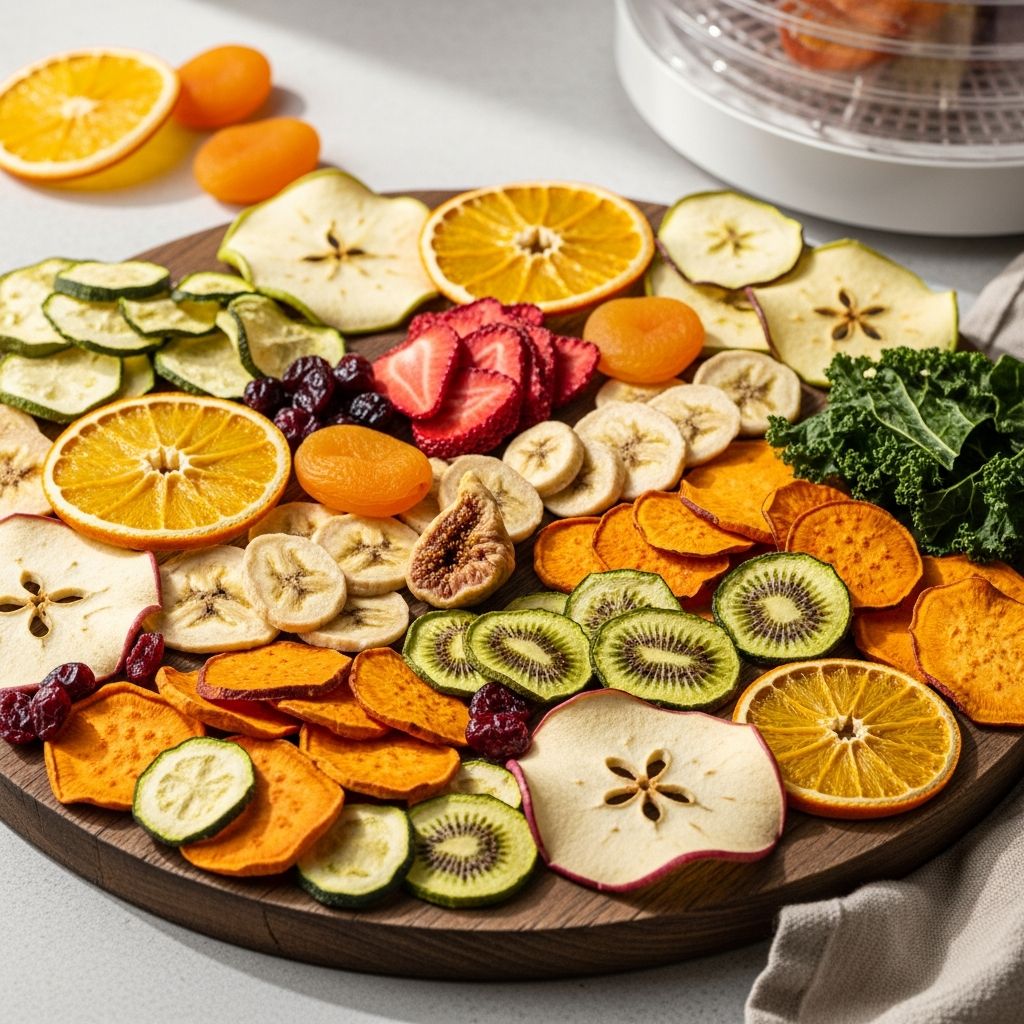
Drying fruits and vegetables is one of the oldest and most effective methods of food preservation, removing moisture to inhibit bacterial growth while retaining nutrients and flavor. This technique allows you to enjoy seasonal produce year-round in forms like chewy snacks, powders, or leathers.
Why Dry Fruits and Vegetables?
Dehydrated foods are lightweight, portable, and versatile for camping, backpacking, or everyday snacking. They retain up to 90% of vitamins when done properly, offer concentrated flavors, and have a shelf life of 6-12 months or longer when stored correctly. Unlike canning, drying requires minimal equipment and no constant heat monitoring.
Equipment You’ll Need
Essential tools include sharp knives for uniform slicing, cutting boards, dehydrators (electric models preferred for consistent results), or alternatives like ovens. Other items: blanching pots, ice baths, lemon juice for pretreatment, parchment paper for leathers, airtight jars or Mylar bags for storage, and oxygen absorbers.
- Dehydrator: Provides steady low heat (95-145°F) and air circulation for even drying.
- Oven: Set to lowest temperature (140°F) with door propped open for airflow.
- Sun/Solar Dryer: Ideal in hot, dry climates (>85°F, low humidity); cover to protect from insects.
General Preparation Steps
Start with fresh, ripe produce at peak ripeness for best flavor and color. Wash thoroughly to remove dirt and residues, then peel if desired. Slice uniformly (1/8 to 1/2 inch thick) to ensure even drying—thinner for fruits, thicker for watery veggies.
Pretreat to prevent browning and enzyme activity: Dip slices in lemon juice solution (1/4 cup lemon juice per quart water) for 10 minutes, or use ascorbic acid.
Blanching: When and How
Blanching kills enzymes, softens tissues for faster drying, and enhances rehydration. Not needed for onions, garlic, peppers, herbs, or most fruits.
- Vegetables: Steam or boil 1-10 minutes based on type, then ice bath. Use 1/4 tsp citric acid per quart water for most.
- Fruits: Optional syrup blanch (1 cup sugar, 1 cup corn syrup, 2 cups water; simmer 10 min) or steam.
Drain blanched items well and pat dry before tray placement.
Drying Methods
Arrange pieces in a single layer without overlapping. Rotate trays midway for uniformity. Test doneness: Fruits leathery/pliable, vegetables brittle (snap when bent), moisture content ~10-20%.
| Method | Temperature | Time Estimate | Pros/Cons |
|---|---|---|---|
| Dehydrator | 95-145°F | 4-12 hours | Consistent; energy-efficient / Upfront cost |
| Oven | 140°F (door ajar) | 6-18 hours | Accessible / Higher energy use |
| Sun Drying | 85°F+ sunny | 2-4 days | Free / Weather-dependent, contamination risk |
Drying Specific Fruits
Apples: Core, slice 1/4-inch, pretreat in lemon water. Dry at 135°F until pliable (6-12 hours). Leathery texture.
Bananas: Peel, slice 1/4-inch diagonally. Dip in lemon juice. Dry 130°F, 8-10 hours for chewy chips.
Berries (Strawberries, Blueberries): Halve strawberries; for blueberries, check skins by dipping in boiling water. Dry 135°F, 8-15 hours until leathery.
Citrus: Slice thin (1/8-inch), no pretreatment. Dry for crafts or snacks at 125°F, 12-24 hours.
Peaches/Pears: Halve, remove pits, slice. Syrup blanch optional. Dry 135°F, 6-10 hours.
Drying Specific Vegetables
Carrots: Peel, slice 1/8-inch or shred. Blanch 3 min steam. Dry 125°F, 6-10 hours until brittle.
Green Beans: String, slice if large. Blanch 3 min. Dry 125°F, 8-12 hours.
Herbs: Rinse, pat dry, no blanch. Dry 95°F, 1-4 hours until crumbly.
Mushrooms: Clean, slice. No blanch. Dry 110°F, 6-8 hours, leathery.
Tomatoes: Halve cherry or slice plum. Optional salt sprinkle. Dry 135°F, 8-12 hours for sundried style.
| Vegetable | Prep/Blanch | Dry Temp/Time | Doneness |
|---|---|---|---|
| Greens (Kale, Spinach) | Trim stems, steam 5 min | 125°F / 8-10 hrs | Crisp, brittle |
| Onions | Slice thin, no blanch | 125°F / 8 hrs | Brittle |
| Peppers | Seed, slice, no blanch | 125°F / 8-10 hrs | Brittle |
Fruit Leathers
Puree ripe fruit (e.g., berries, applesauce), strain seeds. Spread 1/8-inch thick on parchment-lined trays. Dry 140°F until no indentation (4-8 hours). Roll, store. Add honey or spices for flavor.
Conditioning and Pasteurizing
Conditioning equalizes moisture: Pack loosely in jars, shake daily for 7-10 days. Check for condensation; redry if needed. Pasteurize to kill insects: Freeze 48 hours at 0°F or oven 10 min at 175°F.
Storage Tips
Cool completely before packing. Use glass jars, vacuum bags, or Mylar with oxygen absorbers. Store in cool (50-70°F), dark place. Label with date; use within 6-12 months. Vacuum sealing extends life to years.
- Airtight containers prevent rehydration.
- Check periodically for moisture or off-odors.
- Powder dried items in blender for soups.
Rehydrating Dried Produce
Add warm water (1:1 ratio for fruits, 2:1 for veggies), soak 1-2 hours. Use in recipes without full rehydration for intensified flavor.
Troubleshooting Common Issues
- Browning: Pretreat properly.
- Case Hardening: Lower temp, increase air flow.
- Mold: Insufficient drying; redry immediately.
- Off Flavors: Use fresh produce, clean equipment.
Frequently Asked Questions (FAQs)
Q: Is blanching necessary for all vegetables?
A: No, onions, garlic, peppers, and herbs skip blanching, but most others benefit from it to destroy enzymes and speed drying.
Q: Can I dry in a regular oven?
A: Yes, set to 140°F with prop-open door for ventilation; monitor closely as temps vary.
Q: How long do home-dried foods last?
A: 6-12 months in cool, dark storage; longer with vacuum sealing and oxygen absorbers.
Q: What’s the best fruit for beginners?
A: Apples or bananas—easy prep, quick drying, great taste.
Q: Are dehydrated foods nutritious?
A: Yes, they retain most vitamins A and C if dried quickly at low temps.
References
- Food Dehydration 101: Drying Fruits and Vegetables — The Seasonal Homestead. 2023. https://www.theseasonalhomestead.com/food-dehydration-101-drying-fruits-and-vegetables/
- Let’s Preserve: Drying Fruits and Vegetables (Dehydration) — Penn State Extension. 2024-01-15. https://extension.psu.edu/lets-preserve-drying-fruits-and-vegetables-dehydration
- Drying Fruits and Vegetables — National Center for Home Food Preservation, University of Georgia. 2022. https://nchfp.uga.edu/papers/UGA_Publications/uga_dry_fruit.pdf
- Drying Fruits and Vegetables — Ohio State University Extension. 2023-05-22. https://ohioline.osu.edu/factsheet/HYG-5347
- Conditioning or Curing of Dried Fruits and Vegetables — Utah State University Extension. 2024. https://extension.usu.edu/preserve-the-harvest/research/drying-conditioning-curing-fruits-vegetables
Similar Articles








Read full bio of medha deb