Alexandria Ocasio-Cortez: From Bartender to Politician
Discover how AOC rose from bartender to Congress, reshaping modern politics.
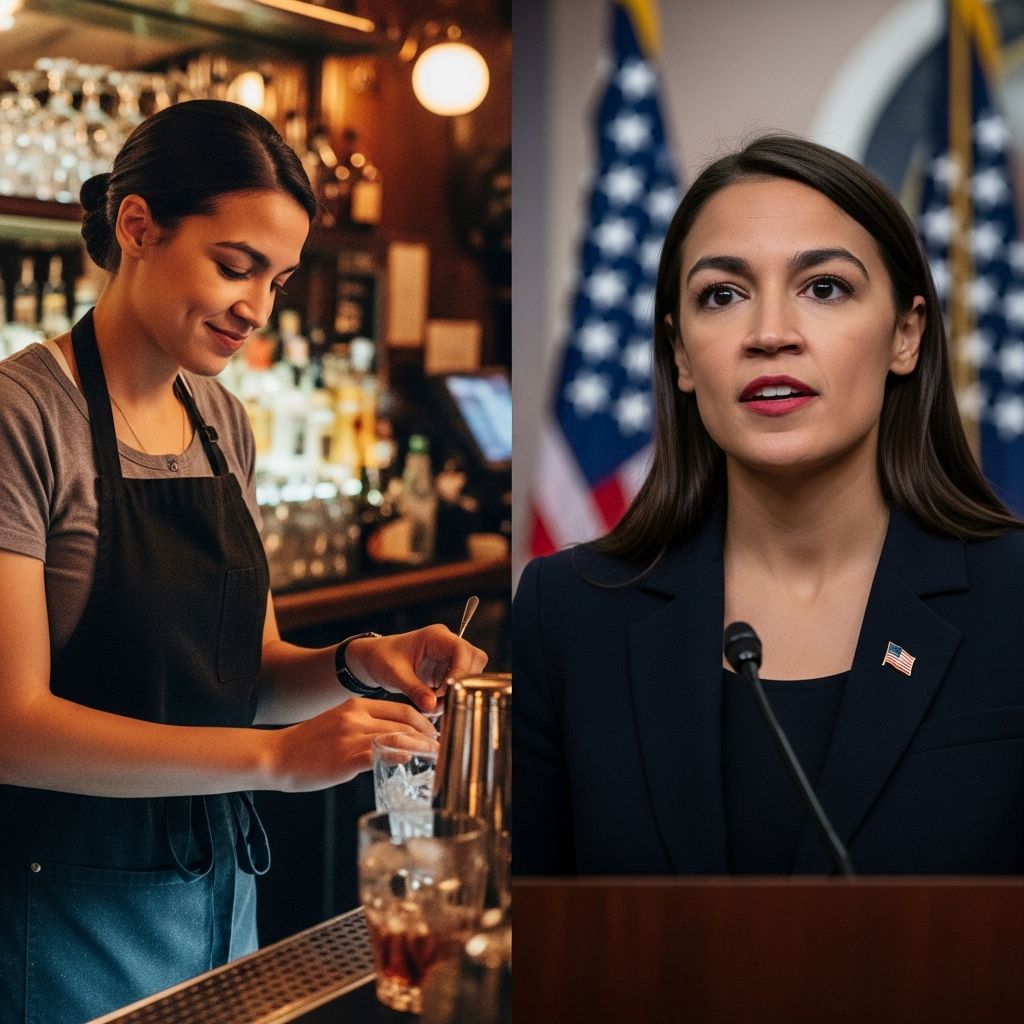
How Alexandria Ocasio-Cortez Went From Bartender to Politician
Alexandria Ocasio-Cortez, widely known as AOC, represents one of the most remarkable political ascents in modern American history. Her journey from working-class roots in the Bronx to becoming one of Congress’s most influential progressive voices has captivated the nation and reshaped conversations about what it means to be a political candidate in the 21st century. Her unexpected defeat of veteran Democratic Rep. Joe Crowley in 2018 sent shockwaves through the political establishment and demonstrated that grassroots organizing, genuine community engagement, and authentic representation can triumph over traditional political machinery and corporate funding.
Early Life and Education
Alexandria Ocasio-Cortez was born and raised in the Bronx, New York, where she developed an early awareness of social and economic inequality. Growing up in her tight-knit community, she witnessed firsthand how geography and circumstances shaped opportunities and futures. Her formative experiences in the outer boroughs of New York City proved transformative when she realized that “the zip code a child was born in determined much of their destiny.” This observation would later become a driving force behind her political advocacy and commitment to addressing systemic inequalities.
Determined to access quality education, Ocasio-Cortez left the Bronx daily to pursue her studies, an experience that deepened her understanding of educational disparities. She attended Boston University, where she earned dual degrees in economics and international relations. However, her pursuit of higher education came with a significant cost. Like many Americans, she remains burdened by student loan debt, a reality that continues to inform her advocacy for tuition-free college and broader educational reform.
Professional Experience Before Politics
Before her breakthrough into electoral politics, Ocasio-Cortez gained valuable experience working in various professional capacities that shaped her political worldview. Her initial foray into the political sphere came through an opportunity to work for the late Senator Ted Kennedy, where she focused on immigration casework and foreign affairs. This position provided her with insider knowledge of how policy decisions are made and how they affect real people’s lives.
After completing her studies at Boston University, she returned to the Bronx and transitioned to educational work. She served as an educational director with the National Hispanic Institute, where she helped high school students develop their skillsets in community leadership and social enterprise. This role allowed her to mentor young people and foster leadership qualities in future community leaders, demonstrating her commitment to investing in her own community’s development.
Pivotal Life Changes and Economic Hardship
A significant turning point in Ocasio-Cortez’s life came when her father died of cancer in 2008, in the middle of the Great Recession. This devastating personal tragedy coincided with one of the nation’s worst economic crises, forcing her family to confront serious financial instability. In response, Ocasio-Cortez took on two jobs simultaneously, often working grueling 18-hour shifts to help her family meet basic expenses and stay afloat during the recession.
Working as a bartender and holding down another job during this period profoundly shaped her understanding of economic inequality and the struggles facing working-class Americans. These hands-on experiences with financial precarity, healthcare challenges, and the inadequacy of social safety nets provided her with authentic insights into the lived experiences of ordinary Americans. She witnessed how policy decisions made in distant governmental chambers directly impact families struggling to pay rent, afford healthcare, and meet their children’s needs. This personal experience became the foundation of her later political platform and her commitment to championing working-class causes.
The Political Outsider Emerges
Ocasio-Cortez’s path to electoral politics began as a self-described democratic socialist who had previously volunteered for Vermont Senator Bernie Sanders’s 2016 presidential campaign. Her involvement in Sanders’s campaign aligned with her progressive values and gave her experience in grassroots political organizing. Sanders would later endorse her congressional campaign, recognizing in her a kindred spirit committed to transformative change.
Her decision to challenge incumbent Joe Crowley, the 56-year-old Democratic Caucus Chair who had represented New York’s 14th district since 1999, was bold and unconventional. Crowley was perceived by the political establishment as a likely successor to Nancy Pelosi as the top Democrat in the House, and few believed that a young, relatively unknown political outsider could defeat him. However, Ocasio-Cortez positioned herself strategically as a woman of the people—a person of color who lived and worked in the same neighborhood she hoped to represent—contrasting sharply with Crowley’s Washington insider status and perceived cozy relationships with corporate interests.
Campaign Message and Platform
Ocasio-Cortez’s campaign video, which was viewed more than two million times, articulated a clear message about being a political outsider determined to create meaningful change. Her platform championed several progressive priorities that resonated deeply with her constituents:
- Expanding Medicare for everyone to ensure universal healthcare coverage
- Tuition-free college to address the student debt crisis
- Criminal justice reform and ending private prisons
- Immigration reform and abolishing ICE (Immigration and Customs Enforcement)
- A federal $15 minimum wage to support working families
- Paid child and sick leave policies
- Housing as a human right and expansion of affordable housing initiatives
Her commitment to housing as a fundamental human right included advocating for expansion of the Low Income Housing Tax Credit, which provides tax incentives to developers building affordable housing. Notably, she refused to take money from luxury real estate developers, explicitly avoiding conflicts of interest that she argued had compromised her opponent’s independence and commitment to serving ordinary constituents.
Grassroots Campaign Strategy
Despite being initially dismissed as a long-shot candidate, Ocasio-Cortez’s campaign employed a groundbreaking grassroots strategy that emphasized authentic community engagement over expensive media buys. The campaign focused on direct constituent outreach, including old-fashioned door knocking and personal conversations with voters in New York’s 14th district. This approach demonstrated a fundamental truth that would later reshape political strategy: genuine human connection and authentic representation could outweigh traditional measures of electoral strength.
Financial constraints, rather than being liabilities, became strategic advantages. The majority of her campaign donations were less than $200 each, and she proudly highlighted that she accepted no money from corporate PACs. As she would later articulate, “You can’t really beat big money with more money. You have to beat them with a totally different game.” Her campaign posters drew inspiration from revolutionary political imagery and visuals from social movements of the past, creating a visual identity that resonated with young voters and progressive activists.
The Historic Victory
On primary election day, Ocasio-Cortez achieved what political analysts had deemed nearly impossible. She decisively defeated Joe Crowley with 57.5% of the vote, becoming the first person to successfully challenge him in 14 years. Her victory was particularly significant given that she was the first person of color and first woman to mount a serious primary challenge against Crowley during his long tenure.
The upset victory sent shockwaves through the Democratic establishment and captured national attention. Crowley’s loss was particularly embarrassing given his perceived status as a potential future House Democratic leader. Contributing to his defeat was his decision to skip the primary debate, instead sending former City Councilwoman Annabel Palma as his surrogate. Ocasio-Cortez did not hesitate to call out this dismissive treatment on social media, noting that Crowley “sent a woman with a slight resemblance to me as his official surrogate to last night’s debate.” This willingness to directly challenge and publicly critique her opponent resonated with voters tired of politics as usual.
Rising Star in Congress
Following her primary victory and subsequent general election win in heavily Democratic New York, Ocasio-Cortez took office in 2019 as the youngest woman ever elected to Congress. Her arrival in Washington marked the beginning of a new chapter in her political career. She quickly established herself as a vocal and articulate progressive voice, unafraid to challenge both Republican opponents and Democratic leadership when she believed their positions compromised progressive values.
In the years following her election, Ocasio-Cortez has authored and co-sponsored significant legislation addressing her core campaign commitments. She has been a vocal advocate for labor rights and has returned to her bartending roots to promote causes like the Raise the Wage Act, which would increase the minimum wage for tipped workers. Her advocacy for postal banking has addressed financial inequality in underserved communities, while her work on climate policy through the Green New Deal initiative has positioned her as a leader on environmental justice.
Currently in her fourth term in Congress, Ocasio-Cortez has become a leader of the Democratic Party’s progressive wing. In the first quarter of 2025, she raised $9.6 million with an average donation of just $21, demonstrating her continued ability to mobilize grassroots support. Her influence has grown substantially, with observers increasingly viewing her as a possible successor to Bernie Sanders and a potential candidate for future national office.
Frequently Asked Questions
Q: What was Alexandria Ocasio-Cortez’s occupation before entering Congress?
A: Before her election to Congress, Ocasio-Cortez worked multiple jobs, most notably as a bartender and as an educational director with the National Hispanic Institute. She also previously worked on immigration casework for Senator Ted Kennedy.
Q: How did Ocasio-Cortez defeat Joe Crowley despite having limited campaign funds?
A: She employed grassroots organizing tactics, direct constituent engagement, door-to-door canvassing, and refused corporate PAC funding. Her authentic connection with her community and commitment to representing working-class voters resonated more strongly than Crowley’s traditional political machinery and corporate support.
Q: What are the main policy priorities in Ocasio-Cortez’s political platform?
A: Her primary policy priorities include Medicare for All, tuition-free college, criminal justice reform, immigration reform, a $15 minimum wage, paid family leave, and treating housing as a fundamental human right.
Q: What personal experiences shaped Ocasio-Cortez’s political values?
A: Growing up in the Bronx, working multiple jobs after her father’s death during the 2008 recession, and experiencing healthcare and financial instability directly informed her commitment to addressing economic inequality and supporting working families.
Q: How did Ocasio-Cortez’s education influence her political career?
A: Her degrees in economics and international relations from Boston University, combined with her student debt burden, informed her advocacy for education affordability and her understanding of economic policy and international affairs.
References
- How Alexandria Ocasio-Cortez Went From Bartender to Politician — Money.com. 2024. https://money.com/alexandria-ocasio-cortez-career/
- Alexandria Ocasio-Cortez — United States House of Representatives. 2025. https://ocasio-cortez.house.gov
- Congressional Profile: Alexandria Ocasio-Cortez — OpenSecrets. 2025. https://www.opensecrets.org/news/2025/10/congressional-profile-alexandria-ocasio-cortez/
- Money is Not Destiny — Brookings Institution. 2018. https://www.brookings.edu/articles/money-is-not-destiny/
Similar Articles








Read full bio of medha deb