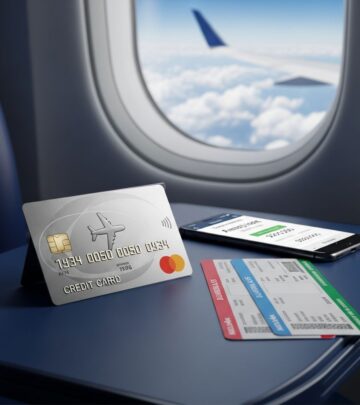
Airline Credit Cards: Maximizing Travel Rewards
Unlock exclusive travel perks and accelerate your journey to free flights

Traveling frequently comes with financial considerations that extend beyond the flight ticket itself. An airline credit card serves as a financial tool designed to transform everyday spending into meaningful travel advantages. Whether you fly multiple times annually or take occasional trips, these specialized credit products offer tangible benefits that can significantly reduce your total travel expenses.
Understanding the Core Value Proposition
Airline credit cards function differently from general-purpose rewards cards. Rather than earning generic points redeemable across various merchants, these cards focus on accumulating airline-specific miles or points that translate directly into flights, seat upgrades, and travel-related services. The fundamental appeal lies in their ability to convert ordinary purchase activity into premium travel experiences.
The primary value extends beyond merely earning miles. These cards integrate a comprehensive ecosystem of benefits designed to enhance your travel experience and offset their annual costs. For many cardholders, the combination of sign-up bonuses, ongoing rewards rates, and complimentary services justifies the annual fee within the first year of membership.
Accelerating Your Journey to Free Flights
One of the most compelling reasons to obtain an airline credit card involves the sign-up bonus. When you open a new account and meet minimum spending requirements, you receive a substantial bonus point or mile deposit. These introductory offers can provide enough currency to book a domestic flight or substantially reduce the cost of an international ticket.
Beyond the initial bonus, everyday redemption accelerates as you use your card for regular expenses. Specialized earning rates apply to specific spending categories:
- Premium earning rates on direct airline purchases, often ranging from 3x to 6x points per dollar
- Enhanced earning on travel-adjacent categories like dining and hotels
- Bonus point opportunities for achieving monthly spending thresholds
- Anniversary bonuses that automatically credit your account each year
The mathematics of airline credit cards favor active users. If you spend $20,000 annually across all categories, earning an average of 2 points per dollar, you accumulate 40,000 points yearly. This rate of accumulation can yield multiple free domestic flights or significantly subsidize international travel within a few years.
Eliminating Travel Expenses Through Included Benefits
Beyond earning miles, airline credit cards deliver financial value through benefits that would otherwise require out-of-pocket payments. These perks effectively reduce your total travel spending by eliminating specific charges.
Checked Baggage Allowances
Most airline credit cards include complimentary checked bags for the primary cardholder and sometimes for additional passengers on the same reservation. A single checked bag typically costs $25 to $40 per flight when purchased separately. For families traveling twice annually, this benefit alone generates $200 to $320 in savings yearly.
Priority Boarding and Seat Selection
Preferred boarding allows you to board earlier, securing overhead bin space and ensuring seat selection preferences are honored. Airlines typically charge $15 to $50 per flight for early boarding. The convenience of avoiding the struggle for luggage space and sitting in your preferred seat enhances comfort while eliminating paid add-on costs.
Travel Insurance Coverage
Comprehensive travel insurance protections included on premium airline cards cover scenarios that could otherwise result in significant financial loss:
- Trip cancellation and interruption insurance protecting prepaid travel costs
- Travel delay reimbursement covering meals and accommodation during extended delays
- Lost baggage reimbursement replacing essential items when luggage is delayed or lost
- Emergency medical and evacuation coverage while traveling internationally
These protections would cost $50 to $200 annually if purchased separately, representing substantial value embedded in your card membership.
Expanding Your Travel Network Through Partnerships
Modern airline credit cards often provide access to alliance networks, multiplying the destinations where your miles hold value. Loyalty programs connected to major alliances like oneworld®, SkyTeam, or STAR Alliance enable you to book flights across hundreds of partner airlines using your accumulated points.
This partnership structure creates flexibility absent from single-airline programs. You can travel to destinations served by partner carriers without abandoning your loyalty program currency. A passenger earning miles through an Alaska Airlines card can redeem those points for flights on Hawaiian Airlines, regional carriers, or international partners, dramatically expanding booking options.
Companion Fare Benefits and Anniversary Rewards
Certain airline credit cards feature companion fare benefits where achieving an annual spending threshold qualifies you for a discount or free ticket for a traveling companion. While these benefits include specific conditions—such as required mileage minimums or blackout dates—they can represent exceptional value.
Anniversary rewards provide another recurring benefit stream. Each year you maintain an active account, the card automatically credits points or provides statement credits toward travel purchases. A card offering 7,500 anniversary points annually creates $75 to $150 in value depending on your redemption strategy, effectively reducing your net annual fee.
Evaluating Annual Fees and Break-Even Analysis
Airline credit cards range from no annual fee products to premium cards charging $350 or more yearly. Understanding whether an annual fee represents worthwhile investment requires analyzing your specific travel patterns and redemption habits.
| Card Tier | Typical Annual Fee | Included Benefits Value | Best For |
|---|---|---|---|
| No-Fee Cards | $0 | $50-$100 | Occasional travelers, building points gradually |
| Standard Tier | $95-$150 | $200-$400 | Regular travelers, 2-4 flights annually |
| Premium Tier | $229-$350 | $500-$1,000+ | Frequent travelers, business flyers, luxury seekers |
Break-even analysis involves comparing annual fees against included benefits and earning potential. A $95 annual fee requires just 95,000 points in annual earning (if worth roughly $1 per 1,000 points) or two $25 checked baggage waivers plus some earning benefit to justify its cost. Most regular travelers exceed this threshold within the first year.
Maximizing Rewards on Everyday Spending
Strategic cardholders leverage airline credit cards across multiple spending categories to accelerate point accumulation. Premium cards often provide enhanced earning rates on:
- Dining at restaurants, often at 2x to 3x points per dollar
- Grocery purchases and supermarket spending
- Gas station fill-ups and EV charging services
- Hotel accommodations booked directly
- Entertainment, streaming services, and cable subscriptions
By concentrating everyday expenses on your airline card, you generate points passively without altering your normal spending behavior. An individual spending $5,000 monthly on groceries, dining, and discretionary purchases at 2x earning rates accumulates 120,000 points annually, equivalent to 1-2 free domestic roundtrip flights or substantial value toward premium cabin international travel.
Advanced Redemption Strategies
Maximizing airline credit card value extends beyond simple point-to-flight conversions. Sophisticated redemption strategies can increase your points’ effective value:
Transfer to Partner Airlines: Many programs allow transferring points to partner carriers, sometimes at favorable ratios. Strategic transfers can unlock premium cabin availability unavailable through direct airline bookings.
Dynamic Pricing Awareness: Understanding when your points provide maximum value requires monitoring award pricing across seasons. Off-peak travel periods often feature lower point costs, multiplying your redemption purchasing power.
Short-Haul vs. International Value: Some programs offer better redemption value for longer flights. Analyzing your typical travel distances helps optimize point usage for maximum value.
Selecting the Right Card for Your Travel Profile
Optimal card selection depends on multiple personal factors. Single-airline focused travelers who fly predominantly with one carrier benefit from branded airline cards offering maximum earning on that carrier’s flights. Frequent international travelers may prefer cards with annual credits toward expensive flights, premium cabin access, or travel insurance provisions.
Occasional travelers might prioritize no-annual-fee cards or cards with generous sign-up bonuses covering their limited travel needs. Business travelers whose employers don’t cover travel expenses warrant premium cards offsetting high spending through substantial benefits.
Frequently Asked Questions
Do airline credit card points expire?
Most airline loyalty programs allow points to remain indefinitely on active accounts. However, inactivity policies may apply if your account or associated credit card sits dormant for extended periods. Regular card usage preserves your point balance.
Can I use airline miles for non-flight purchases?
Many modern loyalty programs have expanded redemption options beyond flights. Points can frequently purchase hotel stays, car rentals, merchandise, or transfer to partner programs. Check your specific program’s redemption catalog for available options.
How are airline credit card annual fees typically structured?
Annual fees are usually charged on your billing anniversary, though some cards apply them upon account opening. Review your card’s terms to understand exact timing and explore whether you can cancel before the second year if the card doesn’t meet your needs.
Are there benefits for co-applicants or authorized users?
Primary benefits like checked bag allowances often extend to passengers on your reservation, while earned miles/points remain under the primary cardholder’s account. Authorized user benefits vary by card; review specific terms before adding secondary cardholders.
What credit score is required for airline credit card approval?
Most airline credit cards require good to excellent credit (typically 670+ credit score minimum). Premium cards often require excellent credit (750+). Pre-qualification tools help determine approval likelihood before formal application.
Conclusion: Optimizing Your Travel Investment
Airline credit cards represent sophisticated financial products that convert spending into tangible travel value. Through strategic selection aligned with your flight patterns, deliberate category spending optimization, and thoughtful redemption timing, these cards can reduce your effective travel costs by 30-50 percent annually. The combination of earning acceleration, included benefits, and partnership flexibility creates an ecosystem where frequent and occasional travelers alike discover substantial financial advantages.
References
- Best Airline Credit Cards of February 2026 — NerdWallet. February 2026. https://www.nerdwallet.com/credit-cards/best/airline
- Compare Airline Credit Cards — Chase. February 2026. https://creditcards.chase.com/airline-credit-cards
- Best Premium Credit Cards: A Side-by-Side Comparison — The Points Guy. 2026. https://thepointsguy.com/credit-cards/best-premium-travel-rewards-cards/
- AAdvantage® Credit Cards — American Airlines. 2026. https://www.aa.com/web/i18n/aadvantage-program/credit-cards/aadvantage-credit-cards.html
- Best Airline Rewards Credit Card Offers — CompareCards.com. February 2026. https://www.comparecards.com/airline
- Best Airline Credit Cards for February 2026 — Credit Karma. February 2026. https://www.creditkarma.com/credit-cards/airline-credit-cards
Similar Articles








Read full bio of medha deb