AI in Investing: Smart Tool or Risky Gamble?
Explore the benefits and pitfalls of using artificial intelligence for investment decisions and learn how to harness its power safely.

Artificial intelligence has revolutionized many industries, and personal finance is no exception. With tools like chatbots and robo-advisors readily available, millions are turning to AI for investment recommendations. A Credit Karma report indicates that 66% of Americans have used generative AI for financial advice, with even higher adoption among younger generations at 82% for both Gen Z and millennials. While this democratizes access to guidance, it raises critical questions about reliability, bias, and safety. This article delves into the mechanics of AI-driven investing, uncovers potential pitfalls, weighs pros and cons, and offers practical strategies for informed decision-making.
The Rise of AI as Your Portfolio Ally
AI’s entry into investing stems from large language models (LLMs) trained on vast datasets including news, reports, and forums. These systems excel at processing complex queries and delivering straightforward responses, making them appealing for explaining concepts or suggesting portfolios. Robo-advisors, a more structured form of AI finance tools, gather user inputs on goals, income, risk tolerance, and timelines to construct diversified portfolios of low-cost index funds or ETFs. They then automate rebalancing and adjustments based on market shifts.
This automation appeals to busy individuals seeking efficiency without high costs. Traditional advisors often demand substantial minimum investments—$50,000 to $500,000—while AI platforms welcome smaller accounts, broadening access for beginners.
Unpacking AI’s Hidden Biases in Investment Picks
Despite their sophistication, AI tools inherit and amplify human flaws from training data. A June 2025 PLOS ONE study by researchers from the University of St. Gallen and Technical University of Munich tested popular LLMs with prompts simulating investor profiles, such as a 30-year-old with $10,000 and moderate risk appetite. Compared to a balanced benchmark like the Vanguard Total World ETF, AI suggestions revealed stark imbalances:
- U.S. Stock Overload: 93% allocation to American equities versus 59% in the benchmark, exposing portfolios to U.S.-specific downturns.
- Sector Skew: Heavy tilt toward tech and consumer sectors, ignoring stabilizers like transportation.
- Momentum Chasing: Preference for recently hyped stocks, a common pitfall leading to losses.
- Active Management Push: Favoring stock picking over passive indexing, incurring higher fees.
Even debiasing attempts, like specifying low-fee preferences, yielded limited improvements. Broader instructions to sidestep errors helped somewhat but failed to eliminate risks entirely.
Advantages That Make AI Worth Considering
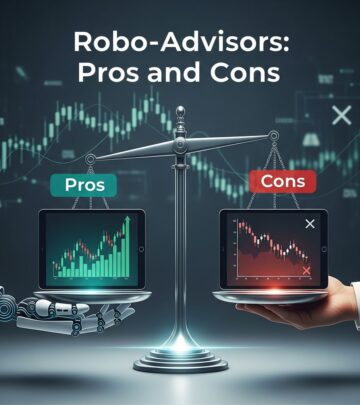
AI isn’t without merits. Here’s a comparison of key benefits against traditional advising:
| Feature | AI/Robo-Advisors | Human Advisors |
|---|---|---|
| Fees | 0.25%-0.5% AUM | 1%-2% AUM |
| Minimum Investment | Often none or low | $50K-$500K |
| Automation Level | Full (rebalancing, tax optimization) | Manual oversight |
| Emotional Bias | None—data-driven | Possible panic or greed |
These factors make AI ideal for straightforward, long-term strategies. Its objectivity prevents emotional trading during volatility, sticking to algorithms grounded in historical patterns.
The Dark Side: Risks You Can’t Ignore
Beyond biases, AI introduces unique vulnerabilities. Consumer Financial Protection Bureau insights highlight risks like “AI washing”—overhyping capabilities—and opaque “black box” decision-making, where algorithms remain inscrutable.
- Personalization Gaps: Basic questionnaires miss nuances like estate planning or philanthropy.
- Privacy Perils: Sharing sensitive data risks breaches; experts urge minimal disclosure.
- Compliance Issues: Financial planners using generative AI face regulatory hurdles, emphasizing responsible integration.
- Overconfidence Trap: Persuasive tones and disclaimers lull users into skipping verification.
Two-thirds of users already experiment with AI, but experts like those at CBS News recommend it for education, not sole reliance. Vanguard notes AI automates tasks but can’t replicate human empathy or holistic planning.
Real-World Examples of AI Wins and Fails
Consider a young professional querying an LLM for a starter portfolio. It might suggest a tech-heavy mix mirroring recent booms, outperforming short-term but crashing in corrections. Conversely, robo-advisors like those from major firms deliver steady, diversified growth via ETFs, benefiting from low fees over decades.
A 2025 study underscored how AI echoes investor herding, potentially inflating bubbles if masses follow identical advice. On privacy, incidents of data mishandling in unregulated chatbots amplify concerns.
Strategies for Safe AI Integration in Your Finances
To leverage AI effectively:
- Verify Outputs: Cross-check against benchmarks like global index funds.
- Limit Data Sharing: Avoid specifics; use hypotheticals.
- Diversify Sources: Blend AI with human input or trusted relatives.
- Opt for Regulated Tools: Choose established robo-advisors over free chatbots.
- Monitor Fees: Ensure recommendations align with cost efficiency.
Regulators may soon mandate transparency to curb systemic risks from uniform AI advice.
Future Outlook: AI and Human Synergy
AI will evolve, but top advisors will pair it with personal touch—empathy for life events, nuanced goal-setting. Investors should view AI as a starting point: generate ideas, educate yourself, then consult professionals for tailored plans.
Frequently Asked Questions
Is AI investment advice free?
Many chatbots are free, but robo-advisors charge 0.25%-0.5% AUM. Always factor in hidden costs.
Can AI replace a financial advisor?
No, it lacks empathy and deep personalization; use as a supplement.
How risky are AI biases?
High—studies show amplified U.S./tech tilts increasing portfolio volatility.
What about data privacy?
Stick to regulated platforms; minimize personal details to reduce breach risks.
Best AI tools for beginners?
Robo-advisors with low minimums and transparency outperform generic LLMs.
References
- Be careful! Financial advice from AI comes with risks — University of St. Gallen. 2025-06-01. https://www.unisg.ch/en/newsroom/be-careful-financial-advice-from-ai-comes-with-risks/
- Should I Use an AI Financial Advisor? Pros and Cons — Alden Investment Group. 2024. https://aldeninvestmentgroup.com/blog/should-i-use-an-ai-financial-advisor/
- Opportunities and Risks of Artificial Intelligence in Investment Markets — Consumer Federation of America. 2024-10. https://consumerfed.org/wp-content/uploads/2024/10/Opportunities-and-Risks-of-Artificial-Intelligence-in-Investment-Markets-Formatted-Final.pdf
- Using AI for financial advice? Here’s what to watch out for — CBS News. 2024. https://www.cbsnews.com/news/artificial-intelligence-financial-advice-tips/
- What AI can—and can’t—replace in financial advice — Vanguard. 2024. http://advisors.vanguard.com/insights/article/what-ai-can-and-cant-replace-in-financial-advice
Similar Articles








Read full bio of medha deb