Agribusiness: Definition, Components & Global Impact
Understanding agribusiness: The complete value chain from farm to consumer in modern agriculture.
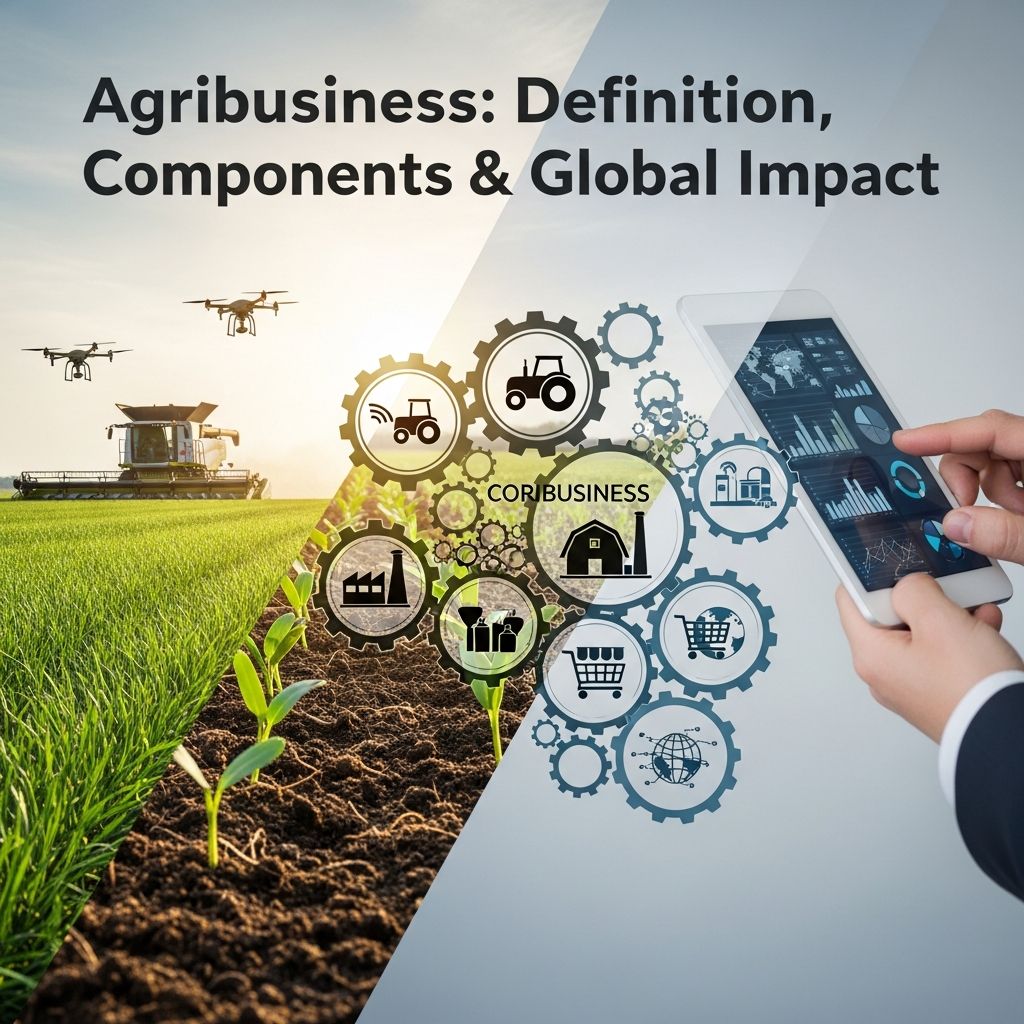
What is Agribusiness?
Agribusiness represents the complete value chain in agriculture, encompassing all economic sectors related to farming and farming-related commerce. The term combines “agriculture” and “business” to describe the commercial operations involved in producing, processing, and distributing agricultural products. Unlike traditional farming, which focuses solely on crop cultivation or livestock raising, agribusiness integrates sophisticated business strategies, advanced technologies, and management practices to create a comprehensive system that brings food and agricultural commodities from farms to consumers’ tables.
The primary goal of agribusiness is to maximize profit while satisfying consumer needs for products derived from natural resources. This industry extends far beyond the farm gate, involving multiple interconnected sectors that work together to ensure efficiency, sustainability, and market responsiveness. Agribusiness serves as the critical bridge between agricultural production and global consumers, playing an essential role in feeding the world’s growing population while supporting local and national economies.
Definition and Scope
Agribusiness refers to all activities involved in farming, including farming practices, agricultural services, and the entire supply chain from production and processing to marketing and distribution. It is a dynamic and systemic endeavor that serves consumers globally and locally through innovation and management of multiple value chains that deliver valued goods and services derived from sustainable orchestration of food, fiber, and natural resources.
The scope of agribusiness is vast and multifaceted, encompassing various sectors and industries. Modern agribusiness incorporates advanced technologies such as precision agriculture, biotechnology, and data analytics to enhance productivity and efficiency. It also involves sophisticated management practices, including strategic planning, market analysis, and financial management. By adopting a business-oriented approach, agribusinesses can better respond to market demands, manage risks, and improve their overall competitiveness in the global market.
Key Components of Agribusiness
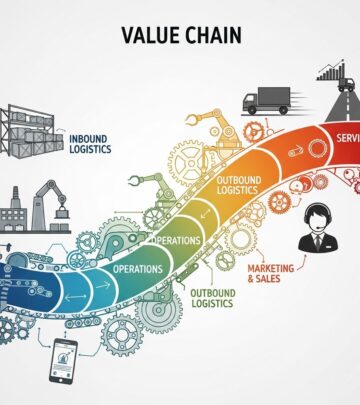
Agribusiness comprises several interconnected components that work together to form a complete value chain. Each link in this chain adds value to agricultural products, creating a system that supports producers and ultimately serves consumers. Understanding these components is essential for grasping how modern agriculture operates as a business.
Input Providers
Input providers form the foundation of the agribusiness value chain, supplying the necessities for natural resource production. A significant portion of input provision relates to direct and indirect forms of energy required for agricultural operations. Beyond energy, input providers include suppliers of starting materials, labor, and materials necessary for production. This category encompasses seed suppliers, fertilizer manufacturers, equipment producers, and fuel providers. Input providers ensure that producers have access to high-quality resources needed to maximize yields and maintain sustainable operations.
Agricultural Production
Agricultural production occurs wherever land or buildings are dedicated to crops or animals. Production varies worldwide depending on the suitability of local climate and geography. Some producers are land-based, operating traditional farms, while others are landless, utilizing concentrated indoor spaces for intensive operations such as greenhouse farming or aquaculture. Examples of producers span from small sustenance farms to industrial-scale operations, each playing a vital role in the global food supply chain. Production-based ventures involve the cultivation, breeding, and harvesting of crops and livestock, providing the raw materials that are processed and consumed globally.
Processing and Manufacturing
Processing and manufacturing operations transform raw agricultural products into finished goods ready for consumer consumption. This includes activities such as grain milling, meat processing, dairy production, and food manufacturing. These operations add significant value to agricultural commodities by converting raw materials into shelf-ready products. Processing facilities employ advanced technologies and quality control measures to ensure food safety, consistency, and consumer appeal.
Distribution and Retail
Distribution and retail sectors ensure that processed agricultural products reach end consumers efficiently. This component includes warehousing, transportation, logistics, and retail operations. Modern agribusiness relies on sophisticated supply chain management to minimize waste, reduce costs, and ensure product freshness. Retailers and distributors work closely with producers and processors to understand consumer preferences and market demands.
Service Providers
Service-based agricultural businesses provide essential support to production-based ventures. These services enhance efficiency and productivity throughout the agricultural sector. Key examples include agricultural consulting, which provides expertise on best practices, soil management, and crop rotation; farm equipment maintenance, offering repair and maintenance services for tractors, harvesters, and other machinery; veterinary services, providing healthcare for livestock including vaccinations and disease management; and logistics companies, managing transportation and supply chain operations. These services are vital for the smooth operation of agricultural enterprises, helping to mitigate risks and improve yields.
Types of Agribusiness Ventures
Agribusiness ventures can be categorized into three main types, each serving distinct functions within the broader agricultural ecosystem:
Production-Based Ventures
Production-based ventures are at the core of agribusiness, involving the cultivation, breeding, and harvesting of crops and livestock. These ventures are fundamental to the supply chain, providing the raw materials that are processed and consumed. Examples include agricultural crop production such as growing corn, soybeans, and wheat; livestock production involving raising cattle, poultry, and swine for meat and dairy products; and aquaculture, farming fish, shrimp, and other seafood products.
Service-Based Businesses
Service-based agricultural businesses offer specialized support that enhances the efficiency of production operations. Agricultural consultants provide expertise on crop management and soil health. Equipment maintenance providers ensure machinery operates at peak performance. Veterinary services keep livestock healthy and productive. Financial institutions offer loans and insurance products tailored to agricultural needs. These service providers are indispensable to the success of production-based operations.
Support Sector Agribusinesses
Support sector agribusinesses supply essential inputs and infrastructure. This category includes seed companies, fertilizer manufacturers, equipment manufacturers, pesticide producers, and technology providers. Support sector businesses ensure that producers have access to the tools, materials, and knowledge needed for successful operations.
Purpose and Importance of Agribusiness
The primary purpose of agribusiness is to create and supply agricultural products for end-consumption. Agricultural products are naturally produced resources for human consumption or other uses, and agribusiness ensures these products reach consumers efficiently and affordably. The products require a variety of sectors and industries to support the producers, which are central in this value chain.
Agribusiness plays an essential role in the global economy by helping feed the world’s growing population and supporting local economies, particularly in rural areas. As global food demand continues to increase, agribusiness must innovate and adapt to meet changing consumer preferences, such as the growing move towards organic or plant-based foods. This sector influences what farmers grow and how they conduct business, driving agricultural evolution in response to market signals.
How Agribusiness Differs from Traditional Farming
| Aspect | Traditional Farming | Agribusiness |
|---|---|---|
| Focus | Crop or livestock production only | Complete value chain from input to consumer |
| Scale | Often small to medium scale | Generally large-scale and integrated |
| Technology | Traditional methods and equipment | Advanced technologies and automation |
| Management | Basic operational management | Strategic planning and market analysis |
| Market Approach | Local or regional markets | Global markets with branding |
| Risk Management | Limited strategies | Comprehensive financial and operational strategies |
Modern Technologies in Agribusiness
Contemporary agribusiness incorporates cutting-edge technologies to optimize operations and improve sustainability. Precision agriculture uses GPS, sensors, and data analytics to apply inputs such as water, fertilizers, and pesticides with remarkable accuracy, reducing waste and environmental impact. Biotechnology enables the development of improved crop varieties and more efficient production methods. Automation and robotics streamline harvesting and processing operations, reducing labor costs and improving consistency. Data analytics helps farmers and agribusiness managers make informed decisions about planting, resource allocation, and market timing.
These technological advances allow agribusinesses to achieve higher yields, reduce production costs, minimize environmental impact, and respond more effectively to market demands. As consumer preferences shift toward sustainable and responsibly produced foods, agribusinesses that successfully integrate these technologies gain competitive advantages.
Global Impact of Agribusiness
Agribusiness is fundamental to global food security and economic development. The sector accounts for a substantial portion of international trade and employment, particularly in developing nations where agriculture remains a primary economic activity. Changing consumer preferences significantly influence agribusiness operations, as producers and processors adapt to demand for organic products, specialty crops, plant-based alternatives, and sustainably produced foods.
Many agribusinesses have adopted the triple bottom line framework, aligning operations with fair trade, organic, and good agricultural practice certifications. This approach reflects growing recognition that agribusiness must balance profit with social and environmental responsibility. The sector continues to evolve as it addresses climate change, resource scarcity, and the need to feed a growing global population sustainably.
Frequently Asked Questions
What is agribusiness, and how does it differ from traditional farming?
Agribusiness refers to the business side of agriculture, encompassing all activities related to the production, processing, and distribution of agricultural products. It differs from traditional farming in its focus on commercial aspects, incorporating advanced technologies and management techniques to improve efficiency and productivity. Traditional farming focuses solely on crop or livestock production, while agribusiness involves an integrated chain of operations including strategic planning, marketing and branding, risk management, and financial investments.
What are the main categories of agribusiness ventures?
Agribusiness ventures can be categorized into three main types: production-based ventures that involve actual cultivation and harvesting of crops and livestock; service-based businesses that provide consulting, equipment maintenance, veterinary services, and logistics support; and support sector agribusinesses that supply inputs like seeds, fertilizers, and equipment.
How does agribusiness impact the global economy?
Agribusiness plays an essential role in the global economy by helping feed the world’s growing population, supporting local economies particularly in rural areas, and driving agricultural innovation. The sector accounts for significant international trade and employment, making it crucial for economic development worldwide.
What role do input providers play in agribusiness?
Input providers supply the necessities for agricultural production, including energy, seeds, fertilizers, machinery, and labor. They form the foundation of the agribusiness value chain by ensuring producers have access to high-quality resources needed to maximize yields and maintain sustainable operations.
How are agribusinesses adapting to changing consumer preferences?
Modern agribusinesses are adapting to consumer demands for organic, plant-based, and sustainably produced foods. Many have adopted certification programs such as fair trade, organic, and good agricultural practices. They utilize advanced technologies including precision agriculture and biotechnology to meet quality and sustainability standards while maintaining profitability.
References
- Agribusiness – Definition, Explain, Purpose, Components — Corporate Finance Institute. 2025. https://corporatefinanceinstitute.com/resources/commercial-lending/agribusiness/
- What is an Agribusiness? — StoneX Financial Glossary. 2025. https://www.stonex.com/en/financial-glossary/agribusiness/
- Agribusiness: Definition, Examples & Challenges — Agristuff. 2025. https://agristuff.com/farming/agribusiness-definition-examples-challenges/
- Agribusiness — Wikipedia. 2024. https://en.wikipedia.org/wiki/Agribusiness
Similar Articles








Read full bio of Sneha Tete