Aggregate Supply: Definition, Curve, and Economic Impact
Understanding aggregate supply: How total production drives economic equilibrium and price levels.
What Is Aggregate Supply?
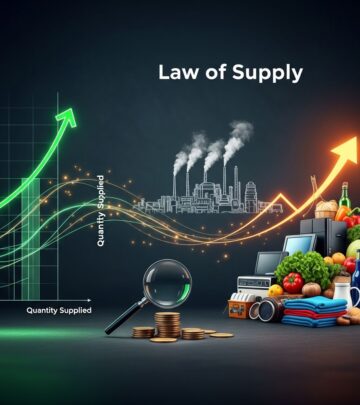
Aggregate supply (AS) represents the total quantity of goods and services that firms are willing and able to produce at different price levels during a specific period. It is a fundamental concept in macroeconomics that describes the relationship between the overall price level in an economy and the total amount of output that producers are willing to supply. The aggregate supply curve illustrates how the quantity of goods and services supplied by all producers in an economy changes in response to changes in the average price level, assuming all other factors remain constant.
Aggregate supply is closely related to aggregate demand and together they determine the equilibrium price level and output in an economy. When aggregate supply increases or decreases, it affects both the price level and the real gross domestic product (GDP), which are critical indicators of economic health. Understanding aggregate supply is essential for policymakers, investors, and economists who need to analyze economic conditions and forecast future trends.
Understanding the Aggregate Supply Curve
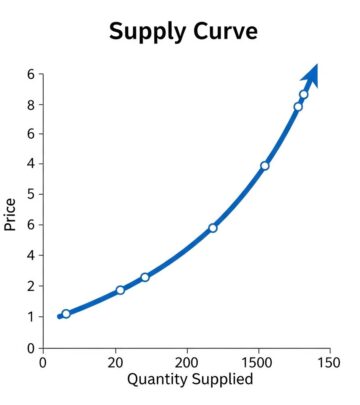
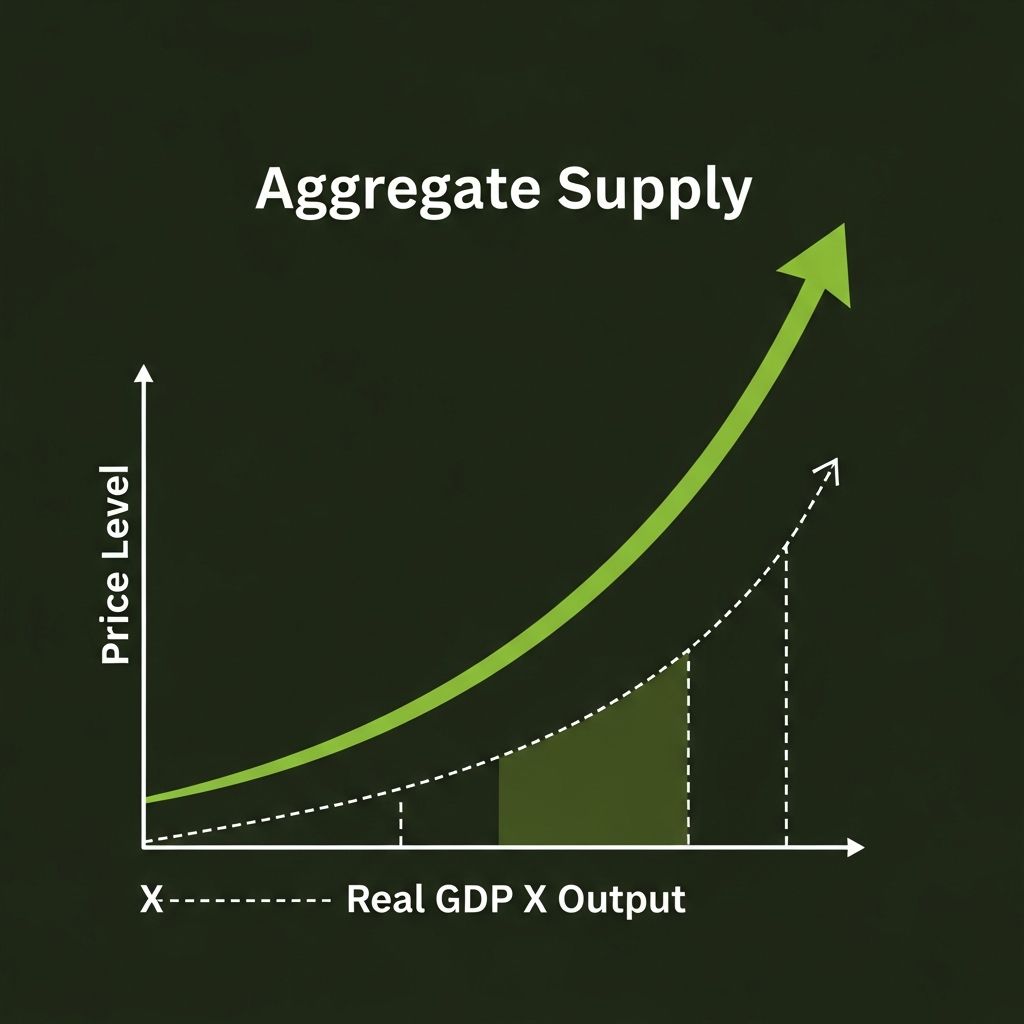
The aggregate supply curve depicts the relationship between the price level and the quantity of real output that producers are willing to supply. The shape and position of this curve are influenced by various economic factors including input costs, technology, expectations, and the availability of resources. The curve typically slopes upward in the short run and is vertical in the long run, reflecting different economic dynamics at these time horizons.
In graphical representation, the horizontal axis shows real GDP or total output, while the vertical axis displays the price level. The aggregate supply curve’s position and slope provide valuable insights into the productive capacity of an economy and how it responds to price changes. When the curve shifts outward, it indicates an increase in productive capacity, while an inward shift suggests a decrease in the economy’s ability to produce goods and services.
Short-Run Aggregate Supply (SRAS)
The short-run aggregate supply curve (SRAS) is typically upward sloping, indicating a positive relationship between price level and quantity supplied. In the short run, firms cannot immediately adjust all their inputs, particularly capital and fixed factors of production. When prices rise, firms find it more profitable to increase production because their costs—especially variable costs like wages and materials—adjust more slowly than output prices.
Several factors cause the short-run upward slope of the aggregate supply curve:
- Sticky Wages: Nominal wages tend to adjust slowly in response to price changes due to long-term employment contracts and labor market rigidities. When prices rise, real wages initially fall, encouraging firms to hire more workers and increase production.
- Information Lags: Producers may not immediately recognize price changes and may initially misinterpret general price increases as relative price increases for their own products, leading them to increase production.
- Fixed Contracts: Many firms operate under fixed-price contracts with suppliers and customers, which limits their ability to immediately adjust prices and quantities in response to market changes.
- Menu Costs: The costs of changing prices can be significant, leading firms to maintain prices for a period even as overall price levels change in the economy.
The SRAS curve shifts when non-price factors change, such as changes in input prices, technology, or productivity. An improvement in technology or a decrease in input costs shifts the SRAS curve to the right, indicating increased supply at each price level. Conversely, higher input costs or reduced productivity shift the curve to the left.
Long-Run Aggregate Supply (LRAS)
The long-run aggregate supply curve (LRAS) is typically vertical at the economy’s potential output level, also known as full employment output or natural rate of output. This vertical shape reflects the idea that in the long run, the economy’s output is determined by the availability of productive resources and technology, not by the price level.
In the long run, all prices and wages are flexible and adjust to changes in supply and demand. Workers adjust their wage expectations, firms can fully adjust their capital investments, and all markets clear. Therefore, the quantity of output supplied depends on real factors such as the stock of capital, the labor force, technology, and natural resources—not on nominal prices. This concept is based on the classical economic principle that money is neutral in the long run.
The position of the LRAS curve can shift due to changes in productive capacity. An increase in the labor force, improvement in technology, accumulation of capital, or discovery of natural resources shifts the LRAS to the right. Conversely, depletion of resources, deterioration of infrastructure, or decline in the labor force shifts it to the left. These shifts reflect genuine changes in an economy’s productive potential.
Factors Affecting Aggregate Supply
Multiple factors influence the aggregate supply curve and can cause it to shift. Understanding these determinants is crucial for analyzing economic conditions and predicting changes in output and prices.
Input Costs and Resource Availability
Changes in the cost of production inputs directly affect aggregate supply. Higher wages, increased energy prices, or rising costs of raw materials reduce aggregate supply, shifting the curve to the left. Conversely, lower input costs increase supply and shift the curve to the right. The availability of resources such as labor, capital, and natural resources also influences the productive capacity of the economy.
Technological Change
Technological advancement improves productivity and increases the amount of output that can be produced from given inputs. Innovations in manufacturing processes, information technology, biotechnology, and other sectors can significantly boost aggregate supply. These improvements shift the AS curve to the right, allowing the economy to produce more at each price level.
Expectations and Confidence
Business expectations about future economic conditions influence current production decisions. If firms expect strong future demand, they may invest in new capacity and increase current production. Conversely, pessimistic expectations reduce investment and supply. Consumer confidence also indirectly affects supply through its impact on demand and firm expectations.
Government Policies and Regulations
Tax policies, regulations, and subsidies affect the profitability of production and the incentives for firms to supply goods and services. Lower corporate taxes or subsidies for certain industries can increase aggregate supply, while stringent regulations may reduce it. Trade policies and labor laws also influence the productive capacity of the economy.
Supply Shocks
Unexpected events can cause sudden shifts in aggregate supply. Positive supply shocks, such as discovery of new oil reserves or favorable weather conditions for agriculture, increase supply. Negative supply shocks, such as natural disasters, wars, pandemics, or severe weather events, reduce supply. These events can have dramatic short-term impacts on prices and output.
Aggregate Supply and the AD-AS Model
The aggregate supply curve is a key component of the aggregate demand-aggregate supply (AD-AS) model, which is central to macroeconomic analysis. This model illustrates how the economy reaches equilibrium at the intersection of the aggregate demand and aggregate supply curves, determining both the economy’s output and price level.
The AD-AS model is used to analyze various economic scenarios:
- Recessions: When aggregate demand falls below aggregate supply at the full employment level, the economy experiences a recession with output below potential and rising unemployment.
- Inflation: When aggregate demand exceeds aggregate supply, prices rise, causing inflation while output temporarily expands beyond potential.
- Stagflation: When negative supply shocks reduce aggregate supply while demand remains unchanged, the economy experiences both high inflation and low output.
- Economic Growth: When aggregate supply increases due to improved productivity and technology, the economy can experience growth without inflation pressure.
The relationship between aggregate supply and aggregate demand determines the effectiveness of monetary and fiscal policies. Understanding how policy changes affect aggregate supply is essential for policymakers seeking to achieve their macroeconomic objectives.
Aggregate Supply vs. Individual Supply
While aggregate supply represents the total supply across the entire economy, individual or market supply refers to the quantity supplied by a single firm or industry at different prices. Individual supply curves are typically upward sloping at the firm level due to increasing marginal costs. However, aggregate supply behaves differently due to macroeconomic factors such as price level expectations, wage stickiness, and economy-wide constraints.
The distinction is important because macroeconomic principles that apply to individual markets may not directly apply to aggregate economic phenomena. For example, while an individual firm might reduce supply when prices fall, the aggregate economy’s supply response depends on factors like employment levels, real wages, and business confidence—which operate at a different level of analysis.
Supply-Side Economics and Policy
Supply-side economics emphasizes that economic growth comes from improving aggregate supply rather than simply stimulating demand. Policies focused on supply-side improvements include investments in education and workforce development, infrastructure investment, research and development incentives, and regulatory reform to reduce business compliance costs.
Supply-side policies aim to increase productivity, reduce production costs, and improve business incentives to expand production. These policies can lead to sustainable economic growth and improved living standards without necessarily generating inflation. However, the effectiveness of supply-side policies depends on their implementation and the overall economic environment.
Frequently Asked Questions
Q: How does aggregate supply differ from aggregate demand?
A: Aggregate supply represents what producers are willing to supply at different price levels, while aggregate demand represents what consumers are willing to purchase. Together, they determine equilibrium price and output in the economy.
Q: Why is the long-run aggregate supply curve vertical?
A: In the long run, output is determined by real factors like technology, capital, and labor—not by price levels. All prices and wages adjust fully, so the economy returns to its natural rate of output regardless of the price level.
Q: What causes the aggregate supply curve to shift?
A: The AS curve shifts due to changes in input costs, technology, resource availability, expectations, government policies, and supply shocks such as natural disasters or pandemics.
Q: How do supply shocks affect the economy?
A: Negative supply shocks reduce output and increase prices (stagflation), while positive supply shocks increase output and can reduce prices, improving economic conditions.
Q: What is stagflation?
A: Stagflation is a combination of high inflation and low economic growth, typically caused by negative supply shocks that reduce aggregate supply while demand remains unchanged.
References
- The Aggregate Demand-Aggregate Supply (AD-AS) Model — Khan Academy. 2025. https://www.khanacademy.org/economics-finance-domain/ap-macroeconomics
- Macroeconomics: Understanding Aggregate Supply and Demand — Federal Reserve Education. https://www.federalreserve.gov/econresdata
- Supply-Side Economics and Long-Term Growth — National Bureau of Economic Research. https://www.nber.org
Similar Articles








Read full bio of Sneha Tete