Aggregate Demand: Definition, Formula, and Components
Master aggregate demand economics: Learn the formula, components, and curve analysis.
Understanding Aggregate Demand in Economics
Aggregate demand represents the total quantity of goods and services that all economic participants are willing to purchase at different price levels during a specific period. This fundamental macroeconomic concept encompasses purchases made by households, businesses, government entities, and foreign buyers through exports. Unlike gross domestic product (GDP), which measures production, aggregate demand focuses on the consumption and acquisition side of the economy. The concept is essential for understanding economic fluctuations, inflation, and the effects of monetary and fiscal policy on overall economic activity.
Aggregate demand always equals the gross domestic product in magnitude, though the perspective differs significantly. While GDP emphasizes what an economy produces, aggregate demand emphasizes what participants are willing to buy at various price levels. This distinction is crucial for economists and policymakers who need to understand consumer behavior, investment patterns, and government spending to forecast economic trends and implement appropriate economic policies.
The Aggregate Demand Formula
The aggregate demand formula provides a systematic method for calculating the total demand for goods and services in an economy. Unlike GDP calculations that focus on production, aggregate demand is computed from a consumption standpoint, considering what economic agents are willing to spend rather than what they produce.
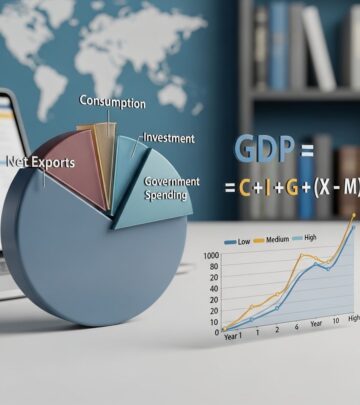
The fundamental formula for aggregate demand is:
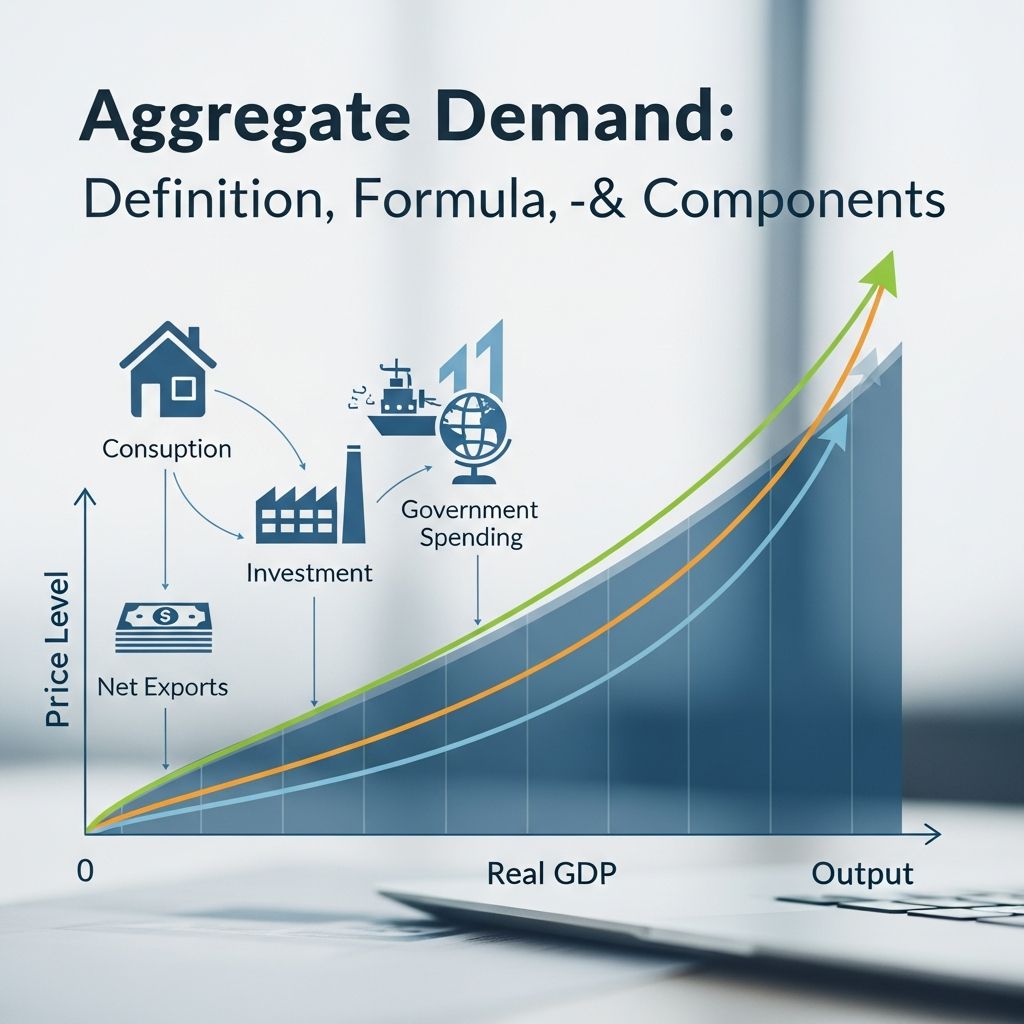
AD = C + I + G + (X - M)This equation represents the sum of all spending components in an economy. Each component plays a distinct role in determining the overall level of economic activity and can be influenced by different economic factors and policy decisions.
Key Components of Aggregate Demand
Understanding each component of the aggregate demand formula is essential for analyzing economic conditions and predicting future trends.
Consumption (C)
Consumption represents the money that households and individuals spend on goods and services. This is the largest component of aggregate demand, typically accounting for approximately 66% of total demand. Consumer spending is influenced by several critical factors:
Disposable income plays a fundamental role, as families can only spend money they have available after taxes and debt obligations. When disposable income increases, consumption typically rises, and vice versa. Consumer expectations about future economic conditions also significantly impact spending patterns. If households and businesses anticipate economic growth and improved employment prospects, they tend to spend more optimistically. Conversely, pessimism about the future leads to reduced spending.
Wealth levels affect consumption decisions substantially. When households possess greater assets and feel financially secure, they spend more freely. Changes in asset values, such as real estate or stock market fluctuations, directly influence consumer purchasing power and spending behavior.
Investment (I)
Investment refers to acquisitions made by businesses, including capital goods like factories, machinery, and housing investments. Investment spending depends heavily on interest rates since most investments are financed through borrowing. Lower interest rates make borrowing cheaper, encouraging businesses and individuals to invest more in capital projects. Higher interest rates discourage investment by increasing borrowing costs.
Business confidence and economic outlook significantly influence investment decisions. When firms anticipate strong future demand and economic growth, they expand capacity and purchase new equipment. Conversely, economic uncertainty leads businesses to postpone investment plans. Technological advances also stimulate investment, as companies adopt new equipment and processes to remain competitive and improve productivity.
Government Spending (G)
Government spending encompasses the cost of goods and services of general interest provided by the public sector. This includes expenditures on infrastructure development, defense, education, healthcare, public facilities, and government employee salaries. Importantly, government spending does not include transfer payments such as pensions, subsidies, or aid transfers to other countries, as these are not directly related to current production.
Government spending is a powerful policy tool that can be adjusted to stimulate or cool economic activity. Increased government spending injects money into the economy, boosting aggregate demand. Reduced spending has the opposite effect, potentially slowing economic growth.
Net Exports (X – M)
Net exports represent the difference between exports and imports. Exports are domestically produced goods and services sold to foreign buyers, representing an injection of foreign money into the economy and increasing aggregate demand. Imports are foreign-produced goods and services purchased by domestic consumers, representing money leaving the economy and reducing aggregate demand.
The distinction is crucial: aggregate demand measures demand for domestically produced goods; therefore, exports are added while imports are subtracted. Exchange rates significantly influence net exports. When a country’s currency weakens relative to foreign currencies, domestic goods become cheaper to foreign buyers, encouraging exports. Strong currency makes domestic goods expensive internationally, reducing export demand.
The Aggregate Demand Curve
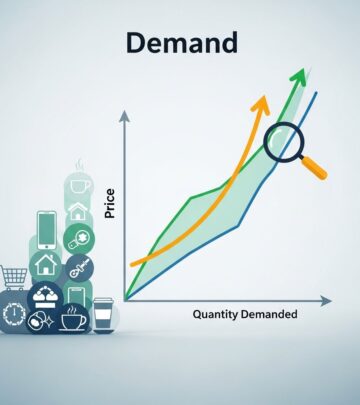
The aggregate demand curve is a graphical representation that illustrates the relationship between the quantity of demanded goods and services and the aggregate price level. The curve shows the number of products consumers are willing to purchase at each cost level, holding all other factors constant except price level and real GDP.
Understanding the Downward Slope
The aggregate demand curve slopes downward, indicating that higher price levels correspond to lower demand for goods and services. This negative relationship occurs for three primary economic reasons:
The Wealth Effect: When prices for goods and services decline, people feel more affluent despite having the same nominal income. Their purchasing power increases, allowing them to buy more goods and services with the same amount of money. This psychological and real increase in wealth encourages greater spending. Conversely, rising prices reduce purchasing power, causing consumers to feel less wealthy and spend less.
The International Trade Effect: When domestic price levels fall, domestic goods and services become cheaper relative to foreign alternatives. This price advantage makes exports more attractive to foreign buyers, increasing export demand. Simultaneously, imported goods become relatively more expensive compared to domestic products, reducing import demand. Both effects increase net exports and aggregate demand.
The Interest-Rate (Keynes) Effect: Lower price levels enhance purchasing power, reducing the need for consumers and businesses to borrow money for purchases. With lower demand for borrowed funds, interest rates decline. Lower interest rates reduce borrowing costs for investments and major consumer purchases, encouraging businesses and households to invest and spend more, thereby increasing aggregate demand. Higher price levels trigger the opposite mechanism.
Factors Affecting Aggregate Demand
Multiple factors can shift the entire aggregate demand curve, changing the quantity demanded at every price level:
Consumer Expectations significantly influence aggregate demand. Optimistic consumers about future economic conditions tend to spend more in the present. Business confidence about future profitability encourages companies to invest and hire. Pessimistic expectations lead to reduced consumption and investment across the economy.
Wealth Fluctuations directly impact spending capacity. Increases in household purchasing power from rising asset values, inheritance, or other sources boost aggregate demand. Conversely, declines in wealth reduce spending. Changes in physical capital owned by businesses influence investment decisions and capital allocation.
Government Policies substantially affect aggregate demand. Tax changes alter disposable income available for consumption. Government spending increases directly inject money into the economy. Monetary policy adjustments by central banks influence interest rates and money supply, affecting both consumption and investment spending.
International Factors also matter significantly. Exchange rate fluctuations affect the competitiveness of exports and the relative prices of imports. Changes in foreign incomes and preferences impact export demand. Trade agreements and tariff policies influence net exports.
Shifts in the Aggregate Demand Curve
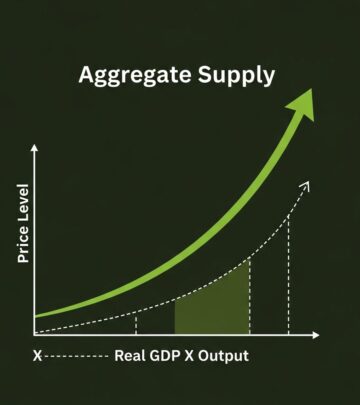
An increase in any component of aggregate demand—consumption, investment, government spending, or net exports—shifts the entire curve to the right, indicating increased demand at all price levels. Conversely, a fall in any component shifts the curve to the left, representing decreased demand at all price levels. These shifts can result from changes in consumer confidence, investor optimism, tax policies, government infrastructure spending, interest rate adjustments, and numerous other economic factors.
| Factor | Effect on AD Curve | Economic Mechanism |
|---|---|---|
| Increased consumer confidence | Right shift | Higher consumption spending |
| Rising interest rates | Left shift | Reduced investment and consumption |
| Increased government spending | Right shift | Direct injection into economy |
| Strengthening currency | Left shift | Reduced exports, increased imports |
| Technological advancement | Right shift | Increased business investment |
| Economic recession expectations | Left shift | Reduced consumption and investment |
How Aggregate Demand Impacts the Economy
Aggregate demand is fundamental to understanding overall economic performance and growth. When aggregate demand exceeds an economy’s productive capacity, inflationary pressures emerge as businesses raise prices to manage excess demand. When aggregate demand falls below productive capacity, unemployment rises as businesses reduce production and lay off workers.
The relationship between aggregate demand and economic output determines real GDP growth rates. Strong aggregate demand supports job creation, business expansion, and rising incomes. Weak aggregate demand leads to economic contraction, unemployment, and reduced business profitability. Policymakers monitor aggregate demand closely to anticipate economic conditions and implement appropriate stabilization policies.
Aggregate Demand and Economic Policy
Understanding aggregate demand is essential for formulating effective economic policies. Central banks adjust interest rates to influence investment and consumption spending. Governments modify tax rates and spending to directly impact aggregate demand. Knowledge of this macroeconomic model helps distinguish between short-term economic fluctuations and understand how economic policies influence them.
During economic downturns, policymakers typically implement expansionary policies to increase aggregate demand, such as lowering interest rates or increasing government spending. During inflationary periods, contractionary policies reduce aggregate demand through higher interest rates or reduced government spending. The effectiveness of these policies depends on how each component of aggregate demand responds to policy changes.
Frequently Asked Questions About Aggregate Demand
Q: How does aggregate demand differ from gross domestic product?
Aggregate demand focuses on what economic participants are willing to purchase at various price levels, while GDP measures the total production value. Their magnitudes are equal in equilibrium, but they represent different economic perspectives—one emphasizes spending behavior, the other emphasizes production.
Q: What causes the aggregate demand curve to shift?
Changes in any of the four components (consumption, investment, government spending, or net exports) shift the entire curve. These shifts result from factors like consumer confidence changes, interest rate adjustments, government policy changes, technological innovations, and international economic conditions.
Q: Why is the aggregate demand curve downward sloping?
The curve slopes downward due to three effects: the wealth effect (lower prices increase purchasing power), the international trade effect (lower prices boost exports and reduce imports), and the interest-rate effect (lower prices reduce borrowing demand and interest rates, stimulating investment and consumption).
Q: How does consumption relate to aggregate demand?
Consumption is the largest component of aggregate demand, typically representing about 66% of total demand. Changes in disposable income, consumer expectations, and wealth levels directly influence consumption and overall aggregate demand.
Q: Can aggregate demand be too high or too low?
Yes. Excessive aggregate demand beyond productive capacity causes inflation. Insufficient aggregate demand below productive capacity causes unemployment and recession. Optimal aggregate demand matches an economy’s productive capacity at stable price levels.
References
- Aggregate Demand: Definition, Formula and Curve — Mecalux. 2024. https://www.mecalux.com/blog/aggregate-demand
- What is Aggregate Demand? — Federal Reserve Board. https://www.federalreserve.gov/faqs/what-is-aggregate-demand.htm
- Aggregate Demand – Definition, Formula, Components — Corporate Finance Institute. https://corporatefinanceinstitute.com/resources/economics/aggregate-demand/
- Aggregate Demand — EconLib. https://www.econlib.org/library/Topics/Details/aggregatedemand.html
- Aggregate Demand — Economics Help. https://www.economicshelp.org/macroeconomics/economic-growth/aggregate-demand/
- Aggregate Demand in Keynesian Analysis — Khan Academy. https://www.khanacademy.org/economics-finance-domain/macroeconomics/income-and-expenditure-topic/macroeconomics-keynesian-economics-and-its-critiques/a/aggregate-demand-in-keynesian-analysis-cnx
Similar Articles








Read full bio of Sneha Tete