Aggregate Demand: Definition, Components, and Economic Impact
Understanding aggregate demand and its role in macroeconomic analysis and policy.

Understanding Aggregate Demand
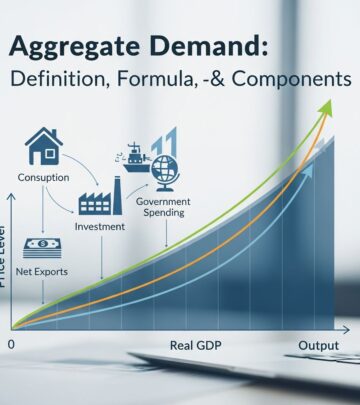
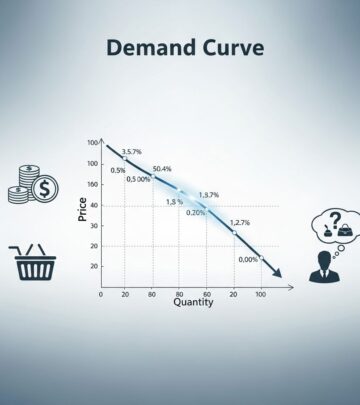
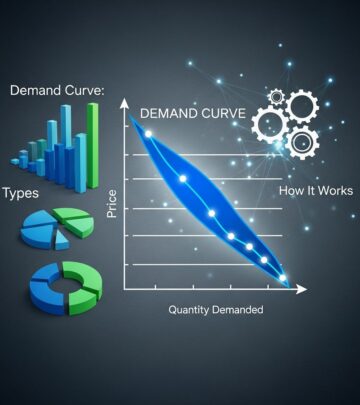
Aggregate demand represents the total amount of goods and services that consumers, businesses, government, and foreign entities are willing and able to purchase at various price levels during a specific time period. It is a fundamental concept in macroeconomics that helps economists and policymakers understand the overall health of an economy and predict future economic trends. The aggregate demand curve illustrates the relationship between the price level and the quantity of output demanded in an economy, typically sloping downward to indicate that as prices fall, the quantity demanded increases.
The aggregate demand-aggregate supply (AD-AS) model is essential for analyzing national income determination and understanding how changes in price levels affect the overall economy. By examining aggregate demand alongside aggregate supply, economists can identify whether an economy is in equilibrium, experiencing inflation, or facing recessionary pressures. This framework serves as a cornerstone for both academic study and practical policy implementation in modern economies.
Key Components of Aggregate Demand
Aggregate demand comprises four main components that together represent all spending in an economy. Understanding each component is crucial for grasping how different economic actors influence overall demand:
Consumer Spending (Consumption)
Consumer spending, often represented by the letter C in economic equations, is the largest component of aggregate demand in most developed economies. Consumption includes all expenditures by households on durable goods (such as automobiles and appliances), non-durable goods (such as food and clothing), and services (such as healthcare and entertainment). Consumer spending typically accounts for approximately 60-70% of total aggregate demand in advanced economies like the United States. Factors affecting consumer spending include disposable income, consumer confidence, wealth effects, interest rates, and expectations about future economic conditions. When consumers feel optimistic about the economy and their employment prospects, they tend to increase spending, which boosts aggregate demand and economic growth.
Business Investment
Business investment, represented by the letter I, encompasses spending by firms on capital goods, equipment, structures, and inventories. Companies invest in these assets to expand production capacity, improve efficiency, or replace worn-out equipment. Business investment is highly sensitive to interest rates, expected profitability, and business confidence. When interest rates are low and companies expect strong future demand, they are more likely to invest in expansion projects. Conversely, during economic downturns or periods of uncertainty, businesses often postpone investment decisions, reducing aggregate demand and potentially prolonging economic weakness. Investment is more volatile than consumption, making it a significant driver of economic cycles.
Government Spending
Government spending, denoted by the letter G, includes all expenditures by federal, state, and local governments on goods, services, and infrastructure projects. This component encompasses spending on defense, education, healthcare, transportation infrastructure, and social programs. Government spending can be used as a policy tool to influence aggregate demand during economic downturns or to combat inflation during periods of overheating. During recessions, governments often increase spending or reduce taxes to stimulate aggregate demand and support employment. Conversely, governments may reduce spending or increase taxes during inflationary periods to cool down excessive demand.
Net Exports
Net exports, represented as X minus M (exports minus imports), reflect the difference between goods and services sold to foreign countries and those purchased from abroad. When a country exports more than it imports, net exports are positive and increase aggregate demand. Conversely, when imports exceed exports, net exports are negative and reduce aggregate demand. Exchange rates, trade policies, relative price levels, and foreign incomes all influence net exports. A weaker domestic currency makes exports more competitive internationally while making imports more expensive, potentially increasing net exports. Trade agreements, tariffs, and protectionist policies can also significantly impact the net export component of aggregate demand.
Determinants of Aggregate Demand
Several factors can shift the entire aggregate demand curve, changing the quantity demanded at every price level. These determinants operate independently of price changes and represent fundamental shifts in economic conditions:
Changes in Consumer and Business Confidence
When consumers and businesses feel optimistic about economic prospects, they increase spending and investment, shifting aggregate demand rightward. Conversely, pessimism leads to reduced spending and leftward shifts in aggregate demand. Confidence can be influenced by media reports, employment data, housing market conditions, and overall economic sentiment.
Changes in Income and Wealth
Increases in household income or wealth lead to higher consumption and rightward shifts in aggregate demand. Stock market gains, real estate appreciation, and wage increases all enhance consumer purchasing power. Conversely, declining wealth from stock market crashes or housing market declines reduces consumption and shifts aggregate demand leftward.
Changes in Interest Rates
Lower interest rates reduce the cost of borrowing for consumers and businesses, encouraging spending and investment, which increases aggregate demand. Higher interest rates have the opposite effect, discouraging borrowing and reducing aggregate demand. Central banks use interest rate adjustments as a primary tool to influence aggregate demand and manage economic growth.
Changes in Exchange Rates
A weaker domestic currency makes exports more attractive to foreign buyers while making imports more expensive for domestic consumers, increasing net exports and shifting aggregate demand rightward. A stronger currency has the opposite effect, reducing net exports and shifting aggregate demand leftward.
Changes in Foreign Income and Demand
When foreign economies grow and incomes rise, demand for exports increases, shifting aggregate demand rightward. Conversely, economic downturns in major trading partner countries reduce demand for exports, shifting aggregate demand leftward.
Aggregate Demand and Economic Policy
Policymakers carefully monitor aggregate demand to guide fiscal and monetary policy decisions. When aggregate demand is insufficient to maintain full employment, expansionary policies aim to increase demand. Fiscal stimulus through increased government spending or tax cuts can directly boost consumption and investment. Monetary expansion through lower interest rates encourages borrowing and spending. Conversely, when aggregate demand exceeds the economy’s productive capacity, inflationary pressures emerge, prompting contractionary policies to reduce demand and control price increases.
The Aggregate Demand Curve and Price Levels
The aggregate demand curve slopes downward, reflecting the inverse relationship between price levels and quantity demanded. This negative relationship occurs through several mechanisms: the wealth effect (higher prices reduce real wealth and purchasing power), the interest rate effect (higher prices increase money demand, raising interest rates and reducing investment and consumption), and the international trade effect (higher domestic prices reduce exports and increase imports). Understanding these effects helps explain why economies contract when price levels rise unexpectedly and expand when prices fall.
Aggregate Demand and Economic Cycles
Fluctuations in aggregate demand are primary drivers of business cycles, periods of expansion and contraction in economic activity. During expansions, rising aggregate demand leads to increased output, employment, and income. As demand continues to outpace supply, inflation accelerates and interest rates rise, eventually dampening demand and leading to contraction. Recessions occur when aggregate demand falls below the economy’s productive capacity, resulting in declining output and rising unemployment. Understanding these cycles helps policymakers time policy interventions to smooth economic fluctuations and maintain stable growth.
Measuring and Analyzing Aggregate Demand
Aggregate demand is measured through the expenditure approach to calculating Gross Domestic Product (GDP). By summing consumption, investment, government spending, and net exports, economists obtain the total value of goods and services demanded in an economy. This measurement provides crucial insights into economic health and serves as the foundation for forecasting and policy analysis. Economists regularly analyze changes in each component to identify which forces are driving aggregate demand movements and adjust policy accordingly.
Long-Run and Short-Run Aggregate Demand
In macroeconomic analysis, economists distinguish between short-run and long-run aggregate demand considerations. In the short run, changes in aggregate demand can lead to output and employment fluctuations. However, in the long run, aggregate demand determines primarily the price level, while the economy’s productive capacity (determined by factors like labor force, capital stock, and technology) determines output. This distinction is critical for understanding the effectiveness and limitations of demand-management policies.
Challenges and Limitations in Aggregate Demand Analysis
While aggregate demand is a powerful analytical tool, it has limitations. Aggregating diverse economic actors and transactions masks important details about income distribution and sectoral variations. Additionally, measuring aggregate demand requires reliable data on consumption, investment, and trade flows, which may be subject to revisions. Furthermore, the relationship between aggregate demand and employment may be unstable across different economic periods, complicating policy predictions. Despite these limitations, aggregate demand remains central to macroeconomic thinking and policy formulation.
Frequently Asked Questions
What is the difference between aggregate demand and aggregate supply?
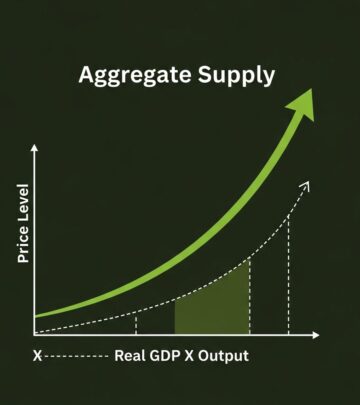
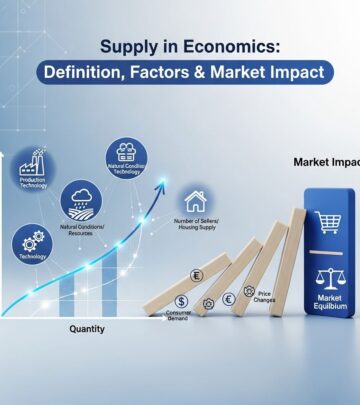
Aggregate demand represents the total quantity of goods and services demanded at various price levels, while aggregate supply represents the total quantity that producers are willing to supply at different price levels. The intersection of these two curves determines the equilibrium price level and output in an economy.
How does monetary policy affect aggregate demand?
Central banks influence aggregate demand primarily through interest rate adjustments. Lowering interest rates reduces borrowing costs, encouraging consumer spending and business investment, which increases aggregate demand. Raising interest rates has the opposite effect, reducing aggregate demand to combat inflation.
What causes shifts in the aggregate demand curve?
Changes in consumer confidence, business expectations, wealth levels, government spending, tax policy, interest rates, exchange rates, and foreign income can all shift the aggregate demand curve. These determinants are distinct from price level changes, which cause movements along the existing aggregate demand curve rather than shifts.
Why does the aggregate demand curve slope downward?
The aggregate demand curve slopes downward due to three main effects: the wealth effect (higher prices reduce purchasing power), the interest rate effect (higher prices increase money demand and interest rates), and the international trade effect (higher domestic prices reduce exports and increase imports). All three mechanisms reduce the quantity of goods and services demanded as prices rise.
How does aggregate demand relate to employment?
In the short run, higher aggregate demand typically leads to increased production and employment as businesses expand output to meet rising demand. Lower aggregate demand reduces business production and employment. However, this relationship can weaken in the long run as wages and prices adjust to reflect underlying economic productivity.
Can aggregate demand be too high?
Yes, when aggregate demand exceeds the economy’s productive capacity, it creates inflationary pressures as businesses raise prices and bid up wages to attract workers. Persistently excessive aggregate demand can lead to accelerating inflation, which erodes purchasing power and creates economic instability, prompting policymakers to implement contractionary measures.
References
- The Aggregate Demand-Aggregate Supply (AD-AS) Model — Khan Academy. 2025. https://www.khanacademy.org/economics-finance-domain/ap-macroeconomics/ap-macro-resources-and-exam-preparation/every-graph-used-in-ap-macroeconomics/a/the-aggregate-demand-aggregate-supply-ad-as-model
- Gross Domestic Product (GDP) Measurement and Components — U.S. Bureau of Economic Analysis (BEA). 2024. https://www.bea.gov/
- Macroeconomic Theory and Policy — International Monetary Fund (IMF). 2024. https://www.imf.org/
- Understanding Business Cycles and Aggregate Demand — Federal Reserve Board. 2024. https://www.federalreserve.gov/
- Consumer Spending and Economic Growth Trends — U.S. Department of Commerce. 2024. https://www.commerce.gov/
Similar Articles








Read full bio of Sneha Tete