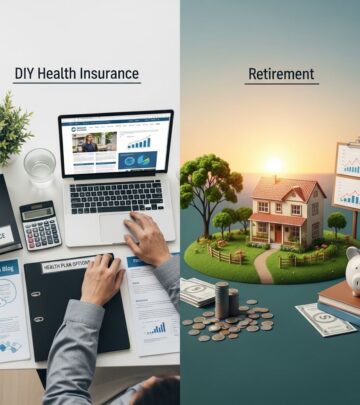
6 Ways to Find Affordable Health Insurance for Self-Employed
Navigate self-employed health insurance options and find affordable coverage that meets your needs.

Being your own boss offers incredible freedom and flexibility, but it also means you’re responsible for managing every aspect of your business—including your own health insurance. Unlike traditional employees who receive health coverage as part of their employment benefits, self-employed individuals must navigate the complex health insurance landscape on their own.
The challenge is significant. According to research, nearly one in four self-employed workers lacks health insurance, a rate substantially higher than that of regular employees. While going without coverage might seem like a way to save money in the short term, it’s a financial risk that can lead to catastrophic expenses if a medical emergency occurs. Understanding your health insurance options and finding affordable coverage is essential for protecting both your health and your financial stability.
Why Health Insurance Matters for Self-Employed Workers
Self-employed individuals face unique financial vulnerabilities. Without employer-sponsored insurance, you bear the full cost of premiums, and a serious illness or injury can devastate your business finances. Medical emergencies can result in overwhelming debt, and even routine healthcare expenses can strain your budget when you’re responsible for 100% of the costs.
The good news is that you have multiple options for obtaining affordable health insurance. By exploring these resources and understanding the tax benefits available to you, you can find coverage that protects your health without breaking the bank.
6 Health Insurance Options for the Self-Employed
1. Health Insurance Marketplace
The Health Insurance Marketplace, created under the Affordable Care Act, is specifically designed for individuals who don’t have access to employer-sponsored coverage. This includes freelancers, gig workers, independent contractors, part-time employees, college students, and self-employed entrepreneurs.
One of the most significant advantages of the marketplace is the availability of subsidies to reduce your premiums. Currently, approximately 14.5 million people enrolled in marketplace coverage receive premium assistance, helping them save substantially on their monthly insurance costs.
Key benefits of the marketplace:
- No income cap to qualify for subsidies—the lower your income, the higher your premium tax credit
- Standardized plans making it easy to compare coverage options
- Open enrollment periods and qualifying life events that allow you to enroll
- Transparent pricing and coverage information
- Access to plans from multiple insurance carriers
For most self-employed individuals, the marketplace represents the most cost-effective option. It’s worth researching these plans thoroughly before exploring other avenues.
2. Health Insurance Brokers
Health insurance brokers and agents, such as Stride and Gravie, specialize in assembling multiple health insurance plans from various carriers. They help you compare options based on your specific coverage needs, saving you time and effort in the research process.
Working with a broker can be particularly valuable if you’re unfamiliar with health insurance terminology and complex plan structures. They can explain the differences between plans, help you understand your coverage options, and guide you through the enrollment process.
Important consideration: Most insurance brokers earn commissions from the insurance products they sell. While this isn’t inherently problematic, it’s important to recognize that their recommendations may be influenced by the commissions they receive. Ask brokers directly about their compensation structure and seek multiple opinions before making a final decision.
3. Your Partner’s Employer Plan
If you have a spouse or domestic partner who is employed and has access to employer-sponsored health insurance, you may be eligible to join their plan. This can be a cost-effective way to obtain comprehensive coverage without the full premium burden.
Eligibility varies by employer. Some companies allow self-employed spouses to join regardless of employment status, while others may require proof that you don’t have alternative coverage options. You typically need to enroll during your partner’s open enrollment period, though qualifying life events—such as marriage, the birth of a child, or loss of other coverage—may allow you to enroll outside of regular enrollment windows.
4. Health Savings Accounts (HSAs) with High Deductible Plans
High deductible health plans (HDHPs) offer significantly lower monthly premiums in exchange for higher out-of-pocket costs when you need care. These plans typically feature deductibles of at least $1,500 or more, making them ideal for self-employed individuals who are generally healthy and don’t expect frequent medical visits.
The real advantage of HDHPs comes when paired with a Health Savings Account. An HSA allows you to set aside pre-tax dollars to pay for qualified medical expenses, providing substantial tax savings. The funds roll over year to year, creating a medical emergency fund that compounds over time.
HSA advantages:
- Triple tax advantage: contributions are tax-deductible, growth is tax-free, and withdrawals for qualified medical expenses are tax-free
- No “use it or lose it” requirement—unused funds roll over annually
- Flexibility to invest HSA funds for long-term growth
- Lower monthly premiums compared to traditional health plans
5. Private Health Insurance Companies
Major health insurance carriers like Cigna, UnitedHealthcare, and others offer private health insurance plans specifically designed for self-employed individuals. These companies provide a wide range of coverage options and price points.
While private insurance gives you direct access to carriers and more personalized service, purchasing directly from an insurance company can be significantly more expensive than obtaining coverage through the marketplace. Spending time to research and compare options is worthwhile, but ensure you’ve checked marketplace options first.
6. Professional and Trade Associations
Depending on your industry, you may be eligible for group health insurance through professional associations or trade groups. These membership organizations sometimes negotiate group rates with insurance carriers, allowing members to access more affordable coverage.
Research associations related to your field to determine if group insurance is available to you. While not all self-employed workers will find suitable options through this route, it’s worth investigating if you’re part of a professional community.
How Much Does Health Insurance Cost for Self-Employed People?
The cost of health insurance varies significantly based on multiple factors. Your age, geographic location, desired coverage level, and the specific plan you choose all influence your monthly premiums and out-of-pocket expenses.
According to recent data, the average person pays approximately $438 per month for coverage through the Health Insurance Marketplace. However, your actual costs may be substantially lower depending on your location, income level, and eligibility for premium subsidies.
Factors affecting your health insurance costs:
- Age (premiums increase with age)
- Location (regional healthcare costs vary significantly)
- Tobacco use (smokers typically pay more)
- Plan metal level (Bronze, Silver, Gold, Platinum)
- Deductible amount
- Copayment and coinsurance rates
- Out-of-pocket maximum
Tax Deductions for Self-Employed Health Insurance
One significant advantage for self-employed individuals is access to valuable tax deductions related to health insurance expenses. Understanding these deductions can substantially reduce your overall healthcare costs.
The Self-Employed Health Insurance Deduction:
If you’re self-employed and pay for health insurance premiums, you can deduct 100% of those premiums from your adjusted gross income (AGI). This is an above-the-line deduction, meaning you can claim it regardless of whether you itemize deductions or take the standard deduction—a significant advantage over other medical deductions.
To qualify for this deduction, you must meet specific criteria:
- You must be self-employed with net profit from your business
- Your net self-employment income must be at least equal to your health insurance deduction
- You cannot be covered under an employer health plan (yours or your spouse’s)
- The deduction applies only to premiums you pay, not out-of-pocket expenses
This deduction can significantly reduce your tax burden. For example, if you pay $500 monthly in health insurance premiums ($6,000 annually) and you’re in a 24% tax bracket, this deduction effectively saves you $1,440 in taxes.
Strategies for Finding the Most Affordable Health Insurance
To navigate the complex health insurance landscape effectively, consider these evidence-based strategies:
Check the Marketplace First
For most self-employed individuals, the Health Insurance Marketplace offers the best value. Subsidies and tax credits can dramatically reduce your costs. Research marketplace options thoroughly before contacting brokers or considering private exchanges. Take advantage of the marketplace’s comparison tools to view all available plans side by side.
Crunch the Numbers Carefully
Don’t focus solely on monthly premiums. Calculate your total potential costs by considering:
- Monthly premiums
- Annual deductibles
- Copayments for office visits and prescriptions
- Coinsurance percentages
- Out-of-pocket maximums
- Coverage for services you actually use
A plan with a lower premium but much higher deductible may cost you more overall if you require regular medical care.
Consider Your Healthcare Needs
Evaluate your anticipated healthcare usage. If you’re young and healthy with minimal medical needs, an HDHP with lower premiums makes sense. If you have chronic conditions requiring regular medications and specialist visits, a plan with lower deductibles and more comprehensive coverage may provide better value despite higher premiums.
Maximize Tax Advantages
Take full advantage of available tax deductions and the triple tax benefit of Health Savings Accounts. These tools can reduce your net healthcare costs substantially.
Financial Considerations for Self-Employed Health Insurance
As a self-employed individual, remember that not all the money you earn comes home to you. When calculating whether you can afford health insurance, factor in:
- Self-employment taxes (15.3% of net self-employment income)
- Income taxes
- Health insurance premiums
- Business expenses
- Quarterly estimated tax payments
Understanding your true take-home income helps you identify affordable insurance options that fit your actual financial situation.
Frequently Asked Questions
Q: Can I get health insurance if I haven’t been self-employed for very long?
A: Yes. The Health Insurance Marketplace is open to anyone who is self-employed, regardless of how recently you started your business. You can enroll during open enrollment periods or if you experience a qualifying life event.
Q: What if my income fluctuates significantly throughout the year?
A: Report your expected annual income when applying for marketplace coverage. If your actual income differs significantly, you can update your application. Be aware that if your income comes in lower than expected, you may owe back some subsidies received during the year when you file taxes.
Q: Are there penalties for not having health insurance?
A: Currently, the federal penalty for not having health insurance has been reduced to $0, though some states have implemented their own penalties. However, being uninsured exposes you to significant financial risk from unexpected medical costs.
Q: Can I deduct health insurance premiums if I have an S-Corp or LLC?
A: Yes, the self-employed health insurance deduction is available to self-employed individuals operating as sole proprietors, partnerships, S-Corps, or LLCs. However, consult with a tax professional about the specific rules for your business structure.
Q: What is a qualifying life event and when can I enroll?
A: Qualifying life events include marriage, divorce, birth or adoption of a child, loss of other coverage, and significant changes in income. These events allow you to enroll in marketplace coverage outside of the regular open enrollment period.
Q: Should I choose a Silver plan to get cost-sharing subsidies?
A: If you qualify for premium tax credits and cost-sharing reductions, Silver plans often provide the best value because cost-sharing reductions are only available on Silver plans. However, compare all options for your specific situation.
References
- 6 Ways to Find Affordable Health Insurance If You’re Self-Employed — The Penny Hoarder. https://www.thepennyhoarder.com/save-money/health-insurance-for-self-employed/
- Health Services Research — 2021 Study on Self-Employed Health Insurance Coverage. https://www.ncbi.nlm.nih.gov/pmc/articles/PMC8144688/
- Self-Employed Health Insurance Deduction — Internal Revenue Service (IRS). https://www.irs.gov/publications/p535
- Health Insurance Marketplace Subsidies and Tax Credits — Centers for Medicare & Medicaid Services (CMS). https://www.healthcare.gov/
- Health Savings Accounts (HSAs) — U.S. Department of the Treasury, Internal Revenue Service. https://www.irs.gov/publications/p969
Similar Articles








Read full bio of Sneha Tete