Federal Student Loans: Key Advantages And 2026 Changes
Discover why federal student loans offer superior flexibility, protections, and forgiveness options compared to private alternatives for funding your education.

Federal student loans provide essential financial support for millions of students pursuing higher education, offering unique benefits like flexible repayment options, forgiveness programs, and strong borrower protections that private loans often lack.
Flexible Repayment Options Tailored to Your Needs
One of the standout features of federal student loans is the variety of repayment plans designed to fit different financial situations. Borrowers can choose from standard plans with fixed payments or income-driven options that adjust based on earnings.
Upcoming changes under the One Big Beautiful Bill Act (OBBBA), effective July 1, 2026, will streamline these choices for new borrowers to just two plans: a standard repayment plan and the new Repayment Assistance Plan (RAP). RAP functions as an income-based option, capping payments at a percentage of discretionary income while ensuring progress toward forgiveness.
- Standard Plan: Fixed monthly payments over 10 years, ideal for those with stable income.
- Repayment Assistance Plan (RAP): Payments based on income, with forgiveness after 20-25 years, replacing multiple prior income-driven plans.
These options help prevent default by making payments manageable, especially during economic hardship. Existing borrowers retain access to legacy plans if enrolled before the changes.
Powerful Loan Forgiveness and Discharge Programs
Federal loans shine with forgiveness opportunities unavailable in private lending. Programs like Public Service Loan Forgiveness (PSLF) erase remaining balances after 120 qualifying payments for those in public or nonprofit sectors.
Other discharge paths include Teacher Loan Forgiveness for educators in low-income schools and Total and Permanent Disability discharge. Under OBBBA, forgiveness under RAP becomes taxable, but the structured path remains a key incentive.
| Program | Eligibility | Forgiveness Amount |
|---|---|---|
| PSLF | 120 payments in public service | Remaining balance |
| Teacher Forgiveness | 5 years in low-income schools | Up to $17,500 |
| Income-Driven (RAP post-2026) | 20-25 years of payments | Remaining balance (taxable) |
These programs provide long-term relief, making federal loans preferable for careers in public service or education.
Income-Driven Repayment for Financial Flexibility
Income-driven repayment (IDR) plans adjust payments to 10-20% of discretionary income, safeguarding borrowers from overwhelming debt. Post-2026, RAP consolidates these into one accessible plan, urged by the U.S. Department of Education for SAVE plan enrollees transitioning to compliant options.
This is crucial amid legal challenges to prior plans like SAVE, PAYE, and ICR. Borrowers in these must switch to authorized plans like Income-Based Repayment (IBR) until RAP launches, preserving eligibility for forgiveness.
Robust Borrower Protections and Deferment Options
Federal loans include safeguards like forbearance, deferment during unemployment or enrollment, and no credit checks for most undergraduates. Military members get interest subsidies, and public servants qualify for PSLF.
Unlike private loans, federal options prevent aggressive collections and offer rehabilitation for defaulted loans. Proration for part-time students starts July 2026, ensuring fair borrowing aligned with enrollment.
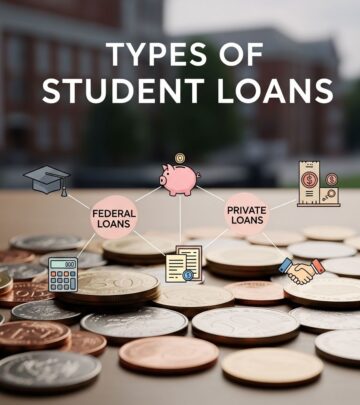
Understanding Loan Limits and Types in 2026
Federal Direct Subsidized and Unsubsidized Loans remain core, with government-paid interest on subsidized for eligible undergrads. Major 2026 shifts eliminate Grad PLUS for new borrowers, imposing caps: $20,500 annual/$100,000 aggregate for grad students; $50,000 annual/$200,000 for professional.
Parent PLUS faces lifetime limits. Legacy rules protect those with pre-July 1, 2026 disbursements, allowing continued borrowing up to cost of attendance until 2029 or program end.
- Grandfathered students: Retain Grad PLUS access if enrolled continuously.
- New borrowers: Strict caps encourage early planning or alternative funding.
These changes aim to curb debt growth while preserving access.
Expanded Aid Opportunities: Workforce Pell Grants
OBBBA introduces Workforce Pell Grants for short-term, high-demand training (150-600 hours), broadening federal aid beyond traditional degrees. FAFSA now excludes family farms, small businesses, and fisheries from assets, aiding rural applicants.
No Origination Fees on Key Loans and Interest Benefits
Direct Subsidized/Unsubsidized Loans have no fees for many, unlike PLUS loans (4.228% until Oct 2026). Subsidized loans pause interest during school, reducing total cost.
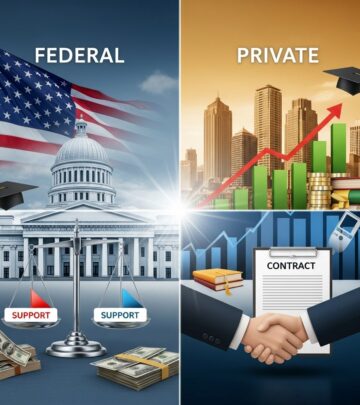
Federal vs. Private: Why Choose Federal?
Private loans lack forgiveness, IDR, or deferment, often requiring credit checks and fixed terms. Refinancing federal loans forfeits benefits; compare carefully.
| Feature | Federal | Private |
|---|---|---|
| Repayment Plans | Multiple/IDR/RAP | Fixed only |
| Forgiveness | PSLF, Teacher, etc. | None |
| Protections | Deferment, forbearance | Limited |
| Credit Check | Rarely for students | Required |
Federal loans prioritize borrower success.
Planning for 2026 Changes: Action Steps
Enroll before July 2026 to lock in legacy benefits. Apply early for 2025-26 aid, consult financial aid offices, and explore grants/scholarships to minimize borrowing.
Frequently Asked Questions (FAQs)
Will current students be affected by 2026 changes?
No changes for 2025-26; legacy provisions protect enrolled students.
What is the Repayment Assistance Plan?
A new income-based plan launching July 2026, replacing multiple IDR options.
Can I still get Grad PLUS loans after 2026?
No for new borrowers; grandfathered if disbursed before.
Are forgiveness amounts taxable now?
Under RAP post-2026, yes.
How do I qualify for PSLF?
120 qualifying payments in public service on Direct Loans.
References
- Federal Student Loans in 2026: What the One Big Beautiful Bill Act Affects Students — Citizens Bank. 2026. https://www.citizensbank.com/learning/how-the-one-big-beautiful-bill-act-affects-students.aspx
- Important Federal Loan Changes Coming in 2026 — Pepperdine Graziadio Business School. 2026. https://bschool.pepperdine.edu/admission/financial-aid/federal-loan-updates/
- Key Changes to Federal Student Loans Expected in July 2026 — Georgetown University Financial Aid. 2026. https://finaid.georgetown.edu/key-changes-to-federal-student-loans-expected-in-july-2026/
- U.S. Department of Education Continues to Improve Federal Student Loan Repayment Options — U.S. Department of Education. 2026. http://www.ed.gov/about/news/press-release/us-department-of-education-continues-improve-federal-student-loan-repayment-options-addresses-illegal-biden-administration-actions
- Subsidized and Unsubsidized Loans — Federal Student Aid (studentaid.gov). 2026. https://studentaid.gov/understand-aid/types/loans/subsidized-unsubsidized
Similar Articles








Read full bio of Sneha Tete