CD Ladders: Expert Guide To Adapting To Rate Shifts
Master strategies to modify your CD ladder amid rising or falling interest rates for optimal savings growth.
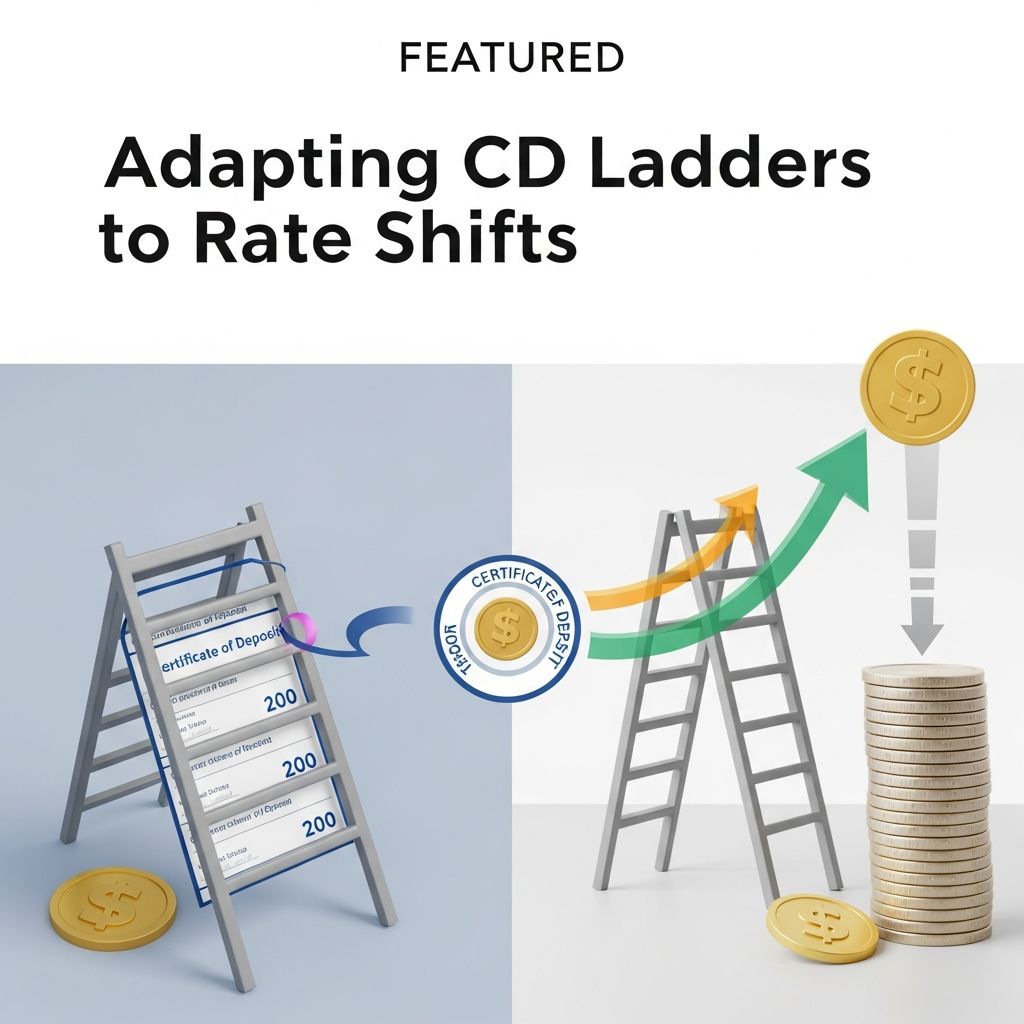
Certificates of deposit (CDs) offer secure, predictable returns, but fluctuating interest rates can impact their effectiveness. A
CD ladder
spreads investments across multiple CDs with staggered maturities, providing regular access to funds while capturing higher yields from longer terms. When rates rise or fall, proactive adjustments ensure your ladder remains efficient.Understanding CD Ladders in a Dynamic Rate Environment
CD laddering divides a lump sum into CDs maturing at different intervals, such as 6 months, 1 year, 2 years, up to 5 years. This setup balances liquidity and yield: shorter terms offer quicker access, while longer ones typically pay more. In stable rates, this works seamlessly, but shifts demand tweaks.
Rising rates benefit ladders by allowing reinvestment at higher yields as CDs mature. Conversely, falling rates risk locking funds at suboptimal levels. Recent data shows CD rates varying widely; for instance, 5-year terms might yield over 4% while short-term hover near 5% during hikes.
Key Triggers for Ladder Adjustments
Monitor Federal Reserve announcements, inflation reports, and bank promotions. Rates often climb post-hikes (e.g., 2022-2023 cycle) or drop during cuts. Adjust if:
- Your shortest CD matures amid rate spikes.
- Longer-term rates exceed your current ladder average.
- Economic forecasts signal prolonged changes.
Assess goals first: emergency funds favor short rungs; long-term savings suit extensions.
Strategies for Rising Interest Rates
When rates increase, capitalize by shortening terms or reinvesting aggressively.
Accelerate Reinvestments into Longer Terms
As a CD matures, roll principal plus interest into the longest available term. Example: With $10,000 split equally across 1-5 year CDs at 3%, a maturing 1-year CD at rising 4.5% rates gets reinvested in a new 5-year CD. This shifts portfolio yield upward.
| Original Ladder | Amount | Term | Rate |
|---|---|---|---|
| CD 1 | $2,000 | 1 year | 3.0% |
| CD 2 | $2,000 | 2 years | 3.2% |
| CD 3 | $2,000 | 3 years | 3.5% |
| CD 4 | $2,000 | 4 years | 3.7% |
| CD 5 | $2,000 | 5 years | 4.0% |
Post-adjustment, new CD at 4.5% boosts average yield.
Build a ‘Barbell’ Ladder
Concentrate funds in very short (3-6 months) and long (4-5 years) terms, skipping middles. This maximizes liquidity for new high rates and locks peaks long-term. Ideal if expecting sustained hikes.
Navigating Falling Interest Rates
Declining rates prompt securing highs before they vanish.
Extend Maturities Proactively
Reinvest maturing CDs into longest terms immediately. If 2-year rates drop from 4% to 2.5%, grab remaining 5-year options at 3.8%. Avoid short terms that force low-rate reinvestments.
Mini-Ladders for Flexibility
Use 3-12 month CDs for a compact ladder. This preserves options if rates rebound quickly, maintaining access without full commitment.
Advanced Adjustment Techniques
Uneven Allocation Ladders
Weight toward higher-rate terms. In rising environments, allocate more to shorts (e.g., 40% in 6-months, 20% each in others). Falling rates? Heavier on longs.
| Strategy | Rising Rates | Falling Rates |
|---|---|---|
| Allocation Focus | Short-heavy | Long-heavy |
| Reinvestment | New longest terms | Lock current highs |
| Liquidity | High | Moderate |
Hybrid Ladders with Brokered CDs
Brokered CDs from platforms allow secondary market sales if rates shift drastically, though penalties apply. Fidelity’s models blend rungs for $1,000 minimums.
Tax and Penalty Considerations
Interest is taxable annually; use tax-deferred accounts like IRAs for ladders. Early withdrawals incur penalties (e.g., 90-180 days interest), so plan maturities around needs. FDIC insures up to $250,000 per depositor per bank—diversify institutions.
Tools and Monitoring Tips
Track via apps like Bankrate or Vanguard’s ladder builders. Review quarterly: compare ladder APY vs. high-yield savings (often 4-5% fluid rates). Stress-test: simulate rate drops by 1%.
Real-World Examples
Suppose $50,000 ladder in 2023 at 4% average. Rates rise to 5.2%: Reinvest $10,000 maturing into 5-year at 5%, lifting total yield to 4.6%. If rates fall to 2.8%, prior long locks preserve gains vs. new singles at 2%.
Common Pitfalls to Avoid
- Overlooking Opportunity Cost: CDs beat savings in hikes but lag stocks long-term.
- Inflation Erosion: Fixed rates may underperform CPI spikes.
- Single-Bank Risk: Spread across FDIC limits.
FAQs
What if rates change mid-ladder?
Wait for maturities; reinvest strategically based on direction.
Is CD laddering better than a single CD?
Yes for balance; ladders average higher yields with liquidity.
How often should I adjust?
At each maturity or major Fed moves.
Can I automate adjustments?
Some brokers offer auto-reinvest, but manual optimizes rates.
Best ladder length?
3-5 years for most; match goals.
References
- CD Laddering: How Does it Work and How Can it Benefit You? — Quaint Oak Bank. 2023. https://www.quaintoak.com/blog/cd-laddering/
- What is a CD ladder? — Vanguard. 2024-02-06. https://investor.vanguard.com/investor-resources-education/article/cd-ladder
- CD Ladder Explained: 3 Strategies To Increase Your Savings — YouTube (Video). 2023. https://www.youtube.com/watch?v=L48xiw3d6H8
- Building a CD Ladder: A Smart Savings Strategy — F&M Bank. 2024-08-16. https://www.fm.bank/blogs/blog/2024/08/16/building-a-cd-ladder–a-smart-savings-strategy
- Model CD Ladders — Fidelity Investments. 2024. https://www.fidelity.com/fixed-income-bonds/cd-ladders
Similar Articles








Read full bio of medha deb