ACV vs Replacement Cost in Auto Insurance
Discover how actual cash value and replacement cost coverage differ in car insurance, impacting your payout after accidents or theft.
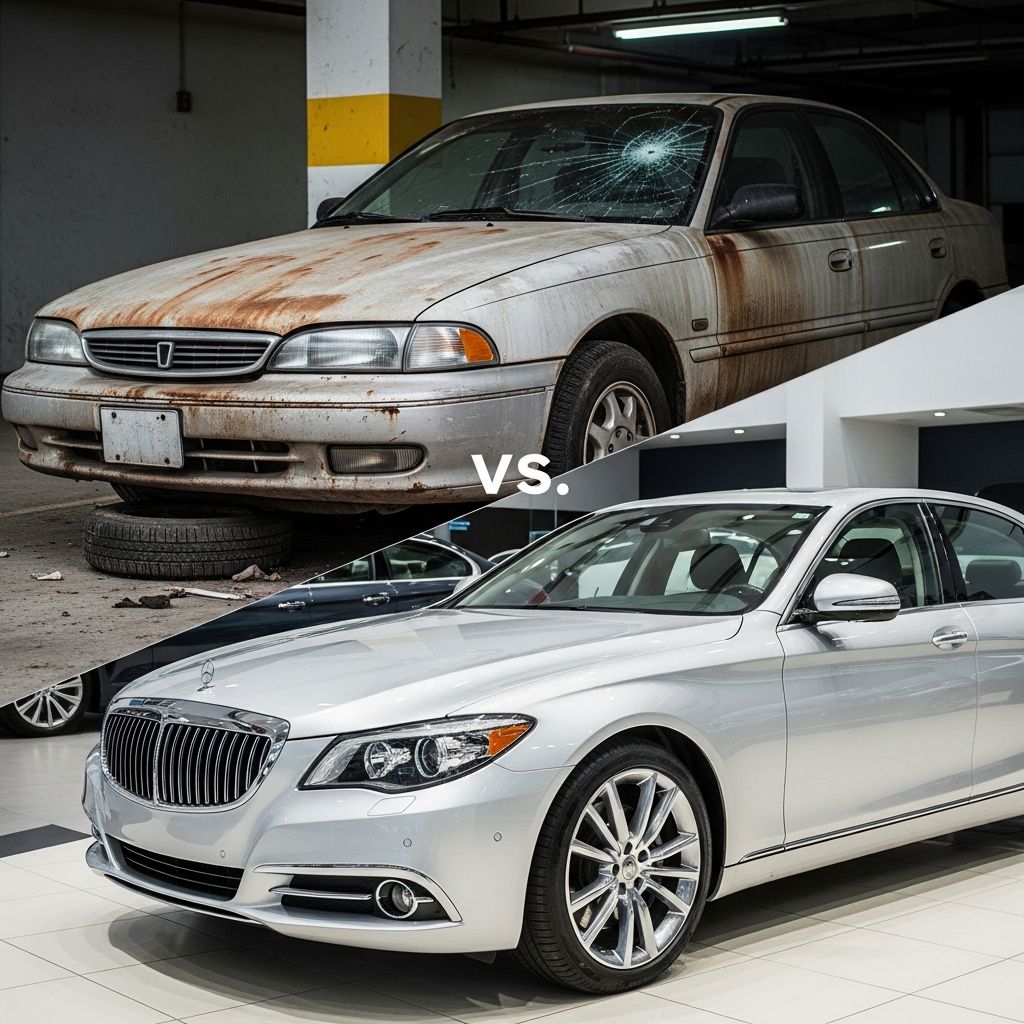
When your car faces damage from a collision, theft, or natural disaster, your insurance payout hinges on whether your policy uses
actual cash value (ACV)
orreplacement cost value (RCV)
. ACV accounts for depreciation, paying less for older vehicles, while RCV covers full modern replacement expenses without deductions for age or wear. Choosing the right one protects your finances effectively.Defining Actual Cash Value Coverage
**Actual cash value (ACV)** represents your vehicle’s current market worth at the time of loss, calculated by subtracting depreciation from its original value. Depreciation reflects wear, tear, age, and mileage, reducing what insurers owe you.
Insurers determine ACV using factors like the car’s make, model, year, condition, location, and comparable sales data. For instance, a five-year-old sedan bought for $25,000 might have an ACV of $12,000 today due to accumulated depreciation.
- Market comparisons from dealers or online listings.
- Adjustments for mileage exceeding averages.
- Deductions for prior damage or poor maintenance.
ACV is standard in most comprehensive and collision policies, keeping premiums lower since payouts are capped at depreciated amounts.
Understanding Replacement Cost Coverage
**Replacement cost value (RCV)** pays the full amount to buy a new, similar vehicle at current market prices, ignoring depreciation. This ensures you can restore your transportation without out-of-pocket losses beyond your deductible.
While less common in standard auto policies, some insurers offer RCV endorsements or guaranteed replacement options, especially for newer cars. Payouts might come in stages: initial ACV payment, followed by the depreciation difference upon proof of replacement.
| Coverage Type | Calculation Basis | Typical Payout Example |
|---|---|---|
| ACV | Replacement cost minus depreciation | $15,000 (for a $20,000 new car after 3 years) |
| RCV | Current cost of similar new vehicle | $20,000 (full replacement) |
RCV shines for policyholders wanting to avoid financial gaps post-loss.
Key Differences Between ACV and RCV
The core distinction lies in depreciation: ACV deducts it, RCV does not. For a totaled 2018 SUV with $30,000 replacement cost and 40% depreciation, ACV yields $18,000, while RCV provides $30,000.
Auto policies default to ACV because vehicles depreciate rapidly—often 20-30% in the first year alone. RCV, more prevalent in home insurance, requires add-ons for cars, raising premiums by 10-25%.
- Payout Timing: ACV is a one-time settlement; RCV may involve recoverable depreciation after repair/replacement proof.
- Premium Impact: ACV saves on costs upfront; RCV costs more but offers fuller recovery.
- Vehicle Age Suitability: ACV fits older cars; RCV benefits newer ones.
Pros and Cons of Actual Cash Value
ACV appeals to budget-conscious drivers with its affordability.
Advantages
- Lower premiums reduce monthly expenses.
- Simpler claims process with quick settlements based on appraisals.
- Suitable for high-mileage or older vehicles where full replacement exceeds value.
Disadvantages
- Underpays for replacement, forcing personal funds to buy equivalents.
- Depreciation hits hard on tech-heavy modern cars.
- May not cover upgrades in newer models.
Pros and Cons of Replacement Cost
RCV provides superior protection at a higher price.
Advantages
- Full reimbursement maintains your lifestyle post-loss.
- No depreciation penalty preserves equity in recent purchases.
- Ideal for leased or financed vehicles matching lender requirements.
Disadvantages
- Higher premiums strain budgets.
- Not always available; often limited to low-mileage, recent models.
- Requires proof of replacement for full payout.
How Depreciation Affects Your Claim
Depreciation is calculated via straight-line methods or market data. For electronics in cars like infotainment systems, it might be 20% per year over 5 years.
Example: A $1,000 navigation unit from two years ago (5-year life) has 40% depreciation ($400), so ACV is $600. RCV pays $1,200 if upgraded equivalents cost more.
Insurers use tools like NADA guides or CCC One for precise valuations.
Real-World Examples in Car Scenarios
Theft Case: Your 2022 sedan (ACV: $22,000; RCV: $28,000) is stolen. ACV leaves you short for a comparable used model; RCV funds a new one.
Collision Total Loss: Post-repair estimate exceeds ACV by $5,000—common with inflation on parts. RCV bridges this via supplemental claims.
Hail Damage: Roof panels cost $4,000 new. ACV at $2,500 means $1,500 out-of-pocket.
Choosing the Right Coverage for Your Car
Evaluate your vehicle’s age, value, driving habits, and budget. New cars under warranty benefit from RCV; beaters suit ACV.
- Discuss with agents about add-on riders.
- Compare quotes from multiple insurers.
- Factor deductibles—higher ones lower premiums across both.
For financed cars, lenders often mandate RCV-like protection.
Factors Influencing Coverage Availability
Insurers restrict RCV to vehicles under 5-7 years old, below certain mileage. Regional factors like theft rates or repair costs also play roles.
Steps to File a Claim Effectively
- Document damage with photos and police reports.
- Get multiple repair estimates.
- Submit receipts for recoverable depreciation under RCV.
- Appeal low ACV offers with market comps.
Frequently Asked Questions
What does ACV mean in car insurance?
ACV is the depreciated market value of your vehicle at loss time.
Is replacement cost worth the extra premium?
Yes, if your car is new and you can’t afford gaps; otherwise, ACV suffices.
Can I switch from ACV to RCV mid-policy?
Possible at renewal; check eligibility.
How is vehicle depreciation calculated?
Using age, mileage, condition against industry guides.
Does ACV cover new car replacements?
No, it pays depreciated value only.
Strategies to Maximize Your Protection
Bundle policies for discounts, maintain low mileage for better rates, and review annually as values change. Gap insurance pairs well with ACV for loans.
Understanding these concepts empowers informed decisions, safeguarding against underinsurance pitfalls.
References
- Replacement Cost vs Actual Cash Value — Corporate Finance Institute. 2023. https://corporatefinanceinstitute.com/resources/valuation/replacement-cost-vs-actual-cash-value/
- What’s the difference between replacement cost and actual cash value — Cooperators. 2024. https://www.cooperators.ca/en/personal/resource-centre/protect-what-matters/replacement-cost-vs-cash-value
- Actual Cash Value vs. Replacement Cost Value — NC Department of Insurance (.gov). 2025. https://www.ncdoi.gov/consumers/homeowners-insurance/actual-cash-value-vs-replacement-cost-value
- Actual Cash Value vs Replacement Cost — Allstate. 2026-02. https://www.allstate.com/resources/home-insurance/actual-cash-value-vs-replacement-cost
- Replacement Cost vs. Actual Cash Value — Progressive. 2025. https://www.progressive.com/answers/replacement-cost-vs-actual-cash-value/
- What’s the Difference Between Actual Cash Value Coverage and Replacement Cost Coverage? — NAIC. 2024. https://content.naic.org/article/whats-difference-between-actual-cash-value-coverage-and-replacement-cost-coverage
Similar Articles








Read full bio of Sneha Tete