Actual Cash Value: 5 Strategies To Maximize Your Car’s Payout
Discover how insurers calculate your vehicle's actual cash value, key factors influencing it, and strategies to maximize your claim payout.
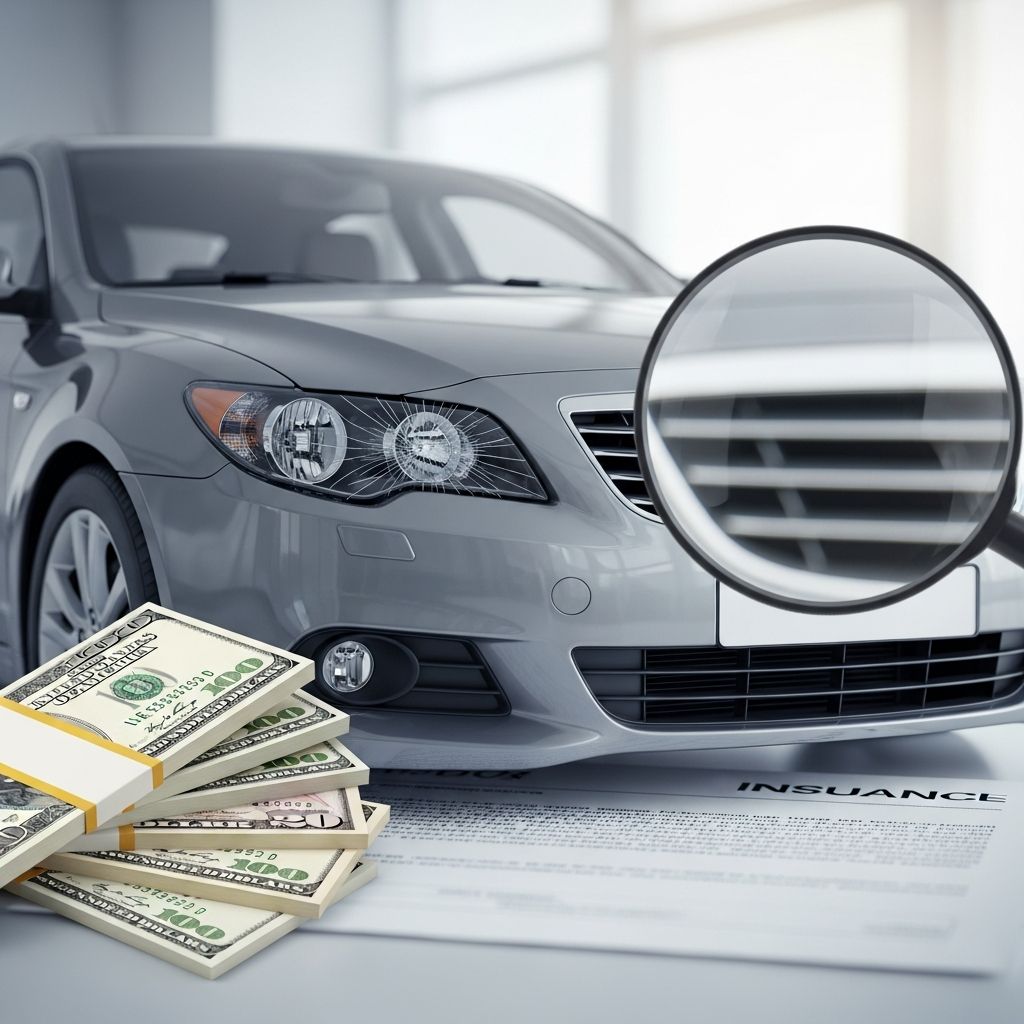
The actual cash value (ACV) of your vehicle represents its current market worth at the time of a loss, accounting for depreciation from age, use, and condition. This figure is central to auto insurance claims, determining payouts for repairs or total losses minus your deductible.
Defining Actual Cash Value in Simple Terms
Actual cash value is the fair market price a buyer would pay for your specific car in its pre-loss state. Unlike the original purchase price, ACV reflects real-world depreciation, making it lower over time. Insurers use this to settle claims fairly based on what replacement would realistically cost in today’s market.
For example, a car bought new for $30,000 might have an ACV of $18,000 after three years due to normal wear. This valuation ensures policyholders receive equitable compensation without overpaying for outdated vehicles.
ACV Versus Replacement Cost: Key Differences
Auto policies typically offer two valuation methods: ACV or replacement cost. ACV deducts depreciation, while replacement cost covers a new equivalent vehicle without reductions.
| Aspect | Actual Cash Value (ACV) | Replacement Cost |
|---|---|---|
| Definition | Current market value minus depreciation | Cost of a new like-kind vehicle |
| Depreciation | Included (reduces payout) | Excluded (full new value) |
| Best For | Older or high-mileage cars; standard policies | New vehicles; premium coverage |
| Payout Example | $20,000 ACV – $500 deductible = $19,500 | $30,000 new car cost – $500 = $29,500 |
Most standard policies default to ACV, saving insurers money but potentially leaving owners short on funds for upgrades.
Core Factors That Shape Your Car’s ACV
Insurers evaluate multiple elements to compute ACV accurately. Understanding these helps drivers anticipate settlements.
- Age of the Vehicle: Older cars lose value faster; a 10-year-old model might retain only 20-30% of its original price.
- Mileage: High odometer readings signal wear, slashing value by thousands. Aim for under 12,000 miles annually for optimal ACV.
- Physical Condition: Dents, scratches, or mechanical issues lower ACV. Pristine interiors and exteriors boost it significantly.
- Make, Model, and Options: Popular brands like Toyota hold value better than luxury models that depreciate quickly.
- Local Market Trends: Regional demand, gas prices, and economy influence comparable sales prices.
Customizations like aftermarket rims may add minor value, but they’re often subjective and depreciate rapidly.
How Insurers Calculate ACV Step by Step
Claims adjusters follow a systematic process, often using tools like Kelley Blue Book or NADA guides.
- Gather Comparables: Find recent sales of identical make/model/year in your area with similar mileage.
- Assess Condition: Inspect for damage, then adjust base value up or down (e.g., +10% for excellent upkeep).
- Apply Depreciation: Subtract annual loss based on age/mileage formulas. ACV ≈ Original Price – (Depreciation Rate × Time).
- Incorporate Market Data: Factor supply/demand; hot models get premiums.
- Finalize Offer: Subtract deductible; provide report for review.
This method ensures objectivity, though disputes arise if owners believe values are undervalued.
When ACV Matters Most: Total Loss Scenarios
A total loss occurs when repair costs exceed 70-80% of ACV, per state rules. Insurers then pay ACV minus deductible, closing the claim.
Post-payout, you might keep the salvage (“title your car”) or surrender it. Negotiating here is crucial, as initial offers can be 10-20% low.
Strategies to Maximize Your ACV Payout
Don’t accept the first offer blindly. Arm yourself with evidence for better results.
- Get Independent Appraisals: Hire certified appraisers for defensible valuations; insurers often concede.
- Research Comparables: Use KBB, Edmunds, or local listings to prove higher values.
- Document Maintenance: Receipts for tires, oil changes elevate perceived condition.
- Highlight Upgrades: Prove added features like navigation boost worth.
- Negotiate Politely: Present facts calmly; escalate to supervisors if needed.
Success stories show 15-25% increases with solid proof, turning frustrating claims into fair deals.
Real-World ACV Calculation Example
Consider a 2019 Honda Civic EX with 60,000 miles in excellent condition.
| Factor | Base Value | Adjustment | Adjusted Value |
|---|---|---|---|
| Market Comparable | $18,500 | – | $18,500 |
| Mileage Adjustment | – | -$1,200 | $17,300 |
| Condition Bonus | – | +$800 | $18,100 |
| Regional Demand | – | +$400 | $18,500 |
| Final ACV | – | – | $18,500 |
After a $500 deductible, payout is $18,000—enough for a similar used Civic.
Common Myths About Vehicle ACV Debunked
- Myth: ACV equals what I paid. Reality: Depreciation starts immediately.
- Myth: All policies pay replacement cost. Reality: Only riders or new-car coverage do.
- Myth: Custom parts always add value. Reality: Insurers often ignore or undervalue them.
FAQs: Actual Cash Value Essentials
What is actual cash value for my car?
ACV is your vehicle’s depreciated market value at loss time, used for insurance settlements.
How does depreciation impact ACV?
It reduces value based on age, mileage, and wear; cars lose 20-30% yearly initially.
Can I negotiate my ACV offer?
Yes, with comparables, appraisals, and maintenance records for higher payouts.
What’s better: ACV or replacement cost?
Replacement cost for new cars; ACV suffices for older ones on standard policies.
Who determines my car’s ACV?
Insurers via adjusters, using guides like KBB; you can challenge with evidence.
Protecting Your Vehicle’s Value Proactively
Maintain records, garage your car, and consider gap insurance for loans exceeding ACV. Shop policies for replacement cost options if buying new.
Staying informed empowers better claims handling, ensuring you drive away fairly compensated.
References
- What Is Actual Cash Value? — Infinity Auto Insurance. 2023. https://www.infinityauto.com/knowledge-center/glossary/actual-cash-value
- Actual Cash Value: How It Works for Car Insurance — Kelley Blue Book. 2024-01-15. https://www.kbb.com/car-advice/actual-cash-value/
- What Is an Actual Cash Value (ACV) Appraisal — Auto Praise. 2023-05-10. https://www.auto-praise.com/understanding-actual-cash-value-in-auto-appraisals/
- What Does “Actual Cash Value” of a Car Mean? — Pain in the Carwreck. 2024. https://paininthecarwreck.com/blog/what-does-actual-cash-value-of-a-car-mean/
- Understanding the Actual Cash Value for My Car — Total Loss NW. 2023-11-20. https://totallossnw.com/actual-cash-value-for-my-car/
- Understanding the Actual Cash Value of Your Car — OreAte AI. 2023. https://www.oreateai.com/blog/understanding-the-actual-cash-value-of-your-car-a-simple-guide/626fe4b4167ca3cde7d8aff634bf6508
- Actual Cash Value — AutoBidMaster Help Center. 2022-08-01. https://helpcenter.autobidmaster.com/hc/en-us/articles/360020512492-Actual-Cash-Value
Similar Articles








Read full bio of medha deb