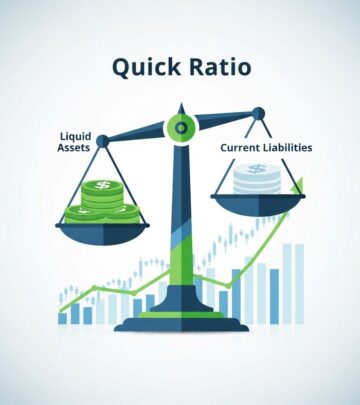
Acid Test Ratio: Quick Guide to Liquidity
Master the acid test ratio to evaluate a company's short-term financial health and liquidity position.
Acid Test Ratio: Understanding Your Company’s Financial Liquidity
The acid test ratio, also known as the quick ratio, is one of the most critical financial metrics used to evaluate a company’s short-term liquidity position. This fundamental indicator measures whether a business has sufficient liquid assets to cover its current liabilities without relying on inventory sales or external financing. For investors, creditors, and business managers, understanding this ratio is essential to making informed financial decisions and assessing the health of any organization.
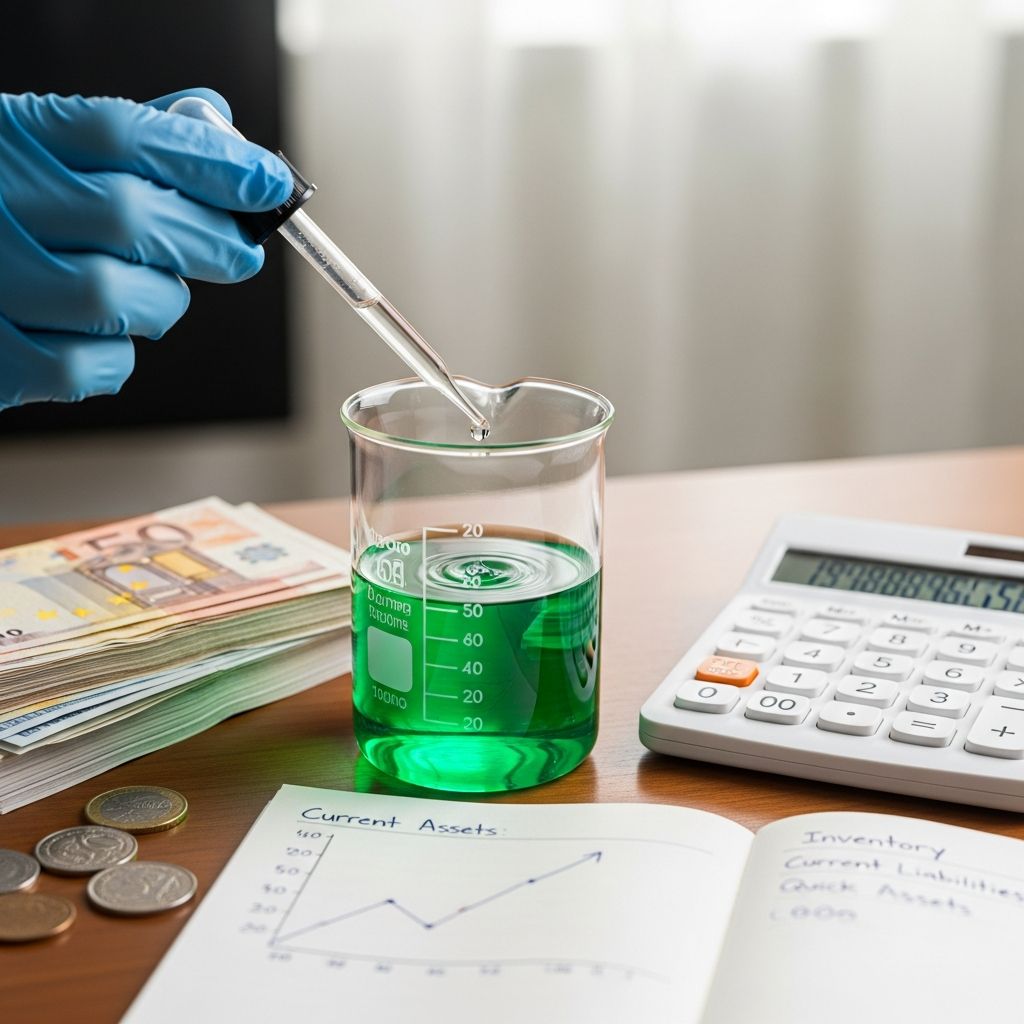
The term “acid test” itself has historical origins dating back to 1854, when nitric acid was used to determine the gold content in jewelry. Similarly, in finance, the acid test ratio serves as a crucial examination to determine whether a company’s liquid assets can withstand financial pressure. This metric is more stringent and conservative than the current ratio, making it a preferred tool for those who want a realistic picture of a company’s financial stability.
What Is the Acid Test Ratio?
The acid test ratio is a liquidity ratio that compares a company’s most liquid assets to its current liabilities. Unlike the current ratio, which includes all current assets, the acid test ratio excludes inventory and prepaid expenses because these assets cannot be quickly converted to cash without significant loss of value.
The acid test ratio focuses on assets that are truly liquid, including:
– Cash and cash equivalents- Marketable securities- Accounts receivable
These three categories represent funds that can be converted into cash within a short timeframe, typically within days or weeks. By excluding inventory and other slow-moving assets, the acid test ratio provides a more conservative and realistic assessment of a company’s ability to meet its immediate financial obligations.
The importance of this distinction cannot be overstated. Inventory, while an asset, requires time to sell and may need to be discounted heavily if liquidated quickly. Prepaid expenses cannot be converted to cash at all. Therefore, the acid test ratio gives stakeholders a clearer picture of genuine financial liquidity.
How to Calculate the Acid Test Ratio
Calculating the acid test ratio is straightforward. The formula is:
Acid Test Ratio = (Cash + Cash Equivalents + Marketable Securities + Accounts Receivable) / Current Liabilities
Alternatively, this can be expressed as:
Acid Test Ratio = (Current Assets – Inventory – Prepaid Assets) / Current Liabilities
All of these components can be found on a company’s balance sheet. Current liabilities include accounts payable, short-term debt, and other obligations due within one year. When calculating the ratio, accounts receivable should be included at net value, accounting for any allowance for doubtful accounts that may not be collected.
For example, if a company has:
– Cash: $50,000- Marketable securities: $30,000- Accounts receivable: $40,000- Current liabilities: $90,000
The acid test ratio would be: ($50,000 + $30,000 + $40,000) / $90,000 = 1.33
This calculation shows that the company has $1.33 in liquid assets for every $1.00 of current liabilities, indicating a healthy liquidity position.
Interpreting the Acid Test Ratio
Understanding what your acid test ratio means is just as important as calculating it. The interpretation of results depends on the specific ratio number and the context of the business.
Ratio of 1.0 or Higher
An acid test ratio of 1.0 or higher generally indicates that a company has adequate liquidity to cover its current liabilities. This means the company has at least one dollar in liquid assets for every dollar of short-term debt. At this level, the company should theoretically be able to pay its bills on time.
However, a ratio of exactly 1.0 leaves no margin for error. If accounts receivable are not collected as expected, the company could face cash flow difficulties. Therefore, while a ratio of 1.0 meets the minimum threshold, it does not provide a safety cushion.
Ratio Between 1.0 and 1.5
A ratio in this range is considered healthy and demonstrates good financial health. A ratio of 1.2 or 1.3, for instance, suggests the company has a reasonable buffer to handle unexpected situations or delays in collecting receivables. This range balances adequate liquidity with reasonable asset utilization.
Ratio of 1.5 or Higher
An acid test ratio of 1.5 or above indicates a strong financial position. This means the company has $1.50 in liquid assets for every $1.00 of current liabilities, providing a 50% cushion against potential shortfalls. Such a company demonstrates solid liquidity and lower risk of financial distress.
Very High Ratios (Above 3.0)
While a higher ratio generally seems positive, extremely high acid test ratios may indicate inefficiency. A ratio above 3.0 could suggest that the company has excessive idle cash that could be deployed for strategic investments, research and development, or other growth initiatives that might generate better returns. This situation may signal that management is being overly conservative with cash deployment or that the company lacks attractive investment opportunities.
Low Ratios (Below 1.0)
An acid test ratio below 1.0 is a red flag. It indicates that the company does not have enough liquid assets to cover current liabilities. In this situation, the company would need to sell inventory, secure additional financing, or rely on other sources of cash to meet its obligations. This can make obtaining credit more difficult and may signal financial distress.
Acid Test Ratio vs. Current Ratio
While related, the acid test ratio and current ratio measure liquidity differently:
| Feature | Acid Test Ratio | Current Ratio |
|---|---|---|
| Includes Inventory | No | Yes |
| Includes Prepaid Assets | No | Yes |
| Formula | (Cash + Equivalents + Securities + AR) / CL | Current Assets / Current Liabilities |
| Conservativeness | More Conservative | Less Conservative |
| Best Used For | Short-term liquidity assessment | Overall liquidity overview |
The acid test ratio is more conservative because it excludes assets that cannot be quickly liquidated. This makes it a better indicator of true short-term financial health, especially for creditors concerned about payment of invoices and loans.
Why the Acid Test Ratio Matters
The acid test ratio is critically important for several stakeholders:
For Creditors and Lenders
Banks and suppliers use the acid test ratio to determine whether a company is creditworthy. A low ratio may result in denial of credit or higher interest rates, as it signals higher risk of default.
For Investors
Investors examine the acid test ratio to assess management’s ability to navigate financial challenges. A healthy ratio suggests lower bankruptcy risk and more stable operations.
For Management
Internal management teams use this metric to optimize cash management and working capital. It helps identify whether the company is holding too much cash or if additional financing is needed.
For Industry Analysis
Comparing acid test ratios across competitors provides insight into relative financial health and operational efficiency within an industry.
Factors Affecting Acid Test Ratio
Several business factors influence the acid test ratio:
– Industry Type: Retail businesses naturally have higher inventory, affecting the ratio difference from service industries- Business Cycle: Seasonal businesses may have varying ratios throughout the year- Payment Terms: Businesses with longer customer payment cycles may have higher accounts receivable- Credit Policies: Lenient credit policies increase accounts receivable but also collection risks- Inventory Management: More efficient inventory turnover improves the acid test ratio- Cash Management: Strategic cash reserves and investment decisions impact available liquid assets
Limitations and Considerations
While useful, the acid test ratio has limitations that should be understood:
Quality of Accounts Receivable
The ratio assumes all accounts receivable will be collected. However, some customers may default. An allowance for doubtful accounts should be applied, but unexpected collection issues can still occur.
Industry Variations
Optimal acid test ratios vary significantly by industry. A well-established company with long-term contracts may operate effectively with a lower ratio than a startup in a volatile industry. Utility companies, for example, typically have predictable cash flows and may maintain lower ratios than technology firms.
Time-Specific Snapshot
The acid test ratio reflects a single point in time. A company may have temporarily low liquid assets due to large purchases or investments that improve long-term prospects.
Does Not Account for Operating Cash Flow
The ratio focuses on balance sheet items but doesn’t consider the company’s ability to generate cash from ongoing operations, which may be substantial.
Marketable Securities Volatility
The value of marketable securities can fluctuate, potentially making the calculation less stable over time.
Improving Your Acid Test Ratio
Companies looking to strengthen their acid test ratio can consider several strategies:
Increase Liquid Assets
– Accelerate collection of accounts receivable through better credit policies- Sell underperforming assets- Reduce unnecessary prepaid expenses- Optimize cash management and investment strategy
Reduce Current Liabilities
– Negotiate longer payment terms with suppliers- Refinance short-term debt into longer-term obligations- Pay down existing short-term liabilities with profits- Improve operational efficiency to reduce costs
Operational Improvements
– Enhance receivables collection processes- Reduce days sales outstanding (DSO)- Implement better cash forecasting- Optimize working capital management
Frequently Asked Questions About the Acid Test Ratio
What is a good acid test ratio?
A good acid test ratio is typically between 1.0 and 2.0. A ratio of at least 1.0 indicates the company can meet short-term obligations, while a ratio above 1.5 demonstrates strong financial health. However, the ideal ratio depends on the industry and specific business circumstances.
Is a 1.5 acid test ratio indicative of a strong financial position?
Yes, a 1.5 acid test ratio indicates a strong financial position. It means the company has $1.50 in liquid assets for every $1.00 of current liabilities, providing a 33% cushion above minimum requirements. This demonstrates solid liquidity and lower financial risk.
How does the acid test ratio differ from working capital?
Working capital is calculated as current assets minus current liabilities and represents the absolute dollar amount available. The acid test ratio is a percentage or decimal representing the proportion of quick assets to current liabilities, making it easier to compare companies of different sizes.
Can a company have a very high acid test ratio?
Yes, but it may not be desirable. An extremely high ratio suggests excess cash that could be invested in business growth, research, or other strategic initiatives that generate better returns. It may indicate inefficient capital allocation.
Which companies typically have high acid test ratios?
Financial institutions, insurance companies, and software companies often have high acid test ratios due to their business models. Conversely, retail and manufacturing companies typically have lower ratios due to significant inventory holdings.
How often should companies monitor their acid test ratio?
Companies should monitor their acid test ratio quarterly or whenever significant financial changes occur. Investors and creditors should review it regularly when evaluating a company’s financial health.
Conclusion
The acid test ratio is an indispensable tool for evaluating a company’s short-term financial health and liquidity position. By focusing on truly liquid assets and excluding inventory, this metric provides a conservative and realistic assessment of whether a company can meet its immediate obligations. Whether you are an investor assessing investment opportunities, a creditor evaluating credit risk, or a manager optimizing cash flow, understanding and monitoring the acid test ratio is essential. While not without limitations, it remains one of the most valuable indicators of financial stability in any comprehensive financial analysis.
References
- Acid-Test Ratio Basics: A Quick Guide to Financial Health — Tipalti. 2024. https://tipalti.com/resources/learn/acidtest-ratio/
- Acid-Test Ratio — Corporate Finance Institute. 2024. https://corporatefinanceinstitute.com/resources/accounting/acid-test-ratio/
Similar Articles








Read full bio of Sneha Tete