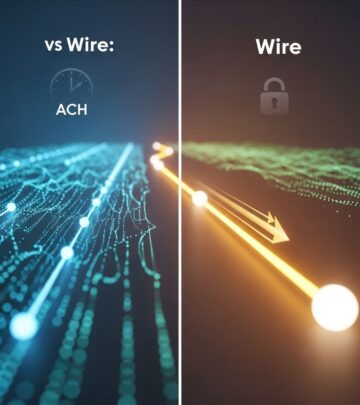
ACH vs Wire Transfer: Key Differences Explained
Understand the critical differences between ACH and wire transfers for your financial needs.

ACH vs. Wire Transfer: Understanding the Differences
When you need to send money electronically, you have several options available through your financial institution. Two of the most common methods are Automated Clearing House (ACH) transfers and wire transfers. While both serve the purpose of moving funds between bank accounts electronically, they differ significantly in speed, cost, security, and application. Understanding these distinctions can help you choose the right payment method for your specific situation.
ACH transfers are typically used for recurring payments and everyday transactions within the United States, while wire transfers are better suited for larger, more formal transactions that require faster processing. The choice between these two methods depends on factors such as the amount being transferred, how quickly you need the funds to arrive, the associated costs, and whether the transaction is domestic or international.
How ACH and Wire Transfers Work
Both ACH and wire transfers move money from one bank account to another electronically, but the underlying processes and networks differ considerably.
ACH Transfers
ACH transfers operate through the Automated Clearing House network, which is a batch-processing system. When you initiate an ACH transfer, your transaction is grouped with thousands of other transactions and processed in batches at set intervals throughout the day. This batch-processing approach is one reason why ACH transfers take longer to complete but cost less than wire transfers. The NACHA (National Automated Clearing House Association) governs ACH operations and has implemented rules to speed up processing, including same-day and next-day ACH options.
Wire Transfers
Wire transfers, by contrast, are processed individually and sent directly from one bank to another through secure banking networks. The funds are transferred in real-time or near-real-time, and the money must be available in the sender’s account before the transaction is processed. Because wire transfers bypass the batch-processing system and require more manual handling and verification, they are processed much faster but at a higher cost.
Key Differences Between ACH and Wire Transfers
There are several critical distinctions between these two payment methods that affect which one is right for your needs:
Processing Speed
One of the most significant differences between ACH and wire transfers is how quickly funds are available to the recipient. Standard ACH transfers typically take between one to three business days to complete, though some banks offer same-day ACH options for an additional fee. Many ACH payments are sent the same day, but they can still take up to one or two business days to process, as funds will appear in “pending” status and aren’t released until they clear the ACH system.
Wire transfers are considerably faster. Most domestic wire transfers are processed on the same business day and should arrive in the recipient’s account within 24 hours if sent by the deadline. If a wire transfer is initiated after the cutoff time, the originating bank sends it the next business day. International wire transfers take longer than domestic wires but are still faster than standard ACH transfers.
Cost Considerations
Cost is another major factor differentiating these two payment methods. ACH transfers are generally the less expensive option, typically costing less than $5 per transaction, and many banks offer ACH transfers for free for routine transactions. Wire transfers, on the other hand, average around $30 per transaction. Domestic wire transfer fees can range from $0 to $35, while international wire transfer outgoing fees typically fall between $35 and $50.
For businesses or individuals making frequent transfers, the cost difference becomes substantial. However, for large, one-time transactions, the wire transfer fee may be considered reasonable given the speed and security benefits.
Security and Reversibility
ACH transfers are generally considered more secure than wire transfers because they use the NACHA network, which includes more built-in protections for senders. ACH payments can be disputed or reversed within a set time frame in cases of error or fraud, providing a safety net for consumers.
Wire transfers, however, are typically irreversible once processed. Once funds have been wired, reversing the transaction is extremely difficult, making them less secure for senders. The instant and permanent nature of wire transfers makes them more vulnerable to fraud and scams. Wire transfer recipients can access funds the moment they hit their account, but this also means senders have little recourse if something goes wrong.
International Capabilities
ACH transfers are limited to domestic transactions within the United States. While variants like International ACH Transactions (IATs) do exist, they come with limitations and are not as flexible as wire transfers for cross-border payments.
Wire transfers have no cross-border payment limitations and are universally accepted for international transactions. They can send funds across countries and currencies with greater fluidity, making them the standard for global business dealings and international payments.
Information Requirements
Wire transfers typically require more detailed information than ACH transfers. For wire transfers, you need routing numbers, recipient details, bank transit numbers, and identifying information or documents. ACH transfers usually require only the account and routing numbers, making them simpler to set up for routine payments.
Transaction Volume and Size
ACH transfers are most often used for smaller and more frequent transactions, while wire transfers are generally used for high-value transactions. The ACH network processed over $86 trillion in transfers in 2024 across 33 billion transactions, with an average transaction value of around $2,600. The slower settlement time has historically made ACH more suitable for smaller transactions, while the higher cost of wire transfers is justified for larger amounts.
Comparison Table: ACH vs. Wire Transfer
| Feature | ACH Transfer | Wire Transfer |
|---|---|---|
| Processing Speed | 1–3 business days | Same day or within 24 hours |
| Cost | Less than $5 (often free) | $0–$35 (domestic), $35–$50 (international) |
| Security for Senders | More secure; reversible | Less secure; difficult to reverse |
| International Use | Domestic US only (limited international) | Can send internationally |
| Information Needed | Account and routing numbers | Routing numbers, recipient details, identifying documents |
| Best For | Recurring and routine payments | Large, urgent, or international transactions |
When to Use ACH Transfers
ACH transfers are the ideal choice for most everyday banking needs. Banks allow individuals to use ACH instructions for bill payments through their online bank accounts, serving as the middleman between consumers and suppliers for personal finance. ACH is perfect for:
- Recurring bill payments (utilities, insurance, subscriptions)
- Regular paycheck deposits
- Sending money to family and friends within the US
- Routine business-to-business payments
- High-volume transactions where cost efficiency is key
- Situations where speed is not critical
ACH transactions are more suitable for domestic, regular, and bulk transactions where cost efficiency is the primary concern. For businesses managing operational expenses and high volumes of fund transfers, ACH offers significant cost savings.
When to Use Wire Transfers
Wire transfers make sense for high-dollar business-to-business payments like commercial real estate transactions or M&A transaction payments. They are ideal when:
- You need funds to arrive urgently or the same day
- The transaction involves a large amount of money
- You’re making an international transfer
- You’re purchasing real estate (down payment)
- You need to send money across borders or convert currencies
- The transaction is one-time or infrequent
Wire transfers are better for urgent, high-value, or international transactions requiring prompt processing. While wire fees are higher, they are often justified by the transaction amount and the speed of transfer. For international money transfers made by individuals either directly or indirectly, wire transfers remain the standard option.
Personal vs. Business Payments
Personal Payments
For personal transactions, ACH transfers work well for paying bills and sending money to family and friends domestically. However, wire transfers make sense for large personal purchases like residential real estate, including down payments. Individuals can also choose to pay for international money transfers through money transfer services like Western Union, which offer wire transfer payment options for cross-border transactions.
Business Payments
Businesses should consider both methods based on their operational needs. Regular payroll processing and supplier payments are better handled through ACH because of lower per-transaction costs and batch processing capabilities. However, high-value commercial transactions, real estate deals, and international business payments are better suited for wire transfers due to their security and immediate processing capabilities.
The Future of ACH Transfers
The landscape of electronic payments is evolving. In August 2019, NACHA issued a statement encouraging the Federal Reserve Board’s plan to move toward an ACH real-time payment and settlement system. A March 2021 NACHA rule change added two hours to the business day submission deadline for ACH debits, further improving ACH transfer speed. As same-day and real-time ACH options become more widely available, the speed advantage of wire transfers may become less significant, making ACH an increasingly competitive option for time-sensitive transactions.
How to Choose Between ACH and Wire Transfers
The choice between ACH and wire transfers generally depends on several key factors:
- Speed: Choose wire transfer if you need funds immediately; choose ACH if you can wait 1–3 days
- Cost: Choose ACH for cost efficiency, especially for high volumes; choose wire transfer only when the benefits justify the higher fees
- Transaction Size: Use ACH for smaller, routine amounts; use wire transfer for large transactions
- Frequency: Use ACH for recurring payments; use wire transfer for sporadic, one-time transactions
- Geographic Reach: Use ACH for domestic US payments; use wire transfer for international transactions
- Security Needs: Choose ACH if you need reversibility and fraud protection; choose wire transfer if immediate irreversible delivery is acceptable
Frequently Asked Questions (FAQs)
Q: Are ACH transfers always free?
A: Most banks offer ACH transfers for free for routine transactions, though some may charge a small fee. Same-day ACH options typically come with an additional fee, usually between $1 and $5.
Q: Can I cancel an ACH transfer after sending it?
A: Yes, ACH transfers can typically be cancelled or recalled before they are processed, usually up to one business day after initiation. Once the transfer has cleared, you may be able to dispute it, but reversing a completed ACH transfer is more difficult.
Q: Can I cancel a wire transfer after sending it?
A: Cancelling a wire transfer is extremely difficult once it has been sent. You would need to contact your bank immediately, and even then, reversing a wire transfer is not guaranteed. This is why wire transfers are considered less secure for senders.
Q: Is there a limit to how much I can send via ACH or wire transfer?
A: Yes, both ACH and wire transfers have sending limits that vary by bank and account type. You can often send larger amounts more frequently through wire transfers, while ACH limits tend to be more restrictive for individual transactions.
Q: Can I use ACH transfers internationally?
A: Standard domestic ACH is limited to the United States. However, International ACH Transactions (IATs) exist but come with limitations and are not as flexible as wire transfers for cross-border payments. For most international transfers, wire transfers are the preferred method.
Q: How do I know which method my bank uses for bill pay?
A: Most banks use ACH for their bill pay services due to the lower cost and suitability for recurring payments. Check with your specific financial institution or their online banking FAQ to confirm how their bill pay service processes payments.
The Bottom Line
When comparing ACH and wire transfers, the choice ultimately comes down to your specific circumstances. Transaction speed and cost are the main differences, along with security considerations and international capabilities. Wire transfers move large amounts quickly but are less secure than domestic ACH transfers and come with higher fees. However, wire transfers are flexible enough for cross-border payments with continually changing rules. ACH transfers are perfect for routine, domestic transactions where cost efficiency and security are priorities, while wire transfers are ideal for urgent, high-value, or international payments where speed justifies the higher cost.
By understanding these differences and considering your financial situation, transaction amount, urgency, and frequency, you can make an informed decision about which payment method is right for you. Whether you’re paying bills, sending money to family, making a large purchase, or handling business transactions, choosing the appropriate method will help you manage your finances efficiently and securely.
References
- ACH vs. wire transfer: How are they different? — Western Union. 2025. https://www.westernunion.com/blog/en/us/ach-vs-wire-transfer/
- ACH vs Wire: Key Differences Between the Transfer Methods — Tipalti. 2025. https://tipalti.com/resources/learn/ach-vs-wire/
- ACH vs wire transfer. 7 key differences — Plaid. 2025. https://plaid.com/resources/ach/ach-vs-wire-transfers/
- A comparison of ACH payments and wire transfers — Stripe. 2025. https://stripe.com/resources/more/ach-payments-vs-wire-transfers-differences-similarities-and-how-to-choose
- ACH Transfer vs. Wire Transfer: What’s the Difference? — FSB Online. 2025. https://www.myfsbonline.com/education/financial-wellness/ach-vs-wire-transfers
Similar Articles








Read full bio of Sneha Tete