Driver’s License Test: Complete Guide To Written And Road Prep
Comprehensive guide to mastering written exams, road tests, and safe driving rules for new drivers seeking their license.
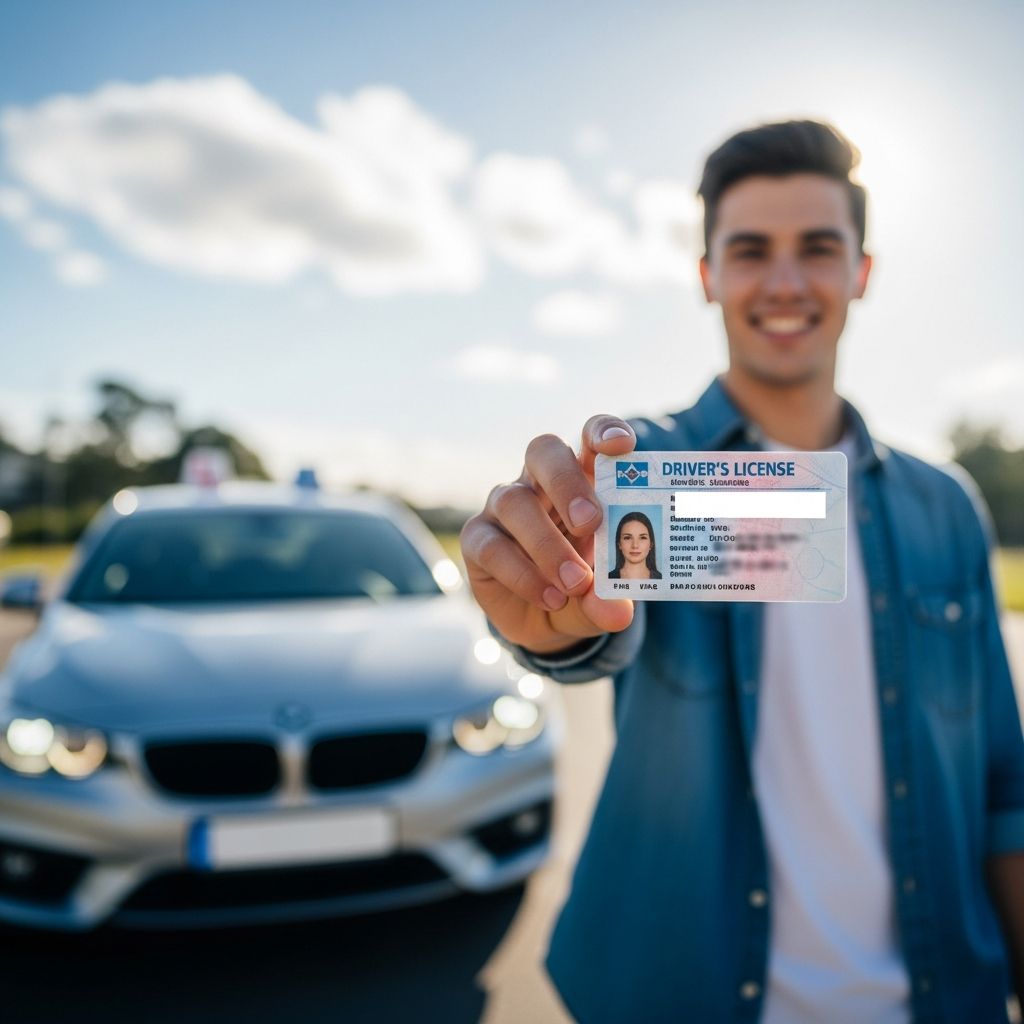
Obtaining a driver’s license marks a significant milestone, granting the freedom to travel independently while imposing the responsibility to uphold road safety. This guide equips aspiring drivers with essential knowledge on written examinations, practical driving assessments, and core traffic regulations. Drawing from official standards, it emphasizes preparation techniques that boost pass rates and foster lifelong safe habits.
Understanding the Written Knowledge Exam
The written component evaluates comprehension of traffic laws, signage, and defensive driving principles. Typically comprising 30 to 40 multiple-choice questions, it splits into segments on road signs and legal rules. Candidates need a 70% score—around 21 to 28 correct answers—to succeed, with limited retries before retesting fees apply.
Exams mirror content from state driver handbooks, covering speed limits, right-of-way, signaling, and hazard recognition. Time limits per section encourage focused study rather than rote memorization.
Core Topics to Master
- Road Signs and Signals: Identify shapes, colors, and meanings, such as red octagons for stops or yellow diamonds for warnings.
- Speed and Distance Rules: Know limits in school zones (often 20 mph), residential areas, and highways, plus safe following distances like the three-second rule.
- Right-of-Way Protocols: Yield to pedestrians, emergency vehicles, and traffic at uncontrolled intersections.
- Impaired and Distracted Driving: Penalties for DUI include license suspension; avoid phones and substances.
- Parking Restrictions: Maintain 15 feet from fire hydrants and 20-30 feet from crosswalks or intersections.
Common Exam Questions and Answers
Practice reveals recurring themes. Here are vital examples with explanations:
| Question | Correct Answer | Key Reasoning |
|---|---|---|
| What distance must you signal before turning or changing lanes? | At least 100 feet | Allows surrounding drivers ample time to react, preventing collisions. |
| If your vehicle skids, what is the proper response? | Steer toward your intended direction; ease off accelerator | Avoids overcorrection or braking, which worsens loss of control. |
| How close can you park to a fire hydrant? | 15 feet minimum | Ensures emergency access without obstruction. |
| What is the minimum following distance in good conditions? | 3 seconds | Increases to 4+ in rain or traffic; allows reaction time. |
| Who has right-of-way at a yield sign? | Ongoing traffic | Yield signs mandate slowing or stopping for others. |
These align with handbook essentials, where understanding why rules exist enhances retention.
Preparing for the Practical Road Test
Beyond theory, the behind-the-wheel evaluation assesses real-world application. Examiners score maneuvers like turns, stops, parking, and hazard observation. Vehicles must be roadworthy, with functional signals, brakes, and mirrors.
Pre-Test Vehicle and Personal Checks
- Adjust seat for full pedal reach and clear view.
- Secure seatbelt; confirm all passengers belted.
- Test lights, wipers, horn, and emergency brake.
- Scan mirrors; note tire pressure and fluid levels.
Arrive early, calm, and review the driver safety checklist from official guides.
Essential Maneuvers and Best Practices
Expect these during the 10-20 minute drive:
- Starting and Stopping: Smooth acceleration; full stops behind lines without jerking.
- Turns and Lane Changes: Signal 100 feet ahead, check blind spots by shoulder glance, yield appropriately.
- Intersections: Creep forward if obstructed; look left-right-left.
- Parking: Parallel park between curbs; back straight for 50-100 feet.
- Highway or Busy Roads: Maintain lane position; use mirrors every 5-8 seconds.
Defensive driving shines: anticipate others’ errors, obey speeds, and react to hazards like pedestrians.
Proven Study Strategies for Success
Structured preparation yields up to 98% pass rates via practice. Start 2-4 weeks early.
Build a Study Plan
- Day 1-3: Signs and signals.
- Day 4-6: Laws and penalties.
- Day 7-10: Scenarios and maneuvers.
- Daily: 30-minute practice quizzes.
Utilize High-Quality Resources
Primary tool: Official driver handbook (free PDF). Supplement with:
- Timed practice tests mimicking 30-question format.
- Flashcards for signs, distances, and DUI facts.
- Mobile apps with 600+ questions and videos.
Track scores; revisit weak areas. Simulate tests without aids.
Avoid Pitfalls
- Don’t cram—space learning for retention.
- Read questions fully; eliminate wrong choices.
- Practice in real conditions, like rain-affected distances.
Day-of-Test Tips
Rest well; eat lightly. Bring ID, permit, and vehicle docs. During:
- Communicate with examiner if unsure.
- Keep hands at 9-and-3; eyes scanning.
- Breathe steadily to manage nerves.
Post-test, review feedback for future drives.
Frequently Asked Questions (FAQs)
What if I fail the written test?
Retry up to three times; repurchase after. Focus on missed topics via handbook.
Can I use a parent’s car for the road test?
Yes, if insured and mechanically sound; proof required.
How long is the road test?
10-20 minutes, covering urban, residential, and basic highway.
Are practice tests identical to the real exam?
No, but they use handbook-derived questions for 97% alignment.
What happens post-pass?
Receive interim license; upgrade after probationary period.
Long-Term Safe Driving Habits
Licensure initiates responsibility. Sustain knowledge:
- Regular handbook refreshers.
- Defensive courses for advanced skills.
- Zero-tolerance for impairments.
Safe drivers prevent 90% of crashes through vigilance.
References
- Mastering the Texas DPS Written Test: 12 Key Questions Explained — DrivingQuest. 2023. https://drivingquest.com/blog/common-dps-test-questions-texas/
- How to Prepare for a Drive Test (DL-60) — Texas Department of Public Safety. 2023-09. https://www.dps.texas.gov/internetforms/forms/dl-60.pdf
- What to Do on Your Driving Test: Step-by-Step Guide — YouTube (Drivers Ed App). 2023. https://www.youtube.com/watch?v=jRwp7z9IL-E
- Free Texas Drivers License Practice Test — Texas Driver Education. 2022. http://www.texasdrivereducation.us/practice-test/
- Texas Driver Handbook (DL-7) — Texas Department of Public Safety. 2023. https://www.dps.texas.gov/internetforms/forms/dl-7.pdf
Similar Articles








Read full bio of medha deb