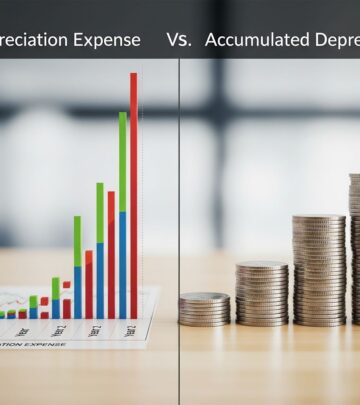
Accumulated Depreciation vs Depreciation Expense
Understanding the key differences between accumulated depreciation and depreciation expense in accounting.
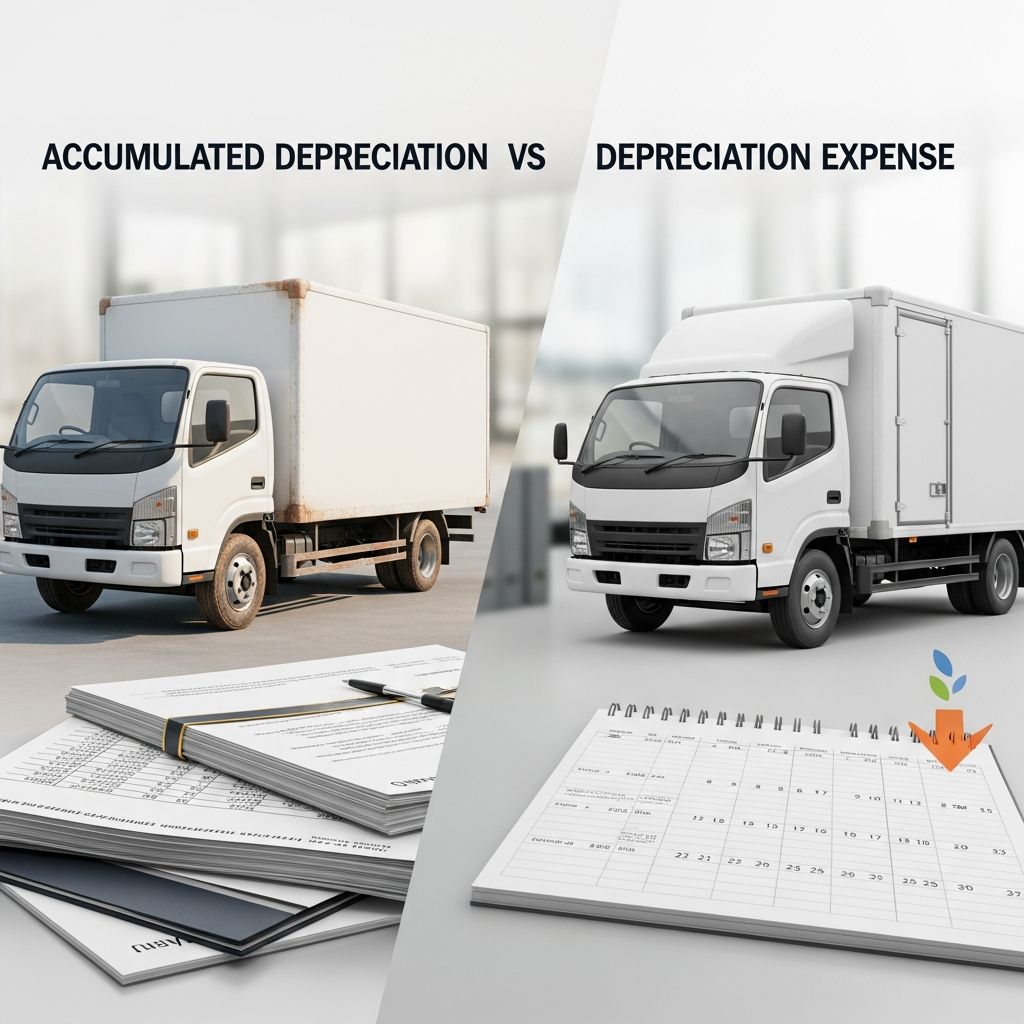
Understanding Accumulated Depreciation and Depreciation Expense
In accounting, two critical concepts help companies accurately report the value of their assets over time: accumulated depreciation and depreciation expense. While these terms are often used interchangeably by those unfamiliar with accounting principles, they represent distinct concepts that serve different purposes in financial reporting. Understanding the relationship between these two elements is essential for business owners, accountants, investors, and anyone involved in financial analysis or decision-making.
Depreciation is a fundamental accounting principle that recognizes the gradual consumption of an asset’s value over its useful life. Rather than expensing the entire cost of a fixed asset in the year of purchase, depreciation allocates this cost across multiple periods. This approach prevents distorting a company’s profitability in any single year and provides a more accurate picture of financial performance over time.
Defining the Key Terms
What is Depreciation Expense?
Depreciation expense represents the allocated portion of a fixed asset’s cost assigned to a specific accounting period, typically one fiscal year. This non-cash expense appears on the income statement and reduces a company’s reported net income during that period. The depreciation expense reflects how much of an asset’s useful life has been consumed during the current accounting year.
For example, if a company purchases equipment for $100,000 with a five-year useful life and no salvage value, the annual depreciation expense under the straight-line method would be $20,000 per year. This $20,000 represents the portion of the equipment’s cost being expensed in that particular year.
What is Accumulated Depreciation?
Accumulated depreciation is the cumulative total of all depreciation expenses recorded for an asset since it was placed into service. This running total represents the total wear and tear an asset has experienced throughout its useful life. Accumulated depreciation appears on the balance sheet as a contra-asset account, meaning it has a credit balance that offsets the gross value of fixed assets reported.
Using the same equipment example, if the company has owned the equipment for three years with $20,000 annual depreciation, the accumulated depreciation would be $60,000 ($20,000 × 3 years). This accumulated total continues to grow each year until the asset is fully depreciated, retired, or sold.
The Core Relationship Between the Two Concepts
The relationship between accumulated depreciation and depreciation expense is straightforward: accumulated depreciation is the sum of all depreciation expenses recorded since an asset’s acquisition. Each period’s depreciation expense is added to the accumulated depreciation account, creating an ongoing total that represents the total reduction in an asset’s book value.
Think of it as a loan scenario: the monthly payment represents the depreciation expense, while the total principal repaid over time equals the accumulated depreciation. This analogy helps clarify how individual period expenses accumulate into a total depreciation figure.
Every time a company records depreciation expense through its accounting journal entry, it debits depreciation expense (increasing the expense on the income statement) and credits accumulated depreciation (increasing the contra-asset on the balance sheet). This dual entry ensures that both financial statements are affected appropriately.
Accounting Treatment and Financial Statement Placement
Depreciation Expense on the Income Statement
Depreciation expense is classified as an operating expense and appears on the income statement. As a non-cash expense, it reduces a company’s reported profit without involving an actual outflow of cash during the period. This distinction is important because it affects how investors and analysts interpret financial performance. While depreciation reduces accounting profits, it does not reduce cash available to the company.
The non-cash nature of depreciation expense is why accountants add it back when preparing the cash flow statement using the indirect method. This adjustment ensures that cash flows reflect only actual cash transactions rather than accounting allocations.
Accumulated Depreciation on the Balance Sheet
Accumulated depreciation appears on the balance sheet as a contra-asset account, positioned immediately below or alongside the gross value of fixed assets. By subtracting accumulated depreciation from the gross asset value, the balance sheet presents the net book value of the asset—the remaining value that has not yet been depreciated.
For instance, if equipment originally cost $100,000 and has accumulated depreciation of $60,000, the net book value shown on the balance sheet would be $40,000. This presentation allows stakeholders to understand both the original investment in assets and how much of that investment has been consumed over time.
Calculation Methods for Depreciation Expense
Straight-Line Depreciation Method
The straight-line method is the simplest and most commonly used depreciation method. It allocates an equal depreciation expense each period throughout the asset’s useful life. The formula is:
(Cost of Asset − Salvage Value) ÷ Useful Life = Annual Depreciation Expense
For example, if a company purchases equipment for $70,000 with an estimated salvage value of $4,000 and a useful life of 15 years, the annual depreciation expense would be calculated as follows:
($70,000 − $4,000) ÷ 15 = $4,400 per year
After five years of ownership, the accumulated depreciation would total $22,000 ($4,400 × 5 years).
Double Declining Balance Method
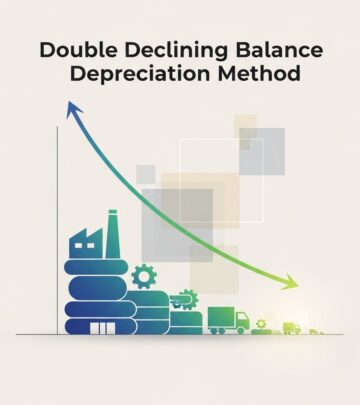
The double declining balance method is an accelerated depreciation approach that recognizes higher depreciation expenses in the early years of an asset’s life and lower expenses in later years. This method is often used for assets that lose value more rapidly in their early years or become obsolete quickly.
The formula for double declining balance depreciation is more complex and involves calculating double the straight-line rate and applying it to the remaining book value each period, resulting in a declining depreciation expense as the asset ages.
Units of Production Method
The units of production method ties depreciation to the actual usage of an asset rather than the passage of time. Depreciation expense is calculated based on how many units an asset produced or how many miles it traveled during the period, relative to its total estimated productive capacity over its lifetime.
This method is particularly useful for assets whose value is consumed based on usage rather than time, such as manufacturing equipment or company vehicles.
Impact on Financial Analysis
Understanding Net Book Value
Net book value is calculated by subtracting accumulated depreciation from the original cost of an asset. This figure is critical for investors and analysts because it shows the remaining value of company assets that has not yet been expensed. By tracking both the gross asset value and accumulated depreciation, financial statement users can assess an asset’s age and remaining useful life.
For example, if machinery originally cost $500,000 and has accumulated depreciation of $400,000, the net book value is $100,000, indicating the asset is 80% depreciated. This signals to management that reinvestment in new equipment may be necessary soon.
Profitability and Cash Flow Considerations
Since depreciation expense reduces reported profits while not affecting cash flows, companies with significant depreciation charges may show lower accounting profits than their actual cash generation would suggest. Investors and lenders must understand this distinction to properly evaluate a company’s financial health and cash-generating ability.
This is why financial analysts often examine earnings before depreciation (EBITDA) or add back depreciation when analyzing cash flow to understand a company’s true cash generation capability separate from accounting allocations.
Practical Examples and Comparisons
Year-by-Year Depreciation Tracking
Consider a delivery van purchased for $50,000 with an estimated salvage value of $5,000 and a five-year useful life. Using the straight-line method:
Annual Depreciation = ($50,000 − $5,000) ÷ 5 = $9,000 per year
| Year | Depreciation Expense | Accumulated Depreciation | Net Book Value |
|---|---|---|---|
| 0 | — | $0 | $50,000 |
| 1 | $9,000 | $9,000 | $41,000 |
| 2 | $9,000 | $18,000 | $32,000 |
| 3 | $9,000 | $27,000 | $23,000 |
| 4 | $9,000 | $36,000 | $14,000 |
| 5 | $9,000 | $45,000 | $5,000 |
This table illustrates how depreciation expense remains constant each year, while accumulated depreciation grows by that same amount, reducing the asset’s net book value accordingly.
Journal Entry Treatment
When recording depreciation, accountants make the following journal entry each period:
Debit: Depreciation Expense (Income Statement) | Amount
Credit: Accumulated Depreciation (Balance Sheet, Contra-Asset) | Amount
This dual-sided entry ensures that the current period’s depreciation expense appears on the income statement while the cumulative depreciation is tracked on the balance sheet. The depreciation expense account is closed at year-end as part of the normal closing process, while accumulated depreciation remains open and continues to accumulate.
Tax Implications
Depreciation plays a significant role in tax planning and reporting. Businesses can deduct depreciation expense from their taxable income, reducing their tax liability. Different depreciation methods may be allowed for tax purposes versus financial reporting purposes, creating timing differences that accountants must manage through deferred tax accounts.
Section 179 of the Internal Revenue Code and bonus depreciation provisions allow businesses to accelerate depreciation deductions in certain circumstances, providing tax benefits in early years while potentially reducing deductions in later years.
Frequently Asked Questions
Q: Why is depreciation considered a non-cash expense?
A: Depreciation is a non-cash expense because it represents an accounting allocation of a past cash expenditure, not an actual outflow of cash during the current period. The cash was spent when the asset was purchased, not when the depreciation is recorded.
Q: Can accumulated depreciation ever exceed the original cost of an asset?
A: No, accumulated depreciation cannot exceed the original cost of an asset minus its salvage value. Once fully depreciated, both accumulated depreciation and the asset’s book value remain constant.
Q: How does depreciation affect cash flow?
A: Depreciation itself does not directly affect cash flow during the period it is recorded. However, the initial purchase of the asset does affect cash flow. Accountants add depreciation back when calculating operating cash flow under the indirect method.
Q: What happens to accumulated depreciation when an asset is sold?
A: When an asset is sold, both its original cost and accumulated depreciation are removed from the balance sheet. Any gain or loss on the sale is recorded based on the difference between the sale price and the asset’s net book value.
Q: Which depreciation method is best for tax purposes?
A: The Modified Accelerated Cost Recovery System (MACRS) is typically required for U.S. tax purposes. This system uses accelerated depreciation methods to provide faster tax deductions in early years.
Q: Is depreciation required under accounting standards?
A: Yes, both Generally Accepted Accounting Principles (GAAP) and International Financial Reporting Standards (IFRS) require companies to depreciate tangible fixed assets with limited useful lives.
References
- Accumulated Depreciation and Depreciation Expense: A Complete Guide — HCO. 2025. https://www.hco.com/insights/accumulated-depreciation-and-depreciation-expense-a-complete-guide
- Depreciation Expense Formula and Calculation Tutorial — Wall Street Prep. 2025. https://www.wallstreetprep.com/knowledge/depreciation/
- What is the Relationship Between Accumulated Depreciation and Depreciation Expense — African Financials Help Desk. 2025. https://helpdesk.africanfinancials.com/support/solutions/articles/233939-what-is-the-relationship-between-accumulated-depreciation-and-depreciation-expense-
- Accumulated Depreciation: A Complete Guide for Businesses — 1800 Accountant. 2025. https://1800accountant.com/blog/accumulated-depreciation
- Tracking Depreciation on a Balance Sheet or Income Statement — Asset Panda. 2025. https://www.assetpanda.com/resource-center/blog/depreciation-and-balance-sheet-accounting/
- Generally Accepted Accounting Principles (GAAP) — Financial Accounting Standards Board (FASB). https://www.fasb.org/
- International Financial Reporting Standards (IFRS) — IFRS Foundation. https://www.ifrs.org/
Similar Articles








Read full bio of medha deb