Accrual Accounting: Definition, Principles, and Examples
Master accrual accounting: Record revenues and expenses when earned, not received.
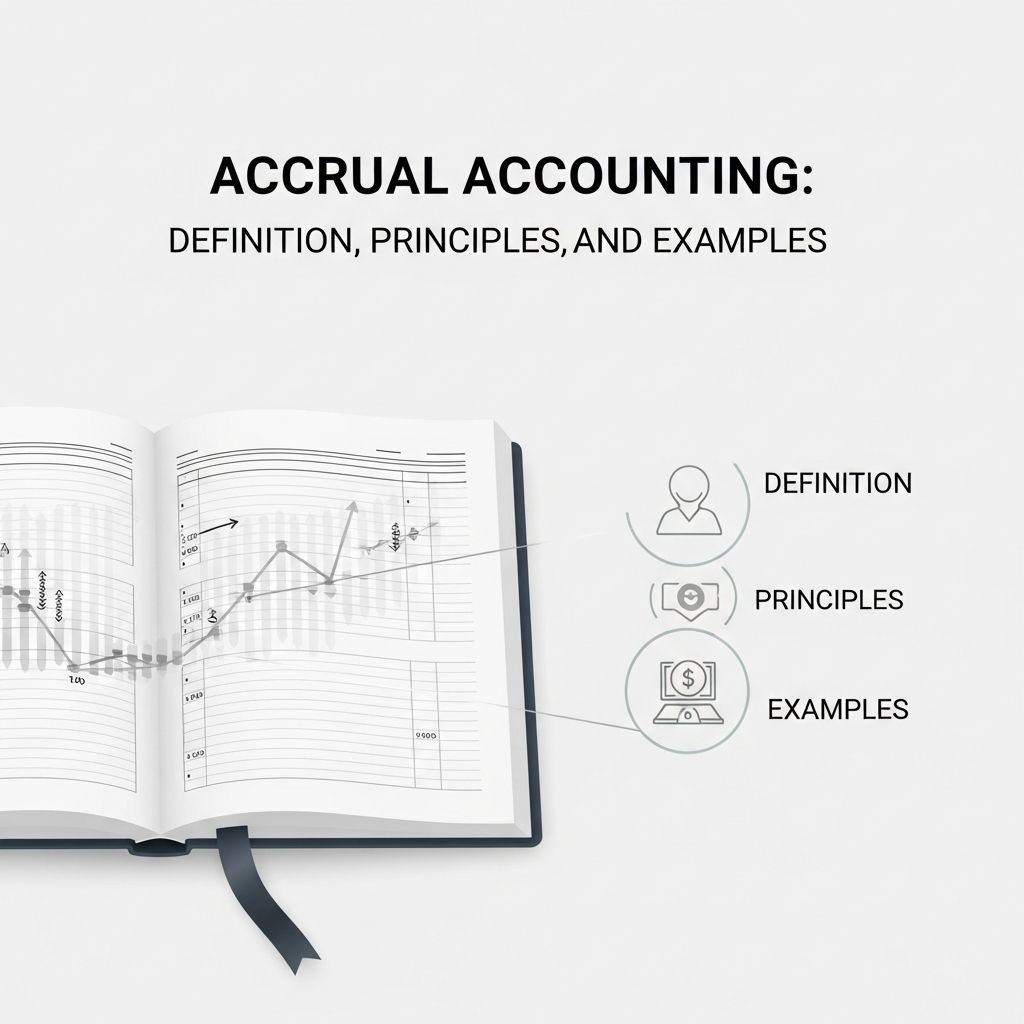
Accrual Accounting: A Comprehensive Guide
Accrual accounting is a financial accounting method that records revenues and expenses when they are earned or incurred, regardless of when cash payments are received or made. This approach provides a more accurate picture of a company’s financial position and is the standard accounting method required by generally accepted accounting principles (GAAP) for most businesses. Understanding accrual accounting is essential for business owners, financial managers, and investors who need to interpret financial statements accurately.
What Is Accrual Accounting?
Accrual accounting is an accounting system that recognizes financial transactions when they occur, not when cash changes hands. Under this method, a company records revenue when it is earned—even if the customer hasn’t paid yet—and expenses when they are incurred, even if payment hasn’t been made. This creates a more comprehensive view of a company’s financial performance during a specific period.
For example, if a service company completes a project in January but doesn’t receive payment until March, under accrual accounting, the revenue is recorded in January when the service was performed. Similarly, if a company receives a utility bill in January for services used in December, the expense is recorded in December, not January.
Key Principles of Accrual Accounting
Accrual accounting operates on several fundamental principles that guide how transactions are recorded and reported:
- Revenue Recognition Principle: Revenue is recorded when it is earned, regardless of when payment is received. This ensures that income is matched with the period in which the goods or services were provided.
- Matching Principle: Expenses are recorded in the same period as the revenues they help generate. This creates a clear relationship between income and costs associated with earning that income.
- Accrual Principle: Both revenues and expenses are recorded when incurred, creating a complete picture of financial activity during a specific accounting period.
- Periodicity Principle: Financial statements are prepared for specific time periods (monthly, quarterly, or annually) to measure performance accurately during that interval.
How Accrual Accounting Works
The mechanics of accrual accounting involve several key steps and accounts:
Recording Transactions
When a transaction occurs, it is recorded immediately in the accounting system through journal entries. These entries typically involve two accounts (following the double-entry bookkeeping method) to ensure the accounting equation remains balanced: Assets = Liabilities + Equity.
Accounts Receivable
When a company sells products or services on credit, the sale is recorded as accounts receivable. This represents money the company expects to receive in the future. For instance, if a consulting firm completes a project worth $10,000 in March but won’t receive payment until April, the transaction is recorded in March as a debit to accounts receivable and a credit to service revenue.
Accounts Payable
Similarly, when a company incurs expenses but hasn’t paid yet, these are recorded as accounts payable. This ensures expenses are recognized in the correct accounting period. If a company receives an invoice for office supplies in February but won’t pay until March, the expense is recorded in February.
Accrued Revenues and Expenses
Accrued revenues represent income that has been earned but not yet received or invoiced, while accrued expenses are costs that have been incurred but not yet paid. These adjusting entries ensure that financial statements accurately reflect the company’s financial position at period-end.
Accrual Accounting vs. Cash Accounting
The primary difference between accrual and cash accounting lies in the timing of transaction recognition:
| Aspect | Accrual Accounting | Cash Accounting |
|---|---|---|
| Revenue Recognition | When earned, regardless of payment | When cash is received |
| Expense Recording | When incurred, regardless of payment | When cash is paid |
| Financial Accuracy | Provides comprehensive view of financial health | Reflects only actual cash flows |
| Complexity | More complex with adjusting entries | Simpler, straightforward tracking |
| GAAP Compliance | Required for most businesses | Acceptable only for small businesses |
Cash accounting only recognizes transactions when cash actually changes hands. While simpler, this method can distort financial performance, especially for businesses with significant credit activity. Accrual accounting is considered the superior method for understanding true financial position because it matches revenues with the expenses incurred to generate them.
Advantages of Accrual Accounting
Accrual accounting offers numerous benefits for businesses and stakeholders:
- Accurate Financial Reporting: Provides a true picture of financial performance by matching revenues with associated expenses during the period they occur.
- Better Decision-Making: Enables managers to make informed decisions based on comprehensive financial data rather than just cash position.
- Regulatory Compliance: Meets requirements of GAAP and International Financial Reporting Standards (IFRS), essential for public companies and many larger organizations.
- Investor Confidence: Investors and creditors trust accrual-based financial statements more because they believe the information is more complete and reliable.
- Trend Analysis: Facilitates comparison of financial performance across multiple periods, making it easier to identify trends and patterns.
- Loan and Credit Access: Banks and lenders typically require accrual-based financial statements when evaluating credit applications.
Disadvantages of Accrual Accounting
Despite its advantages, accrual accounting has some limitations:
- Complexity: Requires more sophisticated accounting knowledge and systems, making it challenging for small business owners without accounting background.
- Higher Costs: Implementing and maintaining accrual accounting systems requires more time and potentially higher professional fees.
- Timing Issues: Can create discrepancies between reported profits and actual cash available, potentially misleading business owners about liquidity.
- Estimation Requirements: Involves making judgments about future events, such as bad debts and depreciation, which adds subjectivity.
- Earnings Manipulation: Provides more opportunities for earnings manipulation through aggressive revenue recognition or expense deferral, if not carefully monitored.
Common Accrual Accounting Examples
Example 1: Service Company Revenue
A marketing agency completes a $5,000 website redesign project in November for a client. The invoice is sent in November, but payment isn’t received until January. Under accrual accounting, the $5,000 is recorded as revenue in November (when the service was performed), not January (when cash is received). This is recorded as a debit to accounts receivable and a credit to service revenue.
Example 2: Inventory and Cost of Goods Sold
A retail company purchases $10,000 of inventory in March but doesn’t pay the supplier until May. Under accrual accounting, the expense is recorded in March when the purchase obligation is created, not May when payment is made. This ensures the inventory cost is matched with the period in which the goods were acquired.
Example 3: Accrued Salaries
A company’s bi-weekly payroll (covering five work days) ends on Friday, December 28th, but payday is Monday, January 2nd. Under accrual accounting, the salary expense for those five days is recorded in December (when earned), not January (when paid), ensuring accurate monthly expense reporting.
Adjusting Entries in Accrual Accounting
Adjusting entries are crucial in accrual accounting. They are made at period-end to ensure revenues and expenses are recognized in the correct periods. Common adjusting entries include:
- Depreciation Expense: Allocating the cost of fixed assets over their useful lives.
- Accrued Expenses: Recording expenses incurred but not yet paid or invoiced.
- Accrued Revenues: Recording revenues earned but not yet billed or received.
- Prepaid Expenses: Converting advance payments into period expenses as services are rendered.
- Unearned Revenues: Converting advance customer payments into period revenues as obligations are fulfilled.
- Bad Debt Allowance: Recording estimated uncollectible accounts receivable.
Accrual Accounting and Tax Compliance
Most businesses using accrual accounting must also file taxes using the accrual method. The IRS generally requires businesses with gross receipts exceeding a certain threshold to use accrual accounting for tax purposes. This alignment between financial reporting and tax accounting provides consistency and reduces compliance complexity.
Accrual Accounting in Different Industries
Accrual accounting principles apply across industries, but implementation varies based on business model:
- Manufacturing: Focuses on inventory valuation, cost of goods sold, and matching production costs with revenue.
- Service: Emphasizes revenue recognition based on contract completion and recognizing costs when services are provided.
- Healthcare: Records patient services and related expenses when provided, regardless of insurance or patient payment status.
- Retail: Recognizes revenue at the point of sale and matches inventory costs with sales revenue.
- Technology: Often deals with subscription revenues recognized over the contract period and multi-period licensing arrangements.
Transitioning to Accrual Accounting
Businesses currently using cash accounting can transition to accrual accounting through careful planning:
- Assess current accounting infrastructure and identify gaps.
- Implement appropriate accounting software capable of handling accrual transactions.
- Train staff on accrual accounting principles and procedures.
- Review and reclassify existing transactions according to accrual principles.
- Establish processes for tracking accounts receivable and payable.
- Implement controls to ensure accurate adjusting entries at period-end.
- Communicate changes to stakeholders including management, lenders, and investors.
Frequently Asked Questions
Q: Is accrual accounting required by law?
A: Accrual accounting is required by GAAP for most businesses, especially public companies and those seeking external financing. However, small sole proprietorships may be able to use cash accounting if they meet certain criteria, such as having gross receipts below IRS thresholds.
Q: How does accrual accounting affect cash flow?
A: Accrual accounting can show profitability while actual cash flow remains negative. For example, a rapidly growing company may have large accounts receivable, making revenue appear strong on income statements while cash position remains tight. Businesses must monitor both accrual-based profitability and actual cash flow.
Q: What is the difference between accrued expenses and accounts payable?
A: Accrued expenses are costs incurred where no invoice has been received yet, while accounts payable refers to invoiced amounts awaiting payment. Both represent liabilities but accrued expenses require estimation or adjustment entries, whereas accounts payable is based on actual invoices.
Q: Can small businesses use accrual accounting?
A: Yes, small businesses can and often should use accrual accounting. It provides a more accurate financial picture and is increasingly required by lenders and investors. However, very small sole proprietorships under certain revenue thresholds may use cash accounting for simplicity.
Q: How does accrual accounting handle bad debts?
A: Under accrual accounting, companies estimate uncollectible accounts receivable and record this as bad debt expense. This may be done using either the percentage-of-sales method or the aging-of-receivables method, ensuring revenue is not overstated by uncollectible amounts.
Q: What software is best for accrual accounting?
A: Popular accrual accounting software includes QuickBooks Online, Xero, NetSuite, and Sage. Selection depends on business size, industry, complexity, and specific feature requirements. Most modern accounting software supports accrual accounting functionality.
- Statement of Financial Accounting Concepts (SFAC) No. 5: Recognition and Measurement in Financial Statements — Financial Accounting Standards Board (FASB). https://www.fasb.org
- Generally Accepted Accounting Principles (GAAP) — American Institute of CPAs (AICPA). https://www.aicpa.org
- International Financial Reporting Standards (IFRS): Revenue from Contracts with Customers (IFRS 15) — International Accounting Standards Board (IASB). https://www.ifrs.org
- Tax Requirements for Accounting Methods — Internal Revenue Service (IRS). Updated 2024. https://www.irs.gov/publications/p334
- The Conceptual Framework for Financial Reporting — IASB. 2018. https://www.ifrs.org/issued-standards/list-of-standards/conceptual-framework
Similar Articles








Read full bio of Sneha Tete