Accrual Accounting: Definition, Methods, and Examples
Master accrual accounting principles: Record revenues and expenses when earned, not when paid.
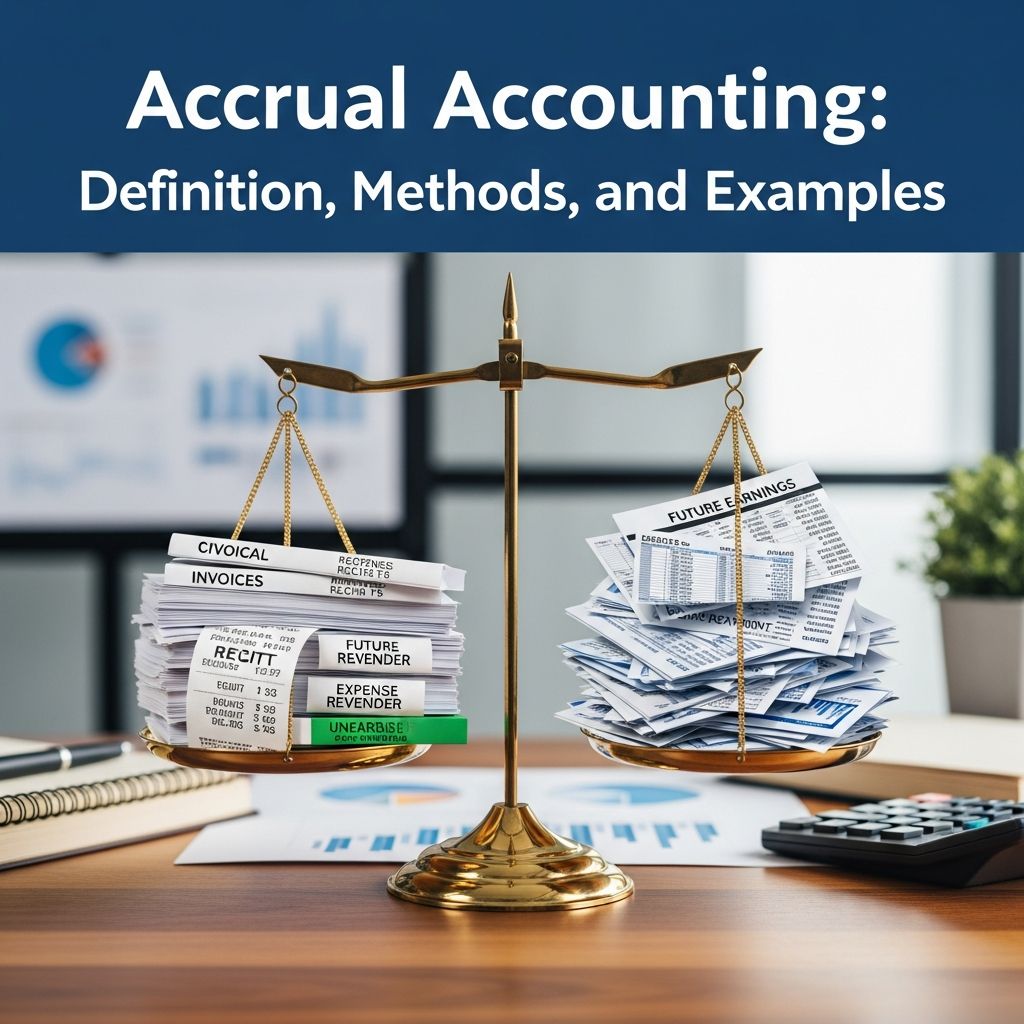
Understanding Accrual Accounting
Accrual accounting is a fundamental accounting method that records financial transactions when they occur, rather than when cash is exchanged. This approach aligns with the accrual concept, one of the core principles of Generally Accepted Accounting Principles (GAAP). Under accrual accounting, revenues are recognized when they are earned, and expenses are recorded when they are incurred, regardless of whether payment has been received or made. This method provides a more accurate representation of a company’s financial performance during a specific period and is the preferred accounting method for most businesses, particularly larger enterprises and publicly traded companies.
How Accrual Accounting Works
The fundamental principle behind accrual accounting is straightforward: transactions are recorded in the accounting system when the economic event occurs, not when the cash transaction takes place. This timing difference is crucial for understanding financial statements and assessing business performance.
Key Components of Accrual Accounting
- Revenue Recognition: Income is recorded when products are sold or services are delivered, even if payment is received later. For example, if a company completes a service for a client in December but receives payment in January, the revenue is recorded in December when the service was performed.
- Expense Recognition: Expenses are recorded when they are incurred, not when they are paid. If a company receives an invoice for supplies in November but pays in December, the expense is recorded in November when the obligation was created.
- Accounts Receivable: Money owed by customers for goods or services delivered is recorded as an asset on the balance sheet until payment is received.
- Accounts Payable: Money the company owes to suppliers and vendors is recorded as a liability until payment is made.
Accrual Accounting vs. Cash Accounting
While accrual accounting records transactions when they occur economically, cash accounting records transactions only when cash is exchanged. This fundamental difference creates significant variations in how financial statements appear and what they reveal about business performance.
Key Differences
| Feature | Accrual Accounting | Cash Accounting |
|---|---|---|
| Revenue Recognition | Recorded when earned, regardless of payment | Recorded only when cash is received |
| Expense Recognition | Recorded when incurred, regardless of payment | Recorded only when cash is paid |
| Financial Accuracy | More accurate representation of financial position | May not reflect true financial picture |
| Complexity | More complex, requires adjusting entries | Simpler to implement and understand |
| GAAP Compliance | Complies with GAAP requirements | Does not comply with GAAP |
| Typical User | Large corporations, public companies | Small businesses, sole proprietors |
Why Businesses Use Accrual Accounting
Most established businesses, particularly corporations and publicly traded companies, adopt accrual accounting for several important reasons:
Advantages of Accrual Accounting
- Accurate Financial Reporting: Accrual accounting provides a true picture of a company’s financial performance by matching revenues with the expenses incurred to generate them. This matching principle ensures that financial statements accurately reflect business activities.
- Better Decision Making: Management can make more informed decisions when financial data accurately reflects economic activities. Investors and stakeholders gain confidence in financial statements that follow recognized accounting principles.
- Legal Requirement: Public companies and many larger businesses are required by securities regulators and tax authorities to use accrual accounting. The Securities and Exchange Commission (SEC) mandates that publicly traded companies follow GAAP, which requires accrual accounting.
- Stakeholder Confidence: Creditors, investors, and other stakeholders expect audited financial statements prepared using accrual accounting methods. This consistency enables meaningful comparisons across companies and industries.
- Tax Advantages: While both methods may be accepted for tax purposes in some jurisdictions, accrual accounting can provide better tax planning opportunities for businesses with significant receivables or payables.
Practical Examples of Accrual Accounting
Understanding accrual accounting becomes clearer through practical examples that demonstrate how transactions are recorded.
Example 1: Service Revenue
A consulting firm completes a project for a client in March and invoices the client for $50,000. Under accrual accounting, the $50,000 is recorded as revenue in March when the service was completed, even though the client doesn’t pay until May. In the company’s March income statement, this revenue appears as earned income. When payment is received in May, the account is simply cleared without affecting the March revenue figures.
Example 2: Expense Recognition
A manufacturing company receives supplies in April with an invoice for $15,000, but doesn’t pay the vendor until June. Using accrual accounting, the $15,000 expense is recorded in April when the supplies are received and the obligation was created. This ensures that the April financial statements reflect all costs associated with April’s operations, providing an accurate picture of profitability for that period.
Example 3: Depreciation
A company purchases equipment for $100,000 with a useful life of ten years. Rather than expensing the entire $100,000 in the year of purchase, accrual accounting spreads this cost over ten years through depreciation expense. Each year, approximately $10,000 is recorded as an expense, matching the equipment’s contribution to revenue generation with the cost.
Adjusting Entries and Accruals
A critical component of accrual accounting is the use of adjusting entries, which are made at the end of an accounting period to ensure that revenues and expenses are recorded in the correct period.
Types of Adjusting Entries
- Accrued Revenues: Revenue that has been earned but not yet received. For example, interest earned on a savings account at month-end that won’t be deposited until the following month must be accrued in the current period.
- Accrued Expenses: Expenses that have been incurred but not yet paid. Salaries earned by employees at month-end that will be paid in the following month must be accrued in the period when work was performed.
- Deferred Revenues: Cash received in advance for goods or services to be delivered later. This cash is initially recorded as a liability, then recognized as revenue when goods are delivered or services are provided.
- Deferred Expenses: Cash paid in advance for expenses that will be recognized in future periods. Prepaid insurance or rent is initially recorded as an asset, then recognized as expense as the coverage or occupancy period passes.
Accrual Accounting and Financial Statements
The accrual method fundamentally shapes how the three primary financial statements are prepared: the income statement, balance sheet, and cash flow statement. Each statement reflects the accrual principle in different ways.
Impact on Financial Statements
- Income Statement: Shows revenues when earned and expenses when incurred, regardless of cash flow timing. This creates an accurate measure of profitability for the period.
- Balance Sheet: Includes accounts receivable (amounts owed by customers) and accounts payable (amounts owed to suppliers), which don’t appear in cash-based accounting. These items show the true financial position of the company.
- Cash Flow Statement: Reconciles accrual-based net income with actual cash flows by adjusting for non-cash items and timing differences, providing insight into the company’s liquidity.
Limitations of Accrual Accounting
While accrual accounting provides a more comprehensive view of financial performance, it does have certain limitations that businesses should consider:
- Complexity: Accrual accounting requires more sophisticated accounting systems and skilled personnel to implement correctly. Adjusting entries and reconciliations demand careful attention to detail.
- Estimation Required: Accrual accounting often requires estimates for items such as bad debts, warranty obligations, and depreciation. These estimates may not be entirely accurate, potentially distorting financial results.
- Timing Manipulation: Companies might manipulate earnings by aggressively recognizing revenue or deferring expenses, though auditors and regulatory oversight help prevent this practice.
- Less Intuitive Cash Picture: While accrual accounting provides a better economic picture, it can obscure the actual cash position of a business, which is critical for short-term operational decisions.
Accrual Accounting Requirements and Standards
Accrual accounting is governed by widely recognized accounting standards that ensure consistency and comparability across organizations.
Key Standards and Requirements
- Generally Accepted Accounting Principles (GAAP): In the United States, GAAP requires accrual accounting for most businesses. These principles are established by the Financial Accounting Standards Board (FASB) and provide the framework for financial reporting.
- International Financial Reporting Standards (IFRS): Globally, many countries require or permit IFRS for financial reporting. Like GAAP, IFRS is based on accrual accounting principles and is used by companies in over 140 countries.
- Regulatory Requirements: Public companies must file accrual-based financial statements with regulatory authorities. The SEC requires publicly traded companies to follow GAAP, which mandates accrual accounting.
When to Use Accrual Accounting
While accrual accounting is mandatory for certain organizations, businesses should consider their specific circumstances when choosing an accounting method:
- Public Companies: Must use accrual accounting to comply with SEC regulations and GAAP.
- Large Private Companies: Often use accrual accounting to meet lender requirements, stakeholder expectations, and for more accurate financial analysis.
- Companies Seeking Financing: Banks and investors typically require accrual-based financial statements before approving loans or investments.
- Businesses with Significant Receivables or Payables: Companies with substantial credit transactions benefit from accrual accounting’s ability to match revenues with expenses.
- Businesses with Inventory: Accrual accounting is required for businesses that manufacture or trade in inventory, as it must be used for tax purposes.
Frequently Asked Questions About Accrual Accounting
Q: What is the main difference between accrual and cash accounting?
A: The primary difference is timing. Accrual accounting records transactions when they occur economically (when revenue is earned or expenses are incurred), while cash accounting records transactions only when cash changes hands. This means accrual accounting provides a more complete picture of financial performance during a specific period.
Q: Why are adjusting entries necessary in accrual accounting?
A: Adjusting entries ensure that revenues and expenses are recorded in the correct accounting period, even when cash hasn’t been exchanged. They’re necessary to apply the accrual principle and the matching principle, ensuring that financial statements accurately reflect business activities.
Q: Can small businesses use cash accounting instead of accrual accounting?
A: Yes, many small businesses can use cash accounting for financial reporting purposes. However, if a business has inventory or exceeds certain revenue thresholds, the IRS may require accrual accounting for tax purposes. Additionally, if a business seeks financing or has investors, lenders and investors typically require accrual-based statements.
Q: How does accrual accounting affect tax filing?
A: Businesses using accrual accounting report income and deductions based on when they’re earned or incurred, not when cash is received or paid. This can affect the timing of tax liabilities and may require reconciliation with cash-based tax positions.
Q: What are some examples of accrued expenses?
A: Common examples of accrued expenses include accrued salaries (wages owed to employees for work performed but not yet paid), accrued interest (interest owed but not yet paid), and accrued utilities (utility services used but not yet billed or paid).
Q: Is accrual accounting mandatory for all businesses?
A: Accrual accounting is mandatory for public companies, businesses above certain revenue thresholds with inventory, and businesses that choose to follow GAAP or IFRS. However, small service businesses and sole proprietors may have the option to use simpler cash accounting methods, depending on jurisdiction and business structure.
References
- Generally Accepted Accounting Principles (GAAP) — Financial Accounting Standards Board (FASB). 2024. https://www.fasb.org/
- International Financial Reporting Standards (IFRS) — IFRS Foundation. 2024. https://www.ifrs.org/
- Accrual Accounting Principles — U.S. Securities and Exchange Commission (SEC). 2024. https://www.sec.gov/
- Revenue Recognition Standards — American Institute of Certified Public Accountants (AICPA). 2024. https://www.aicpa.org/
Similar Articles








Read full bio of Sneha Tete