Accounts Payable: Definition, Importance & Management
Master accounts payable management to optimize cash flow and strengthen supplier relationships.
What Is Accounts Payable?
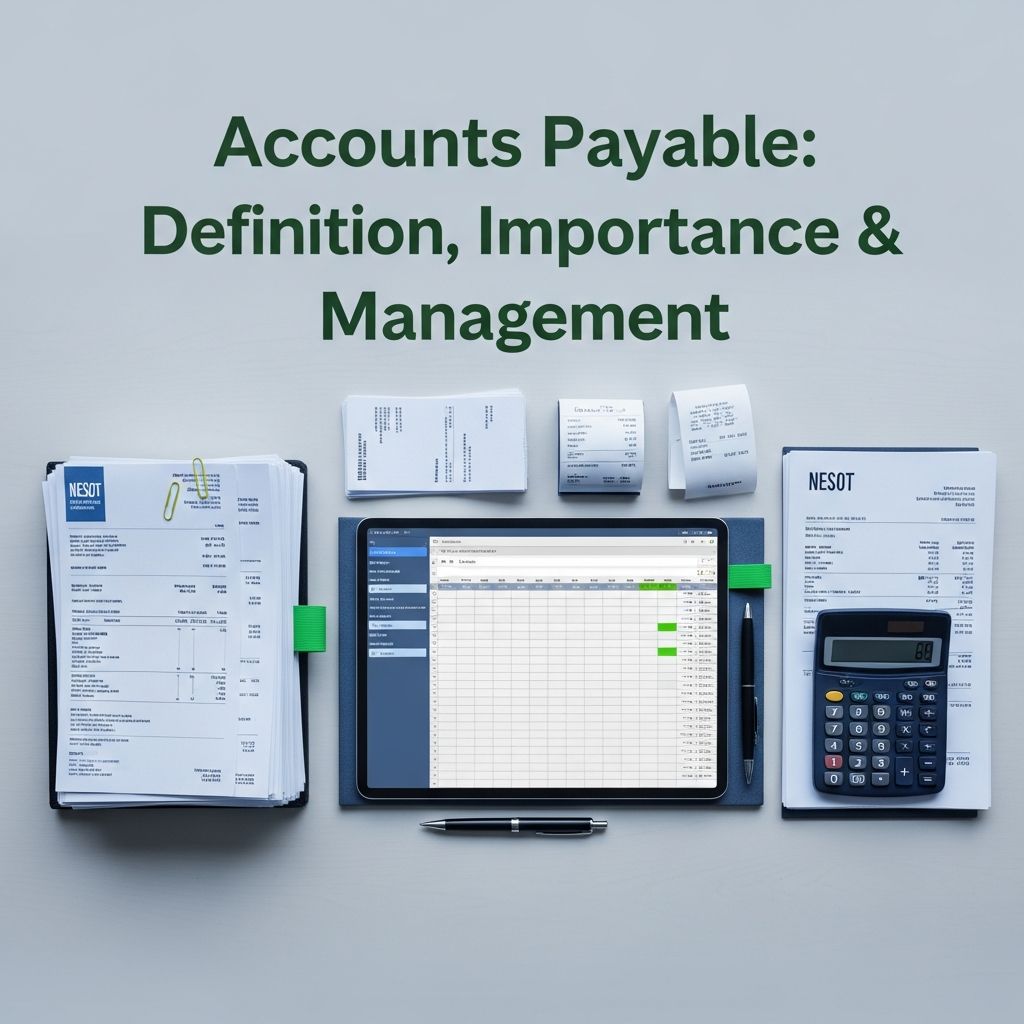
Accounts payable (AP) represents the amount a company owes its suppliers for goods or services purchased on credit. It is typically used in a company’s day-to-day operations and appears as a short-term liability on the balance sheet. Unlike notes payable, which involve formal written agreements and typically larger transactions, accounts payable are informal credit arrangements that arise from routine business transactions with vendors.
When a business purchases inventory, office supplies, or services on credit rather than paying immediately in cash, an accounts payable obligation is created. These obligations are critical components of working capital management and directly affect a company’s ability to maintain healthy operations. The accounts payable department plays a vital role in tracking, managing, and paying these obligations in a timely manner.
Understanding Accounts Payable in Accounting
Definition and Characteristics
Accounts payable are short-term liabilities that a company owes to its vendors or suppliers due to credit purchases of goods and services. This money must be paid back to maintain good working relationships and establish creditworthiness with suppliers. Several key characteristics define accounts payable:
- They arise from routine, ordinary business operations
- They are typically unsecured, meaning no collateral backs the obligation
- They generally have shorter payment terms, usually 30 to 90 days
- They are recorded as current liabilities on the balance sheet
- They do not include formal debt instruments or interest charges (unless payment is delayed)
Balance Sheet Classification
Accounts payable are recorded as current liabilities on the company’s balance sheet, classified separately from other obligations. This classification is important because it signals to investors, creditors, and stakeholders that the company has near-term payment obligations. Current liabilities are those due within 12 months, and accounts payable almost always fall into this category.
The presentation of accounts payable on financial statements provides transparency about the company’s short-term obligations. Creditors and investors use this information to assess liquidity risk and the company’s ability to meet its immediate obligations. A significant increase in accounts payable relative to revenue might indicate cash flow challenges, while a decrease could suggest improved payment capabilities or reduced purchasing activity.
Key Implications of Accounts Payable Management
Cash Flow Management
Efficient accounts payable management is crucial for a company to maintain solid cash flow. This involves tracking the company’s obligations and using cash wisely to pay off short-term debts when they are due. Properly managed accounts payable can lead to more favorable payment terms from suppliers. Some companies strategically choose to extend payments beyond agreed-upon terms if they don’t have sufficient funds to pay on time or to improve their cash balance to fund operations.
However, this strategy requires careful consideration. While extending payment terms can preserve cash in the short term, it may damage supplier relationships and creditworthiness if done repeatedly or without communication. Professional accounts payable management involves balancing the need for operational cash with the importance of maintaining positive vendor relationships.
Creditworthiness and Supplier Relationships
A company’s ability to meet its accounts payable obligations on time significantly impacts its credit rating. Businesses that consistently pay their vendors on time are viewed as more credible, which can lead to better loan terms and improved relationships with suppliers. This creditworthiness extends beyond supplier relationships and affects how banks and financial institutions view the company’s overall financial health.
Strong payment history with suppliers can result in negotiated advantages such as:
- Extended payment terms for future purchases
- Volume discounts on larger orders
- Priority access to goods during supply shortages
- Preferential treatment for new products or services
- Better pricing on future transactions
Impact on Cost of Goods Sold
Accounts payable directly impact the cost of goods sold (COGS). As accounts payable represent the purchases made by a business on credit, these obligations directly influence COGS calculations. The timely and efficient payment of accounts payable helps a company accurately determine its COGS and profitability. Understanding the relationship between accounts payable and COGS is essential for accurate financial reporting and performance analysis.
When companies receive inventory on credit, the obligation is recorded as accounts payable, while the inventory increases the company’s assets. As inventory is sold, it transforms from an asset into COGS. Proper accounting for accounts payable ensures that financial statements accurately reflect the true profitability of the business.
Early Payment Discounts and Cost Savings
Some suppliers offer early payment discounts to incentivize companies to pay their accounts payable promptly. These discounts, often expressed as “2/10 net 30” (meaning 2% discount if paid within 10 days, otherwise full payment due in 30 days), can lead to significant cost savings and better profit margins for the business. The decision to take advantage of these discounts requires analyzing whether the discount benefits outweigh the cost of accelerating cash outflows.
For example, a 2% discount on a $100,000 purchase saves $2,000. If this means paying 20 days early, the annualized return on this investment is approximately 36%, making it an attractive option in most circumstances. However, companies with tight cash flow situations may need to prioritize maintaining cash reserves over capturing discount opportunities.
Days Payable Outstanding (DPO)
Days Payable Outstanding is a key metric used by businesses to track the average time they take to pay invoices. If a company is buying on 30-day terms, their actual DPO could be over 40 or even 50 days. This metric is calculated by dividing accounts payable by daily cost of goods sold and multiplying by the number of days in the period.
A higher DPO indicates that a company takes longer to pay its suppliers, which can improve short-term cash flow. However, excessively high DPO ratios may indicate financial distress or poor supplier relationship management. Industry benchmarks for DPO vary significantly, so companies should compare their ratios to industry peers for meaningful analysis.
Accounts Payable vs. Notes Payable
While both accounts payable and notes payable are liabilities, they differ significantly in purpose, components, and time duration. Understanding these differences is important for proper financial classification and management.
| Factor | Accounts Payable | Notes Payable |
|---|---|---|
| Nature | Informal credit arrangement from suppliers | Formal written contract with lender |
| Documentation | Invoice or purchase order | Promissory note with specific terms |
| Interest | Typically no interest charged | Usually includes interest component |
| Duration | Short-term (usually 30-90 days) | Can be short or long-term (often 12+ months) |
| Balance Sheet Classification | Current liability | Current or long-term liability |
| Source | Suppliers and vendors | Banks, credit companies, or other lenders |
Best Practices for Managing Accounts Payable
Establishing Effective Processes
Successful accounts payable management requires establishing clear processes and procedures. This includes maintaining organized records of all invoices, tracking payment due dates, and implementing approval workflows. Many companies use accounts payable software to automate these processes, reducing errors and improving efficiency.
Optimizing Payment Timing
Companies should strategically determine when to pay invoices based on their cash position and supplier terms. This involves analyzing early payment discount opportunities against cash flow needs. Maintaining a payment calendar helps ensure that critical payments are never missed while optimizing the use of available cash.
Maintaining Vendor Relationships
Regular communication with suppliers about payment schedules and any issues affecting timely payment helps maintain positive relationships. Companies should inform suppliers of any cash flow challenges and work collaboratively to develop payment solutions that work for both parties.
Frequently Asked Questions (FAQs)
Q: What is the difference between accounts payable and accounts receivable?
A: Accounts payable represents money your company owes to suppliers, while accounts receivable represents money customers owe to your company. Essentially, one is a liability and the other is an asset.
Q: How is accounts payable recorded in journal entries?
A: When a company purchases goods on credit, accounts payable is recorded with a debit to the appropriate asset or expense account and a credit to accounts payable. When payment is made, accounts payable is debited and cash is credited.
Q: Can accounts payable have interest charges?
A: Typically, standard accounts payable do not include interest charges. However, if payment is made significantly late, suppliers may assess late fees or interest. This is why distinguishing between accounts payable and notes payable is important.
Q: What constitutes good accounts payable management?
A: Good accounts payable management involves paying invoices on time, maintaining organized records, taking advantage of early payment discounts when appropriate, communicating with suppliers, and regularly reviewing vendor relationships to ensure favorable terms.
Q: How does accounts payable affect cash flow?
A: Accounts payable affects cash flow by delaying cash outflows. By managing payment terms effectively and potentially extending payment periods within reason, companies can improve their working capital and maintain better liquidity for operations.
References
- Accounts Payable vs. Notes Payable: Differences & Examples — Allianz Trade. 2025. https://www.allianz-trade.com/en_US/insights/accounts-payable-vs-notes-payable.html
Similar Articles








Read full bio of Sneha Tete