Accounting: Definition, Types, and Core Principles
Master accounting fundamentals: Learn how businesses track, record, and report financial transactions.
Accounting is the systematic process of recording, classifying, summarizing, and reporting financial transactions of a business or organization. Often referred to as the “language of business,” accounting provides crucial information that enables stakeholders—including investors, creditors, management, and regulatory authorities—to make informed decisions about an organization’s financial health and performance.
The primary purpose of accounting is to track the flow of money into and out of a business, maintain organized financial records, and produce accurate financial statements that reflect the organization’s economic status. This disciplined approach to financial management serves as the foundation for business planning, performance evaluation, and strategic decision-making.
What Is Accounting?
Accounting encompasses the entire process of identifying, measuring, recording, and communicating financial information about economic entities. It involves more than simple bookkeeping; accounting includes analysis, interpretation, and strategic use of financial data to support business objectives.
The scope of accounting extends beyond profit-and-loss calculations. It includes:
- Tracking all financial transactions and events
- Maintaining comprehensive financial records
- Ensuring accuracy and compliance with regulations
- Preparing financial statements and reports
- Providing financial analysis for decision-making
- Ensuring transparency and accountability to stakeholders
Modern accounting integrates technology, allowing businesses to automate recording processes, improve accuracy, and generate real-time financial insights. Digital tools and accounting software have transformed how organizations manage their finances, making data-driven decisions more accessible than ever.
The Two Main Accounting Methods
Businesses employ two primary accounting methods: cash accounting and accrual accounting. Each method offers distinct advantages and serves different business needs.
Cash Accounting
Cash accounting is the simpler of the two methods, recording financial transactions only when cash actually changes hands. Under this approach, revenue is recognized when payment is received, and expenses are recorded when they are paid.
Advantages of cash accounting:
- Straightforward and easy to understand
- Requires minimal accounting expertise
- Provides accurate picture of cash flow
- Lower administrative burden
- Ideal for small businesses and sole proprietorships
Limitations of cash accounting:
- Does not reflect true profitability
- Excludes outstanding receivables and payables
- Can misrepresent financial performance during transition periods
- Not accepted by larger corporations or public companies
Accrual Accounting
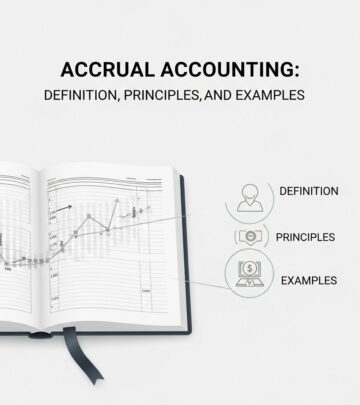
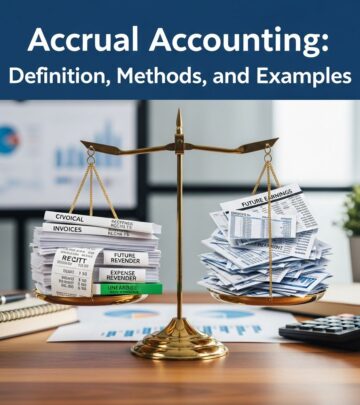
Accrual accounting records transactions when they are earned or incurred, regardless of when cash is exchanged. This method recognizes revenue when services are delivered or products are sold, and expenses when they are incurred, not when they are paid.
Advantages of accrual accounting:
- Provides a more accurate picture of profitability
- Recognizes all economic events
- Required by Generally Accepted Accounting Principles (GAAP)
- Mandated for publicly traded companies
- Better represents true financial performance
Limitations of accrual accounting:
- More complex and requires accounting expertise
- Higher administrative costs
- May not reflect actual cash position
- Requires careful management of receivables and payables
Generally Accepted Accounting Principles (GAAP)
Generally Accepted Accounting Principles, or GAAP, comprise the standardized set of rules, conventions, and procedures that accountants must follow when preparing financial statements in the United States. These principles ensure consistency, transparency, and comparability of financial information across organizations and industries.
Core GAAP principles include:
- Accrual Principle: Transactions are recorded when they occur, not when cash is exchanged
- Consistency Principle: Accounting methods remain consistent from period to period
- Cost Principle: Assets are recorded at their historical purchase price
- Economic Entity Principle: Personal and business finances are kept completely separate
- Going Concern Principle: Business is assumed to continue indefinitely
- Matching Principle: Expenses are matched with revenues they help generate
- Materiality Principle: All significant financial information is disclosed
- Objectivity Principle: Financial information is based on objective, verifiable evidence
- Revenue Recognition Principle: Revenue is recorded when earned, not when payment is received
- Periodicity Principle: Financial statements are prepared for specific time periods
Adherence to GAAP ensures that financial statements are reliable, comparable, and understandable to all users, from investors to regulators to creditors.
International Financial Reporting Standards (IFRS)
While GAAP is the standard in the United States, many countries worldwide have adopted International Financial Reporting Standards (IFRS). IFRS is a set of globally recognized accounting principles designed to ensure consistency in financial reporting across borders.
Key differences between GAAP and IFRS include their approach to revenue recognition, asset valuation, and financial statement presentation. Many multinational corporations operating in multiple countries must reconcile their financial statements to comply with both GAAP and IFRS requirements.
Core Financial Statements
Accounting produces three primary financial statements that provide comprehensive insight into an organization’s financial position:
Income Statement
The income statement, also called a profit and loss statement (P&L), summarizes revenues, expenses, and net income or loss over a specific period. It shows whether a business generated profits or incurred losses.
Balance Sheet
The balance sheet presents a snapshot of a company’s financial position at a specific point in time, detailing assets, liabilities, and shareholders’ equity. It demonstrates the fundamental accounting equation: Assets = Liabilities + Equity.
Cash Flow Statement
The cash flow statement tracks the movement of cash throughout the business, categorizing activities as operating, investing, or financing. This statement reveals whether a company has sufficient cash to meet obligations and fund growth.
Types of Accounting Specializations
The accounting profession encompasses numerous specialized fields, each serving distinct organizational needs:
- Financial Accounting: Prepares external financial statements for investors and creditors
- Managerial Accounting: Provides internal reports for management decision-making
- Tax Accounting: Manages tax obligations and identifies tax optimization strategies
- Forensic Accounting: Investigates financial discrepancies and fraud
- Government Accounting: Manages public sector financial operations
- Non-Profit Accounting: Handles finances for charitable and educational organizations
- Audit: Independently verifies accuracy of financial statements
Accounting Career Opportunities
The accounting profession offers diverse career paths with strong employment prospects. Professionals typically begin as junior accountants or accounting assistants and progress to senior accountant, accounting manager, controller, or chief financial officer (CFO) positions.
Professional certifications enhance career advancement prospects. The Certified Public Accountant (CPA) credential is recognized nationally and often required for certain positions. Other valuable certifications include Certified Management Accountant (CMA), Certified Internal Auditor (CIA), and Chartered Financial Analyst (CFA).
Why Accounting Matters
Accurate accounting serves multiple critical functions:
- Enables informed business decision-making based on reliable financial data
- Ensures compliance with tax laws and regulatory requirements
- Provides transparency to investors and stakeholders
- Identifies financial problems before they become critical
- Facilitates business planning and forecasting
- Supports performance measurement and evaluation
- Protects against fraud and financial mismanagement
Frequently Asked Questions
What is the main difference between bookkeeping and accounting?
Bookkeeping is the process of recording financial transactions, while accounting encompasses the broader analysis, interpretation, and strategic use of financial information. Bookkeepers maintain the records; accountants use those records to provide business insights and guidance.
Do small businesses need to use accrual accounting?
Small businesses are often allowed to use cash accounting for tax purposes if their annual gross receipts fall below IRS thresholds. However, accrual accounting may provide better insight into true profitability, even for small operations.
What qualifications do I need to become an accountant?
Most accountant positions require at least a bachelor’s degree in accounting or a related field. Professional certification such as CPA typically requires additional education, examination, and work experience beyond the basic degree.
How often should financial statements be prepared?
Most businesses prepare financial statements quarterly and annually. However, many organizations, especially larger corporations, prepare internal financial reports monthly to monitor performance more closely and facilitate timely decision-making.
What is the purpose of an external audit?
An external audit involves an independent third party reviewing a company’s financial statements to verify their accuracy and compliance with accounting standards. This process provides assurance to investors, creditors, and other stakeholders about the reliability of reported financial information.
Can accounting software replace accountants?
While accounting software has improved efficiency and reduced manual data entry, it cannot replace professional accountants. Software handles routine recording tasks, but accountants provide critical analysis, interpretation, strategic guidance, and expertise in complex financial matters that software cannot deliver.
References
- Financial Accounting Standards Advisory Board (FASB) — Accounting Standards Updates — Financial Accounting Foundation. 2025. https://www.fasb.org/standards/updates
- International Accounting Standards Board (IASB) — IFRS Standards — IFRS Foundation. 2025. https://www.ifrs.org/standards/
- IRS Publication 583: Starting a Business and Keeping Records — Internal Revenue Service. 2024. https://www.irs.gov/publications/p583
- Bureau of Labor Statistics — Occupational Outlook for Accountants and Auditors — U.S. Department of Labor. 2024. https://www.bls.gov/ooh/business-and-financial/accountants-and-auditors.htm
- American Institute of CPAs (AICPA) — Professional Standards and Resources — AICPA. 2025. https://www.aicpa.org/
Similar Articles








Read full bio of medha deb