Account Status Terminology in Credit Reports
Understand how account closure and payment status affect your credit profile
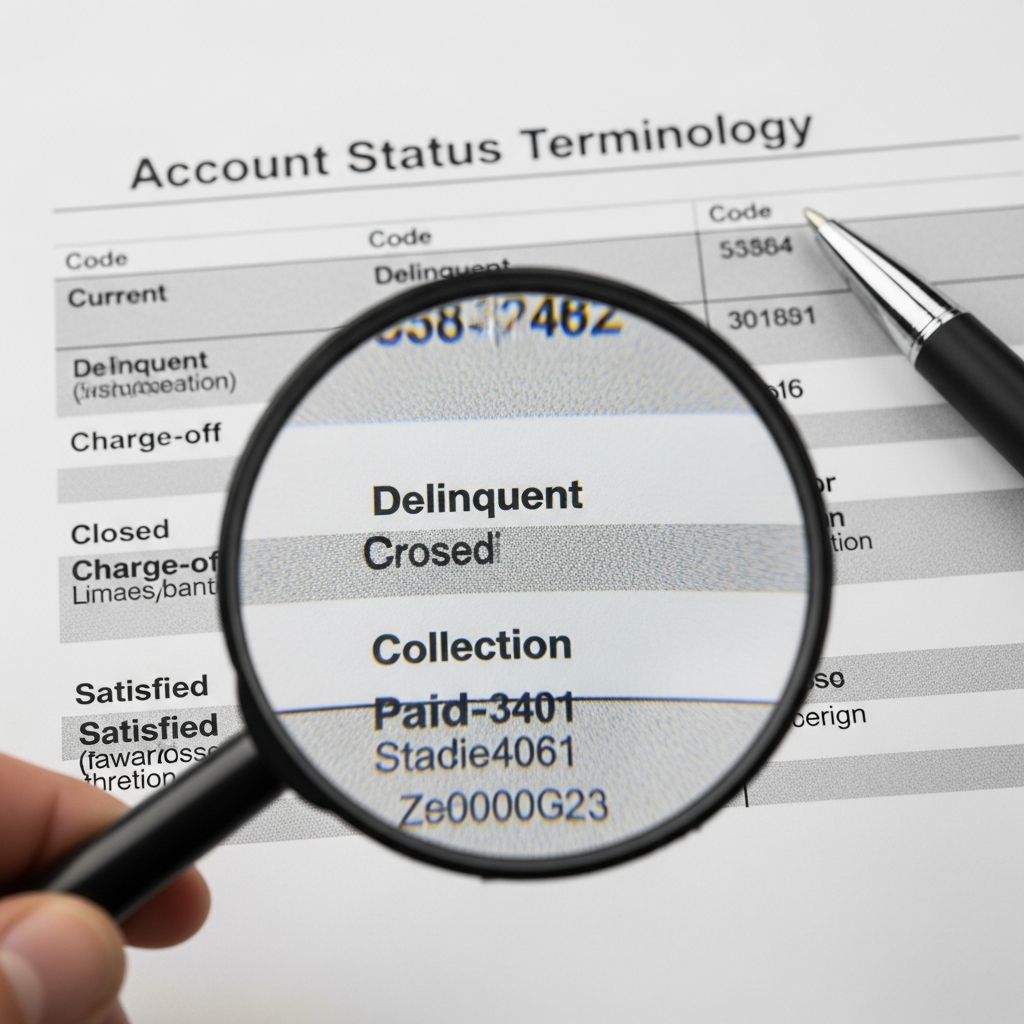
Your credit report functions as a comprehensive financial history that chronicles your borrowing patterns and repayment behaviors. Among the various details captured in this document are specific notations about your accounts’ operational status and their current balances. Two commonly encountered designations—closed and paid in full—often create confusion for consumers trying to interpret their credit profiles. While these terms may appear interchangeable to the untrained eye, they carry distinct meanings that significantly influence how lenders perceive your creditworthiness.
Distinguishing Between Account Closure and Payment Status
The fundamental distinction between these two designations lies in what they communicate about your account. Closed accounts indicate that the account is no longer active for conducting new transactions, whereas paid in full describes the absence of an outstanding balance on that account. These terms address different dimensions of your account profile—one speaks to activity status, while the other addresses financial obligation.
When an account appears as closed, it merely signals that no new charges or withdrawals can be made. This closure might result from your deliberate decision to terminate the account, or it could stem from the creditor’s action due to extended inactivity or payment defaults. The critical point is that closure alone does not necessarily mean the debt has been satisfied.
Conversely, when an account is designated as paid in full, it communicates that you have eliminated any outstanding financial obligation associated with that account. A closed account that displays this designation represents the optimal scenario—the account is inactive and carries no remaining debt.
How Revolving Accounts Differ from Installment Accounts
Credit reports typically categorize accounts into two distinct types, each with unique characteristics regarding closure and payment status.
Revolving Credit Structures
Revolving accounts, such as credit cards and home equity lines of credit, function with flexible spending parameters. When a revolving account is closed, it becomes inactive and cannot be used for additional purchases or transactions. However, closing a revolving account does not necessarily eliminate an existing balance. You may have closed the account while maintaining an unpaid balance, or you may have settled the balance before closure. The account status notation will reflect these circumstances.
Installment Loan Arrangements
Installment loans—including personal loans, auto loans, and mortgages—operate on fixed payment schedules with predetermined repayment periods. A closed installment account typically indicates that you have completed the loan repayment in full, though closure can also result from the creditor’s decision due to payment delinquency or collection proceedings. When an installment loan is paid in full ahead of schedule, the account may be closed by either party, and the notation on your credit report will reflect this successful completion.
Understanding Account Status Variations on Credit Reports
Credit reporting agencies and individual creditors may use varying terminology to describe account status, creating potential confusion. The specific language appearing on your report depends on your payment history and the circumstances surrounding account closure.
Positive Account Closure Designations
When you have maintained an excellent payment record and successfully paid off your obligation, your credit report may display terminology such as:
- Closed; never late
- Closed; paid as agreed
- Paid and closed
- Account in good standing
These designations carry positive implications, signaling to prospective lenders that you fulfilled your financial obligations responsibly.
Account Status with Payment Complications
If your account history includes late payments that were subsequently brought current before final payoff, your report may indicate this through terminology such as:
- Paid; 30 days past due
- Paid; 60 days past due
- Settled in full
- Charged off; paid in full
These notations acknowledge that while the account has been satisfied financially, payment irregularities occurred during the account’s lifetime.
The Timeline for Closed Account Reporting
Understanding how long closed accounts remain visible on your credit report is essential for long-term financial planning. The reporting duration depends significantly on whether the account was in good standing at closure.
Positive Account Closure Duration
Accounts closed in good standing—meaning you maintained current payment status and paid the balance in full or carried a zero balance—will remain visible on your credit report for 10 years from the closure date. This extended reporting period actually benefits your credit profile by demonstrating a lengthy history of responsible account management.
During this 10-year window, the positive account continues to contribute to your credit history length, which is a factor in credit score calculations. Even though the account is inactive, its presence supports your overall creditworthiness narrative.
Negative Account Closure Duration
If an account was closed while past due or in default status, the reporting timeline differs substantially. The entire account will be removed from your credit report seven years after the original delinquency date—which is defined as the first missed payment in the series leading to closure.
This seven-year period begins not from the closure date but from the initial delinquency, meaning the negative impact diminishes over time. However, during this seven-year window, the delinquent account continues to influence credit scores negatively.
Payment Status Nuances and Settlement Considerations
Not all accounts showing a zero balance reflect identical circumstances. Understanding the distinction between “paid in full” and “settled” provides important clarity for interpreting your credit report.
Complete Payment vs. Settlement Agreements
When an account is truly paid in full, you have satisfied the entire outstanding obligation as originally agreed. Conversely, settlement indicates that you reached an agreement with your creditor or collection agency to satisfy the debt for less than the full amount owed. While both scenarios result in account closure with zero balance, lenders viewing your credit report can distinguish between them.
Settlement arrangements may result in the account being updated to show “paid in full” with a zero balance; however, creditors evaluating your application will still recognize that you did not pay the complete original debt. This distinction can influence lending decisions, as settlement agreements sometimes carry greater risk perception than full repayment.
Credit Score Implications of Settlement
While settlement resolves your financial obligation, it may not restore your credit score as effectively as complete repayment would. The settlement notation serves as a permanent indicator that you negotiated a reduced payoff, which some lenders interpret as elevated risk. For this reason, consumers should seek written confirmation that settled accounts will be reported as “paid in full” rather than “settled” if possible.
Practical Scenarios: When Closed Accounts Still Carry Balances
A counterintuitive situation that confuses many consumers is the existence of closed accounts that still display outstanding balances. This scenario occurs when the account was terminated while debt remained unpaid.
How Balance Retention Happens
Closed accounts may maintain balances if the closure occurred before complete debt satisfaction. This can result from several circumstances:
- The lender closed the account due to missed payments while debt persisted
- You requested account closure despite maintaining an unpaid balance
- The account was charged off after extended delinquency, with the balance transferred to a collection entity
When a balance remains on a closed account, you retain legal responsibility for that debt regardless of the account’s inactive status. The closed designation simply means no new transactions can occur; it does not absolve existing financial obligations.
Impact on Credit Scoring
Closed accounts with outstanding balances continue to damage credit scores until resolved. The unpaid balance appears on your credit report as a negative factor, and depending on when the delinquency occurred, it may be reported to collections agencies or litigated against you. Unlike paid-in-full accounts that benefit your credit profile through their positive history, unpaid closed accounts actively harm your creditworthiness.
Comparing Account Status Impact Across Different Scenarios
The following table illustrates how different account status combinations affect your credit report and score:
| Account Status | Balance | Report Duration | Credit Impact | Lender Perception |
|---|---|---|---|---|
| Closed in Good Standing | Zero Balance | 10 Years | Positive | Demonstrates responsible management |
| Closed with Late Payments (Current) | Zero Balance | 10 Years (late payment removed after 7 years) | Mixed | Shows eventual responsibility despite history |
| Closed While Delinquent | Outstanding Balance | 7 Years from First Delinquency | Negative | Indicates default or collection risk |
| Settled (Less than Full) | Zero Balance | 7 Years | Somewhat Negative | May indicate financial difficulty |
Strategic Considerations for Closed Accounts
Understanding account closure has practical implications for managing your credit profile strategically. While you cannot retroactively change an account’s status, you can make informed decisions about future account management.
Timing of Account Closure
The decision to close a revolving account, particularly a credit card, deserves careful consideration. While closing an account you no longer use might seem prudent, it can reduce your total available credit and potentially lower your credit score by decreasing your credit utilization ratio. Many financial professionals recommend maintaining closed accounts in good standing on your report since they continue supporting your credit history length.
Managing Multiple Account Closures
If you have multiple accounts showing closed status, particularly within a concentrated timeframe, lenders may interpret this as financial stress or reduced creditworthiness. However, closed accounts in good standing eventually become less significant factors in credit calculations as they age, particularly after the negative information is removed.
Frequently Asked Questions About Account Closure and Payment Status
How long does a paid-in-full account remain on my credit report?
A closed account that is paid in full and was in good standing remains on your credit report for 10 years from the date of closure. This extended timeline actually benefits your credit profile by maintaining a record of responsible account management.
Can I reopen a closed account?
The ability to reopen a closed account depends on the account type and the creditor’s policies. Some lenders will not reopen previously closed accounts under any circumstances, while others may consider reopening requests on a case-by-case basis. It is best to contact your creditor directly to inquire about reopening possibilities.
What does it mean if my closed account still shows a balance?
A closed account displaying an outstanding balance indicates that debt remains unpaid despite the account’s inactive status. You maintain legal responsibility for this balance, and it will continue to affect your credit score negatively until resolved through payment, settlement, or the passage of applicable time limitations.
Should I pay off an old closed account with an unpaid balance?
Paying off an old closed account with an unpaid balance can potentially improve your credit score, particularly if the account is recent enough that the payment is reported positively. However, be cautious about making payments on very old debts, as doing so can restart the statute of limitations clock in certain situations, potentially extending your liability period.
Is “settled” the same as “paid in full”?
No, these are distinct designations. “Paid in full” indicates complete repayment of the original obligation, while “settled” means you negotiated payment of less than the full amount owed. Although both result in account closure with zero balance, lenders can distinguish between them, and settlement may carry slightly greater risk perception.
Moving Forward with Account Closure Understanding
Comprehending the distinctions between closed accounts and paid-in-full designations empowers you to make informed financial decisions and accurately interpret your credit report. While closed accounts eventually age off your credit history, the circumstances surrounding their closure—whether they were in good standing or carried unpaid balances—meaningfully impact your creditworthiness during their reporting period.
By maintaining clear payment records and understanding how different account statuses are reported, you can strategically manage your credit profile and work toward improved financial outcomes over time.
References
- What Do “Closed” and “Paid in Full” Mean on Credit Reports? — Experian. 2024. https://www.experian.com/blogs/ask-experian/the-difference-between-closed-and-paid-in-full/
- Charge Off vs Closed Account: What’s the Real Credit Impact? — The Credit People. 2024. https://www.thecreditpeople.com/credit/charge-off-vs-closed-account-what-is-the-real-difference
- Should You Pay Off Closed or Charged-Off Accounts? — Experian. 2024. https://www.experian.com/blogs/ask-experian/paying-off-closed-or-charged-off-accounts/
- Should Closed Accounts on Credit Report Drop Off? — InCharge. 2024. https://www.incharge.org/debt-relief/credit-counseling/credit-score-and-credit-report/closed-account-on-credit-report/
- How Do Closed Accounts Affect Your Credit Score? — Chase Bank. 2024. https://www.chase.com/personal/credit-cards/education/build-credit/closed-accounts-on-credit-report
Similar Articles








Read full bio of Sneha Tete