Account Closure and Credit Impact: What You Need to Know
Understand how closing financial accounts affects your credit profile
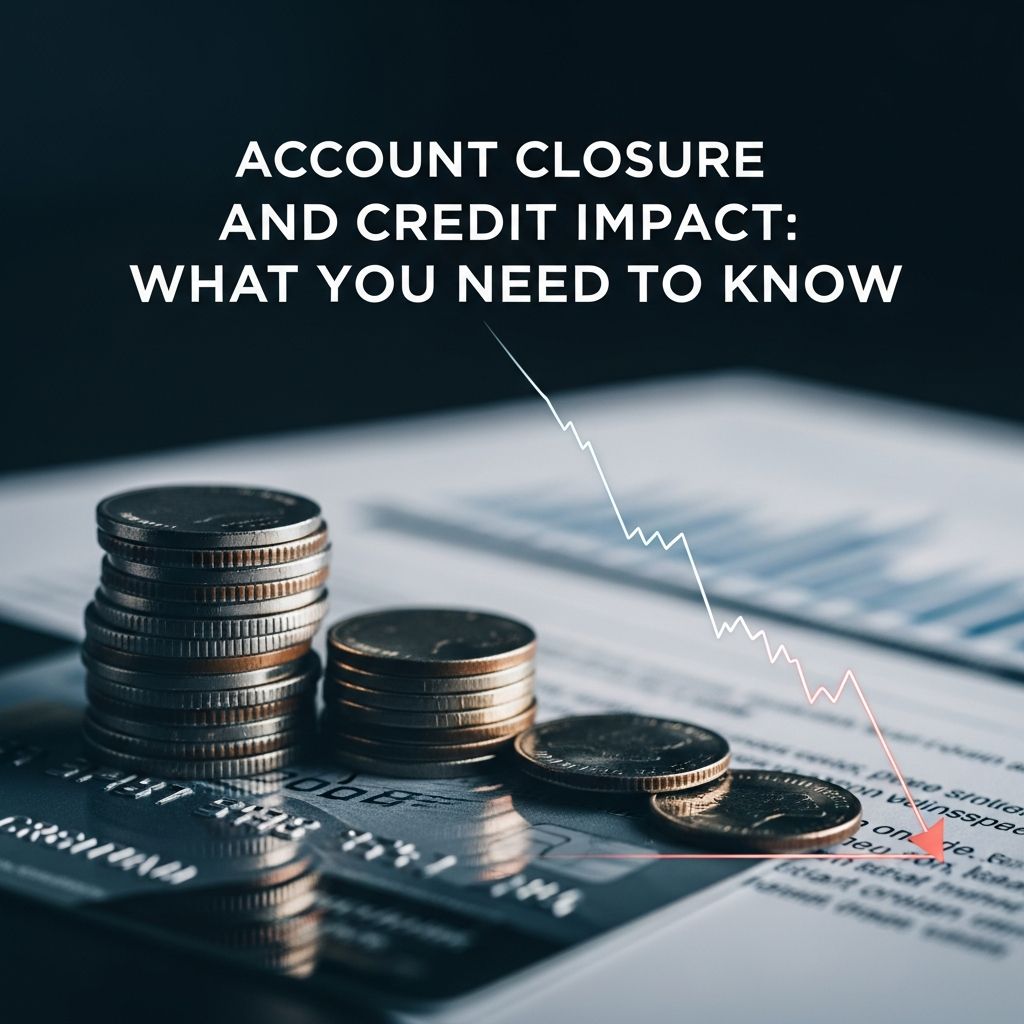
When you decide to close a financial account, whether it’s a checking account at your local bank or a savings account you’ve maintained for years, questions about potential consequences naturally arise. One of the most pressing concerns is whether this action will harm your credit score, a numerical representation that significantly influences your financial future and access to credit products. Understanding the relationship between account closures and credit reporting is essential for making informed financial decisions.
The Direct Connection: What Credit Bureaus Actually Track
The fundamental answer to whether closing a bank account hurts your credit is straightforward: the act of closing a bank account does not directly damage your credit score. This is because the three major credit reporting agencies—Experian, Equifax, and TransUnion—do not include information about checking or savings accounts in their standard credit reports. These bureaus focus primarily on credit-related accounts such as credit cards, loans, mortgages, and other forms of borrowed money.
This distinction is critical. Your banking activity, including opening and closing accounts, exists in a separate financial ecosystem from your credit profile. Banks maintain their own systems for tracking account history, but this information does not flow to credit bureaus in the same way that missed credit card payments or loan defaults do. Understanding this separation helps clarify why simply closing an account—without other complications—poses no direct threat to your credit standing.
When Account Closure Becomes Problematic: Indirect Effects on Credit
While the closure itself is neutral from a credit perspective, several scenarios can transform account closure into a credit concern. These indirect pathways represent situations where poor account management intersects with credit reporting mechanisms, creating real damage to your financial profile.
Outstanding Negative Balances and Collection Agency Involvement
One of the most significant ways closing an account can harm your credit involves outstanding debt. If you close an account with a negative balance—money you actually owe to the bank—and fail to resolve this debt promptly, the financial institution may pursue collection measures. This typically unfolds in stages:
- Initial charge-off: After a period of non-payment, the bank may write off the debt as uncollectible, formally known as a charge-off
- Collection agency assignment: The bank often sells or transfers the debt to third-party collection agencies
- Credit bureau reporting: Collection agencies report this unpaid debt to credit bureaus, creating a negative mark on your credit report
- Long-term reporting: Collection accounts remain on your credit report for up to seven years from the original delinquency date, even if you eventually pay the debt
The impact on your credit score can be substantial. Depending on the amount owed and your overall credit profile, collection accounts can reduce your score by 100 points or more. This creates a cascading effect that extends far beyond the initial account closure, affecting your ability to obtain new credit, secure favorable interest rates, or even qualify for rental housing.
Disrupted Automatic Payment Arrangements
Another critical scenario involves automatic payments set up through the account you’re closing. Many people use their checking accounts as the hub for paying credit card bills, loan payments, utilities, and other recurring obligations. When you close this account without properly redirecting these automatic payments, you create a dangerous situation.
The mechanics of this problem are straightforward: automatic payment systems cannot deduct money from a closed account. The payment attempts will be declined, and if you don’t notice this quickly, you may inadvertently miss payment deadlines. Missing a payment by 30 days or more becomes a serious credit issue because payment history comprises approximately 35% of most credit scoring models. A single missed payment can reduce your credit score significantly and may remain on your report for up to seven years.
Furthermore, creditors often respond to late payments with additional consequences beyond credit reporting. Late fees accumulate, and creditors may close your account or demand immediate payment of the entire balance. Some may even pursue legal action for larger outstanding balances.
Bounced Checks and Collection Consequences
For those still using paper checks, account closure creates another vulnerability. If you write checks against an account you’re planning to close, and the payee deposits the check after closure, the check will bounce. This seemingly minor banking problem escalates quickly when the recipient—whether a utility company, landlord, or creditor—reports the bounced check to a collection agency. This collection report then reaches credit bureaus, resulting in a negative credit impact.
Secondary Reporting Systems: Beyond Traditional Credit Bureaus
While traditional credit bureaus don’t track checking and savings accounts directly, specialized financial reporting systems do monitor this activity. Understanding these alternative reporting mechanisms is important because they can indirectly affect your financial opportunities.
When you close an account under negative circumstances, the closure may be reported to services such as ChexSystems or Early Warning Services. These systems maintain records that banks and credit unions consult when evaluating new account applications. A negative mark from one of these services can make it difficult to open new bank accounts for up to five years, effectively limiting your access to basic financial services.
Account Age and Credit History Considerations
Beyond the acute problems of negative balances and missed payments, closing accounts can have subtle long-term effects on your credit profile through account age calculations. Credit scoring models consider the average age of your accounts as a factor in credit assessments. When you close a longstanding account, you potentially reduce the average age of your remaining accounts, which can result in a temporary credit score decrease.
This effect is generally modest compared to serious delinquencies or collections, but it represents a real consideration. The longer your credit history demonstrates consistent, responsible account management, the more positively credit bureaus view your financial behavior. Closing old accounts eliminates this historical evidence.
Strategic Planning for Account Closure
Understanding the risks associated with account closure allows you to implement protective strategies that minimize potential damage to your credit profile. Proper planning transforms what could be a problematic financial transition into a seamless one.
Essential Pre-Closure Steps
- Review automatic payments: Conduct a thorough audit of all recurring charges attached to the account you plan to close
- Redirect payment sources: Update all automatic payment arrangements—credit cards, loans, utilities, subscriptions—to draw from your new account at least one billing cycle before closing the old account
- Verify account settlement: Ensure the account has a zero balance and no outstanding fees or charges
- Check for outstanding checks: Review recent check register entries and confirm all checks have cleared before closing
- Allow transition time: Maintain both accounts simultaneously for at least one billing cycle to verify all transitions processed correctly
- Obtain closure documentation: Request written confirmation of account closure to preserve records
Managing Negative Balance Situations
If you discover a negative balance when planning to close an account, address it immediately before closure. Contact the bank to understand what triggered the negative balance—whether overdraft fees, insufficient funds for a transaction, or other charges. Resolve the debt completely rather than allowing it to transfer to a collection agency. This direct resolution eliminates the collection reporting consequence entirely.
Comparing Account Types and Their Effects
| Account Type | Credit Bureau Reporting | Potential Credit Impact | Specialized Reporting |
|---|---|---|---|
| Checking Account | No direct reporting | Only through collections/missed payments | ChexSystems, Early Warning Services |
| Savings Account | No direct reporting | Only through collections/missed payments | ChexSystems, Early Warning Services |
| Credit Card | Direct reporting | High impact from closure or missed payments | Credit bureaus only |
| Loan Account | Direct reporting | Very high impact from missed payments | Credit bureaus only |
Frequently Asked Questions
Q: Will closing multiple bank accounts simultaneously hurt my credit?
A: Closing multiple bank accounts doesn’t create additional credit damage beyond the individual risks of each closure. However, if you close accounts that contained automatic payments, the multiplication of redirected payments increases the likelihood of missing a transition. Space closures apart and verify each transition before proceeding.
Q: How long does the credit impact from a closed account last?
A: The direct credit impact—such as a collection account—remains for seven years from the original delinquency date. However, the indirect effect of reduced account age may resolve within months as your remaining accounts age and new positive account activity demonstrates responsible behavior.
Q: Can I rebuild credit after closing an account that hurt my score?
A: Yes. Consistent on-time payments on remaining accounts, maintaining low credit card balances, and avoiding new delinquencies gradually rebuild your credit score over time. Some newer credit scoring models may ignore paid-off collection accounts, providing additional recovery opportunities.
Q: Should I close old unused accounts to improve my credit?
A: Generally, no. Keeping old accounts open maintains your credit history length and available credit, both positive factors for credit scores. Closing unused accounts can actually lower your score slightly by reducing available credit and shortening your credit history.
The Bottom Line: Making Informed Closure Decisions
Closing a bank account does not inherently damage your credit score. The three major credit bureaus do not track traditional banking accounts, making the mere act of closure creditwise neutral. However, this neutrality disappears quickly if you fail to manage the practical details surrounding the closure.
The real credit damage stems from indirect consequences: unresolved negative balances that migrate to collection agencies, missed payments on credit obligations that depended on the closed account, or bounced checks that initiate collection processes. Each of these scenarios represents a failure of planning rather than an inevitable consequence of account closure.
By understanding these mechanics and implementing proper planning protocols, you can close accounts confidently without sacrificing your credit profile. The key lies in recognizing that account closure is not inherently risky—only careless account closure. With appropriate attention to details and timely transitions, you can manage your financial accounts effectively while maintaining the credit standing that serves as the foundation for future financial opportunity.
References
- Does Closing a Bank Account Hurt Your Credit? — PNC Insights. Accessed April 2026. https://www.pnc.com/insights/personal-finance/spend/does-closing-bank-account-hurt-credit.html
- Does Closing a Bank Account Affect Your Credit Score? — Wise. Accessed April 2026. https://wise.com/gb/blog/closing-bank-account-credit-score
- Does Closing a Bank Account Hurt Your Credit? — Experian. Accessed April 2026. https://www.experian.com/blogs/ask-experian/does-closing-a-bank-account-affect-your-credit/
- Does Closing a Checking Account Affect Credit Score? — Midlands Bank. May 15, 2025. https://www.midlandsb.com/resources-articles/articles/2025/05/15/does-closing-a-checking-account-affect-credit-score
- Do Closed Bank Accounts Affect Credit Score? — SoFi. Accessed April 2026. https://www.sofi.com/learn/content/closed-bank-accounts-and-credit-score/
- Does Closing a Bank Account Hurt Your Credit? — NerdWallet. Accessed April 2026. https://www.nerdwallet.com/banking/learn/does-closing-a-bank-account-hurt-your-credit
Similar Articles








Read full bio of medha deb