Account Balances and Credit Score Impact
Understand how your account balances influence your credit rating and financial health

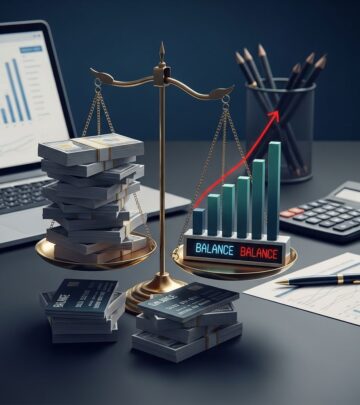
Your account balances represent one of the most influential factors determining your creditworthiness. When lenders evaluate your financial reliability, they examine not just whether you pay your bills, but how much debt you’re carrying relative to your available credit. Understanding this relationship is essential for anyone seeking to build and maintain a strong credit profile.
The Connection Between Account Balances and Credit Scoring
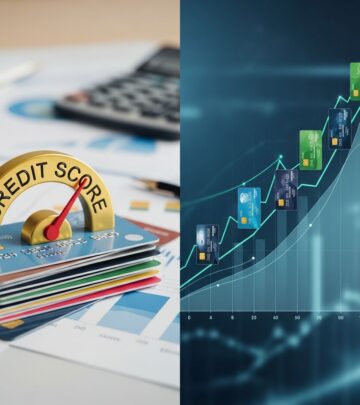
Account balances directly influence your credit score through multiple pathways. The amount of debt you carry on your accounts determines approximately 30% of your FICO® Score. This significant weight reflects a fundamental principle in credit scoring: lenders view your existing debt levels as predictive of your future ability to manage credit responsibly. When you carry higher balances, the probability increases that you may struggle to meet your monthly payment obligations on time.
However, carrying debt alone doesn’t automatically label you as a high-risk borrower. The relationship between your balances and your credit limits—measured through your credit utilization ratio—matters substantially more than the absolute dollar amount you owe.
Understanding Credit Utilization Ratio
Credit utilization represents the percentage of your available credit that you’re actively using across all your revolving accounts, primarily credit cards. This metric reveals to lenders how close you are to exhausting your credit capacity.
How Credit Utilization Is Calculated
The calculation is straightforward. If you have a $1,000 balance across all your credit cards and your combined credit limits total $4,000, your utilization ratio is 25%. Credit scoring models analyze this percentage to assess your creditworthiness.
The financial industry consensus, supported by the Consumer Financial Protection Bureau, recommends maintaining your credit utilization below 30% of your total available credit. This threshold exists because higher utilization suggests you’re increasingly dependent on credit and may face difficulty managing additional financial obligations.
Impact of High Utilization Rates
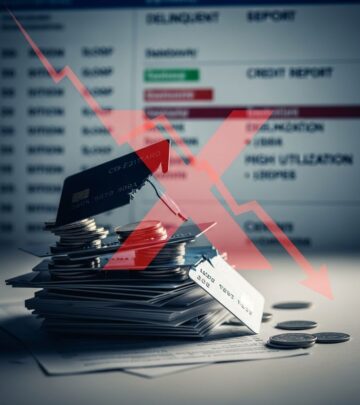
When your credit utilization exceeds 30%, your credit scores typically suffer. The closer your balances approach your credit limits, the more severe the negative impact becomes. If you actually exceed your credit limit, the damage intensifies further.
Interestingly, research has revealed a nuanced pattern: using a low percentage of your available credit can have a more positive impact on your FICO Scores than using no credit at all. This suggests that credit scoring models favor demonstrating responsible credit management through measured usage rather than complete abstention.
How Lenders Report Your Balance Information
A crucial detail that many credit holders overlook is timing. Card issuers typically report your account balance to credit bureaus around the end of your statement period, which often occurs three to four weeks before your next bill payment is due. This reporting delay creates an important reality: even if you pay your balance in full every month, your credit report may reflect a balance different from your current account status.
For example, you might charge $500 during your billing cycle, receive your statement showing that $500 balance, and pay it immediately. However, your credit bureau report reflects the $500 balance that was reported when the statement closed, regardless of your subsequent payment. Understanding this timing mechanism helps explain why your credit report may not mirror your actual financial situation at any given moment.
Multiple FICO Reason Codes Related to Account Balances
The FICO scoring system employs several distinct reason codes that address different dimensions of how you carry balances across your credit portfolio:
- Code M6 – Focuses on the number of bank-issued revolving accounts carrying balances. The more national, regional, or local bank credit cards you maintain with active balances, the more negatively this code impacts your score.
- Code P3 – Examines the proportion of balance to limit specifically on retail credit accounts. This code penalizes having retail card balances that approach your retail credit limits.
- Code P5 – Similar to P3 but applies to all revolving accounts regardless of issuer type, including bank cards, credit union cards, and any other revolving credit sources.
- Code Q0 – Takes a holistic view of your revolving balances compared to your total overall debt. This code suggests that when credit card balances approach your entire debt portfolio balance, it negatively affects your score.
- Code Q1 – Concentrates specifically on balances and limits for credit cards issued by national financial institutions and banks.
- Code U8 – Specifically addresses recently opened retail accounts carrying balances month-to-month, regardless of balance size.
These multiple reason codes demonstrate that credit scoring models examine your balance patterns from various angles, not just one simple metric.
The Payment History Dimension
Carrying a balance connects to another critical credit scoring component: payment history. If you carry a balance because you cannot afford to pay it, missed or late payments will damage your payment history—the most important factor in your credit score.
When card issuers report missed payments to the credit bureaus, the impact compounds beyond the immediate account. A single late payment can remain on your credit report for years, and the credit score damage extends to future credit applications.
The Interest Accumulation Cycle
Beyond credit score implications, carrying balances initiates a cycle of interest charges that compounds your financial burden. When you carry a balance on a high-interest credit card, each month’s interest charges get added to your principal balance, making the debt increasingly difficult to eliminate.
This cycle becomes particularly problematic for those who can only afford minimum payments. Minimum payments typically cover interest charges and a small portion of principal, meaning the balance decreases slowly while interest continues accumulating.
Myth: Building Credit by Carrying a Small Balance
A persistent misconception suggests that carrying a small balance actually helps your credit score. This is false. Research from the Consumer Financial Protection Bureau confirms that paying off your credit card balance each month remains the optimal strategy whenever possible, rather than maintaining revolving debt.
The confusion may stem from the earlier observation about low utilization being better than zero utilization. However, this doesn’t mean you should intentionally carry a balance to achieve a higher score. Instead, it means that responsible usage of available credit—paying it off monthly—appears better to scoring models than having available credit you never use.
Strategic Balance Management
Paying Off Balances Strategically
To optimize your credit profile, prioritize paying down balances across multiple accounts. The more you reduce your balances toward zero, the less likely you are to miss future payments, and consequently, the higher your credit rating becomes.
If you have multiple cards, focus first on reducing balances on cards where your utilization is highest. Bringing a card from 80% utilization down to 25% utilization will have a more dramatic positive impact than equally distributing payments across all cards.
Leveraging Introductory Offers
Some credit cards offer introductory 0% Annual Percentage Rate (APR) periods, providing time to pay down balances without interest accumulation. However, remember that even during this interest-free period, the balance still affects your credit utilization ratio and credit scores. Once the introductory period expires, standard APR rates begin applying immediately.
Income Level and Credit Assessment
An important realization: credit scores don’t include or account for your income. Even high-income earners experience negative credit score impacts from maxed-out cards. When lenders observe that your credit card reaches its limit, they may assume you’re living beyond your means, regardless of your actual earning capacity. Additionally, research indicates that high-income earners experience financial stress from debt at similar rates as lower-income earners.
Practical Steps to Optimize Your Account Balances
| Action | Impact on Credit | Timeline |
|---|---|---|
| Pay full balance monthly | Maintains low utilization, builds positive payment history | Immediate next billing cycle |
| Reduce utilization below 30% | Directly improves credit utilization ratio score component | One to two billing cycles |
| Pay down multiple cards proportionally | Addresses multiple FICO reason codes simultaneously | Ongoing improvement |
| Avoid new high-balance retail cards | Prevents Code U8 negative factors from triggering | Prevents future damage |
| Make on-time payments consistently | Strengthens payment history (35% of score) | Continuous positive impact |
Beyond Credit Scores: The Broader Financial Implications
Account balance management extends beyond credit score concerns. When your credit score decreases due to high balances, you may face higher interest rates on future credit cards and loans. A damaged credit profile can also affect apartment rental applications, phone plan approvals, and other non-credit evaluations.
For those struggling with high credit card balances, personal loan consolidation may offer an alternative. Trading credit card debt for a fixed, lower-interest personal loan can break the cycle of endless revolving debt, though individuals should carefully compare terms before making this transition.
Frequently Asked Questions
Does carrying a balance improve my credit score?
No. The myth that carrying a small balance helps your credit is false. Instead, paying your balance in full each month while maintaining low utilization provides the optimal credit impact.
What credit utilization percentage is ideal?
Financial experts recommend keeping your utilization below 30% of your total available credit. However, some research suggests that using a low percentage (rather than 0%) may have slightly more positive effects on your score.
Will paying my balance in full appear as zero on my credit report?
Not necessarily. Credit bureaus receive your balance information from your lender’s statement closing date, which occurs before your payment due date. Even if you pay in full, your credit report may show a balance.
How quickly will reducing my balance improve my credit score?
Utilization impacts typically appear within one to two billing cycles after you reduce your balance. Payment history takes longer to rebuild, particularly if you have late payments.
Do high-income earners have different credit scoring rules?
No. Credit scores explicitly exclude income information. High-income earners face the same credit impacts from high balances as anyone else.
Conclusion: Taking Control of Your Account Balances
Your account balances represent a controllable factor in your credit profile. By understanding how credit utilization, payment history, and balance-to-limit ratios influence your scores, you can make intentional decisions that strengthen your creditworthiness. The most effective strategy remains consistent: maintain balances well below your credit limits, pay your bills on time, and work toward paying off revolving debt. While this disciplined approach requires effort, the resulting credit score improvements provide access to better interest rates, more favorable credit terms, and broader financial opportunities.
References
- Does Carrying a Balance Affect Your Credit Score? — SoFi. Accessed March 2026. https://www.sofi.com/learn/content/does-carrying-credit-card-balance-affect-credit/
- How Carrying a Card Balance Can Affect Credit — Capital One. Accessed March 2026. https://www.capitalone.com/learn-grow/money-management/carrying-credit-card-balance/
- Why Carrying a Credit Card Balance Hurts Your Credit Score — MoneyFit. Accessed March 2026. https://www.moneyfit.org/why-carrying-a-credit-card-balance-hurts-your-credit-score/
- How Owing Money Can Impact Your Credit Score — myFICO. Accessed March 2026. https://www.myfico.com/credit-education/credit-scores/amount-of-debt
- How does credit card debt affect credit score? — Chase Bank. Accessed March 2026. https://www.chase.com/personal/credit-cards/education/credit-score/how-does-credit-card-debt-affect-credit-score
- Will paying off my credit card balance every month improve my score? — Consumer Financial Protection Bureau. Accessed March 2026. https://www.consumerfinance.gov/ask-cfpb/will-paying-off-my-credit-card-balance-every-month-improve-my-score-en-1293/
Similar Articles








Read full bio of medha deb