Accessory Dwelling Unit (ADU): Definition & Types
Complete guide to ADUs: Types, benefits, costs, and how to add one to your property.
What Is an Accessory Dwelling Unit (ADU)?
An accessory dwelling unit, commonly abbreviated as ADU, is a secondary residential unit located on the same property lot as a primary single-family home. These smaller, independent living spaces are also known by various other names including accessory apartments, in-law suites, granny flats, mother-in-law units, secondary suites, or secondary dwelling units, depending on the region and the structure type. The defining characteristic of an ADU is that it must be a completely independent living space with its own entrance, separate from the primary residence, allowing occupants to maintain privacy and autonomy while remaining on the same property.
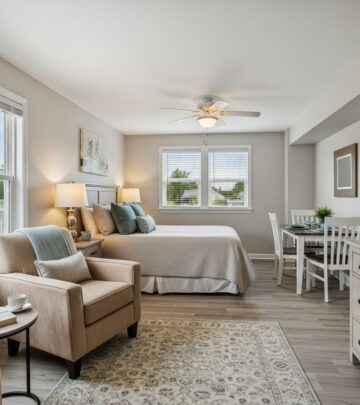
An ADU typically includes essential living facilities such as a kitchen, bathroom, separate sleeping areas, and a living space. Importantly, the unit must have its own independent entrance so residents do not need to pass through the main home to access their living space. While ADUs may or may not have direct access to the primary residence, they must be accessible without requiring passage through the main home, and there must be clear expectations of privacy for residents. The unit cannot be sold or legally separated from the primary residence, as it remains an accessory structure to the main dwelling.
One key distinction that defines an ADU is the requirement of a kitchen, which differentiates it from other additional habitable spaces like bonus rooms or converted storage areas. This kitchen requirement ensures that the space can function as a completely independent dwelling unit suitable for long-term residential use.
Types of Accessory Dwelling Units
ADUs come in several distinct forms, each with unique characteristics, construction considerations, and regulatory requirements. Understanding these different types helps homeowners determine which option best suits their property, budget, and goals.
Detached ADUs
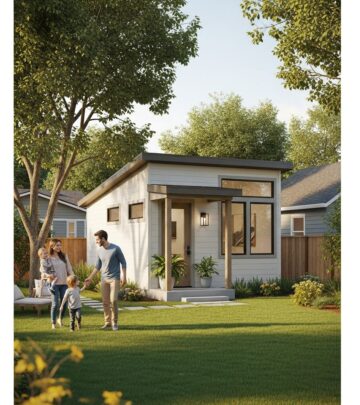
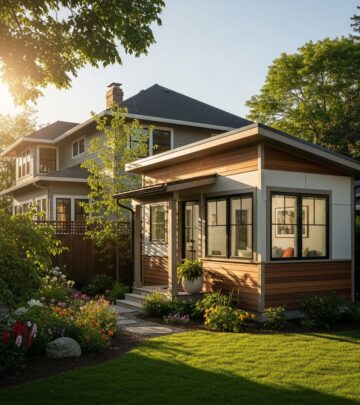
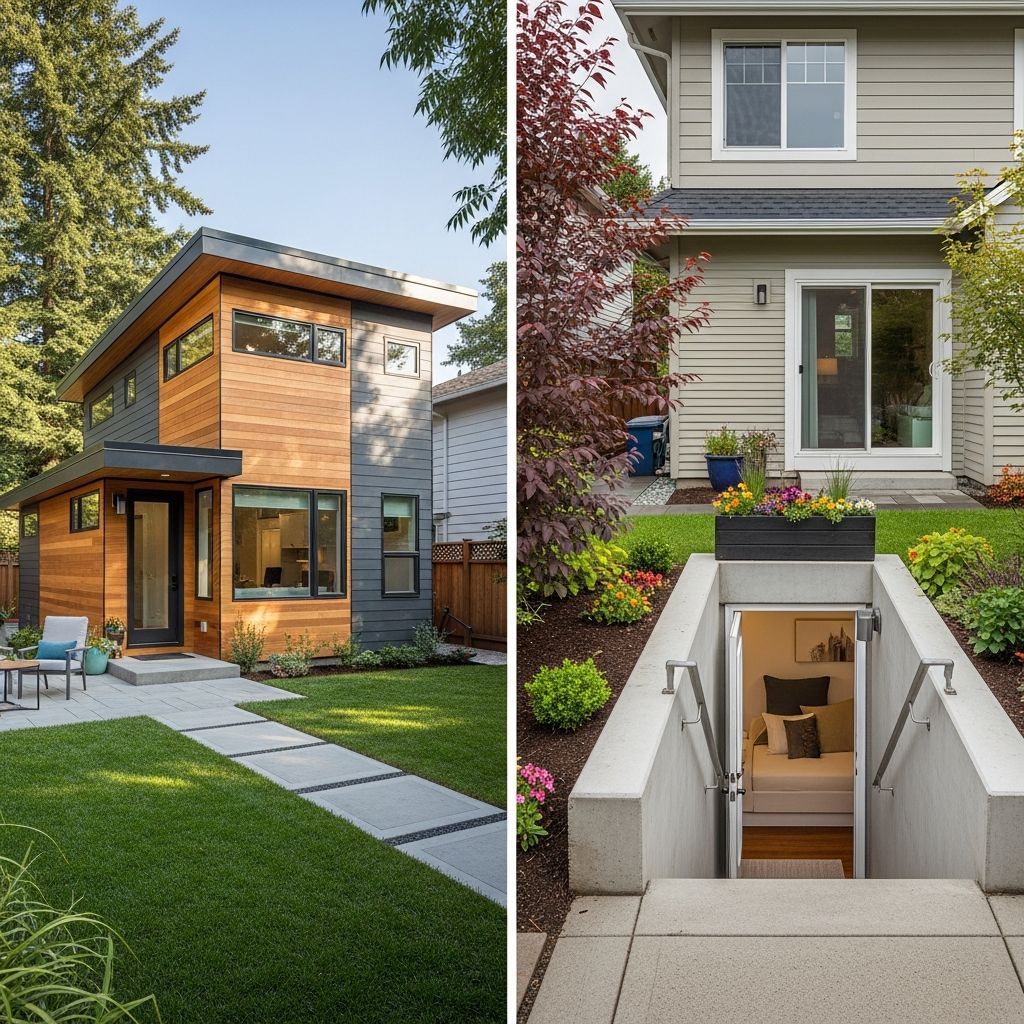
Detached accessory dwelling units, often called backyard cottages, DADUs (detached ADUs), laneway houses, or carriage houses, are standalone structures built on the same lot as the primary home. These units are typically constructed in the backyard or side yard of the property and are completely separate from the main residence. Detached ADUs offer maximum privacy and independence for residents while providing homeowners with a self-contained rental or guest housing option. However, they generally require more construction work and utility connections compared to other ADU types.
Garage Conversions
A garage conversion involves transforming an existing garage space into a living space. This ADU type can be cost-effective since it leverages existing structure and utility connections. However, before converting a garage, homeowners must carefully consider whether they actually need the garage for vehicle storage, tools, or other purposes. Garage conversions are particularly popular in urban and suburban areas where additional land is limited and existing structures can be repurposed efficiently.
Apartments Above Garages
These units are constructed above or attached to an existing garage or workshop structure. Sometimes called garage apartments or carriage houses, these ADUs benefit from existing foundations and utility infrastructure. They represent a practical middle ground between fully detached structures and garage conversions, offering separate living space without requiring additional ground-level footprint. These units gained cultural recognition as the famous housing arrangement in the television show Happy Days, where the character The Fonz famously lived above the Cunningham’s garage.
Attached ADUs
Attached accessory dwelling units are directly connected to the main home, typically built onto the side or rear of the residence. These units may have shared or separate entrances from the main home and could involve converting existing spaces like breezeways or patios into separate living areas. Attached ADUs benefit from shared walls with the primary residence, which reduces construction costs and simplifies utility connections. They maximize the use of existing property infrastructure while maintaining separation and privacy.
Basement Conversions
Basement apartments, often called basement conversion ADUs, mother-in-law units, English basements, or secondary suites, involve converting basement space into an independent living unit. This ADU type typically requires the least new construction since the basement structure already exists. However, basement ADUs must meet specific building codes regarding natural light, emergency exits, and ceiling height requirements. They represent an efficient way to add rental income or housing capacity with minimal impact on a home’s exterior footprint.
Internal ADUs
Internal accessory dwelling units involve converting portions of the primary house other than the basement into a separate living space. This might include converting a large bonus room, guest suite, or other underutilized interior space into an independent unit with its own kitchen and entrance. Internal ADUs maximize existing structure and utility infrastructure but may require more significant interior modifications to achieve true separation and privacy.
Addition or Bump-Out ADUs
Addition ADUs, sometimes called bump-out ADUs, are added directly onto the house structure. These units benefit from shared walls and typically have easier access to existing utilities. They represent a middle-ground approach between fully detached and purely interior conversions, offering architectural flexibility while minimizing site work and foundation requirements.
Common Characteristics of ADUs
While ADUs come in diverse structural forms, they share several defining characteristics that distinguish them from other housing types:
- Secondary units: ADUs are accessory and adjacent to a primary housing unit on the same residential lot.
- Smaller size: ADUs are significantly smaller than the average U.S. house, typically ranging from 300 to 1,200 square feet depending on type and local regulations.
- Single ownership: ADUs tend to be one of two residential units owned by one owner on a single-family residential lot.
- Asynchronous development: ADUs are often developed separately from the primary house, sometimes years after the main home’s construction, as homeowners seek to add value or income.
- Regulatory variance: A large range of municipal land use and zoning regulations differentiate ADU types and styles, dramatically affecting their allowed uses and permitting requirements.
Benefits of Adding an Accessory Dwelling Unit
Homeowners may choose to add an ADU to their single-family property for various compelling reasons. ADUs provide flexible housing solutions for diverse family situations and financial goals.
Housing for family members: An ADU can offer privacy for young family members seeking independence or elderly family members who need assistance but still want their own space. Rather than living in the main house, an ADU provides more freedom and privacy, allowing residents to have their own living room, kitchen, and bedroom.
Rental income generation: ADUs can serve as short-term or long-term rental properties that generate income and add value to the home. This additional revenue stream can help offset mortgage payments, property taxes, and maintenance costs, potentially providing significant long-term financial benefits.
Property value enhancement: The addition of an ADU typically increases overall property value by expanding the usable living space and creating potential income generation. This added value can benefit homeowners when refinancing or eventually selling the property.
Flexible use options: ADUs can accommodate various purposes including guest housing, home office space, rental units, or housing for multi-generational families, providing flexibility as homeowner needs change over time.
Cost Considerations for Adding an ADU
The cost to add an ADU varies significantly based on multiple factors. Upfront costs depend on whether you need to build the structure from scratch and the cost of adding or separating utilities for the unit. The type of ADU you choose substantially affects overall expenses. Generally, interior conversions like basement apartments cost less than new construction, while detached structures typically represent the highest investment.
Key cost factors include construction type, labor costs in your region, utility separation requirements, permit and inspection fees, design and architectural work, and any site preparation needed. Homeowners considering ADU development should obtain detailed cost estimates specific to their property and local market conditions. Many homeowners finance ADU construction through home equity loans or cash-out refinancing options, leveraging existing home value to fund the project.
Zoning and Regulatory Requirements
Before adding an ADU, homeowners must thoroughly investigate their local zoning requirements and building codes. ADU regulations vary dramatically by municipality and jurisdiction. Some areas enthusiastically support ADU development with streamlined permitting processes, while others impose strict limitations on size, appearance, parking, or permitted uses.
Local regulations may specify ADU size limitations, require off-street parking, dictate architectural compatibility with primary residences, limit the number of ADUs per lot, establish owner-occupancy requirements, or restrict rental uses. Understanding these local requirements early in the planning process can prevent costly delays or project redesigns. Consulting with local zoning departments and experienced ADU developers familiar with your specific jurisdiction is highly recommended.
ADU Financing Options
For borrowers purchasing or refinancing a home with an existing ADU, certain mortgage products offer advantageous terms. Specifically, borrowers who qualify for programs like Fannie Mae’s HomeReady loan can include rental income from an ADU to help them qualify for the mortgage. This approach recognizes that ADU rental income can significantly enhance a borrower’s debt-to-income ratio and overall loan qualification profile.
Additionally, homeowners looking to add an ADU can explore cash-out refinancing options or home equity loans to finance construction. These financing approaches allow homeowners to leverage their existing home equity to fund ADU development while potentially maintaining favorable interest rates.
ADU Financing Limitations
It is important to note that ADUs are not eligible for Fannie Mae financing in certain situations, including when the property is a 2-4 unit dwelling, when a manufactured home serves as the primary residence, or when properties feature multiple ADUs. These restrictions ensure that ADU financing programs maintain their intended focus on single-family properties with one accessory unit.
Comparison Table: ADU Types and Characteristics
| ADU Type | Construction Effort | Cost Range | Utility Connection | Privacy Level |
|---|---|---|---|---|
| Detached Structure | High | $$$$ | Moderate-High | Highest |
| Garage Conversion | Moderate | $$-$$$ | Low-Moderate | High |
| Above Garage | Moderate-High | $$$ | Moderate | High |
| Attached Addition | High | $$$-$$$$ | Low | Moderate-High |
| Basement Conversion | Low-Moderate | $-$$ | Low | Moderate |
| Internal Conversion | Moderate | $$-$$$ | Low | Moderate |
Frequently Asked Questions About ADUs
Q: What is the primary difference between an ADU and a duplex?
A: The key difference is that an ADU is a secondary unit on a single-family residential lot and cannot be legally separated from the primary residence, whereas a duplex consists of two independently owned units that can be purchased separately. ADUs remain accessory structures tied to the primary property.
Q: Can I rent out my ADU as a short-term vacation rental?
A: This depends entirely on local zoning regulations and municipal ordinances. Some jurisdictions permit short-term rental use, while others restrict ADUs to long-term residential tenancies only. Always verify local regulations before establishing a rental business model.
Q: How much rental income can I expect from an ADU?
A: ADU rental income varies significantly based on location, unit type, size, amenities, and local rental market conditions. Urban properties typically generate higher rental income than rural properties. Research local rental rates and analyze your specific property’s income potential.
Q: What are the tax implications of adding an ADU?
A: ADUs can create various tax considerations including potential rental income taxation, property tax assessments, mortgage interest deductions, depreciation benefits, and home office deductions. Consult with a tax professional to understand specific implications for your situation.
Q: Do I need a separate utility meter for my ADU?
A: Many jurisdictions require separate utility metering to accurately track usage and facilitate independent billing. However, requirements vary by location and utility type. Check with local building departments and utility providers for specific requirements.
Q: How long does it take to build an ADU?
A: Timeline varies significantly by ADU type, local permitting processes, and construction complexity. Simple conversions might take 3-6 months, while new construction can require 6-12 months or longer including permitting, design, and building phases.
Q: Are ADUs environmentally friendly?
A: ADUs can promote sustainability by utilizing existing property infrastructure and reducing sprawl. They enable more efficient land use and can be designed with energy-efficient features, though environmental benefits depend on specific design and construction choices.
Q: Can I add an ADU to any single-family home?
A: Not necessarily. Property characteristics including lot size, shape, utility capacity, zoning designation, and local regulations determine whether an ADU is feasible. Some properties may lack sufficient space or utilities to support an ADU. Professional assessment is recommended.
Decision-Making Framework for ADU Addition
If you’re considering an ADU, check into zoning requirements, costs, and other affordable housing options to ensure an ADU makes sense for your property. Thoroughly evaluate your motivations, local regulatory environment, financial capacity, timeline, and long-term property goals. Consider consulting with local zoning departments, experienced ADU developers, architects, and financial professionals to make informed decisions. Set on adding an ADU? Research local financing options including home equity loans or cash-out refinancing to fund your project.
References
- Accessory Dwelling Units (ADUs) — Fannie Mae. 2025. https://singlefamily.fanniemae.com/originating-underwriting/mortgage-products/accessory-dwelling-units
- What is an Accessory Dwelling Unit, or ADU? — Rocket Mortgage. May 18, 2025. https://www.rocketmortgage.com/learn/what-is-an-adu
- What is an ADU (Accessory Dwelling Unit) — Building an ADU. 2025. https://www.buildinganadu.com/what-is-an-adu
- Accessory Dwelling Units — Saint Paul Minnesota City Government. 2025. https://www.stpaul.gov/departments/safety-inspections/building-and-construction/construction-permits-and-inspections/building-permits-inspections/accessory-dwelling-units
- Accessory Dwelling Units — Freddie Mac Single-Family. 2025. https://sf.freddiemac.com/working-with-us/accessory-dwelling-units
Similar Articles








Read full bio of medha deb