Accessing Extra Funds Through Your Mortgage
Explore strategies to borrow additional money using your home equity

Homeownership represents one of the most significant financial commitments most people make during their lifetime. Yet, beyond providing shelter, your home also serves as a substantial financial asset that can be leveraged for various personal or investment needs. Whether you’re facing unexpected expenses, planning a major renovation, consolidating debt, or seeking capital for business ventures, understanding how to access additional funds through your mortgage can open multiple financial pathways. The methods available to tap into your home’s equity have evolved considerably, offering borrowers unprecedented flexibility in how they structure their financing.
Understanding Home Equity as a Financial Resource
Your home equity represents the difference between your property’s current market value and the outstanding balance on your mortgage. As you make monthly payments, build equity through appreciation, or both, you accumulate a growing financial resource. This equity can be mobilized through several distinct mechanisms, each with unique characteristics, advantages, and limitations. The challenge for most homeowners lies not in whether they can access these funds, but rather in determining which approach aligns best with their financial situation, timeline, and long-term goals.
The increased prevalence of non-traditional mortgage structures and evolving lender practices means that homeowners in 2026 have more options than ever before. Industry analysts predict that alternative lending products, including Non-QM loans, could represent over 15% of total mortgage originations by year’s end, reflecting growing diversity in how people finance their homes and access equity.
Cash-Out Refinancing: Replacing Your Existing Mortgage
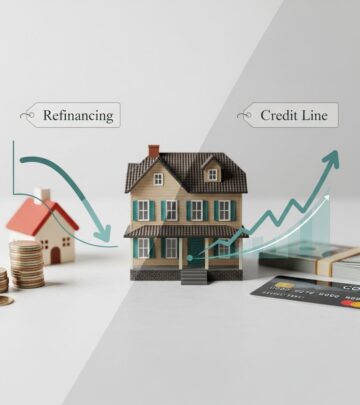
One of the most straightforward methods to borrow additional funds involves refinancing your existing mortgage for a larger amount than what you currently owe. When you pursue a cash-out refinance, your new loan replaces your old mortgage entirely, and you receive the difference between the new loan amount and your current balance as a lump sum of cash.
This approach offers several distinct advantages. First, the interest rate on a refinanced mortgage may be competitive with your existing rate, particularly if market conditions have shifted favorably or your credit profile has strengthened since your original loan. Second, the loan structure remains relatively simple—you’re still making a single monthly payment to a single lender. Third, the funds you receive are often not restricted to specific uses, providing maximum flexibility in how you deploy the capital.
However, cash-out refinancing carries important considerations. When you refinance, you typically restart the loan amortization schedule, which can extend your payoff timeline and increase total interest costs despite potentially favorable rates. Additionally, with interest rates remaining relatively elevated in the current market environment, refinancing may not always be financially attractive compared to alternative borrowing methods. Each refinance also involves closing costs, appraisals, and credit inquiries that reduce your net proceeds and require careful calculation to ensure the strategy makes financial sense.
Home Equity Loans: Fixed-Rate Borrowing Against Your Assets
A home equity loan represents a completely separate loan from your primary mortgage, typically structured as a fixed-rate installment loan with a defined repayment period. These loans are sometimes referred to as “second mortgages” because they create a secondary lien against your property.
The primary advantage of home equity loans lies in their predictability and simplicity. Your interest rate remains locked in for the entire loan term, your monthly payment stays constant throughout the borrowing period, and budgeting becomes straightforward. This stability can provide peace of mind when planning major expenditures or consolidating existing debts. Home equity loans typically offer competitive interest rates relative to unsecured borrowing alternatives like personal loans or credit cards, because they’re secured by your property.
The loan approval process for home equity financing has historically been more accessible for borrowers who might not qualify for conventional mortgage products. Many lenders offering home equity loans maintain more flexible credit criteria and may approve applicants with credit scores and financial profiles that wouldn’t meet traditional mortgage underwriting standards. This accessibility has made home equity loans particularly valuable for borrowers with challenging credit histories or non-traditional income documentation.
Disadvantages include the fact that you now carry two separate loan obligations with separate monthly payments to potentially different lenders. The secondary lien status also means that if you default, the first mortgage holder gets priority in any foreclosure or asset liquidation proceedings. Additionally, home equity loans require a new application process, credit inquiries, and potentially an appraisal, similar to cash-out refinancing.
Home Equity Lines of Credit: Flexible On-Demand Access
A home equity line of credit, commonly abbreviated as HELOC, functions more like a credit card than a traditional loan. Instead of receiving a lump sum of funds, you receive approval for a maximum credit limit and draw funds as needed during a specified “draw period.” You only pay interest on the amount you’ve actually borrowed, not on your total available credit line.
HELOCs have undergone substantial transformation in recent years, with new lender rules, evolving rate dynamics, and tighter borrowing requirements fundamentally changing how these products operate in practice. Understanding these changes is essential for homeowners evaluating whether a HELOC fits their financial strategy in 2026.
Historically, many HELOCs carried variable interest rates that fluctuated based on prevailing market conditions. This variability created uncertainty about future payment obligations, making it challenging for borrowers to budget accurately. The recent market evolution has prompted many lenders to offer fixed-rate HELOC products, though these typically carry slightly higher interest rates than their variable-rate counterparts. This shift represents a meaningful change in how consumers can access equity-based credit while maintaining payment predictability.
One significant shift away from traditional cash-out refinancing and toward HELOCs reflects the reality that with rates remaining relatively elevated, refinancing one’s entire mortgage often doesn’t make financial sense. HELOCs provide a more adaptable financing option that allows homeowners to access funds without restructuring their entire mortgage debt.
The primary advantages of HELOCs include:
- Interest-only payments during the draw period, reducing early payment obligations
- Access to funds on an as-needed basis rather than a single lump sum
- Potentially lower costs compared to refinancing an entire mortgage
- Flexibility to draw additional funds if circumstances change
- Potential tax deductibility in certain circumstances (consult a tax professional)
Disadvantages include potential variable interest rates on some products (though fixed-rate options now exist), the requirement to eventually repay all borrowed funds, and the complexity of managing a separate credit line in addition to your primary mortgage.
Comparing Your Equity Access Options
| Borrowing Method | Interest Rate Type | Payment Structure | Funding Timeline | Best Use Case |
|---|---|---|---|---|
| Cash-Out Refinance | Fixed or Variable | Single monthly payment | Lump sum at closing | Large one-time need with favorable rate environment |
| Home Equity Loan | Fixed | Fixed monthly payment | Lump sum at closing | Predictable borrowing with defined repayment timeline |
| HELOC | Variable or Fixed | Interest-only then principal+interest | Draw as needed during draw period | Flexible access or ongoing capital needs |
Qualifying for Extra Mortgage Borrowing
Lenders evaluating your application to borrow additional funds will examine several key factors. Your credit score remains important, though lending standards vary significantly by product and lender. Conventional loans typically require a minimum credit score of 620, but borrowers targeting the most competitive rates generally need a higher score. FHA loans are available with a 580 credit score and a 3.5% down payment for purchase transactions, though these standards may differ for equity-based borrowing.
Your debt-to-income ratio—the percentage of your gross monthly income consumed by debt obligations—significantly impacts approval odds and available loan terms. Lenders want assurance that your existing obligations plus new borrowing won’t exceed sustainable levels. The amount of equity available in your property also matters tremendously. Most lenders require you to maintain some minimum equity cushion and won’t allow you to borrow against 100% of your home’s value.
Recent employment history, income stability, and savings reserves all factor into lender decisions. The current mortgage market has driven lenders toward non-QM (non-qualified mortgage) lending solutions and alternative credit models to reach borrowers whose financial profiles don’t fit neatly into traditional guidelines. These alternatives have expanded access for self-employed individuals, recent graduates, and others with non-traditional financial documentation.
Strategic Considerations for Borrowing Against Your Home
Before accessing your home equity, carefully consider your intended use of funds. Different purposes carry different risk-benefit profiles. Using equity to consolidate high-interest credit card debt often makes financial sense, as home equity borrowing rates are typically lower than credit card rates, potentially saving substantial interest expenses. Using funds for home improvements that increase property value can be viewed as an investment in your asset.
Conversely, using home equity for consumable expenses or discretionary purchases carries inherent risk. If circumstances change and you cannot maintain the new debt service, you risk losing your primary asset through foreclosure. Always ensure you can comfortably afford the required payments under various scenarios, including potential income disruption.
The choice between fixed and variable rate products deserves particular attention. While variable-rate products may offer initially lower payments, rising interest rates could substantially increase your obligation. Fixed-rate products provide certainty and predictability, which most financial advisors recommend when borrowing large amounts or when you anticipate rate increases.
Alternative Pathways and Emerging Trends
Beyond traditional equity access methods, the mortgage market continues to evolve. In 2026, alternative financing solutions serve borrowers whose income, assets, or goals don’t fit neatly into standard guidelines. These specialty mortgage programs can provide opportunities for real estate investors, self-employed individuals, and homeowners seeking to utilize their equity strategically.
Non-QM lending represents a growing segment, with industry analysts predicting that Non-QM products could represent over 15% of total mortgage originations by the end of 2026. Extended loan terms and DSCR (Debt Service Coverage Ratio) products are gaining traction as lenders develop creative solutions to reach broader borrower populations.
Frequently Asked Questions
Can I borrow against my home multiple times?
Yes, many homeowners establish multiple equity lines of credit or home equity loans simultaneously. However, lenders typically require you to maintain minimum equity levels in your home. As you borrow more, your available equity decreases, eventually reaching a point where no additional borrowing is possible.
What happens to my home equity borrowing if rates rise significantly?
With fixed-rate products like home equity loans or fixed-rate HELOCs, rising rates don’t affect your existing obligations. With variable-rate products, your payment would increase. This underscores the importance of carefully considering rate risk when choosing between product types.
How quickly can I access funds through different methods?
Cash-out refinances and home equity loans typically close within 30-45 days, with funds available shortly after closing. HELOCs usually have similar timelines for initial approval, but ongoing draws can be accessed within days once the line is established.
Does borrowing against my home affect my credit score?
The application process involves a hard inquiry that temporarily impacts your score. Taking on new debt can also affect your debt-to-income ratio and credit utilization. However, successfully managing the new obligation through on-time payments can ultimately strengthen your credit profile.
Are there tax implications to borrowing against my home?
In specific circumstances, interest paid on home equity borrowing may be tax-deductible, though recent tax law changes have limited these deductions significantly. Consult with a qualified tax professional to understand implications for your specific situation.
Making Your Decision
Accessing additional funds through your home equity represents a powerful financial tool, but requires careful deliberation. Start by clearly defining your borrowing purpose, timeline, and amount needed. Compare available options side-by-side, accounting for interest rates, fees, payment structures, and terms. Ensure you can comfortably afford obligations under various economic scenarios. Consult with mortgage professionals, financial advisors, and tax specialists to develop a strategy aligned with your overall financial plan.
The mortgage market in 2026 offers unprecedented flexibility in how homeowners can structure their finances and access their accumulated equity. By understanding your options and carefully evaluating which approach best serves your specific circumstances, you can make informed decisions that enhance your financial flexibility without undermining your housing security.
References
- 2026 Mortgage Types Breakdown: Fixed, ARM, Jumbo, FHA, VA and More — Trusted American. 2026. https://trustedamerican.com/2026-mortgage-types-breakdown-fixed-arm-jumbo-fha-va-more/
- HELOC Rules Are Changing in 2026 — Kiplinger. 2026. https://www.kiplinger.com/real-estate/mortgages/heloc-strategy-borrow-smart
- Conventional Home Loans in the 2026 Market — Mortgage Equity Partners. 2026. https://mortgageequitypartners.com/conventional-home-loans-in-the-2026-market/
- 4 Trends That Will Help Mortgage Lenders Reach New Borrowers in 2026 — HousingWire. 2026. https://www.housingwire.com/articles/4-trends-that-will-help-mortgage-lenders-reach-new-borrowers-in-2026/
- Non-QM Lending Trends to Watch in 2026: What Brokers Need to Prepare For — NQMF. 2026. https://www.nqmf.com/non-qm-lending-trends-to-watch-in-2026-what-brokers-need-to-prepare-for/
Similar Articles








Read full bio of Sneha Tete