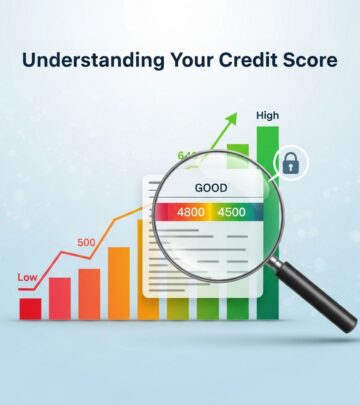
Accessing Credit Scores Through Banks
Discover convenient ways to monitor your credit score directly from your bank account without extra fees or hassle.

Your credit score is a vital number that influences everything from loan approvals to interest rates. Many banks now offer free access to this information right through their online portals or mobile apps, making it simpler than ever to stay informed about your financial standing.
Why Banks Are a Smart Starting Point for Credit Checks
Banks and credit card issuers have increasingly partnered with credit bureaus to deliver credit scores directly to customers. This service is often complimentary and integrated into your existing accounts, eliminating the need for separate subscriptions. For instance, logging into your bank’s app can reveal your score alongside transaction history, providing a holistic view of your finances.
These bank-provided scores are typically based on data from major bureaus like Equifax, Experian, or TransUnion, using models such as VantageScore or FICO. Unlike free credit reports, which exclude scores, bank services fill this gap conveniently.
How to Locate Your Credit Score in Banking Platforms
Finding your score is straightforward across most institutions. Here’s a step-by-step guide:
- Online Banking Portal: Navigate to the dashboard or ‘Services’ section; look for ‘Credit Score’ or ‘Financial Health’ tabs.
- Mobile App: Access via menu options like ‘Help & Services’ or directly under profile settings. Updates may occur weekly.
- Monthly Statements: Some providers print scores or include links to view them digitally.
Banks like Associated Bank and U.S. Bank exemplify this with features including score trends and simulators to predict changes based on actions like paying down debt.
Understanding the Types of Credit Scores Offered by Banks
Not all scores are identical. Banks commonly provide:
| Score Model | Range | Key Features | Common Bank Providers |
|---|---|---|---|
| FICO Score | 300-850 | Used by 90% of lenders; focuses on payment history | Bank of America, various lenders |
| VantageScore 3.0/4.0 | 300-850 | Inclusive for thin credit files; uses trended data | Associated Bank, Equifax partners |
| Alternative Models (e.g., CVNA) | Varies | Emphasizes recent behavior for new users | TransUnion via select banks |
FICO remains the gold standard, but VantageScore offers broader accessibility. Scores may differ slightly due to data timing or model variations.
Key Factors Banks Use to Calculate Your Score
Credit scores derive from five primary components, weighted as follows:
- Payment History (35-40%): Timely payments are crucial; delinquencies linger for years.
- Credit Utilization (20-30%): Keep usage under 30% of limits for optimal scoring.
- Length of Credit History (15-21%): Older accounts boost scores; avoid closing long-held ones.
- New Credit (10%): Limit inquiries and applications to prevent dings.
- Credit Mix (10%): A blend of revolving and installment debt shows stability.
Bank tools often break these down, helping you pinpoint improvements.
Benefits of Bank-Integrated Credit Monitoring
Opting for bank services yields several advantages:
- Cost-Free Access: No fees for basic scores from many providers.
- Real-Time Insights: Weekly or monthly refreshes reflect recent activity.
- Educational Resources: Simulators and trends graphs guide better habits.
- Security: Protected within verified accounts, reducing phishing risks.
- Convenience: All-in-one platform with alerts for changes.
Compared to third-party sites, banks minimize upsell pressure.
Free Credit Reports vs. Bank Credit Scores: Key Differences
Credit reports are score-free but essential for detail. Access weekly via AnnualCreditReport.com from Equifax, Experian, and TransUnion—permanently extended post-pandemic, plus extra Equifax reports through 2026. Banks complement this with scores, not full reports.
| Aspect | Credit Report (AnnualCreditReport.com) | Bank Credit Score |
|---|---|---|
| Cost | Free weekly | Usually free |
| Includes Score? | No | Yes |
| Frequency | Weekly per bureau | Weekly/monthly |
| Details Provided | Full history, accounts | Score + factors |
Use both: reports for disputes, banks for scores.
Steps to Improve Your Credit Score Using Bank Insights
Leverage bank data proactively:
- Review Factors: Identify low-utilization or late payments.
- Pay Down Balances: Aim for <30% utilization.
- Automate Payments: Avoid misses impacting 35%+ of score.
- Request Limit Increases: If responsible, to lower utilization.
- Monitor Trends: Use graphs to track progress.
Changes appear within 30-45 days as lenders report.
Potential Limitations and Pitfalls to Watch For
Bank scores aren’t perfect:
- Not All Lenders Use Same Model: Your bank’s VantageScore may differ from a FICO-needed mortgage.
- Update Delays: Scores refresh periodically, not daily.
- Not Comprehensive: Misses non-reporting accounts.
- Soft Inquiries Only: Checking doesn’t harm score.
Verify with bureaus for critical applications.
Frequently Asked Questions (FAQs)
Does checking my credit score through my bank affect it?
No, bank checks are soft inquiries that don’t impact your score.
How often do bank credit scores update?
Typically weekly or monthly, depending on the bank and reporting.
Can I get scores from all three bureaus via my bank?
Some do; others focus on one. Supplement with direct bureau access.
Is a bank score the same as FICO?
Often VantageScore; compare models for lender needs.
What if my bank doesn’t offer free scores?
Use credit card statements or buy directly from bureaus.
Advanced Tools and Future Trends in Bank Credit Services
Banks are evolving with AI-driven simulators predicting score shifts from scenarios like new debt. Partnerships expand, like Associated Bank’s Experian tie-up for monitoring. Expect more inclusive models aiding those with limited history.
Stay vigilant: regular checks empower financial decisions, from rentals to rates.
References
- How Can I Check My Credit Scores? | Equifax® — Equifax. 2023. https://www.equifax.com/personal/education/credit/score/articles/-/learn/how-to-check-credit-score/
- How to Check Your Credit Score and Credit Report – Associated Bank — Associated Bank. 2024-03-15. https://www.associatedbank.com/education/articles/personal-finance/banking-basics/how-to-check-your-credit-score
- How to Check Your Credit Score and Credit Report | Regions Bank — Regions Bank. 2024. https://www.regions.com/insights/personal/article/checking-your-credit-score
- Where can I get my credit scores? | Consumer Financial Protection Bureau — CFPB. 2023-10-01. https://www.consumerfinance.gov/ask-cfpb/where-can-i-get-my-credit-scores-en-316/
- Free credit score | Check and monitor your score – U.S. Bank — U.S. Bank. 2024. https://www.usbank.com/online-mobile-banking/get-your-free-credit-score.html
- Free Credit Reports | Consumer Advice — FTC. 2024-02-20. https://consumer.ftc.gov/articles/free-credit-reports
- Learn about your credit report and how to get a copy | USAGov — USAGov. 2024. https://www.usa.gov/credit-reports
Similar Articles








Read full bio of medha deb