ABA Transit Number: Definition, Uses, and How to Find
Complete guide to ABA transit numbers: understanding routing numbers for bank transfers.

What is an ABA Transit Number?
An ABA transit number, also known as a routing transit number (RTN) or ABA routing number, is a nine-digit code assigned by the American Bankers Association that uniquely identifies a specific financial institution in the United States. This number plays a critical role in banking operations by directing funds to the correct bank or credit union during various financial transactions. The ABA transit number appears on checks, in online banking platforms, and in bank statements, serving as a standardized identifier that ensures secure and accurate fund transfers across different financial channels.
The term “ABA” refers to the American Bankers Association, which developed this system in 1910 to provide an organized and secure method for processing paper checks and other financial instruments between banks. Over the decades, the system has evolved to accommodate modern banking needs, including electronic fund transfers, automated clearinghouse transactions, and wire transfers through the Federal Reserve’s Fedwire system.
Understanding the Structure of an ABA Transit Number
An ABA transit number consists of nine digits, each segment carrying specific information about the financial institution. Understanding the breakdown of these digits helps clarify how banks use this system to route funds correctly.
The Nine-Digit Breakdown
The nine digits of an ABA transit number are organized as follows:
- First two digits: These identify the Federal Reserve Bank that serves the bank’s region. The Federal Reserve System operates 12 regional banks across the United States, and this portion of the routing number indicates which one processes transactions for that particular financial institution.
- Third digit: This digit identifies the check processing center responsible for handling checks drawn on the bank. Different processing centers may serve various geographic areas or banking networks.
- Fourth digit: This digit identifies the Federal Reserve District state in which the bank is located, providing geographic information about the institution.
- Digits five through eight: These four digits form the financial institution identifying number, which uniquely identifies the specific bank or credit union among all financial institutions served by that Federal Reserve Bank.
- Ninth digit: Known as the check digit or checksum character, this final digit serves as a validation tool. It is calculated based on the other eight digits using a mathematical formula, allowing banking systems to verify that the routing number is valid and reduce processing errors.
ABA Transit Number vs. Related Banking Identifiers
While ABA transit numbers are essential for banking operations, they differ from other identification numbers used in banking. Understanding these distinctions prevents confusion when conducting financial transactions.
ABA Transit Number vs. Bank Account Number
A common source of confusion involves the relationship between an ABA transit number and a bank account number. The key difference is that the ABA transit number identifies the financial institution itself, whereas the bank account number identifies a specific account within that institution. When you see a check, the ABA routing number appears on the left side of the bottom of the check, while your account number appears in the middle section. Every customer of a particular bank shares the same routing number, but each individual account has a unique account number.
Fractional Routing Numbers
In addition to the standard nine-digit ABA transit number printed at the bottom of checks, an older format called the fractional routing number appears at the top of checks. This eight or nine-digit number resembles a fraction with a numerator and denominator. The numerator typically contains five digits: the first two digits represent the city and state prefix, while the three digits following the hyphen represent the ABA institution identifier. The denominator contains three or four digits representing the Federal Reserve routing symbol. While less commonly used in modern banking, this format still appears on checks for reference purposes.
Routing Number Variations for Different Transaction Types
It is important to note that some banks maintain multiple routing numbers for different purposes. For example, the routing number used for domestic wire transfers received at your bank may differ from the routing number shown on your physical checks or used for ordering new checks. Additionally, the routing number for ACH transactions might differ from the one used for wire transfers through the Fedwire system. For these reasons, it is advisable to contact your bank directly or check their official website to confirm which routing number to use for specific types of transactions.
Where to Find Your ABA Transit Number
Locating your ABA transit number is straightforward, as it appears in several places associated with your bank account.
On Physical Checks
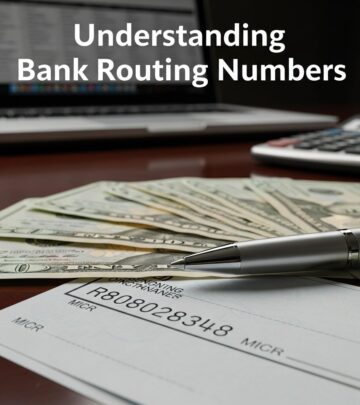
The most visible location for your ABA transit number is at the bottom left corner of any paper checks issued by your bank. The nine-digit routing number appears first, followed by your account number, and then the individual check number. This standardized placement has been used for decades and remains the most recognizable format for the routing number.
Online Banking and Bank Statements
Your bank statement, whether received in paper form or accessed online, typically displays your routing number. Most banks also make this information readily available through their online banking portals and mobile applications. You can usually find it in the account information or settings section of your bank’s digital platforms.
Bank Websites and Customer Service
The American Bankers Association maintains an official ABA Routing Number Lookup page on their website, where you can search for your bank’s current routing number. This is particularly useful if your bank has undergone mergers or acquisitions that might have changed its routing number. Additionally, calling your bank’s customer service department or visiting a branch in person will provide you with accurate routing number information.
Debit Cards and Digital Wallets
It is worth noting that your ABA routing number does not appear on bank-issued debit cards used for payment transactions or ATM withdrawals. Debit cards are not required to display routing numbers since they operate through different payment networks and do not involve the same routing infrastructure as checks or electronic fund transfers.
Uses and Applications of ABA Transit Numbers
ABA transit numbers serve essential functions across various banking operations, enabling secure and accurate fund transfers in both traditional and modern banking environments.
Check Processing
Originally developed to streamline check processing, ABA transit numbers remain fundamental to how checks are cleared and deposited. When a check is written and deposited at another bank, the routing number directs that check through the appropriate processing centers and ultimately to the correct financial institution for payment. This system has been refined over more than a century and continues to be used alongside modern digital check clearing methods.
Electronic Fund Transfers and ACH Transactions
The Automated Clearing House (ACH) network relies heavily on ABA transit numbers to route electronic fund transfers between banks. Common ACH transactions that require routing numbers include:
- Direct deposit of paychecks from employers
- Automatic bill payments to creditors and service providers
- Online vendor payments and e-commerce transactions
- Business-to-business (B2B) payments
- Person-to-person payments through banking apps and services
Wire Transfers
When sending money via wire transfer, either domestically or internationally, your bank requires the recipient’s ABA routing number to ensure the funds reach the correct financial institution. The Federal Reserve’s Fedwire system, which handles large-value wire transfers, uses routing numbers as a key component of its fund routing infrastructure. Domestic wire transfers specifically rely on ABA routing numbers, though international wire transfers may require additional information such as SWIFT codes.
Federal Reserve Operations
The Federal Reserve Bank uses ABA transit numbers through the Fedwire funds transfer system when processing checks and other forms of payment into bank accounts. These numbers facilitate the Federal Reserve’s ability to track and manage the flow of funds through the nation’s banking system, ensuring proper liquidity and efficient monetary operations.
Historical Development and Evolution
The ABA transit number system represents more than a century of banking infrastructure development. When the American Bankers Association established the system in 1910, it solved a critical problem: the need for a standardized method to route paper checks between banks. At that time, checks were the primary means of transferring funds between individuals and businesses, and without a systematic identification method, processing was chaotic and error-prone.
Since its inception, the routing number system has adapted to accommodate major changes in banking technology and regulation. The system was refined to work with the Federal Reserve System established in 1913, updated to incorporate MICR (Magnetic Ink Character Recognition) technology that allowed for automated check processing, and modified to comply with regulations such as the Expedited Funds Availability Act and Check 21. Today, the system seamlessly supports both paper-based and electronic transactions, demonstrating its resilience and adaptability.
Important Considerations and Best Practices
Verifying Your Routing Number
If you need to provide your routing number to set up direct deposit, authorize automatic payments, or initiate a wire transfer, it is essential to verify the correct number for that specific transaction type. Rather than assuming all routing numbers for your bank are identical, contact your bank directly to confirm which number to use. This simple step prevents delays or failed transactions.
Security Considerations
While ABA routing numbers are publicly available and widely shared, you should still protect your complete banking information. Your routing number combined with your account number could potentially be used to create counterfeit checks or authorize fraudulent ACH transactions. Never share your full banking details with untrusted sources, and monitor your bank statements regularly for unauthorized activity.
Bank Mergers and Routing Number Changes
When banks merge or are acquired by larger institutions, routing numbers may change. If your bank undergoes such a transaction, your current checks may no longer display the correct routing number. Keep updated with your bank’s communications regarding any routing number changes and order new checks reflecting the updated information.
Frequently Asked Questions
Q: Is an ABA transit number the same as a routing number?
A: Yes, in the United States, ABA transit number, routing number, and routing transit number (RTN) are synonymous terms referring to the same nine-digit code. However, other countries use different terminology and formats for their bank identification numbers.
Q: Can I see my routing number without ordering checks?
A: Absolutely. Your routing number appears on your bank statement, in your online banking account, and through your bank’s mobile app. You can also contact your bank directly or visit their website to find this information.
Q: Do I need a different routing number for wire transfers?
A: Possibly. Some banks use different routing numbers for various transaction types. Always verify with your bank which routing number to use for wire transfers, ACH transactions, or check processing to ensure your transaction processes correctly.
Q: What does the ninth digit of a routing number represent?
A: The ninth digit is called the check digit or checksum character. It is calculated using a mathematical algorithm based on the other eight digits and serves as a validation tool to verify the routing number’s accuracy and reduce processing errors.
Q: Are routing numbers public information?
A: Yes, routing numbers are publicly available. However, this does not mean you should share your complete banking information casually. Keep your account number and other sensitive banking details private, as combined with a routing number, they could be misused.
Q: Has the routing number system changed since 1910?
A: Yes, the system has evolved significantly to accommodate changes in banking technology and regulation, including the adoption of MICR technology, integration with the Federal Reserve System, and adaptation to modern electronic banking. However, the fundamental nine-digit structure has remained consistent.
References
- ABA Routing Number — American Bankers Association. https://www.aba.com/about-us/routing-number
- What is a Bank Routing Number? — PNC Bank. https://www.pnc.com/insights/personal-finance/spend/what-is-a-bank-routing-number.html
- What is a Bank Transit Number? — BILL. https://www.bill.com/learning/bank-transit-number
- ABA Number Explained: Meaning, Uses, and How to Find It — Tipalti. https://tipalti.com/resources/learn/aba-number/
- What is an ABA Routing Number? — Stripe. https://stripe.com/resources/more/aba-routing-numbers-101-what-they-are-what-they-do-and-how-to-locate-yours
- More than you ever wanted to know about routing numbers — My Union State Bank. https://www.myunionstate.bank/more-than-you-ever-wanted-to-know-about-routing-numbers
Similar Articles








Read full bio of Sneha Tete