9 Money Leaks Hurting Your Finances (And Fixes)
Discover the 9 most common money leaks, how they quietly drain your budget, and practical strategies to plug them for good.

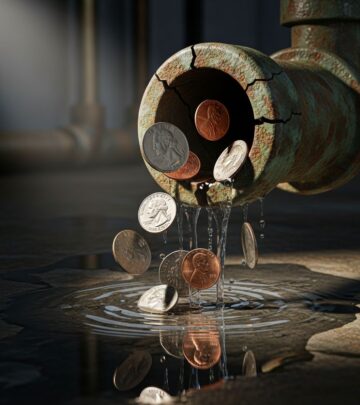
Money leaks are like tiny holes in a bucket: the water keeps dripping out, and no matter how much you pour in, it never fills up. The same thing happens with your finances when small, frequent, or unnoticed expenses quietly drain your income and prevent you from reaching your money goals.
This guide explains what money leaks are, the top 9 money leaks you should watch for, and simple ways to plug them so you can put that cash toward saving, investing, and building wealth instead.
What are money leaks?
Money leaks are recurring or frequent small expenses that seem insignificant on their own but add up to a substantial amount over time. They are often:
- Automatic or habitual (for example, subscriptions or daily takeout)
- Convenience-based (like paying for delivery instead of planning ahead)
- Hidden in the fine print (such as bank fees or unused services)
While a single coffee, fee, or subscription may not break your budget, the total cost over months and years can create a real dent in your savings and delay your financial goals. Consumer spending data shows that even small recurring expenses can significantly reduce the amount of money households can redirect into savings or debt repayment over time.
If you regularly wonder, “Where did all my money go?” at the end of the month, there is a good chance you have money leaks you have not identified yet.
Top 9 money leaks and how to avoid them
Money leaks can affect anyone, regardless of income. The key is to spot them early and put systems in place to keep them from quietly draining your bank account. Below are nine common leaks and practical strategies to fix each one.
1. Frequent restaurant meals and takeout
Food is a major budget category for most households, and eating out is one of the easiest ways for costs to spiral without noticing. According to the U.S. Bureau of Labor Statistics, the average household spends thousands of dollars per year on food away from home, which can be a large share of total food spending. When restaurant meals or takeout become the default instead of an occasional treat, they quickly turn into a money leak.
Common examples include:
- Daily or multiple-times-per-week takeout orders
- Lunches bought at work instead of packed from home
- Delivery markups and fees on food apps
How to fix this leak:
- Set a monthly cap for dining out and track it.
- Meal plan simple, repeatable recipes for busy days.
- Cook larger portions and use leftovers for lunches.
- Reserve restaurant meals for special occasions or specific days.
2. Disposable products
Disposable products, such as paper plates, paper towels, and single-use cleaning wipes, may seem cheap per item, but their ongoing replacement cost adds up. Many disposable products also come with environmental downsides, such as contributing to landfill waste and deforestation for paper-based goods.
Examples of this money leak include:
- Using paper plates instead of reusable dishes at home
- Relying on paper towels instead of washable cloths
- Frequent purchases of single-use wipes, razors, or bottles
How to fix this leak:
- Switch to reusable dishes, cups, and cutlery for daily use.
- Use washable cleaning cloths and microfiber towels.
- Buy durable, refillable versions of items where possible.
- Reserve disposable items for travel or true emergencies.
3. Impulse purchases and emotional spending
Impulse purchases are unplanned buys made in the moment, often triggered by sales, advertising, social media, or emotional states like stress or boredom. Studies in behavioral economics show that situational cues and emotions strongly influence spending decisions, often leading to regret afterward.
Types of impulse spending include:
- Grabbing items at the checkout line “just because”
- Late-night online shopping after seeing an ad or influencer
- Buying things to cope with stress or to celebrate minor wins
How to fix this leak:
- Create a 24-hour (or 48-hour) rule for non-essential purchases.
- Remove saved cards from shopping apps to slow down buying.
- Unsubscribe from promotional emails and limit social media that triggers spending.
- Find non-spending ways to handle emotions, like exercise or journaling.
4. Bank fees
Bank fees can be a silent but expensive money leak. These include overdraft fees, monthly account maintenance fees, ATM fees for using out-of-network machines, minimum balance penalties, and more. Bank fee revenue can be very large; regulators have highlighted billions of dollars collected annually from overdraft and related charges across the industry.
You might be paying for:
- Overdraft and non-sufficient funds (NSF) fees
- Monthly account service fees
- ATM withdrawal fees at other banks’ machines
- Foreign transaction fees when traveling
How to fix this leak:
- Review your bank’s fee schedule and your last few statements.
- Choose accounts with no monthly maintenance fee and low or no overdraft fees.
- Set up low-balance alerts so you can transfer money before overdrafts happen.
- Use in-network ATMs or switch to a bank that reimburses ATM fees.
5. Subscriptions and memberships you don’t use
Automatic monthly payments can be convenient, but they also make it easy to pay for services you barely use or forgot about. Common subscription leaks include streaming services, apps, premium software features, gym memberships, and subscription boxes.
These become money leaks when:
- You are no longer using the service regularly.
- You have multiple subscriptions that overlap (for example, several similar streaming platforms).
- You signed up for a free trial and never canceled.
How to fix this leak:
- Pull your last 2–3 months of bank and card statements and list every subscription.
- Cancel anything you haven’t used in the last 30–60 days.
- Downgrade to cheaper plans if you don’t need premium features.
- Avoid signing up for new recurring subscriptions unless they replace something else.
6. Name-brand products when generics work
Paying extra for name brands can become a money leak if the product is functionally identical to a cheaper generic or store brand alternative. For many products, including packaged foods and over-the-counter medications, generics can provide similar quality at a lower price when they contain the same active ingredients.
You may be overspending on:
- Brand-name groceries and household items
- Cosmetics or personal care products
- Over-the-counter medicines where a generic version is equivalent
How to fix this leak:
- Compare ingredients, quantity, and unit price between brands and generics.
- Test generic versions for non-critical items first to build confidence.
- Reserve brand-name purchases for situations where quality or performance clearly differs.
7. Debt interest and late fees
High-interest debt is one of the most damaging forms of money leakage because you are paying for past purchases instead of funding current goals. Credit card interest rates are often much higher than many other forms of consumer credit, and late fees add even more cost.
Signs this is a money leak for you:
- Carrying a revolving credit card balance month after month
- Only making minimum payments on high-interest debt
- Being charged late payment fees because of missed due dates
How to fix this leak:
- Create a payoff plan using a strategy such as the debt avalanche (highest rate first) or snowball (smallest balance first).
- Set up automatic payments at least for the minimum due to avoid late fees.
- Consider consolidating high-interest balances into a lower-rate product if appropriate for your situation.
8. Energy waste at home
Household utilities can quietly increase your monthly expenses when energy is used inefficiently. Poor insulation, leaving lights or electronics on, and inefficient appliances can all raise your bills. Improving energy efficiency can reduce costs and environmental impact at the same time.
Energy-related money leaks can look like:
- Heating or cooling an empty home for long periods
- Leaving lights, computers, or TVs on when not in use
- Using old, inefficient appliances
How to fix this leak:
- Use programmable or smart thermostats to avoid heating or cooling when no one is home.
- Switch off and unplug devices when not in use.
- Seal drafts and consider cost-effective efficiency upgrades over time.
9. Unused insurance policies or unnecessary coverage
Insurance is essential for protecting against major financial risks, but paying for coverage you do not use or need can be a leak. This includes policies for items you no longer own, overlapping coverage, or coverage levels that no longer match your situation.
Examples of this money leak include:
- Full coverage auto insurance when you rarely drive an older car
- Multiple policies that cover the same risk
- Insurance for devices, services, or warranties you no longer use
How to fix this leak:
- Review all insurance policies annually with your providers.
- Adjust coverage based on current usage and needs while keeping essential protection.
- Ask about pay-per-mile or usage-based options where appropriate.
Examples of how money leaks add up
The power of money leaks lies in how small amounts compound over time. The table below illustrates how a few common leaks can grow over a year.
| Money leak | Monthly cost (example) | Yearly cost |
|---|---|---|
| Extra streaming subscriptions you rarely use | $30 | $360 |
| Takeout coffee 3 times a week | $45 | $540 |
| Bank and overdraft fees | $25 | $300 |
| Impulse online purchases | $50 | $600 |
In this simple scenario, that is $1,800 per year leaking out of your budget. Redirected to savings or investments, that same money could significantly improve your financial position over time.
Tips to avoid money leaks and improve your finances
Beyond spotting the specific leaks above, you can put broader systems in place to protect your money and strengthen your overall financial situation.
Create and stick to a realistic budget
A budget is one of the most effective tools for identifying and preventing money leaks. Budgeting helps you see clearly where your money is going and forces you to make intentional choices about spending and saving.
- Track all income and expenses for at least one month.
- Group expenses into categories (housing, food, transportation, debt, savings, etc.).
- Set spending limits that fit your goals and income.
- Review your budget monthly and adjust as needed.
Make a plan to pay off high-interest debt
Because interest charges are such a powerful money leak, prioritizing debt repayment can unlock more cash for savings and investing. Consider using structured methods like the avalanche or snowball approach and, where appropriate, exploring options such as refinancing or consolidation if they reduce your overall cost and fit your circumstances.
Use automation strategically
Automation can help you avoid certain leaks while also preventing others from forming:
- Automate transfers to savings or investment accounts right after payday.
- Set up automatic bill payments to avoid late fees.
- Review automated subscriptions regularly to ensure they still provide value.
Pause before every non-essential purchase
To keep new leaks from forming, introduce a simple pause before non-essential spending:
- Ask: “Do I need this, or do I just want it right now?”
- Check your budget category for that type of expense.
- Consider whether the purchase brings you closer to or further from your goals.
Frequently Asked Questions (FAQs)
Q: How do I know if an expense is a money leak?
An expense is likely a money leak if it is recurring or frequent, you rarely think about it, and it does not significantly improve your life or move you toward your financial goals. Review bank and credit card statements for charges that surprise you or that you have not evaluated in a long time.
Q: How often should I review my finances for money leaks?
A monthly check-in is a good starting point. At least once a month, look over your transactions, compare actual spending with your budget, and cancel or adjust anything that no longer provides value. A more detailed review every quarter can help you catch patterns and renegotiate bills or services.
Q: Is it wrong to spend on convenience or fun?
No. The goal is not to remove all enjoyment or convenience from your life. The aim is to be intentional: keep the expenses that truly matter to you and eliminate the ones that do not. Building some fun money into your budget can actually make it easier to stay on track.
Q: Where should I put the money I save from fixing leaks?
That depends on your financial situation. Common priorities include building an emergency fund, paying off high-interest debt, contributing to retirement accounts, and saving for specific goals. Directing the freed-up money to these areas can help you build long-term financial security.
Q: What if my income is low and I do not see many leaks?
When income is limited, budgets can already be very tight. In that case, identifying even small leaks can still help, but it may also be necessary to explore ways to increase income, such as additional training, negotiating pay, or side work, while seeking available assistance programs where appropriate.
References
- Impulse Buying: A Literature Review — Rook, D.W. Journal of Consumer Research. 1987-12-01. https://doi.org/10.1086/209105
- Understanding Generic Drugs — U.S. Food and Drug Administration (FDA). 2021-08-20. https://www.fda.gov/drugs/generic-drugs/overview-generic-drugs
- Consumer Expenditures — 2023 — U.S. Bureau of Labor Statistics. 2024-09-10. https://www.bls.gov/news.release/cesan.nr0.htm
- Global Forest Resources Assessment — Food and Agriculture Organization of the United Nations (FAO). 2020-07-01. https://www.fao.org/forest-resources-assessment/en/
- Overdraft and Nonsufficient Fund Fees: Data Point — Consumer Financial Protection Bureau. 2021-12-01. https://www.consumerfinance.gov/data-research/research-reports/data-point-overdraft-nsf-fees/
- Economic Well-Being of U.S. Households in 2023 — Board of Governors of the Federal Reserve System. 2024-05-22. https://www.federalreserve.gov/publications/2024-economic-well-being-of-us-households-in-2023-banking-and-credit.htm
- Energy Saver Guide: Tips on Saving Money and Energy at Home — U.S. Department of Energy. 2023-01-15. https://www.energy.gov/eere/energysaver/energy-saver
Similar Articles








Read full bio of Sneha Tete