80/20 Budget: Simple Expense Tracking Without the Hassle
Master your finances effortlessly: Learn the 80/20 budget method that requires minimal tracking.

Don’t Like Tracking Expenses? Try the 80/20 Budget
If the thought of meticulously tracking every expense and categorizing your spending fills you with dread, you’re not alone. Many people find traditional budgeting methods overwhelming and unsustainable. The good news is that there’s a simpler approach that could transform your financial life without requiring spreadsheets or constant monitoring. Enter the 80/20 budget—a streamlined, flexible method that prioritizes saving while allowing you the freedom to spend the rest of your income as you see fit.
The 80/20 budget is gaining popularity among individuals who want to build wealth without sacrificing their time and mental energy on detailed expense tracking. Unlike more complex budgeting systems that demand you categorize every purchase, the 80/20 method strips budgeting down to its simplest form: save 20% of your income and spend 80% on whatever you need or want. This approach appeals to anyone tired of traditional budgeting but still committed to improving their financial health.
Understanding the 80/20 Budget Basics
The 80/20 budget is fundamentally simple. After calculating your after-tax income, you divide it into two straightforward categories: 20% for savings and 80% for all other expenses. That’s the entire framework. There are no complex subcategories, no need to distinguish between needs and wants, and no requirement to track individual transactions obsessively.
This budgeting method is built on the Pareto Principle, an economic concept dating back to the late 19th century. Italian economist Vilfredo Pareto observed that 20% of pea plants in his garden produced 80% of the pea pods. He later discovered this same pattern applied to wealth distribution in his country. While the Pareto Principle has various applications across business and economics, when applied to personal finance, it suggests that a small, consistent effort—saving 20% of your income—can lead to significant financial stability and wealth accumulation over time.
How It Differs from Other Budgeting Methods
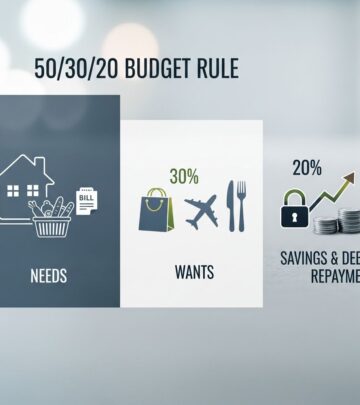
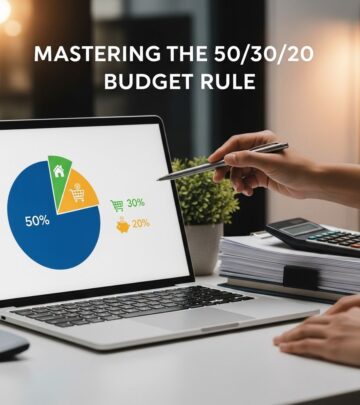
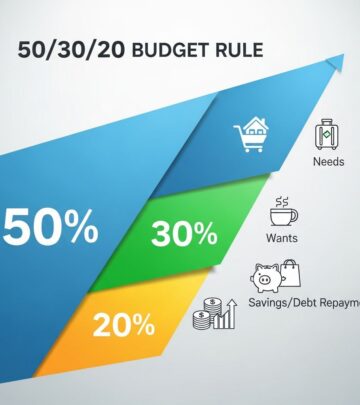
The 80/20 budget is essentially a simplified version of the 50/30/20 budget, a popular framework promoted by financial expert Elizabeth Warren. In the 50/30/20 method, you allocate 50% of your income to needs, 30% to wants, and 20% to savings. While the 50/30/20 budget is comprehensive, it requires you to carefully categorize each expense, determining whether it qualifies as a need or a want—a task many find tedious.
The 80/20 budget eliminates this complexity entirely. Instead of trying to distinguish between needs and wants, you combine them into one category. This unified approach makes the 80/20 budget ideal for people who find detailed categorization frustrating or who simply want a more relaxed approach to budgeting.
The Two Core Components of the 80/20 Budget
The 20% Savings Rule
The cornerstone of the 80/20 budget is the 20% savings allocation. This is the non-negotiable portion of your income that you commit to saving before you spend money on anything else. This principle embodies the “pay yourself first” philosophy—the idea that you should prioritize your financial future just as you would prioritize paying rent or utilities.
Savings in the 80/20 budget encompasses multiple financial priorities. First, it includes building and maintaining an emergency fund—ideally containing three to six months of living expenses—to protect yourself against unexpected financial hardships. Second, it includes retirement savings through vehicles like a 401(k) or Individual Retirement Account (IRA). Finally, it covers any other financial goals you’re working toward, whether that’s saving for a home down payment, education, or a major purchase.
The beauty of allocating 20% to savings is that it forces you to be intentional about your financial future. By making savings automatic—ideally through direct deposit to a separate savings account—you remove the temptation to spend this money. This automation creates a powerful behavioral shift: you train yourself to live comfortably on 80% of your income rather than spending whatever is available.
The 80% for Everything Else
Once you’ve set aside your 20% for savings, the remaining 80% of your income is yours to allocate as you see fit. This is where the 80/20 budget truly distinguishes itself from more prescriptive budgeting methods. You don’t need to meticulously categorize these expenses. Whether you’re spending on groceries, rent, entertainment, dining out, or hobbies, it all falls into the same bucket.
This flexibility is one of the most appealing aspects of the 80/20 budget. Life is unpredictable, and your expenses won’t fit neatly into predetermined categories every month. Some months you’ll spend more on dining out; other months you might need car repairs. With the 80/20 method, as long as you stay within your 80% allocation and maintain your 20% savings commitment, you have complete freedom in how you allocate your spending.
Implementing the 80/20 Budget: A Step-by-Step Guide
Step 1: Calculate Your After-Tax Income
The first step in implementing the 80/20 budget is determining your total monthly after-tax income. This is your actual take-home pay—the amount that lands in your bank account after taxes, insurance premiums, and other payroll deductions. Include all income sources: your primary salary, side gigs, freelance work, bonuses, or any other regular income.
For those with variable income, calculate an average based on your earnings over the past few months. This gives you a realistic baseline to work with, even if some months are stronger than others.
Step 2: Set Aside 20% for Savings
Once you know your after-tax monthly income, calculate 20% of that amount. This is your savings target. If you earn $3,000 monthly, you would save $600. If you earn $5,000, you would save $1,000.
The most effective way to ensure you hit this savings target is to automate it. Set up an automatic transfer from your checking account to a separate savings account on the day you receive your paycheck. This way, the money is already allocated to savings before you have a chance to spend it. Automation removes willpower from the equation and makes consistency effortless.
Step 3: Allocate 80% for Living Expenses
The remaining 80% of your income is allocated to everything else: housing, utilities, groceries, transportation, insurance, entertainment, dining out, shopping, and any other expenses you incur. Unlike the 50/30/20 budget, you don’t need to subdivide this amount further.
Some months you might spend more on groceries; other months you might spend more on entertainment. As long as your total expenses stay within 80% of your income, you’re following the budget correctly.
Step 4: Stay Flexible but Disciplined
While the 80/20 budget is flexible, that doesn’t mean you can ignore your spending entirely. Unexpected expenses will arise—medical bills, car repairs, or home maintenance issues. When this happens, look for ways to reduce non-essential spending temporarily to stay within your 80% allocation.
The key is maintaining your 20% savings commitment even when unexpected expenses occur. If possible, avoid dipping into savings to cover emergencies; instead, adjust your 80% spending allocation by cutting back on discretionary expenses for that month.
Step 5: Review and Adjust Quarterly
While the 80/20 budget doesn’t require constant tracking, it’s wise to review your financial situation quarterly. Take a look at your overall spending patterns and ensure you’re consistently hitting your 20% savings target. If you notice that you’re struggling to stay within the 80% allocation, you may need to adjust your savings rate downward slightly. Conversely, if you find it easy to maintain 80% in spending, you might increase your savings rate to 25% or 30%.
Advantages of the 80/20 Budget
Simplicity and Ease of Implementation
The most obvious advantage of the 80/20 budget is its simplicity. You don’t need complex spreadsheets, multiple budget categories, or hours spent tracking expenses. The entire framework can be explained in a single sentence: save 20%, spend 80%. This straightforward approach makes the 80/20 budget accessible to everyone, regardless of financial literacy or comfort with numbers.
Focus on Saving
The 80/20 budget places savings front and center. By making the 20% allocation non-negotiable, you ensure that you’re consistently building wealth, regardless of your spending habits. This focus on saving creates a powerful behavioral change over time, as you train yourself to live within 80% of your income.
Flexibility in Spending
Unlike budgeting methods that rigidly categorize expenses, the 80/20 budget adapts to your lifestyle. Your spending priorities might be different from your friend’s or family member’s, and that’s perfectly fine. Whether you prioritize travel, hobbies, or a comfortable home, you have the flexibility to allocate your 80% according to your values and preferences.
Works with Variable Income
The 80/20 budget is particularly effective for freelancers, gig workers, and anyone with variable income. Whether you earn $3,000 or $5,000 in a given month, the percentages remain the same. You simply calculate 20% of whatever you earned that month and allocate it to savings. This consistency makes the 80/20 budget ideal for those whose income fluctuates.
Reduces Financial Stress
Traditional budgeting methods can be overwhelming and anxiety-inducing. The detailed categorization, constant tracking, and complex rules can make budgeting feel like a second job. The 80/20 budget eliminates this stress by offering a simplified approach that takes minutes to set up and maintain. Many people find this reduced complexity helps them stick to their budget long-term.
Potential Drawbacks of the 80/20 Budget
Not Ideal for High-Expense Situations
The 80/20 budget works well for many, but it may not be suitable for everyone. If you live in a high-cost-of-living area or have exceptionally high fixed expenses, you might find that your housing, utilities, and insurance alone consume more than 80% of your income. In such cases, you may need to adjust your savings rate to a lower percentage—perhaps 10% or 15%—to make the budget work for your situation.
Limited for Specific Financial Goals
If you’re working toward an aggressive financial goal—such as paying off significant debt, saving for early retirement, or building a substantial down payment—you might need to save more than 20% of your income. In these cases, the standard 80/20 split may not align with your objectives, and you’d benefit from a more customized approach.
May Lack Accountability in Spending
While the simplicity of the 80/20 budget is a strength, it can also be a weakness. Without detailed tracking, some people may find themselves unaware of their actual spending patterns. If you’re someone who tends to overspend without realizing it, you might benefit from a more detailed budgeting method that provides greater visibility into where your money goes.
Examples of the 80/20 Budget in Action
Example 1: Fixed Monthly Income
Consider Sarah, who earns $3,500 per month after taxes. Using the 80/20 budget, she allocates $700 (20%) to savings and $2,800 (80%) to all other expenses. Her $700 goes into a designated savings account where it accumulates toward her emergency fund and retirement. Her $2,800 covers rent ($1,200), utilities ($150), groceries ($400), transportation ($250), insurance ($300), and discretionary spending ($500). If unexpected expenses arise, like a dental visit costing $200, she adjusts by reducing her discretionary spending that month to maintain her budget.
Example 2: Variable Income
Consider Marcus, a freelance graphic designer whose monthly income varies between $2,500 and $5,000. In months when he earns $2,500, he saves $500 and allocates $2,000 to expenses. In months when he earns $5,000, he saves $1,000 and allocates $4,000 to expenses. Despite the income variability, the 80/20 principle remains consistent, giving Marcus a reliable framework even when his earnings fluctuate.
Example 3: Adjusting for High Fixed Expenses
Consider Priya, who lives in an expensive metropolitan area where her rent alone is $2,000 monthly. Her after-tax income is $3,500. The standard 80/20 split would give her only $2,800 for all expenses, which wouldn’t even cover her rent. In this situation, Priya adjusts her budget to 15% savings and 85% expenses, allocating $525 to savings and $2,975 to living expenses. This adjustment acknowledges her unique circumstances while still maintaining a meaningful savings commitment.
Frequently Asked Questions
Q: What if I can’t afford to save 20% of my income?
A: The 80/20 budget is flexible. If 20% is too ambitious, start with 10% or 15% and gradually increase as your financial situation improves. The most important thing is establishing a consistent savings habit, even if it’s a smaller percentage initially.
Q: How should I allocate my 20% savings among different goals?
A: Prioritize building an emergency fund first (three to six months of expenses). Once that’s established, divide your 20% between retirement contributions and other financial goals like saving for a home or education.
Q: Can I use the 80/20 budget if my income is irregular?
A: Yes. Calculate your average monthly income over the past three to six months, then apply the 80/20 split to that average. Adjust quarterly as needed based on actual earnings.
Q: Should I track my 80% spending at all?
A: While detailed tracking isn’t required, periodic reviews—monthly or quarterly—help ensure you’re staying within your 80% allocation. Many people use bank statements or budgeting apps for this purpose without categorizing every transaction.
Q: What’s the difference between the 80/20 budget and the 50/30/20 budget?
A: The 50/30/20 budget categorizes the 80% into 50% needs and 30% wants, requiring more detailed tracking. The 80/20 budget combines needs and wants into one category, making it simpler and less time-consuming.
Q: Can I adjust my savings rate after I’ve started?
A: Absolutely. Review your budget quarterly and adjust based on changes in your income, expenses, or financial goals. You might increase to 25% if you find it manageable or decrease to 15% if circumstances change.
Is the 80/20 Budget Right for You?
The 80/20 budget is an excellent choice if you value simplicity over detailed tracking, prefer flexibility in spending decisions, and want a straightforward path to building wealth. It’s particularly effective for those with relatively stable housing and fixed expenses that comfortably fit within 80% of their income.
However, if you have very high fixed expenses, aggressive financial goals that require higher savings rates, or a strong preference for detailed spending visibility, you might benefit from a more comprehensive budgeting method.
Ultimately, the best budget is the one you’ll actually follow. If the idea of meticulously tracking every expense makes you want to abandon budgeting altogether, the 80/20 budget offers a refreshingly simple alternative that still helps you build a stronger financial foundation.
Getting Started with Your 80/20 Budget Today
Implementing the 80/20 budget requires just a few minutes of setup. Calculate your after-tax income, determine your 20% savings target, set up an automatic transfer to a separate savings account, and you’re done. The simplicity of this approach is precisely why it works—it removes barriers to budgeting success and makes financial discipline sustainable.
By adopting the 80/20 budget, you’re making a powerful statement about your financial priorities. You’re choosing to pay yourself first, build wealth systematically, and maintain flexibility in your daily spending. Over time, this simple approach can lead to significant financial security and the freedom to pursue your long-term goals without the stress of complex budgeting systems.
References
- The 80/20 Budget: What’s It All About? — OppLoans. 2024. https://www.opploans.com/oppu/financial-literacy/80-20-budget/
- How to Use the 80/20 Rule to Change Your Life — Erin Gobler. 2024. https://eringobler.com/80-20-rule/
- The 80/20 Rule (aka Pareto Principle) Explained: How to “Pay Yourself First” — The Muse. 2024. https://www.themuse.com/advice/80-20-rule
- How to ‘Pay Yourself First’: Save More Money with the 80/20 Budget — Thrivent Financial. 2024. https://www.thrivent.com/insights/budgeting-saving/what-does-it-mean-to-pay-yourself-first
Similar Articles








Read full bio of Sneha Tete