Stop Spending: 8 Practical Ways To Break Impulse Buying Today
Discover practical, immediate strategies to curb impulse spending and regain control over your finances starting right now.
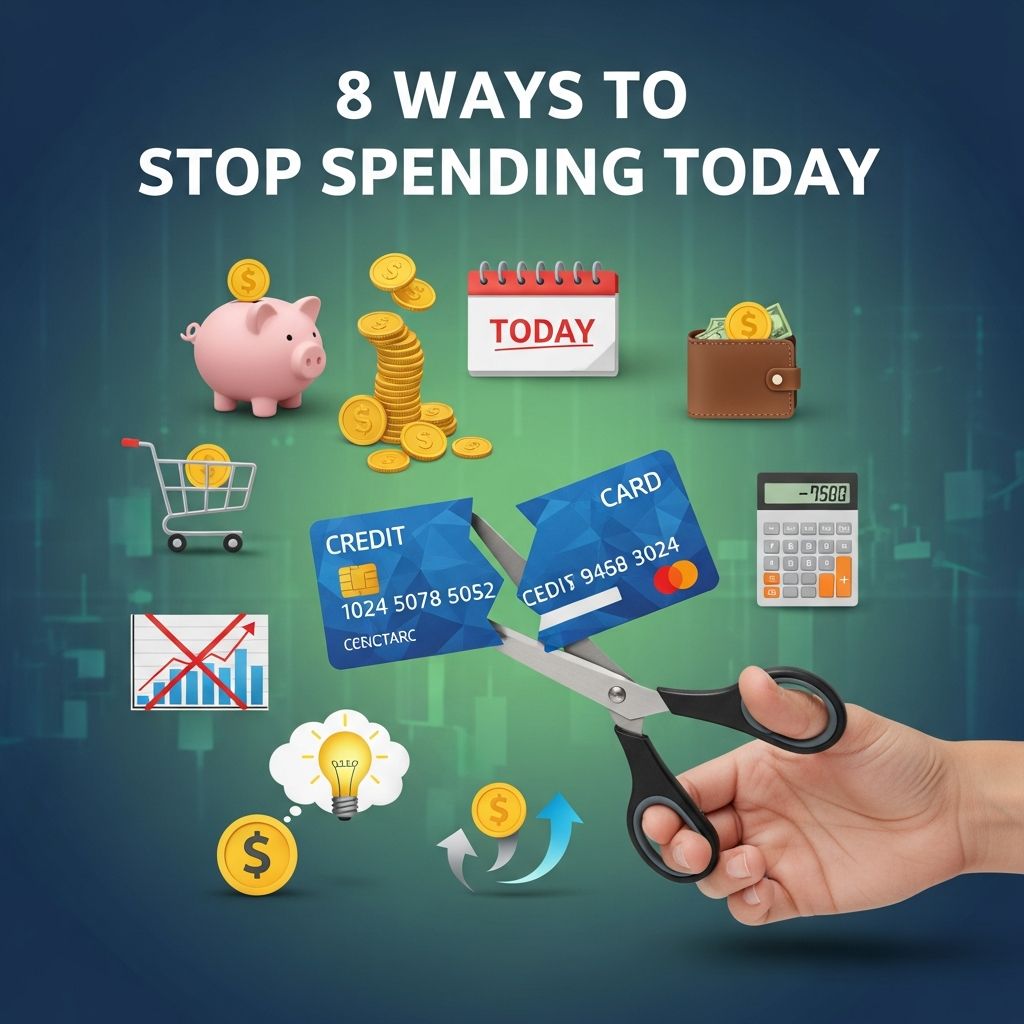
Impulse spending can derail even the most disciplined budgets, turning small indulgences into significant financial setbacks. In today’s world of one-click purchases and constant temptations, regaining control requires deliberate, actionable steps. This article outlines
8 practical ways to stop spending today
, drawing from proven personal finance strategies to help you break the cycle of mindless buying and build lasting habits for financial freedom.Whether you’re battling online shopping urges or habitual cash splurges, these methods emphasize immediate implementation. By applying them, you can create barriers to spending, foster mindfulness, and redirect your money toward meaningful goals like debt reduction or emergency savings.
Cut Up Those Credit Cards
The first and most decisive step is to
physically destroy your credit cards
. Credit cards enable effortless spending far beyond your means, often leading to high-interest debt. Cutting them up removes the temptation to swipe without thinking.To do this safely, pay off balances first if possible, then use scissors to slice through the magnetic strip and chip. Keep one emergency card frozen in ice or locked away if absolutely needed. This drastic measure, popularized in personal finance circles, forces reliance on cash or debit, making every purchase feel real and immediate.
- Identify non-essential cards and cut them immediately.
- Notify issuers to close accounts after destruction.
- Switch to cash-only for daily expenses to feel the pain of spending.
Resist the urge to apply for replacements; instead, build discipline through alternative payment methods. This step alone can slash impulse buys by creating friction in the spending process.
Pay Your Bills Immediately
Procrastinating on bills invites late fees and interest, compounding your financial stress.
Pay bills the moment they arrive
to eliminate this trap and free mental space for better decisions.Set up auto-payments for fixed bills like utilities and subscriptions. For variables, log in daily or use bill-tracking apps. This habit ensures you’re never caught off guard, reducing the need for credit to cover shortfalls.
| Bill Type | Best Payment Method | Benefit |
|---|---|---|
| Rent/Mortgage | Auto-pay | Avoids eviction risks |
| Utilities | Immediate online | No late fees |
| Credit Cards | Pay in full monthly | Preserves credit score |
Immediate payment builds accountability and prevents spending money earmarked for obligations.
Set Savings Goals
Without clear targets, money slips away on trivia.
Define specific, achievable savings goals
to motivate restraint—whether it’s $1,000 for emergencies, a vacation fund, or debt payoff.Make goals SMART: Specific, Measurable, Achievable, Relevant, Time-bound. For example, “Save $500 in 3 months by cutting dining out.” Visualize success with progress trackers or apps like Mint.
- Short-term: Emergency fund (3-6 months expenses).
- Medium-term: Big purchase (car, travel).
- Long-term: Retirement or home down payment.
When tempted to spend, recall your goal: “Does this align with my vacation dreams?” This mental shift transforms spending into an opportunity cost evaluation.
Leave Your Debit Card at Home
Debit cards mimic cash but enable ATM runs and PIN-less swipes.
Leave your debit card at home
, carrying only necessary cash for the day.Pre-plan daily cash allotments based on your budget—e.g., $20 for lunch and transit. This caps spending naturally, as overspending means going without. It also curbs ATM fees and overdrafts.
Pro tip: Use envelopes for categories like groceries or entertainment, stopping you when empty. This tactile method heightens spending awareness dramatically.
Only Carry a Small Amount of Cash for Emergencies
Even cash burns quickly without limits.
Limit cash to a true emergency amount
, like $20-50, stashed separately from daily funds.Distinguish emergencies (car repair) from wants (coffee). Small cash forces intentional choices, ending habitual small spends that accumulate—think $5 lattes adding $150 monthly.
- Weekly cash audit: Track and adjust.
- Digital alternatives: Prepaid cards with spending caps.
- Mindset: Cash as finite resource, not infinite.
Avoid Malls and Online Shopping Sites
Environments trigger spending.
Steer clear of malls, stores, and websites
known to tempt you until habits solidify.Delete shopping apps, unsubscribe from emails, and use browser blockers like Freedom. Replace urges with free activities: walks, libraries, or hobbies. When shopping is necessary, go with a strict list and exit quickly.
Online, enable purchase delays—remove saved cards, use gift cards bought in advance. This mirrors strategies from finance experts to break environmental cues fueling impulses.
Record All of Your Purchases
Mindless spending thrives in the dark.
Log every purchase
immediately, from 99¢ apps to $50 lunches, using a notebook or app.This practice reveals patterns—like $200 monthly on snacks—and creates pause for reflection: “Is this worth recording?” Over time, it disrupts autopilot buying, fostering accountability.
Weekly reviews highlight leaks, enabling cuts. Studies show tracking boosts savings by 20-30% through heightened awareness alone.
Make a List of Needed Items and Stick to It
Impulses flourish without plans.
Maintain a running list of true needs
, shopping only when items accumulate and with that list in hand.For groceries, plan meals from pantry staples first. Online, wait for free shipping thresholds with listed items only. This avoids ‘browsing buys’ and filler items.
- Digital lists: Apps like AnyList for sharing.
- Rule: No deviations from list.
- Bonus: Bulk buys for lists reduce trips.
Frequently Asked Questions (FAQs)
What if I need credit for emergencies?
Keep one card secured (frozen or hidden) for true emergencies only. Build an emergency fund to minimize reliance.
How long until these habits stick?
Typically 21-66 days with consistency. Track progress to stay motivated.
Can I ever splurge again?
Yes, allocate ‘fun money’ in your budget (5-10%) for guilt-free treats after core goals.
What about shared finances with family?
Communicate goals openly; involve them in cash-only challenges for collective buy-in.
Do these work for online spending?
Absolutely—delete saved info, use gift cards, and list-based buying curbs digital impulses effectively.
References
- Personal Finance Tips: Behavioral Insights on Spending Habits — Federal Reserve Board. 2024-06-15. https://www.federalreserve.gov/publications/2024-economic-well-being-of-us-households-in-2023-executive-summary.htm
- Consumer Expenditure Survey: Spending Patterns — U.S. Bureau of Labor Statistics. 2025-09-10. https://www.bls.gov/cex/
- How Habits Form and Break — American Psychological Association. 2023-11-20. https://www.apa.org/topics/habit-formation
- Impulse Buying: A Meta-Analysis — Journal of Consumer Research (Oxford University Press). 2024-03-05. https://doi.org/10.1093/jcr/ucad072
- Financial Literacy and Spending Control — Consumer Financial Protection Bureau. 2025-01-08. https://www.consumerfinance.gov/data-research/research-reports/financial-well-being-scale/
Similar Articles








Read full bio of Sneha Tete