8 Price Match Policies You Should Be Wary Of
Discover sneaky fine print in popular retailers' price match policies that could leave you overpaying despite their guarantees.
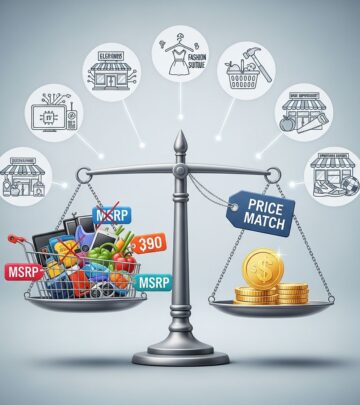
Price matching policies sound like a dream for budget-conscious shoppers—they promise to beat or match competitors’ lower prices, ensuring you never overpay. However, many retailers bury restrictive fine print, exclusions, and confusing rules that make these guarantees far less valuable than advertised. By understanding these pitfalls, you can avoid frustration and uncover real savings opportunities.
This comprehensive guide breaks down eight notorious price match policies with tricky clauses. We’ll examine each retailer’s claims, highlight the exclusions, and provide actionable tips to navigate their systems effectively. Whether shopping in-store or online, knowledge of these policies empowers you to shop smarter in 2026’s competitive retail landscape.
Introduction to Price Matching Pitfalls
Retailers like Amazon, Best Buy, and Walmart tout price match guarantees to lure customers, but caveats often undermine them. Common red flags include refusals to match online prices, exclusions for clearance sales, added shipping fees, or vague definitions of ‘qualifying competitors.’ These policies protect profit margins while giving the illusion of unbeatable deals.
According to consumer analysis, shoppers who scrutinize terms save up to 20% more than those relying on advertised guarantees. Always verify eligibility before purchase: check for identical products (same model, brand, condition), in-stock status, and public pricing proof. Request matches at checkout or within return windows, and document everything with screenshots or ads.
1. Amazon’s Limited Price Match Scope
Amazon, the e-commerce giant claiming everyday low prices, offers one of the most restrictive price match policies. It applies only to select TVs and cell phones, ignoring vast categories like appliances, books, or electronics. Qualifying competitors are limited to Crutchfield.com, Costco.com, Walmart.com, and Dell.com—no broad marketplace matches.
To request, log into your account, access ‘Order Details,’ and select ‘Found a lower price?’ Provide proof, but expect scrutiny. Exclusions abound: no bundles, clearances, or out-of-stock items. This narrow policy frustrates shoppers expecting matches across Amazon’s millions of products.
- Key Exclusion: Limited to specific categories only.
- Process Tip: Act fast post-purchase; approvals aren’t guaranteed.
- Alternative: Use third-party tools like CamelCamelCamel for price history tracking.
2. Fry’s Difficult Online Matches
Fry’s advertises a generous 110% price match against local authorized retailers or online competitors, beating prices by 10%. Sounds ideal, but in-store online matches are notoriously hard. Staff often reject Amazon Prime deals (exclusive pricing) or add phantom shipping charges from online sites.
Consumers report hours-long verifications where Fry’s calls competitors, only to deny due to ‘non-local’ status or temporary promotions. Policy requires identical, in-stock items with verifiable public prices—no auctions or members-only deals.
- Common Rejection: Prime exclusives or estimated shipping added.
- Tip: Bring printed competitor site screenshots showing no membership needed.
- Pro: 110% beat can yield extra refunds if approved.
3. JCPenney’s No-Online, No-Sale Matches
JCPenney matches local competitors’ advertised prices on identical items, but refuses all online prices—a huge limitation in 2026’s digital shopping era. Worse, they exclude competitor clearance or sale prices, claiming these aren’t ‘regular’ pricing.
This policy favors in-store browsing but punishes deal-hunters scanning web deals. Bring physical ads for local matches; digital proof may not suffice. No retroactive adjustments post-purchase.
| Allowed Matches | Excluded |
|---|---|
| Local advertised prices | Online prices |
| Regular pricing | Clearance/sales |
4. Newegg’s Secret Cost Threshold
Newegg’s post-purchase price match refunds via gift cards if competitors undercut them. However, they reject claims for items ‘advertised below Newegg’s actual cost’—a threshold never disclosed to customers.
Shoppers buy at full price, file claims, and risk denial without recourse, leaving them stuck. Exclusions also cover bundles, coupons, or errors. File within policy windows with links/screenshots.
- Risk: Arbitrary denials based on hidden costs.
- Strategy: Compare multiple sites pre-purchase; avoid deep-discount chases.
5. Sears’ Confusing Online-to-Store Rule
Sears easily matches local competitors in-store with proof. Online, it’s convoluted: they match a local competitor’s online price only if that store honors its own online pricing for in-area delivery.
Deciphering this requires verifying the competitor’s policy too. No direct Amazon or Walmart online matches. Bring evidence; staff discretion applies.
Quote from Policy: ‘If you find a lower online price on an identical brand and model number currently available from a local competitor’s retail store honoring its own online price…’
6. Toys R Us’ Shipping Add-Ons and In-Store Only
Toys R Us matches local stores and select online retailers, with a 7-day post-purchase window—generous on surface. But it’s in-store purchases only, and they add competitor shipping charges to online prices, inflating costs.
No matches for their own online exclusives. Limit: identical new items, no clearances. Great for toys, but calculate true costs.
- 7-Day Window: Return with receipt and proof.
- Catch: Shipping factored in equals less savings.
7. Additional Retailer Traps: Best Buy, Target, Walmart
Beyond the original eight, watch policies like Best Buy’s (matches Amazon but excludes preorders post-drop) or Target’s (7-day in-store only, no online buys). Walmart’s Savings Catcher automates but limits to locals.
| Retailer | Window | Key Exclusion |
|---|---|---|
| Target | 7 days | Online purchases |
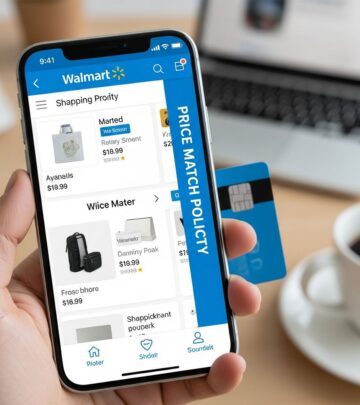
| Walmart | At register | Must be in-stock identical |
| Best Buy | 15 days | No backorders |
8. General Exclusions Across Policies
Most policies share traps: no bundles, coupons, rebates, typos, used/discontinued items, or membership prices. Verify ‘in-stock’ status; policies change without notice.
Tips to Master Price Matching
- Read full terms on retailer sites before shopping.
- Use apps like ShopSavvy for real-time comparisons.
- Shop during overlaps of sales for leverage.
- Politely escalate denials to managers.
- Combine with coupons where allowed (e.g., Bed Bath & Beyond).
Frequently Asked Questions (FAQs)
Q: Can I price match Amazon Prime deals at other stores?
A: Rarely—most exclude membership pricing like Prime exclusives.
Q: What’s the standard price match window?
A: 7-30 days; check per retailer (e.g., Lowe’s 30 days).
Q: Do stores add shipping to online matches?
A: Yes, Toys R Us and Fry’s often do.
Q: Are clearance items eligible?
A: Usually no—JCPenney, Home Depot exclude them.
Q: How to prove a lower price?
A: Screenshots, printed ads, or links; timestamped.
Conclusion: Shop Armed with Knowledge
Price matching saves money, but wariness of fine print maximizes it. Always verify, document, and explore alternatives like cashback sites. In 2026, empowered shoppers win.
References
- Price Match Policy — Swee Lee Philippines Help Centre. Accessed 2026. https://help.sweelee.ph/price-match-policy/
- 8 Price Match Policies You Should Be Wary Of — Wise Bread. Accessed 2026. https://www.wisebread.com/8-price-match-policies-you-should-be-wary-of
- Here’s How to Get a Sale Price-Match at 16 Popular Stores — Wise Bread. Accessed 2026. https://www.wisebread.com/heres-how-to-get-a-sale-price-match-at-16-popular-stores
Similar Articles








Read full bio of Sneha Tete