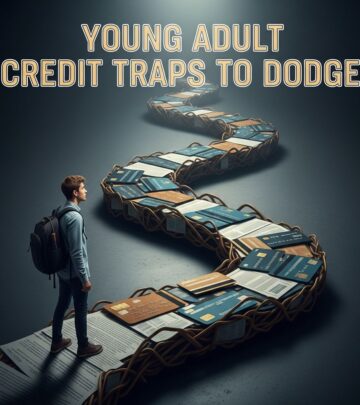
8 Money Mistakes at 20 That Will Land You in Debt by 30
Avoid these 8 critical financial pitfalls in your 20s to prevent overwhelming debt and secure your financial future by age 30.

Your 20s are a pivotal decade for building financial foundations. Choices made now—often impulsive or uninformed—can compound into massive debt by 30. This article breaks down the
8 most common money mistakes
young adults make, drawing from real-world examples and expert guidance. By recognizing and avoiding these pitfalls, you can steer toward financial freedom rather than a debt trap.According to the Federal Reserve, average student loan debt exceeds $30,000 per borrower, while credit card debt among young adults has surged 20% in recent years. Proactive steps today yield exponential benefits tomorrow.
1. Amassing Huge Student Loans
College is marketed as essential, but pursuing degrees without regard for cost leads to crippling debt. Many graduate with six-figure loans for fields offering modest salaries, delaying life milestones like homeownership.
Consider this: The average borrower owes $37,000, with payments stretching 20+ years. Stories abound of individuals regretting loans taken without career ROI analysis, forcing them into unwanted jobs or freelance limitations.
- Research affordability: Calculate expected salary vs. loan payments using tools from the U.S. Department of Education.
- Explore alternatives: Community college, scholarships, or trade schools often yield faster debt-free paths.
- Work-study programs: Offset costs through part-time campus jobs.
Avoidance tip: Before enrolling, project total costs and post-grad income. If debt exceeds first-year salary, reconsider.
2. Carrying Credit Card Debt
Credit cards tempt with instant gratification, but high-interest charges (averaging 20% APR) turn small purchases into mountains. Young adults often treat them as “free money,” leading to snowballing balances.
Real accounts reveal repeated cycles: unemployment triggers spending, job hunts extend, and debt balloons. One person racked up charges three times, learning too late that credit isn’t income.
| Mistake | Consequence | Solution |
|---|---|---|
| Treating cards like debit | Interest accrues rapidly | Pay in full monthly |
| Minimum payments only | Debt lasts decades | Budget aggressively |
| Multiple cards | Overspending temptation | Limit to one secured card |
Pro tip: Use the debt snowball method—pay smallest balances first for momentum, as endorsed by financial planners.
3. Ignoring Your Credit Score
A poor credit score (below 670) hikes loan rates, rental fees, and insurance premiums. Yet, many in their 20s never check it, missing chances to build a strong profile early.
Neglect leads to surprises: denied apartments, high car loans. Free weekly reports from AnnualCreditReport.com (backed by federal law) make monitoring easy.
- Pay bills on time (35% of score).
- Keep utilization under 30%.
- Limit new accounts.
Building credit now saves thousands; a 100-point boost cuts mortgage interest by 0.5% over 30 years.
4. Splurging on a New Car
New cars depreciate 20% in year one, yet status drives purchases beyond means. Financing traps young buyers in 5-7 year payments, diverting funds from savings.
One example: A $20k car with $5k rolled over led to $412 monthly payments and a $14k balloon—daily regret. Used cars or public transit preserve wealth.
Smart buying rules:
- Total cost (payment + insurance + gas) < 15% income.
- Save 20% down payment.
- Buy used with cash if possible.
5. Not Talking Finances with Your Significant Other
Money conflicts doom 40% of marriages. Avoiding discussions leads to mismatched spending, hidden debts, or joint splurges.
Early transparency prevents disasters like shared credit misuse or unequal contributions. Schedule monthly money dates: review budgets, goals, debts openly.
Key topics:
- Income, debts, savings rates.
- Spending triggers.
- Future goals (wedding, kids).
6. Living Beyond Your Means
Lifestyle inflation—upgrading apartments, dining out—erodes budgets. Without tracking, expenses outpace income, forcing debt reliance.
Periodic expenses (taxes, holidays) ambush if ignored. Document all spending: fixed, variable, irregular.
Reduction strategies:
- 50/30/20 rule: 50% needs, 30% wants, 20% savings.
- Cut subscriptions, eat in.
- Windfalls to debt/savings, not splurges.
7. Not Having an Emergency Fund
No cash buffer means job loss or repairs trigger high-interest borrowing. Aim for 3-6 months’ expenses in a high-yield account.
Start small: $1,000 buffer, then build. Automate $50/paycheck transfers. This prevented many from credit spirals during unemployment.
8. Neglecting to Invest Early
Delaying investing misses compound interest magic. $5k at 20 grows to $40k by 60 at 7% return; at 30, it’s half that.
Start with Roth IRA or 401(k) matches. Low-cost index funds beat picking stocks. Education via CFP Board resources empowers informed starts.
How to Reverse Course If You’re Already in Trouble
Debt isn’t permanent. Steps:
- Assess total debt: List balances, rates.
- Debt avalanche/snowball: High-interest or small balances first.
- Increase income: Side gigs, raises.
- Cut expenses: Track via apps.
- Seek help: NFCC.org counselors (nonprofit).
Patience pays: Many eliminate $20k+ debt in 2-3 years with discipline.
Frequently Asked Questions (FAQs)
Q: How much student debt is too much?
A: Keep total debt under your expected first-year salary. Use federal calculators for projections.
Q: What’s the fastest way to build credit?
A: Secured card, on-time payments, low utilization. Monitor free via Credit Karma (supplemental to official reports).
Q: Should I buy a car in my 20s?
A: Only if cash or minimal loan; prioritize used, reliable models under 10% income.
Q: How do I start an emergency fund?
A: $20/week into high-yield savings. Hit $1k, then expand to 3 months.
Q: Is it too late if I’m 25 with debt?
A: No—compound recovery works both ways. Budget now, invest tomorrow.
Final Thoughts: Your 20s Are Your Financial Launchpad
Avoiding these
8 mistakes
—student loans, credit debt, score neglect, car splurges, partner silence, overspending, no emergency fund, investment delay—positions you for wealth by 30. Track progress quarterly, celebrate wins. Financial wellness is a skill; master it young.References
- Federal Reserve Survey of Consumer Finances — Board of Governors of the Federal Reserve System. 2022-10-01. https://www.federalreserve.gov/publications/files/scf23.pdf
- Student Debt Report — U.S. Department of Education, Federal Student Aid. 2024-05-15. https://studentaid.gov/data-center/student/portfolio
- Consumer Credit Report — Consumer Financial Protection Bureau. 2023-11-20. https://www.consumerfinance.gov/data-research/consumer-complaints/
- National Foundation for Credit Counseling Guidelines — NFCC. 2024-01-10. https://www.nfcc.org/resources/debt-snowball-vs-debt-avalanche-method/
- Compound Interest Basics — Investor.gov (SEC). 2023-07-12. https://www.investor.gov/introduction-investing/investing-basics/investment-products/mutual-funds-and-exchange-traded-2
Similar Articles








Read full bio of Sneha Tete