7 Things You Should Know About Your 401(k) Match
Unlock the full potential of your employer's 401(k) matching contributions with these essential insights to maximize retirement savings.

Your employer’s 401(k) match is one of the most valuable benefits available, essentially free money for your retirement. However, many employees fail to fully leverage it due to misunderstandings about how it works. This comprehensive guide covers the seven essential things you need to know to ensure you’re getting the maximum benefit from your 401(k) match, helping you build a stronger financial future.
1. It’s Free Money — Always Contribute Enough to Get the Full Match
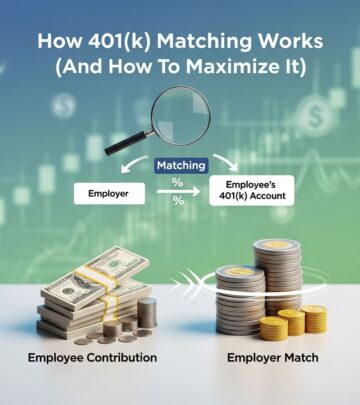
The 401(k) match represents free money from your employer, directly boosting your retirement savings. Failing to contribute at least the amount required to receive the full match means leaving real dollars on the table. For instance, if your employer matches 50% of your contributions up to 6% of your salary, and you earn $50,000 annually, contributing just 6% ($3,000) would yield a $1,500 match — equivalent to a 50% immediate return on your investment.
Consider a typical scenario: An employee earning $60,000 who contributes only 3% misses out on potential matching funds. Prioritizing the match over other savings vehicles is crucial because no other investment offers such guaranteed, risk-free returns. Even if your company’s match is modest, such as 25% on the first 4% contributed, it’s still superior to most market returns in the short term.
- Calculate your required contribution: Match percentage × Eligible salary portion.
- Automate contributions to hit the threshold effortlessly.
- View it as an instant 100% raise if the match is dollar-for-dollar.
According to financial experts, participating in matching programs is like passing up significant tax advantages and free funds. In 2025, with contribution limits at $23,500 for those under 50 (plus catch-up for older workers), ensuring you max the match is step one toward retirement security.
2. Matches Aren’t One-Size-Fits-All: Understand the Formula
Employer matches vary widely, from generous 100% up to 6% of salary to more conservative 50% on 4%. Common formulas include:
| Match Type | Example | Employee Contribution | Employer Match |
|---|---|---|---|
| 50% up to 6% | $60,000 salary | 6% ($3,600) | $1,800 |
| 100% up to 3% | $60,000 salary | 3% ($1,800) | $1,800 |
| 25% up to 8% | $60,000 salary | 8% ($4,800) | $1,200 |
Review your plan documents or HR portal to decode the exact formula. Some matches vest immediately, while others require service time. Misunderstanding this can lead to suboptimal contributions; for example, contributing beyond the match threshold without need if other options like Roth IRAs offer better flexibility.
Recent data shows average matches hover around 4-6%, but industry varies — tech firms often exceed 6%, while smaller companies may offer 2-3%. Always confirm: Is it based on pre-tax salary? Does it include bonuses? Clarity here prevents costly mistakes.
3. Vesting Schedules Can Make Matches Disappear
Vesting determines when employer contributions become yours. Common schedules include:
- Immediate vesting: 100% yours right away — ideal for job-hoppers.
- Cliff vesting: e.g., 100% after 3 years; leave early, forfeit match.
- Graded vesting: 20% per year over 5 years.
If you leave before fully vested, unvested matches revert to the employer. For a $10,000 accumulated match with 4-year graded vesting, departing after 2 years means losing $5,000. Factor this into job change decisions, especially in your first few years.
Pro tip: Track vesting via annual statements. Some plans accelerate vesting upon acquisition or retirement. Understanding this protects your nest egg during career transitions.
4. Contribution Deadlines Are Strict — Don’t Miss Out
Matches are typically calculated per payroll period, but some aggregate annually. Contribute consistently to avoid shortfalls; irregular contributions (e.g., bonuses only) may not trigger full matches. Deadlines align with plan year-ends, often December 31.
For 2025, ensure contributions by year-end to capture that year’s match. True-up provisions in some plans adjust at year-end if payroll contributions fell short, but not all offer this luxury. Monitor via payroll stubs and adjust mid-year if needed.
5. Matches Are Pre-Tax, Just Like Your Contributions
Your contributions and the employer match are both pre-tax, growing tax-deferred until withdrawal. This double tax advantage amplifies compounding. For a $1,000 match, you avoid immediate taxes on it, plus earnings accrue sheltered.
Compare to after-tax savings: The match’s tax deferral adds significant value, especially in higher brackets. Post-2025 SECURE 2.0 rules enhance Roth options, but traditional matches remain pre-tax powerhouses.
6. Job Changes Can Jeopardize Your Match
Switching jobs risks forfeiting unvested matches. Rollover 401(k)s promptly to IRAs or new plans to maintain control and continue growth. Leaving funds behind may incur fees or poor investment options.
- Cash out only as last resort — penalties and taxes erode 40%+.
- Direct rollover preserves tax-deferral.
- Consolidate old accounts for easier management.
Career mobility is common; protect accumulations accordingly.
7. Even Without a Match, 401(k)s Offer Tax Advantages
No match? Contribute anyway for tax deferral and forced savings. Reasons include:
- Immediate tax savings lower your bracket.
- Tax-free growth inside the plan.
- Employer plans often have low-cost funds unavailable elsewhere.
Prioritize high-interest debt first (>7%), then match, then further 401(k), then Roth IRA. Tax math: A 25% bracket saver saves $250 taxes on $1,000 contribution instantly.
Frequently Asked Questions (FAQs)
What if my employer match is low, like 2%?
Still contribute to get it — it’s free money. Compare to IRA after securing the match.
How do catch-up contributions affect matches?
Matches typically apply only to base contributions; catch-ups ($7,500 in 2025 for 50+) don’t usually qualify.
Can I use 401(k) match money before retirement?
Loans possible in some plans (up to $50,000), but hardship withdrawals incur taxes/penalties. Avoid if possible.
Is the match based on gross or taxable salary?
Usually gross pay; confirm with HR.
What happens to match if I leave mid-year?
Prorated based on service; vesting applies separately.
Maximizing Your 401(k) Match: Actionable Steps
To optimize:
- Review plan details annually.
- Max match before other savings.
- Rebalance investments for growth.
- Use tools like Vanguard’s retirement calculator.
With inflation eroding purchasing power, stocks in 401(k)s counter it better than CDs. Start today — compound interest turns modest matches into substantial wealth over decades.
References
- Key ways to stretch your retirement income — John Hancock. 2024. https://www.johnhancock.com/ideas-insights/key-ways-to-stretch-your-retirement-income.html
- Recent comments on Wise Bread — Wise Bread. 2023. https://www.wisebread.com/comments/feed?page=4034
- Recent comments on Wise Bread MoneyCenter — Wise Bread. 2023. https://www.wisebread.com/comments/moneycenter.yodlee.com?page=3490
- Recent comments on Wise Bread Book Flights — Wise Bread. 2023. https://www.wisebread.com/comments/book%20flights?page=2698
- Financial Literacy Month — FNB Community Bank. 2024. https://www.fnbmwc.com/about/blog/post.html?title=financial-literacy-month
Similar Articles








Read full bio of Sneha Tete